Episodios

  • The Final Gavel: Why the 2026 Session Felt Different
    Apr 16 2026

    In this season finale "Roundtable" edition of Maryland Now, hosts Dori Henry, Josh Kurtz, and David Nitkin are joined by two veteran Annapolis insiders: Tiffany Harvey of Cornerstone Government Affairs and Sean Malone of the Harris, Jones & Malone. Together, they break down the highs, lows, and unexpected tensions of the 2026 legislative session.

    The group explores the overarching "Protect Maryland" theme that defined the year, analyzing how leadership navigated complex debates over energy and high-stakes immigration policy. From the dynamics between the House and Senate to the influence of business voices in the State House, this episode provides a comprehensive look at the decisions made this year as lawmakers and the governor head into 2027 elections.

    In This Episode:

    • The Energy Conversation: A deep dive into the debate over the state’s energy challenges
    • The Immigration Flashpoint: Behind the scenes of the safety-versus-rhetoric debate and the "local control" tensions surrounding immigration enforcement
    • Friction at the Finish Line: Discussing the evolving dynamics between the House, Senate, and the Governor’s office
    • The "Smith Island Cake" Effect: A conversation about the effect of cumulative legislative decisions on Maryland’s business competitiveness and revenue picture.

    Connect With the Show:

    Questions or Story Ideas: Email us at marylandnow@blendedpublicaffairs.com.

    Production Credits: Audio and technical support by Nate Carper of Carper Creative.

    Maryland Now is brought to you by Blended Public Affairs.

    Don’t Forget to Subscribe Wherever You Get Your Podcasts! Thank you for listening and stay tuned for Season 2...

    • (00:00) - Welcome and Introductions
    • (01:00) - Session Wrap Takeaways
    • (01:19) - Dori re-record
    • (02:38) - New Dynamics and Tensions
    • (04:42) - Protect Maryland Theme
    • (07:40) - Energy Bill Breakdown
    • (15:25) - Grid Limits and Messaging
    • (16:46) - Green Energy Funding Friction
    • (20:09) - Data Centers and Policy Bench
    • (23:46) - Pivot to Immigration Debate
    • (24:13) - Immigration Bills Focus
    • (26:03) - Safety Versus Rhetoric
    • (29:57) - Local Control Tensions
    • (31:39) - Detention Center Dilemma
    • (33:33) - Governor Legislature Dynamics
    • (36:08) - Staff Access And Transparency
    • (38:53) - Nuance Within Parties
    • (40:03) - Reformation Commission Highlight
    • (41:12) - Next Term Priorities Ahead
    • (43:47) - Revenue Taxes Competitiveness
    • (45:19) - Business Voices Rising
    • (46:37) - Season Wrap And Farewell
    Más Menos
    47 m
  • Inside Maryland's Official State Symbols
    Apr 2 2026

    In this "Roundtable" edition of Maryland Now, hosts Dori Henry, Josh Kurtz, and David Nitkin dive into the quirky, surprising, and often controversial world of Maryland’s official state symbols. From the 1893 Chicago World’s Fair to classroom lobbying efforts by elementary school students, the group explores how 26 different icons—ranging from the iconic blue crab to the prehistoric Astrodon johnstoni—became part of the state’s official identity.

    The episode goes behind the scenes of the legislative "sausage-making" in Annapolis, revealing why some symbols represent deep-seated heritage while others are the result of persistent student campaigns, political compromises, and even a bit of lighthearted debate over the state’s official dessert.

    In This Episode:

    • The World’s Fair Spark: How a 19th-century disagreement over a national flower led to the "snowball effect" of state symbols across all 50 states.
    • The "Bad Bill" of 2001: The humorous story of how a group of Allegany County students successfully lobbied for the Calico Cat, despite pushback from legislators who thought the General Assembly had "gone to the cats."
    • The Jousting vs. Lacrosse Compromise: A look at the legislative maneuver that kept Maryland’s traditional state sport intact while elevating Lacrosse to its own official status.
    • The Smith Island Cake Crusade: How a humble multi-layered dessert from a small island community became a staple of Maryland pride (and a lesson in the power of grassroots lobbying).
    • Repealing History: A serious look at the 2021 decision to officially repeal "Maryland, My Maryland" as the state song and the ongoing search for a replacement.
    • Dinosaur Drama: Why a 112-million-year-old "Star Tooth" found in Prince George’s County is the only dinosaur officially recognized by the Free State.


    Questions or Story Ideas: Email us at marylandnow@blendedpublicaffairs.com.

    Audio and technical support by Nate Carper of Carper Creative.

    Maryland Now is brought to you by Blended Public Affairs.

    Don't Forget to Subscribe Wherever You Get Your Podcasts!

    • (00:00) - Welcome to Maryland Now
    • (00:23) - Origins of State Symbols
    • (02:01) - Food Talk and Flag Pride
    • (03:16) - New Symbols and State Song
    • (07:04) - Square Dance Deep Dive
    • (08:58) - Henry Ford and Big Square Dance
    • (11:28) - Maryland Makes It Official
    • (18:11) - Jousting State Sport Story
    • (21:30) - Lacrosse vs Jousting Politics
    • (24:35) - Jousting Politics Backstory
    • (27:15) - Walking State Exercise Saga
    • (28:55) - Ehrlich Veto and Kids March
    • (30:22) - Smith Island Cake Becomes Law
    • (32:34) - Cake Lobbying and Ethics
    • (36:17) - Calico Cat Origin Story
    • (38:22) - Student Lobbying Playbook
    • (41:34) - Survey Data and Senate Help
    • (43:19) - Opposition and Final Votes
    • (46:28) - Wrap Up and Postscript
    Más Menos
    49 m
  • Roundtable Discussion: The 2026 County Executive Races
    Mar 26 2026

    In this second "Roundtable" edition of Maryland Now, hosts Dori Henry, Josh Kurtz, and David Nitkin are joined by two of the state’s most experienced political insiders: Don Mohler, former Baltimore County Executive, and Candace Dodson-Reed, Chief of Staff at the Maryland Economic Development Corporation.

    This episode focuses on the critical battles for County Executive and County Council in Baltimore, Howard, Anne Arundel, and Montgomery counties. The group discusses how voter turnout, public financing, and significant turnover could reshape local governance and produce the next generation of statewide leaders in Maryland


    In This Episode:

    • The Turnout Wildcard: Why Democratic nominees for county executive might need to garner relatively few votes due to a lack of competitive statewide races to drive voter participation.
    • Baltimore County’s Crowded Field: A look at the "inside baseball" scandals—from pension controversies to debates over the inspector general—and whether they actually influence the average voter.
    • The "Ulman Wing" and Howard County: Analyzing Vanessa Atterbury’s fundraising lead and the impact of former executive Ken Ulman’s endorsement in a wide-open primary.
    • Anne Arundel’s Blue Shift: Discussing the county’s transition from a Republican stronghold to a "purple-to-blue" battlefield and the three-way Democratic primary currently underway.
    • Montgomery’s Generational Change: Why the state’s largest county is guaranteed to see a new era of leadership, even as outgoing County Executive Marc Elrich attempts a unique return to the County Council.
    • Historic Diversity: Celebrating a cycle that features a record number of women and candidates of color, potentially leading to county executives and county councils that better reflect Maryland's changing demographics.


    Connect With the Show:

    • Questions or Story Ideas: Email us at marylandnow@blendedpublicaffairs.com.
    • Production Credits: Audio and technical support by Nate Carper of Carper Creative.

    Maryland Now is brought to you by Blended Public Affairs.

    • (00:00) - Welcome and Guests
    • (01:08) - Why County Exec Races Matter
    • (01:39) - Baltimore County Field and Turnout
    • (04:36) - Scandals and Voter Attention
    • (08:07) - Money Field and Identity Politics
    • (14:01) - County Council Shakeup Ahead
    • (16:47) - Negative Ads and Popcorn Time
    • (19:27) - Howard County Stakes and Turnover
    • (20:44) - Howard Candidates and Money Race
    • (22:16) - Howard Voters Progressives and Black Vote
    • (25:08) - Money And Mailers
    • (26:07) - Ulman Wing Endorsements
    • (28:09) - Turnout Enthusiasm Wildcard
    • (29:37) - Anne Arundel Turns Blue
    • (31:02) - Three Way Primary Dynamics
    • (34:27) - Apple Ballot And Black Vote
    • (36:38) - Montgomery Race Overview
    • (37:50) - Money Unions And Polling
    • (39:53) - Elrich Endorsement Fallout
    • (42:52) - Statewide Stakes And Diversity
    • (45:16) - Final Thanks And Wrap
    Más Menos
    47 m
  • Risk and Reward: When the Private Sector Builds Public Infrastructure
    Mar 19 2026

    If your child brought home a report card with a C average, you’d likely be underwhelmed. But a C average is what the American Society of Civil Engineers gives Maryland’s infrastructure, and they have some suggestions for how to improve. Infrastructure is the "bread and butter" of government—covering everything from the water in your pipes to the bridges on your commute—but as construction costs rise and traditional funding sources like the gas tax dwindle, the state is looking for new ways to build.


    In this episode, hosts Dori Henry, Josh Kurtz, and David Nitkin dive into the complex and often debated world of Public-Private Partnerships, or P3s. They spoke to some experts to discuss whether these deals are a "panacea" for the state's building woes or a "necessary evil" that requires caution.


    Featured in the episode:

    • Michael Sakata, President and CEO of the Maryland Transportation Builders and Materials Association
    • Dr. Jonathan Gifford, Director of the Center for Transportation Public-Private Partnership Policy at George Mason University
    • Marshall Macomber, Chief of Innovative Finance and Delivery, Maryland Department of Transportation
    • Jaclyn Hartman, Assistant Secretary of Transportation Investments, Maryland Department of Transportation (MDOT)
    • Brad Frome, Partner at Rise Investment Partners

    What We Discuss:

    • The "C" Grade: Why Maryland’s infrastructure is struggling and why the traditional way of paying for roads and bridges is breaking down.
    • Beyond the Purple Line: Moving past the headlines to understand how P3s work and the challenges with this particular project.
    • Success Stories: How the P3 model has been used to fast-track a "bundle" of new schools in Prince George’s County and manage the Port of Baltimore.
    • The Maintenance Guarantee: Why the most valuable part of a P3 might not be the initial construction, but the thirty years of guaranteed upkeep that follows.

    Connect With the Show: Questions, comments, or story ideas marylandnow@blendedpublicaffairs.com

    Maryland Now is brought to you by Blended Public Affairs and produced by Carper Cre8tive.

    • Blended Public Affairs: https://www.blendedpublicaffairs.com
    • Carper Cre8tive: https://www.carpercreative.studio

    Don’t forget to subscribe wherever you get your podcasts!

    • (00:00) - C Grade Wake Up Call
    • (00:38) - Why P3s Matter
    • (02:46) - School Construction Spark
    • (04:29) - Risks And Skepticism
    • (05:25) - Maryland Infrastructure Report
    • (07:52) - Funding Model Breakdown
    • (10:52) - What A P3 Is
    • (13:01) - Maryland P3 Examples
    • (16:25) - Purple Line Case Study
    • (20:24) - PG County School P3
    • (24:11) - Maintenance And Value
    • (25:19) - Wrap Up And Takeaways
    Más Menos
    30 m
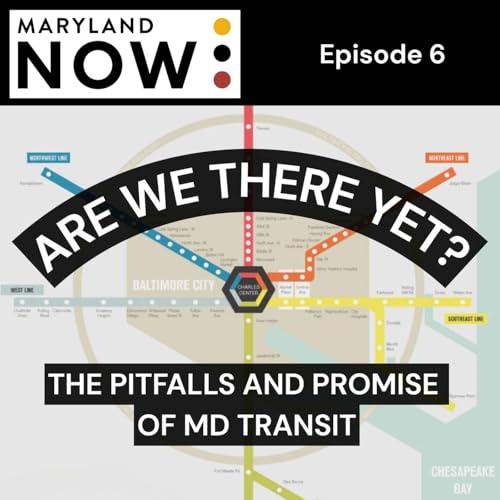
  • Are We There Yet? The Pitfalls and Promise of Maryland Transit
    Mar 12 2026

    For decades, Marylanders have looked at maps of what could have been: a sprawling, interconnected rail network linking neighborhoods from Owings Mills to the Inner Harbor and beyond. While Washington, D.C. successfully colored in its transit lines, Baltimore was left with a "single metro line" and a light rail system described as "two systems flying in loose formation" that fail to feed each other. The dream of a comprehensive network has been stalled by shifting political winds, funding hurdles, and a lack of sustained regional advocacy.

    In this episode, hosts Dori Henry, Josh Kurtz, and David Nitkin explore the past, present, and uncertain future of transit in Maryland. They are joined by John Porcari (former U.S. Deputy Secretary of Transportation), Delegate Robbyn Lewis (D-Baltimore City), Ron Hartman (former MTA head), and Mike Kelly (Baltimore Metropolitan Council) to dissect the pivotal 2015 cancellation of the Red Line and the potential for its revival. They discuss why Maryland is unique in having its transit run by a state agency without a board of directors, the "radicalizing" effect of stalled projects on local leaders, and whether "Bus Rapid Transit" is a viable, high-speed alternative to traditional rail.

    Why This Episode Matters

    Transit is more than just "the widget" used to move people; it is an engine for economic development, a tool for dismantling historic segregation, and a necessity for a functioning democracy. The gap between transit-rich regions and those left behind reveals deep-seated issues of power, influence, and racial history in Maryland. Understanding the "flabby" failures of the past and the new push for local governance is essential for any resident who wants to see a more connected and equitable state. Whether you are a daily bus rider or a commuter waiting for the next rail extension, this conversation offers the context needed to understand why Maryland’s transit system remains a work in progress.

    Connect With the Show Questions, comments, or story ideas: marylandnow@blendedpublicaffairs.com


    Links & Resources

    Maryland Now is brought to you by Blended Public Affairs and produced by Carper Cre8tive.

    · Blended Public Affairs: https://www.blendedpublicaffairs.com

    · Carper Cre8tive: https://www.carpercreative.studio

    Don’t forget to subscribe wherever you get your podcasts!

    Note: The voice of Mileah Kromer heard in this episode is a synthetic AI model reading excerpts from her book. Not a live recording.

    • (00:00) - Red Line Fallout
    • (00:33) - Meet the Hosts
    • (00:44) - Are We Transit Riders
    • (02:45) - Riding Baltimore Metro
    • (04:12) - LA Metro Detour
    • (05:22) - The 1960s Rail Dream
    • (08:09) - Music Transition
    • (08:13) - How Maryland Runs Transit
    • (09:51) - From Streetcars to MTA
    • (11:16) - Schaefer Era Expansion
    • (12:45) - Light Rail Missteps
    • (14:50) - Planning the Red Line
    • (16:24) - Hogan Cancels It
    • (19:20) - Why No Outcry
    • (20:55) - Race Power and Redlining
    • (22:51) - Robin Lewis Radicalized
    • (28:05) - Purple Line vs Red Line
    • (29:35) - Buses and Funding
    • (34:05) - Who Governs Transit
    • (36:37) - Red Line Relaunch
    • (37:11) - Bus Rapid Transit Future
    • (39:23) - Transit as Democracy
    • (44:21) - Wrap Up and Subscribe
    Más Menos
    45 m
  • Upstream, Downstream: The Architecture of the Chesapeake Bay Agreement
    Mar 5 2026

    The Chesapeake Bay is more than just a body of water; it supports a $600 million seafood industry in Maryland; it's a $3.2 billion tourism engine for the state, and it's at the very heart of Maryland’s self-image. But for the other five states in the 64,000-square-mile watershed, the Bay is often an abstract concept, a distant destination. This geographic and emotional disconnect complicates the decades-long effort to restore one of the world’s most productive estuaries.

    In this episode, hosts Dori Henry, Josh Kurtz, and David Nitkin explore the intricate "architecture" of the multi-state coalition responsible for keeping the Bay clean. They are joined by Adam Ortiz (Maryland Department of the Environment and formerly with U.S. EPA), Sarah Elfreth (U.S. Representative), Ben Grumbles (Environmental Council of the States), and Gene Yaw (Pennsylvania State Senator) to break down the newly signed 15-year Bay Agreement.

    Why This Episode Matters The health of the Chesapeake Bay depends on decisions made not just in Maryland, but in five other states and the District of Columbia -- along with the federal government. The friction between downstream beneficiaries and upstream contributors reveals the fundamental challenge of regional cooperation. Understanding how leaders navigate "shared pain" for "shared gain" offers a rare look at how environmental policy actually survives—or fails—in a complicated landscape. Whether you are a waterman concerned about runoff or a voter interested in how interstate collaborations function, this episode provides the context needed to understand the "pollution diet" that will impact the Bay through 2040.

    Connect With the Show Questions, comments, or story ideas: marylandnow@blendedpublicaffairs.com

    Links & Resources Maryland Now is brought to you by Blended Public Affairs and produced by Carper Cre8tive.


    Don’t forget to subscribe wherever you get your podcasts!

    • (00:00) - Josh Kurtz ep 5 MAIN SCRIPT
    • (00:03) - Bay Love And Stakes
    • (00:22) - Podcast Intro And Focus
    • (00:44) - Why The Bay Agreement Matters
    • (03:27) - Upstream Disconnect In New York
    • (05:12) - Maryland Economy Needs Partners
    • (07:43) - How The Bay Compact Evolved
    • (11:13) - What Makes Cooperation Work
    • (14:55) - When States Clash And Sue
    • (18:03) - Pennsylvania Politics And Messaging
    • (25:56) - Ortiz Brings Tough Love
    • (30:57) - Progress Report And New Deal
    • (36:33) - Federal Uncertainty Under Trump
    • (39:59) - Host Wrap And Outtakes
    • (42:06) - Closing Credits
    Más Menos
    42 m
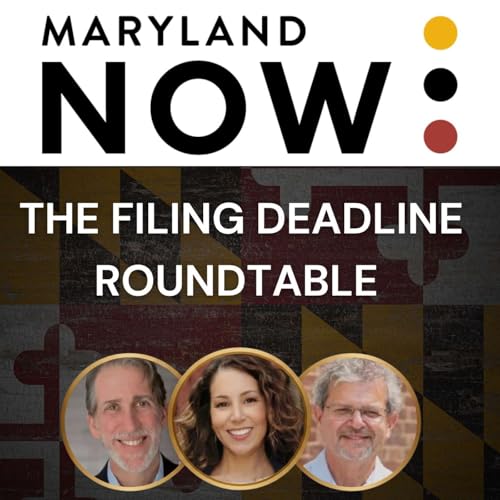
  • The Filing Deadline Roundtable
    Feb 26 2026

    The filing deadline has passed, and the board is finally set for Maryland’s 2026 elections. With a flurry of last-minute entries and some surprising absences, the stakes for the state’s political future have never been clearer. From a wide-open race in the 5th Congressional District to generational challenges in some state legislative seats, there’s plenty to watch in this election cycle.

    In this episode, hosts Dori Henry, Josh Kurtz, and David Nitkin are joined by Alex Hughes (Blended Public Affairs) and Will Ford (Maryland Matters) for a roundtable conversation to break down the final candidate lists. They explore why so many Democrats are vying for the same seats, why the Republican "bench" remains thin in key counties, and what the high number of uncontested races means for the health of Maryland's democracy.

    Why This Episode Matters The people who filed by the deadline will determine the laws, budgets, and priorities of Maryland for years to come. The lack of competition in some areas and the extreme "pile-on" in others reveals a state in political transition. Understanding who is running—and who isn't—is essential for any voter trying to navigate a primary season where the noise is louder than ever. Whether you are tracking the power shifts in Annapolis or the federal races in D.C., this roundtable offers the context needed to make sense of the 2026 ballot.

    Connect With the Show Questions, comments, or story ideas: marylandnow@blendedpublicaffairs.com

    Links & Resources Maryland Now is brought to you by Blended Public Affairs and produced by Carper Cre8tive.

    • Maryland Matters: https://www.marylandmatters.org
    • Blended Public Affairs: https://www.blendedpublicaffairs.com
    • Carper Cre8tive: https://www.carpercreative.studio
    • (00:00) - Roundtable and filing deadline
    • (00:53) - Hoyer seat candidate scramble
    • (09:15) - Campaign tactics and big fields
    • (11:26) - Other races and uncontested seats
    • (23:00) - Maryland GOP Bench Crisis
    • (24:32) - Affordability Versus Trump
    • (27:25) - Filing Deadline Shakeups
    • (38:05) - Term Limits And Coordination
    Más Menos
    44 m
  • Why Maryland Can’t Build Enough Housing
    Feb 19 2026
    Maryland is in the middle of a full‑blown housing crisis — and the consequences are showing up everywhere. For 12 straight years, more Marylanders have left the state than moved in, and the trend is accelerating. As Comptroller Brooke Lierman explains, it’s not just retirees heading south. Younger residents and middle‑income families are leaving too, taking billions in economic activity with them. “I was particularly disconcerted to see how many younger Marylanders are moving away,” she says.At the center of the problem: Maryland simply hasn’t built enough homes. The state is short roughly 100,000 units today, and needs 590,000 new homes by 2045 to meet projected demand. But for decades, a patchwork of zoning rules, local veto points, and well‑intentioned but restrictive smart‑growth policies have made it harder — not easier — to build where people actually want to live. As Housing Secretary Jake Day puts it, “We’ve done a fantastic job telling people where they can’t build… we never finished the equation.”In this episode, hosts Dori Henry, Josh Kurtz, and David Nitkin unpack how Maryland got here, why the state’s “culture of permission” makes development so difficult, and what lawmakers are proposing this session to finally break the logjam. They explore the political dynamics that allow a handful of neighbors to stall desperately needed housing, the unintended consequences of Maryland’s smart‑growth legacy, and why even high‑performing school districts use tools like adequate public facilities ordinances to keep new families out.Featuring voices from across the housing landscape — developers, preservationists, county leaders, and state officials — this episode offers a clear, grounded look at one of Maryland’s most urgent challenges, and what it will take to build a more affordable future.In This EpisodeWhy Maryland has lost residents to other states for 12 consecutive yearsHow a shortage of 100,000 homes is driving up prices and pushing families outWhy Maryland permits far fewer homes than fast‑growing states like the Carolinas, Texas, and FloridaHow single‑family zoning and decades of layered regulations restrict what can be built — and whereThe unintended consequences of Maryland’s smart‑growth movementWhy local “permission structures” allow neighbors to block needed housingHow late vesting rules let opponents kill projects even after approvalsWhy developers say community engagement is essential — but can go too farWhat the Moore administration is proposing this session to accelerate homebuildingWhy adequate public facilities ordinances often halt development in high‑demand school zonesKey VoicesBrooke Lierman — Maryland ComptrollerJake Day — Maryland Secretary of HousingTom Coale — Land Use Attorney & Housing AdvocateChris Mfume — Founder, The Civic GroupNick Redding — President & CEO, Preservation MarylandMichael Sanderson — Executive Director, Maryland Association of CountiesWhy This Episode MattersHousing shapes everything — affordability, economic mobility, school enrollment, transportation, and the long‑term competitiveness of the state. Maryland’s shortage is already driving residents away, straining local budgets, and limiting opportunities for families across income levels. Understanding how we got here — and why it’s so hard to fix — is essential to understanding the debates unfolding in Annapolis this session.Whether you’re a renter, a homeowner, a policymaker, or someone trying to understand why housing costs keep rising, this episode offers clarity, context, and a rare inside look at the forces shaping Maryland’s housing future.Connect With the ShowQuestions, comments, or story ideas: marylandnow@blendedpublicaffairs.comLinks & ResourcesMaryland Now is brought to you by Blended Public Affairs and produced by Carper Cre8tive.Blended Public Affairs: https://www.blendedpublicaffairs.comCarper Cre8tive: https://www.carpercreative.studio (00:00) - Welcome to Maryland Now + Why Housing Is a Full-Blown Crisis(01:31) - The ‘Culture of Permission’: How Public Process Slows (or Stops) Building(03:27) - Case Study: Lutherville Station, Smart Growth, and Transit-Oriented Development(06:44) - The Economic Alarm Bells: Marylanders Leaving, Revenue Loss, and Permit Shortfalls(09:17) - How We Got Here: Zoning History, Single-Family Dominance, and Smart Growth’s Missing Half(13:20) - Jake Day’s Playbook: Salisbury’s ‘Here Is Home’ Incentives and Fast-Track Permitting(15:53) - State vs. Local Power: Starter Homes, Early Vesting, and Fixing Late-Vesting Uncertainty(17:52) - When Engagement Becomes Veto Power: Tom Coale & Developers on Delays and Deal-Killers(22:34) - Can the 2026 Session Deliver? Counties, Consensus, and the Politics of Reform(24:37) - The APFO Debate: Schools, Infrastructure Backlogs, and the ‘Red Light’ on Growth(30:43) - What Else Needs to Change: Better Engagement,...
    Más Menos
    37 m