Episodios

  • The Scaling Paradox: Why Good Designs Fail at Enterprise Scale
    Mar 31 2026
    A solution works perfectly in a pilot.It saves time. Improves visibility. Reduces friction. Then it scales… and starts breaking. In this episode, Mirko Peters explains why success in one team often turns into fragmentation at enterprise level—and why most organizations misunderstand what “scale” actually means. This is the scaling paradox: What works locally often fails globally—not because it was wrong, but because the system around it wasn’t designed to carry it. 🔥 Core Insight A pilot proves usefulness.It does not prove scalability. Scaling is not copying solutions.Scaling is reproducing the conditions that make solutions trustworthy. ⚠️ The Real Problem Most organizations treat scaling as:More usersMore appsMore workflowsMore rolloutBut in reality, they are doing: 👉 Load expansion without design adaptation 🧠 Why Scale Breaks Systems At small scale:People rely on context, trust, memoryOwnership is implicitProblems are solved informallyAt enterprise scale:Decisions cross boundariesOwnership splitsContext disappearsDependencies multiply👉 Result: Hidden weaknesses get exposed instantly 📉 The 5 Failure Patterns at Scale 1. 🧩 Workspace SprawlToo many Teams, sites, groupsNo clear ownershipLifecycle missing👉 Not clutter — an ownership & access problem 2. 📊 Data Lineage GapsMultiple “versions of truth”Reports don’t matchDecisions require negotiation👉 Data trust collapses before data quality does 3. 👥 Ownership AmbiguityNobody knows who owns whatDecisions slow downSupport becomes guesswork👉 Shared responsibility = fragmented accountability 4. ⚙️ Environment Chaos (Power Platform)Too many environmentsNo clear promotion pathInconsistent deployment logic👉 Not technical debt — organizational ambiguity 5. 🔌 Hidden IntegrationsShadow connectorsShared credentialsUndocumented dependencies👉 Useful → invisible → fragile infrastructure 💡 The Root Cause All five problems point to one issue: Capacity does not scale automatically Organizations scale:Demand ✅Adoption ✅But NOT:Ownership ❌Governance ❌Decision clarity ❌Lifecycle ❌🚨 The Governance Trap When things break, leaders react with:More approvalsMore controlMore centralization👉 Result:Slower executionMore shadow ITLess trustBad governance doesn’t fix scale.It turns complexity into delay. ⚖️ The Critical Distinction ❌ Tool ConsistencySame platformSame templatesSame policies✅ System ConsistencySame decision logicSame ownership claritySame trust model👉 You can have one platform… and still run five different systems 🏆 What Actually Scales 1. Scale Principles, Not Solutions Define:Decision rulesOwnership rulesLifecycle rulesTrust rules👉 Solutions change. Principles travel. 2. Standardize What Matters Standardize:OwnershipAccessData definitionsLifecyclePromotion pathsNOT:Every workflow detailEvery UIEvery process variation3. Allow Local Adaptation (Within Boundaries)Freedom inside structureFlexibility without drift👉 Scale needs bounded variation 4. Measure System Health (Not Adoption) Stop tracking:UsersAppsActivityStart tracking:Decision speedDuplicationOwnership clarityDependency risk👉 High usage ≠ healthy system 🤖 AI Changes Everything AI (Copilot, agents) doesn’t fix your system. It amplifies it.Weak structure → faster confusionBad data → confident wrong answersPoor permissions → broader exposureAI scales whatever already exists. 🛠️ Practical Scaling Model Before scaling, check: ✔ Ownership Who owns process, data, solution, support? ✔ Decision Flow How are decisions made without escalation? ✔ Access Who gets access—and how is it reviewed? ✔ Lineage Where does data come from? ✔ Environment Logic How do solutions move to production? 💰 Why Scaling Gets Expensive Organizations fund:AppsUse casesRolloutsBut not:Governance capacityLifecycle managementSupport models👉 ResultBecome a supporter of this podcast: https://www.spreaker.com/podcast/m365-fm-modern-work-security-and-productivity-with-microsoft-365--6704921/support.If this clashes with how you’ve seen it play out, I’m always curious. I use LinkedIn for the back-and-forth.
    Más Menos
    1 h y 19 m
  • Microsoft 365 Transformation: Why It Fails and the Role of the Power Architect
    Mar 30 2026
    In this episode of M365.fm, Mirko Peters explains why Microsoft 365 transformation projects fail — and what role a Power Architect plays in making them succeed.WHAT YOU WILL LEARNWhy Microsoft 365 transformation projects fail despite the right toolsWhat a Power Architect does inside Microsoft 365Why Microsoft Teams and SharePoint adoption alone is not transformationHow governance and architecture drive sustainable Microsoft 365 changeWhy organizational structure determines Microsoft 365 success or failureWhat the difference is between IT deployment and true digital transformationHow to identify and close transformation gaps in your Microsoft 365 environmentTHE CORE INSIGHTMost Microsoft 365 transformation projects are technology projects dressed up as change projects. The tools get deployed. The training gets delivered. The adoption dashboards look good. And yet, three months later, nothing has fundamentally changed about how the organization works, decides, or collaborates.The reason is simple: transformation is not a technology question. It is an organizational design question. And without someone who understands both the technology and the organization — someone who can connect Microsoft 365 architecture to business outcomes — the project will deliver tools, not transformation.This is the role of the Power Architect. Not a developer. Not a classic IT architect. A Power Architect is someone who understands how Microsoft 365 works structurally, how governance and permissions shape organizational behavior, how Microsoft Teams and SharePoint can either enable or obstruct collaboration, and how to design a Microsoft 365 environment that reflects the actual structure of the business.Without a Power Architect, Microsoft 365 becomes a collection of disconnected tools. With one, it becomes a coherent operating system for the organization.WHY MICROSOFT 365 TRANSFORMATION FAILSProjects are led by IT without business architecture involvementMicrosoft Teams and SharePoint are deployed without governance or structureAdoption is measured by usage, not by business outcomeNo one is responsible for the overall Microsoft 365 architectureGovernance is designed after deployment, not beforeChange management is treated as communication, not structural redesignMicrosoft 365 is configured for the tool, not for the organizationKEY TAKEAWAYSTransformation requires architectural thinking, not just technical deploymentThe Power Architect connects Microsoft 365 structure to organizational designGovernance must be built into the architecture from day oneAdoption without architecture produces chaos, not transformationMicrosoft 365 should reflect how the organization actually works, not how IT wants to configure itSuccess is measured in business outcomes, not in licensing utilizationWHO THIS EPISODE IS FORThis episode is essential for Microsoft 365 architects, transformation leaders, IT directors, and organizations planning or currently executing Microsoft 365 digital transformation programs. If you are responsible for making Microsoft 365 work as a business platform rather than just a set of tools, this episode will give you a new framework for thinking abouttransformation and the role of architecture.TOPICS COVEREDMicrosoft 365 digital transformation strategyThe Power Architect role in Microsoft 365 environmentsGovernance design as a foundation for Microsoft 365 transformationWhy Microsoft Teams and SharePoint adoption fails without structureOrganizational design and Microsoft 365 architecture alignmentCommon Microsoft 365 transformation mistakes and how to avoid themABOUT THE HOSTMirko Peters is a Microsoft 365 consultant and digital workplace architect with deep expertise in enterprise Microsoft 365 strategy, governance, security, and organizational transformation. Through M365.fm, Mirko shares practical insights, architectural frameworks, and real-world lessons for IT professionals and business leaders navigating the Microsoft 365 ecosystem.Become a supporter of this podcast: https://www.spreaker.com/podcast/m365-fm-modern-work-security-and-productivity-with-microsoft-365--6704921/support.If this clashes with how you’ve seen it play out, I’m always curious. I use LinkedIn for the back-and-forth.
    Más Menos
    1 h y 23 m
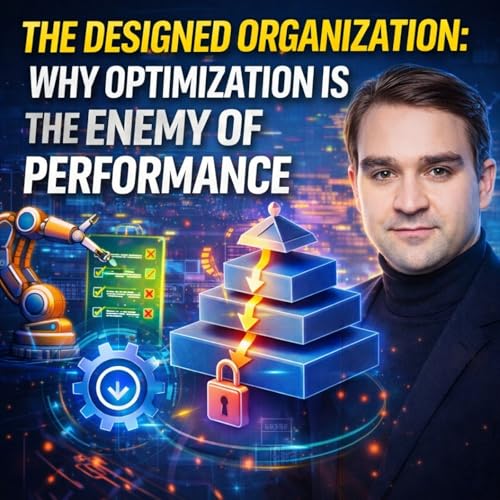
  • Microsoft 365 & Modern Work: Why Work Optimization Hurts Performance
    Mar 29 2026
    In this episode of M365.fm, Mirko Peters challenges the assumption that more Microsoft 365 features and more workflow automation automatically lead to better organizational performance.WHAT YOU WILL LEARNWhy work optimization in Microsoft 365 often reduces overall organizational performanceHow Microsoft Teams, SharePoint, and Viva can create the illusion of productivityWhy local efficiency and system-level performance are fundamentally differentHow over-automation and tool overload harm collaboration and decision-makingWhy Microsoft 365 governance must be designed around outcomes, not featuresHow to distinguish between work that creates value and work that creates activityWhat a performance-oriented Microsoft 365 design actually looks like in practiceTHE CORE INSIGHTMost organizations using Microsoft 365 are optimizing the wrong things. They automate more processes, deploy more features, measure more activity metrics, and push for higher adoption rates. And yet, the fundamental question — is the organization actually performing better? — is rarely asked.The paradox of work optimization is that making individual tasks faster and more efficient can slow down the organization as a whole. When every team optimizes locally, the system becomes fragmented. When communication is automated, understanding disappears. When workflows are standardized, adaptability is lost.Microsoft 365 accelerates this paradox. Because it is so capable, it makes it easy to optimize everything — processes, communication, documentation, meetings — without ever asking whether those things should be done at all, or whether they are connected to actual organizational outcomes.The result is organizations that are busy but not productive, connected but not collaborative, automated but not intelligent. Microsoft 365 does not cause this problem. But it amplifies it. And without the right governance and design philosophy, it makes the paradox worse, not better.WHY WORK OPTIMIZATION IN MICROSOFT 365 BACKFIRESTeams channels multiply without clear ownership or purposeSharePoint sites accumulate content that no one can find or useMeetings are scheduled through Microsoft 365 but produce no decisionsViva Insights tracks activity but not value creationPower Automate workflows automate low-value work at scaleMicrosoft 365 Copilot surfaces content from an ungoverned environmentAdoption metrics replace performance metrics as the measure of successKEY TAKEAWAYSOptimizing individual tasks in Microsoft 365 does not improve organizational performanceGovernance must be designed around business outcomes, not tool adoptionMicrosoft 365 amplifies existing organizational design problemHigh adoption rates without governance produce high-volume chaosPerformance design in Microsoft 365 requires removing work, not adding featuresMicrosoft 365 Copilot reflects the quality of your information architectureWHO THIS EPISODE IS FORThis episode is essential for Microsoft 365 architects, IT leaders, modern work consultants, and organizations that want to use Microsoft 365 as a genuine performance platform rather than a feature collection. If you are planning a Microsoft 365 rollout, managing an existing environment, or responsible for digital workplace strategy, this episode will fundamentally change how you think about optimization and performance.TOPICS COVEREDMicrosoft 365 and the paradox of work optimizationWhy Microsoft Teams adoption does not equal performanceSharePoint governance and information architecture for performanceMicrosoft 365 Copilot and the importance of clean data architectureViva Insights and the difference between activity and valueDesigning Microsoft 365 for organizational outcomes, not tool adoptionABOUT THE HOSTMirko Peters is a Microsoft 365 consultant and digital workplace architect with deep expertise in enterprise Microsoft 365 strategy, governance, security, and organizational transformation. Through M365.fm, Mirko shares practical insights, architectural frameworks, and real-world lessons for IT professionals and business leaders navigating the Microsoft 365 ecosystem.Become a supporter of this podcast: https://www.spreaker.com/podcast/m365-fm-modern-work-security-and-productivity-with-microsoft-365--6704921/support.If this clashes with how you’ve seen it play out, I’m always curious. I use LinkedIn for the back-and-forth.
    Más Menos
    1 h y 23 m
  • AI in Microsoft 365: Why AI Won’t Fix Your Business (It Exposes Your Data, Security & Structure)
    Mar 28 2026
    In this episode of M365.fm, Mirko Peters breaks down one of the most dangerous assumptions in enterprise AI: that deploying Microsoft 365 Copilot or AI tools will fix your business problems — and explains why the opposite is true.WHAT YOU WILL LEARNWhy AI in Microsoft 365 does not fix business problems — it exposes themHow Microsoft 365 Copilot surfaces broken data, unclear ownership, and missing governanceWhy deploying AI before fixing governance creates security and compliance risksHow fragmented Microsoft 365 environments make AI results unreliable and dangerousWhy AI amplifies both the strengths and the weaknesses of your Microsoft 365 architectureWhat needs to be in place before Microsoft 365 Copilot can deliver real business valueHow to use AI readiness as a diagnostic tool for your Microsoft 365 environmentTHE CORE INSIGHTAI does not solve organizational problems. It reveals them. When you deploy Microsoft 365 Copilot into a poorly governed environment, the AI does exactly what it is designed to do: it finds, surfaces, and uses whatever data is available. If your data is fragmented, incorrect, or over-shared, Copilot will produce fragmented, incorrect, and insecure outputs.Most organizations deploying AI in Microsoft 365 are trying to skip steps. They want the intelligence without the architecture. They want the results without the governance. They want Copilot to answer questions that their own employees cannot answer — because the underlying information is a mess.The result is not just poor AI performance. It is a security and compliance risk. Copilot can surface confidential information to the wrong people, generate outputs based on outdated or incorrect data, and create the appearance of insight where there is actually confusion.The real value of Microsoft 365 Copilot is not in what it produces on day one. It is in what it forces you to confront: the state of your data architecture, your governance model, your permission structure, and your information management practices. Organizations that pass the Copilot readiness test are organizations that have already done the hard work. AI just makes that visible.WHY AI WON'T FIX YOUR MICROSOFT 365 ENVIRONMENTMicrosoft 365 Copilot surfaces content that should not be accessible to all usersAI results are only as reliable as the data and governance behind themUnstructured Microsoft 365 environments produce unreliable AI outputsCopilot cannot compensate for missing ownership, naming conventions, or lifecycle policiesAI adoption without governance creates new security and compliance risksMicrosoft 365 data sprawl becomes an AI liability, not an AI assetDeploying Copilot before governance is ready amplifies every existing problemKEY TAKEAWAYSAI in Microsoft 365 exposes your governance gaps, it does not fill themCopilot readiness is a governance readiness test, not a technical testMicrosoft 365 data quality determines AI output qualityAI deployment without architecture preparation creates security risksThe best thing you can do before deploying Copilot is fix your Microsoft 365 information architectureOrganizations that invest in Microsoft 365 governance before AI will outperform those that do notWHO THIS EPISODE IS FORThis episode is essential for Microsoft 365 architects, IT security leaders, CIOs, and business leaders who are planning or evaluating a Microsoft 365 Copilot deployment. If you areconsidering AI in Microsoft 365, or already deploying it, this episode will give you the honest picture of what AI can and cannot do in an ungoverned environment.TOPICS COVEREDMicrosoft 365 Copilot and AI readiness in enterprise environmentsWhy AI exposes Microsoft 365 governance and security weaknessesMicrosoft 365 data quality and information architecture for AIPermission problems and security risks when deploying CopilotHow to prepare your Microsoft 365 environment for AI deploymentThe connection between Microsoft 365 governance and AI performanceABOUT THE HOSTMirko Peters is a Microsoft 365 consultant and digital workplace architect with deep expertise in enterprise Microsoft 365 strategy, governance, security, and organizational transformation. Through M365.fm, Mirko shares practical insights, architectural frameworks, and real-world lessons for IT professionals and business leaders navigating the Microsoft 365 ecosystem.Become a supporter of this podcast: https://www.spreaker.com/podcast/m365-fm-modern-work-security-and-productivity-with-microsoft-365--6704921/support.If this clashes with how you’ve seen it play out, I’m always curious. I use LinkedIn for the back-and-forth.
    Más Menos
    1 h y 23 m
  • Microsoft 365 Security: Who Has Access to Your Data and Why It Matters
    Mar 27 2026
    In this episode of m365.fm, Mirko Peters breaks down one of the most critical and most underestimated problems in Microsoft 365 security: the permission problem. Who actually has access to your Microsoft 365 data? Who has power over your workspaces, your SharePoint sites, your Teams channels, your OneDrive files? In most organizations, the honest answer is: nobody really knows.This episode is essential for Microsoft 365 security architects, IT compliance teams, CISOs, and any organization that needs to understand and control who has access to their Microsoft 365 environment. If you are responsible for Microsoft 365 security, governance, or compliance, this episode will fundamentally change how you think about permission management.WHAT YOU WILL LEARNWhy the Microsoft 365 permission problem is the root cause of most security incidentsHow permission sprawl develops silently inside Microsoft 365 and why it is so hard to reverseWhy reactive access management creates compounding security risk in Microsoft 365How external sharing and guest access in Microsoft Teams and SharePoint create hidden exposureWhy regular Microsoft 365 access reviews are not optional in a compliant environmentHow to design a permission governance model that actually works at enterprise scaleWhat ownership means inside Microsoft 365 and why it must be explicit, not assumedTHE CORE INSIGHTMost organizations approach Microsoft 365 security by investing in technology. They add Defender, they configure Conditional Access, they enable MFA. But they never ask the most important question: who actually has access to what, and should they?Permissions in Microsoft 365 accumulate over time. Every new project creates a new Team. Every new Team adds members. Members get access to files, sites, and channels they no longer need after the project ends. Nobody removes the access. The workspace stays. The data stays. The access stays. This is how permission sprawl happens. It is not a failure of technology. It is a failure of process design.Microsoft 365 security starts with understanding that permissions are not a technical problem. They are a governance and ownership problem. Every workspace needs a defined owner. Every access decision needs a defined lifecycle. Every external sharing action needs explicit accountability. Without these foundations, no security tool will protect you.THE PERMISSION PROBLEM IN DETAILPermission sprawl is the natural result of reactive access management in Microsoft 365Guest and external access in SharePoint and Teams is one of the highest-risk surfaces in Microsoft 365Access reviews are the only reliable mechanism to detect and correct permission driftOwnership without explicit assignment defaults to everyone and therefore to no onePermission governance is a process design challenge, not a Microsoft 365 configuration challengeKEY TAKEAWAYSMicrosoft 365 security starts with permission governance, not with security toolsPermission sprawl is the natural result of reactive and ungoverned access managementExternal sharing and guest access must be governed with explicit lifecycle policiesRegular access reviews are not optional in a compliant Microsoft 365 environmentOwnership must be explicit at every level of the Microsoft 365 architecturePermission governance requires process design, not just Microsoft 365 technical configurationWHO THIS EPISODE IS FORMicrosoft 365 security architects and consultantsIT compliance teams and CISOs managing Microsoft 365 environmentsOrganizations preparing for Microsoft 365 security audits or compliance reviewsGovernance and risk management teams working with Microsoft 365Anyone responsible for Microsoft 365 access management, guest policies, or data protectionTOPICS COVEREDMicrosoft 365 Security & Permission GovernanceMicrosoft Teams & SharePoint Access ManagementExternal Sharing & Guest Access LifecycleMicrosoft 365 Compliance & Access ReviewsMicrosoft 365 Governance & Ownership DesignEnterprise Security ArchitectureABOUT THE HOSTMirko Peters is a Microsoft 365 expert, architect, and host of m365.fm. He works with organizations from small businesses to large enterprise environments, focusing on Microsoft 365 architecture, security, AI integration, governance design, and system architecture. His work centers on designing context-driven systems that reduce complexity, enable autonomous execution, and create scalable performance across modern enterprises.Become a supporter of this podcast: https://www.spreaker.com/podcast/m365-fm-modern-work-security-and-productivity-with-microsoft-365--6704921/support.If this clashes with how you’ve seen it play out, I’m always curious. I use LinkedIn for the back-and-forth.
    Más Menos
    1 h y 22 m
  • Microsoft 365 & Modern Work: Your Organization Is Not What You Think
    Mar 26 2026
    In this episode of m365.fm, Mirko Peters reveals why most organizations have a fundamental misunderstanding of how they actually work. The org chart shows one thing. The formal structure says something else. But the real organization — the one that determines whether Microsoft 365 works, whether modern work initiatives succeed, and whether Microsoft security policies hold — is defined by behavior, not by design.This episode is essential for IT leaders, Microsoft 365 architects, consultants, and anyone working on organizational change, modern work strategy, or Microsoft security governance who wants to understand why formal structures and real work behavior rarely match.WHAT YOU WILL LEARNWhy your organization works differently than its official structure suggestsHow real Microsoft 365 productivity is shaped by informal processes, not formal onesWhy Microsoft 365 security depends on real usage patterns, not planned governanceHow informal networks determine whether Microsoft Teams and SharePoint actually workWhy Microsoft 365 adoption fails when it targets the formal org instead of the real oneHow to design Microsoft 365 systems that reflect how work actually happensTHE CORE INSIGHTMost Microsoft 365 deployments fail because they are designed for the organization that exists on paper, not the organization that exists in reality. The formal structure defines roles and reporting lines. The real organization defines who actually talks to whom, who makes decisions, who holds the knowledge, and how work actually flows.When you deploy Microsoft Teams, SharePoint, or any Microsoft 365 tool based on org charts and job titles, you are building for a fiction. The tool gets adopted by the real organization — which rewrites your structure, ignores your governance, and works around your policies. This is not user error. It is a design error.Real Microsoft 365 success requires understanding the actual organization — its informal networks, real decision flows, and actual knowledge holders — and designing systems that match that reality, not the org chart.WHY FORMAL STRUCTURES MISLEAD MICROSOFT 365 PROJECTSOrg charts show reporting lines, not how decisions actually get madeMicrosoft 365 tools get adopted by the real organization, not the planned oneGovernance designed for formal roles gets ignored by informal networksMicrosoft Teams channels reflect communication needs, not org chart structuresSecurity policies built on job titles miss the real access and knowledge patternsKEY TAKEAWAYSThe real organization is defined by behavior, not by the org chartMicrosoft 365 productivity depends on informal networks, not formal structuresMicrosoft security governance must account for real usage, not planned usageDesigning for the formal organization guarantees Microsoft 365 adoption failureReal Microsoft 365 success requires mapping how work actually happensWHO THIS EPISODE IS FORMicrosoft 365 architects and consultants designing modern work environmentsIT leaders and CIOs responsible for Microsoft 365 strategy and adoptionHR and organizational development teams working alongside Microsoft 365 rolloutsAnyone leading Microsoft 365 governance, security, or change management projectsTOPICS COVEREDMicrosoft 365 Modern Work & Organization DesignMicrosoft Teams & SharePoint Adoption StrategyMicrosoft 365 Security & Real Usage GovernanceInformal Networks & Real Decision Flows in Microsoft 365Microsoft 365 Architecture & System DesignABOUT THE HOSTMirko Peters is a Microsoft 365 expert, architect, and host of m365.fm. He works with organizations from small businesses to large enterprise environments, focusing on Microsoft 365 architecture, security, AI integration, governance design, and system architecture. His work centers on designing context-driven systems that reduce complexity, enable autonomous execution, and create scalable performance across modern enterprises.Become a supporter of this podcast: https://www.spreaker.com/podcast/m365-fm-modern-work-security-and-productivity-with-microsoft-365--6704921/support.If this clashes with how you’ve seen it play out, I’m always curious. I use LinkedIn for the back-and-forth.
    Más Menos
    1 h y 31 m
  • Modern Work: Why High Performers Feel Isolated (Microsoft 365, Productivity and the Loneliness System)
    Mar 25 2026
    Modern Work: Why High Performers Feel Isolated (Microsoft 365, Productivity and the Loneliness System) In this episode, you’ll learn why high performers in modern work environments often experience isolation and pressure, even in highly connected Microsoft 365 organizations. You’ll understand how productivity systems, expectations, and Microsoft 365 collaboration tools can unintentionally create a “loneliness system”.why high performers silently struggle in modern work environmentshow Microsoft 365 productivity and collaboration can increase pressurewhy modern work systems create isolation instead of connectionThis episode is ideal for consultants, leaders, IT professionals, and anyone working with Microsoft 365, productivity, and modern work.WHY HIGH PERFORMERS BECOME ISOLATEDModern work promises flexibility, autonomy, and productivity. Tools like Microsoft Teams, SharePoint Online, and Microsoft 365 create constant connectivity and access to information. However, this environment also creates hidden pressure. High performers often take on more responsibility, respond faster, and become central points in communication and decision-making. Over time, this leads to overload and isolation. The more productive someone is, the more they are relied on. But this also means they carry more invisible responsibility.THE LONELINESS SYSTEM IN MODERN WORKThe “loneliness system” is not created intentionally. It emerges from how modern work is designed. Organizations optimize for productivity, responsiveness, and efficiency. Microsoft 365 environments enable constant communication and fast collaboration. But they rarely address how work is distributed or how pressure is managed. High performers become bottlenecks. They are included in more conversations, more decisions, and more responsibility. At the same time, they often lack support, because they are seen as capable and reliable.HOW MICROSOFT 365 PRODUCTIVITY CONTRIBUTESMicrosoft 365 productivity tools are designed to make work faster and more efficient. But without proper structure and boundaries, they increase cognitive load. Notifications, chats, meetings, and shared content create a constant flow of information. High performers are often the ones who handle this flow, which increases stress and reduces focus. This creates a paradox. The tools that are meant to improve productivity can also create overload and isolation.THE HIDDEN IMPACT ON SECURITY AND ORGANIZATIONThis dynamic also affects Microsoft security and organization design. When knowledge and responsibility are concentrated in a few individuals, risks increase. Access, decisions, and information flow become dependent on specific people instead of structured systems. This creates vulnerabilities, both from a security perspective and from an organizational resilience perspective.FROM PRODUCTIVITY TO SUSTAINABLE WORKIf you are working with Microsoft 365, modern work, or productivity consulting, this episode helps you rethink how work is distributed and supported. Sustainable productivity is not about doing more. It is about designing systems where responsibility, knowledge, and workload are shared effectively. Organizations need to move from individual performance to system performance.KEY TAKEAWAYShigh performers often carry invisible organizational loadmodern work can create isolation despite constant connectivityMicrosoft 365 productivity tools increase pressure without structureconcentration of knowledge creates security and organizational riskssustainable performance requires better system designQUOTES FROM THIS EPISODE"High performers are not fine. They are overloaded.""Modern work creates connection, but also isolation.""Productivity systems often ignore human limits.""The more reliable you are, the more work you get.""Loneliness is a system problem, not a personal problem." TOOLS AND TOPICSHigh Performers - role concentration and invisible workloadModern Work Systems - always-on collaboration and expectationsProductivity Culture - performance pressure and responsivenessWorkload Distribution - imbalance in responsibility and decision-makingOrganizational Design - system vs individual performanceKnowledge Concentration - risk of dependency on key individualsABOUT THE EXPERTMirko Peters is a Microsoft 365 expert, architect, and host of m365.fm. He works with organizations from small businesses to enterprise environments, focusing on modern work, Microsoft security, and productivity consulting. His work connects technology with real organizational behavior. He helps organizations design systems that are not only productive, but also sustainable and resilient.Become a supporter of this podcast: https://www.spreaker.com/podcast/m365-fm-modern-work-security-and-productivity-with-microsoft-365--6704921/support.If this clashes with how you’ve seen it play out, I’m always curious. I use LinkedIn for the back-and-forth.
    Más Menos
    1 h y 14 m
  • Modern Work: The Infrastructure Illusion – What Your People Actually Do (Microsoft 365, Security and Workflow Reality)
    Mar 24 2026
    In this episode, you’ll learn why your organization is not running on the infrastructure you designed but on the workflows your people actually use. You’ll understand how modern work, Microsoft 365, and security are shaped by real behavior instead of documented systems.why designed infrastructure does not reflect real workhow Microsoft 365 workflows evolve outside governancewhy Microsoft security fails when it is based on assumptionsThis episode is ideal for architects, consultants, IT professionals, and anyone working with Microsoft 365, modern work, and organizational systems.WHY THE INFRASTRUCTURE ILLUSION EXISTSMost organizations believe their systems reflect how work actually happens. They rely on architecture diagrams, governance models, and defined processes. But in reality, organizations operate on a completely different layer. This is what we call the infrastructure illusion — the gap between what you think is happening and what people are actually doing. People adapt, bypass friction, and optimize for speed. The result is a second, invisible system that runs alongside your designed infrastructure.DESIGNED SYSTEM VS REAL WORKFLOWEvery organization has a clean version of reality. It exists in diagrams, policies, and system definitions. But the moment real work starts, people change the system. They use email instead of platforms, create workarounds, and move data outside governed environments. The designed system is structured, controlled, and visible.The real system is adaptive, fast, and invisible. And most organizations only manage the first one.WHY MICROSOFT 365 AND SECURITY ARE AFFECTEDIn Microsoft 365 environments, this gap becomes critical. Organizations believe data follows governance, permissions are controlled, and collaboration happens inside defined tools. But in reality, work often happens outside these boundaries. This creates a dangerous situation. Security policies are designed for systems that are not actually used. Data moves outside controlled environments. Access and permissions no longer reflect reality. You cannot secure or govern what you do not see.THE PROBLEM IS NOT TECHNOLOGYMany organizations try to fix this gap with more tools, more policies, or more training. But the real issue is not technology. It is the mismatch between system design and human behavior. Workflows evolve faster than governance. Systems grow faster than structure. As a result, organizations lose visibility over how work actually happens.FROM INFRASTRUCTURE TO FLOWTo understand your organization, you need to shift your perspective. Stop looking at systems and start looking at flow. Where does work actually happenHow does data moveWhy do people behave the way they do Only by mapping real activity can you understand your actual infrastructure.KEY TAKEAWAYSorganizations run on real workflows, not designed systemsMicrosoft 365 governance often ignores actual behaviorMicrosoft security fails when based on assumptionsworkarounds are a signal, not a problemreal performance comes from understanding flowQUOTES FROM THIS EPISODE"Your infrastructure is not your system. Your people are.""You do not run the system you designed.""Work happens outside the architecture diagram.""Governance without visibility is illusion.""You cannot control what you cannot see." TOOLS AND TOPICSWorkflow Mapping - understanding real work behaviorWorkarounds - adaptive behavior under frictionGovernance Models - designed vs actual controlData Flow - how information really movesOrganizational Systems - formal vs informal structuresInfrastructure vs Flow - system vs realityABOUT THE EXPERTMirko Peters is a Microsoft 365 expert, architect, and host of m365.fm. He works with organizations from small businesses to enterprise environments, focusing on modern work, Microsoft security, and productivity consulting. His work is centered on understanding how systems actually behave, not how they are designed. He helps organizations move from assumed infrastructure to real visibility and control.Become a supporter of this podcast: https://www.spreaker.com/podcast/m365-fm-modern-work-security-and-productivity-with-microsoft-365--6704921/support.If this clashes with how you’ve seen it play out, I’m always curious. I use LinkedIn for the back-and-forth.
    Más Menos
    1 h y 29 m