Episodios

  • Learning Velocity Is the New Superpower
    Apr 8 2026

    Companies keep saying they've moved past credential-based hiring. They haven't. Most are still filtering for where someone worked, where they went to school, and how many years they've held a similar title. The data says that's not the signal that predicts performance. What does? How someone thinks, learns, and collaborates inside a team.

    Sachi Kittur calls it the credential trap. And after 20+ years inside organizations during some of their most turbulent moments, she's seen how deep it goes. Companies that say they value diversity are still optimizing for comfort and familiarity. Leaders who claim to hire for potential are actually hiring for pattern recognition. And the result is a confidence in hiring that's borrowed, not earned.

    In this episode, Sachi breaks down why learning velocity is replacing adaptability as the most important skill signal, why removing the CV forces a better conversation, and why the biggest business risk she sees right now isn't technology. It's the loss of human connectivity.

    What you'll learn: → Why the credential trap persists at every level, including C-suite → How pattern recognition bias disguises itself as hiring strategy → What "learning velocity" means and why it matters more than experience → How to replace the CV with structured, stage-appropriate conversations → Why human connectivity is the biggest business risk companies are ignoring

    HOST

    Anita Chauhan — Host, Looks Good on Paper
    LinkedIn - https://www.linkedin.com/in/anitachauhan/

    GUEST
    Sachi Kittur — Future Work Advisor, VP of Human Experience & Innovation at HRPA
    LinkedIn → https://www.linkedin.com/in/sachikittur/

    0:00 — Intro
    0:16 — Meet Sachi Kittur
    1:20 — How Sachi got here: keeping the humanitarian ethos alive in HR
    2:26 — Q1: The biggest hiring mistake companies keep making
    3:04 — The credential trap
    5:48 — Q2: Hidden bias companies unknowingly have
    6:04 — Pattern recognition bias: when comfort disguises itself as strategy
    7:59 — Microsoft's approach to trust and guardrails in hiring
    8:41 — Q3: What happens if you remove the CV
    10:19 — Learning velocity: the new superpower skill
    11:18 — 90% of conflict resolution traces back to one thing
    12:20 — How growth-stage companies should replace the CV
    13:51 — Wildcard: How to increase hiring confidence over the next year
    15:24 — Pick up the phone: the case for old-school conversations
    15:56 — The biggest business risk: losing human connectivity
    17:02 — Wrap-up


    LISTEN & FOLLOW
    Spotify - https://open.spotify.com/show/0dbfz6y0tMq3crViHQD66H
    Apple Podcasts - https://podcasts.apple.com/podcast/id1625835562
    All episodes - https://looksgoodonpaper.buzzsprout.com

    WATCH ON YOUTUBE https://youtu.be/vWrVcMjH0o8

    POWERED BY WILLO Hire humans, not resumes - https://www.willo.video/looks-good-on-paper

    CONNECT WITH US
    LinkedIn - https://www.linkedin.com/company/10170893


    If this episode changed how you think about hiring, share it with one person who needs to hear it. And subscribe — we're rewriting the rules of hiring, one episode at a time.

    Companies keep saying they've moved past credential-based hiring. The credential trap — filtering for school, company name, and years of experience over actual learning capability — is

    Show Resources

    • Willo: willo.video - The most cost-effective way to screen candidates at scale. Interview candidates anywhere & at any time
    • CV Free Toolkit: cvfree.me/join - Break up with the CV and get everything you need to modernize your hiring approach with skills-based assessments
    • Anita Chauhan: linkedin.com/in/anitachauhan - Connect with the host
    Más Menos
    18 m
  • The Hiring Bias Nobody Thinks They Have
    Apr 2 2026

    Most companies believe they've moved past credential bias. They've rewritten their job descriptions, dropped degree requirements, maybe even adopted skills assessments.

    But when six hiring leaders were asked the same question independently, without hearing each other's answers, every single one pointed to the same blind spot: companies are still screening for where someone has worked instead of evaluating whether they can actually do the job.

    The language has shifted. The behavior hasn't. "We need someone who's operated at scale" still means "did you work at a company I've heard of." And the teams that recognize this pattern in their own process, the ones willing to strip away the shortcuts and sit with what's left, are the ones making better hires right now.

    This is a Season 2 supercut from Looks Good on Paper.

    Six voices, one question, and an answer that should make every hiring team uncomfortable.

    What you'll learn:
    - Why screening for recognizable company names is outsourcing your talent assessment to a third party
    - How one team removes company names, school names, and years of experience from every candidate presentation
    - The difference between hiring for cultural fit and hiring for cultural addition - Why the most progressive hiring leaders actively avoid big-company experience for certain roles
    - What happens when you force hiring managers to question their own screening defaults

    GUESTS
    Mike Bettley — VP Talent, StackAdapt
    Gillian Emerson — Sr. Director Talent Acquisition, Toast
    Jeff Waldman — Founder, ScaleHR
    Sarah Sheikh — Chief of Staff, Loop Financial
    Julia Arpag — Founder & CEO, Aligned Recruitment
    Jim Berrisford — VP Partnerships, Willo

    YOUR HOST

    Anita Chauhan — Host, Looks Good on Paper
    LinkedIn - https://www.linkedin.com/in/anitachauhan/

    LISTEN & FOLLOW
    Spotify - https://open.spotify.com/show/0dbfz6y0tMq3crViHQD66H
    Apple Podcasts - https://podcasts.apple.com/podcast/id1625835562
    All episodes - https://looksgoodonpaper.buzzsprout.com

    WATCH ON YOUTUBE - https://youtu.be/34sf1c3bKUc

    POWERED BY WILLO Hire humans, not resumes - https://www.willo.video/looks-good-on-paper

    CONNECT WITH US
    LinkedIn - https://www.linkedin.com/company/10170893
    If this episode changed how you think about hiring, share it with one person who needs to hear it. And subscribe — we're rewriting the rules of hiring, one episode at a time.

    When companies use recognizable employer names as a shortcut for evaluating candidate quality, they are outsourcing their talent assessment to another organization's hiring standards rather than evaluating capability directly.

    Skills-based approaches that remove company names, school names, and credential signals from candidate evaluation consistently surface stronger matches by forcing hiring teams to assess problem-solving ability, adaptability, and role-specific competence on their own terms.

    The gap between how confident companies are in their hiring process and how confident they should be is one of the most underexamined problems in modern talent acquisition.

    Show Resources

    • Willo: willo.video - The most cost-effective way to screen candidates at scale. Interview candidates anywhere & at any time
    • CV Free Toolkit: cvfree.me/join - Break up with the CV and get everything you need to modernize your hiring approach with skills-based assessments
    • Anita Chauhan: linkedin.com/in/anitachauhan - Connect with the host
    Más Menos
    7 m
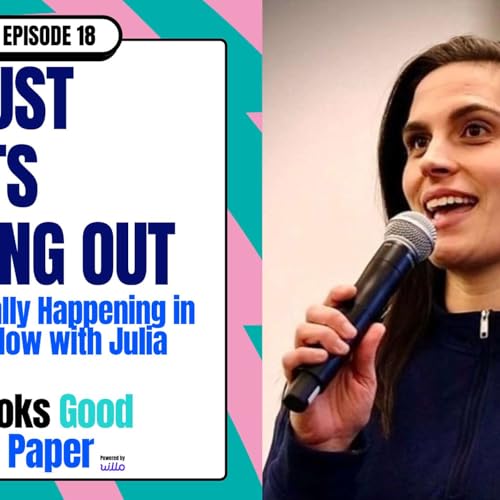
  • It's Just Robots Hanging Out: What's Actually Happening in Hiring Right Now
    Feb 24 2026

    AI is flooding hiring pipelines — and most of the tools claiming to fix it are making the noise worse. Automated outreach, AI-generated applications, and screening tools that were never built for the volume they're now processing: the signal-to-noise problem in recruiting has never been worse.

    The teams navigating it best aren't the ones with the most sophisticated tech stack. They're the ones who stayed clearest about what a good hire actually looks like — and built their process around finding that, not processing everything.

    Julia Arpag, Founder and CEO of Aligned Recruitment, has spent over a decade placing talent at high-growth tech companies and she's watching the same mistake repeat itself: teams outsourcing judgment to automation and wondering why the humans they hire keep disappointing them. In this episode of Looks Good on Paper, she breaks down what's actually shifting in hiring right now, why people-first recruiting is harder than it sounds when the tech is moving this fast, and what separates companies getting great hires from the ones spinning their wheels.

    What you'll learn:

    → What AI is actually doing to hiring pipelines in 2026 versus what vendors claim

    → Why people-first recruiting is harder to maintain as automation scales

    → What the companies making the best hires right now have in common

    GUEST

    Julia Arpag — Founder & CEO, Aligned Recruitment

    LinkedIn → https://www.linkedin.com/in/julia-arpag/


    YOUR HOSTS

    Anita Chauhan — Fractional CMO, co-host

    LinkedIn → https://www.linkedin.com/in/anitachauhan/


    In this episode:

    0:00 Introduction

    2:27 The biggest hiring mistake companies keep making

    3:08 Why "culture fit" leads to homogeneity

    3:34 Skills assessments for every role, not just technical ones

    6:23 Hidden biases even progressive companies have

    9:04 What hiring looks like without resumes

    10:49 "It's just robots hanging out"

    11:08 Calling candidates to reject them instead of emailing

    11:43 Julia's husband's nonprofit-to-tech pivot story


    LISTEN & FOLLOW

    Spotify → https://open.spotify.com/show/0dbfz6y0tMq3crViHQD66H

    Apple Podcasts → https://podcasts.apple.com/podcast/id1625835562

    All episodes → https://looksgoodonpaper.buzzsprout.com


    WATCH ON YOUTUBE - https://youtu.be/8ukiBXAZKRw


    POWERED BY WILLO

    Hire humans, not resumes → https://www.willo.video/looks-good-on-paper


    CONNECT WITH US

    LinkedIn → https://www.linkedin.com/company/10170893


    If this episode changed how you think about hiring, share it with one person who needs to hear it. And subscribe — we're rewriting the rules of hiring, one episode at a time.

    The signal-to-noise problem in hiring has reached a critical point. AI-generated applications have made volume metrics meaningless, and automated screening tools trained on historical data replicate historical bias at scale. The companies making the best hires in 2026 are the ones who have stayed clear about what good looks like — and built their process around finding that rather than processing everything.

    Show Resources

    • Willo: willo.video - The most cost-effective way to screen candidates at scale. Interview candidates anywhere & at any time
    • CV Free Toolkit: cvfree.me/join - Break up with the CV and get everything you need to modernize your hiring approach with skills-based assessments
    • Anita Chauhan: linkedin.com/in/anitachauhan - Connect with the host
    Más Menos
    14 m
  • Better Hiring Without the Noise: Why Hiring Feels Over-Engineered (and How to Fix It)
    Feb 18 2026

    Hiring isn't broken. It's over-engineered. Every new tool added to the stack, every extra screening step, every automated touchpoint is making the process heavier — and candidates can feel it.

    The irony is that teams adding complexity are usually trying to make better decisions. But more steps without better signal just produces slower decisions with the same quality. And in a competitive talent market, slow is a filter that works against you.

    Jim Berrisford, VP of Partnerships at Willo, has a front-row seat to where hiring processes break down — and where the simplest interventions create the biggest improvements. In this episode of Looks Good on Paper, he unpacks why adding more technology to a broken process just breaks it faster, what poor candidate communication is actually costing you in offer acceptance and employer brand, and where the real leverage is when you want to hire better without adding more noise.

    What you'll learn:

    → Why complexity in hiring creates worse outcomes, not better ones

    → What poor candidate communication costs you beyond just the immediate hire

    → The simplest changes that have the biggest impact on hiring quality


    GUEST
    Jim Berrisford — VP of Partnerships, Willo
    LinkedIn → https://www.linkedin.com/in/talentattractiontech-hrtech-tech2rec/

    YOUR HOSTS
    Anita Chauhan — Fractional CMO, co-host
    LinkedIn → https://www.linkedin.com/in/anitachauhan/

    🕘 Chapters
    00:00 — Intro & Jim’s background in recruitment and HR tech
    02:20 — The biggest hiring mistake: poor communication
    03:30 — Why “throwing tech at hiring” backfires
    05:00 — AI noise vs real assisted intelligence
    06:30 — Hidden bias and lived experience in hiring panels
    09:20 — What hiring without CVs could actually look like
    12:30 — Over-engineering recruitment systems
    14:20 — Human-centric technology in hiring
    16:30 — Final thoughts on AI, nuance, and the hiring journey


    LISTEN & FOLLOW
    Spotify → https://open.spotify.com/show/0dbfz6y0tMq3crViHQD66H
    Apple Podcasts → https://podcasts.apple.com/podcast/id1625835562
    All episodes → https://looksgoodonpaper.buzzsprout.com

    WATCH ON YOUTUBE - https://youtu.be/u54b2w6OnRc


    POWERED BY WILLO

    Hire humans, not resumes → https://www.willo.video/looks-good-on-paper


    CONNECT WITH US

    LinkedIn → https://www.linkedin.com/company/10170893


    If this episode changed how you think about hiring, share it with one person who needs to hear it. And subscribe — we're rewriting the rules of hiring, one episode at a time.

    Over-engineered hiring processes don't produce better decisions — they produce slower ones with the same quality. Each additional step that doesn't generate new signal adds friction for candidates without adding value for hiring teams. The companies hiring best in 2026 are removing steps, not adding them.

    Show Resources

    • Willo: willo.video - The most cost-effective way to screen candidates at scale. Interview candidates anywhere & at any time
    • CV Free Toolkit: cvfree.me/join - Break up with the CV and get everything you need to modernize your hiring approach with skills-based assessments
    • Anita Chauhan: linkedin.com/in/anitachauhan - Connect with the host
    Más Menos
    18 m
  • They Belong in a Museum: Why Most Resumes Say Nothing at All
    Feb 11 2026

    The resume was already a weak signal before AI. Now candidates generate polished CVs in minutes, ATS systems sort on keywords, and hiring teams are drowning in documents that tell them almost nothing about whether someone can actually do the work.

    The resume's fundamental problem isn't that people lie on it — it's that even honest resumes measure the wrong things. They capture job titles and tenure, not judgment, adaptability, or the ability to produce outcomes in a specific context.

    Jeff Waldman from ScaleHR has spent years helping companies fix what their hiring process is actually measuring. In this episode of Looks Good on Paper, he explains why most traditional hiring signals fail, what to look for instead, and why clinging to the CV in 2026 is like keeping a fax machine because it technically still works.

    What you'll learn:

    → Why the resume fails as a signal even when candidates are completely honest

    → What hiring signals actually predict performance versus which ones just feel rigorous

    → How to redesign your screening process around the outcomes you actually want


    GUEST

    Jeff Waldman — ScaleHR

    LinkedIn → https://www.linkedin.com/in/jeffwaldmanhr/


    YOUR HOSTS

    Anita Chauhan — Fractional CMO, co-host

    LinkedIn → https://www.linkedin.com/in/anitachauhan/

    ⏱️ Chapters

    00:17 – Meet Jeff Waldman (ScaleHR)

    01:31 – Building global HR communities

    03:06 – The biggest hiring mistake companies still make

    06:38 – Why resumes are an outdated artifact

    07:48 – AI resumes & “It belongs in a museum”

    08:50 – Hidden bias: gaps, job hopping & “clean careers”

    12:42 – AI, bias, and why prompting matters

    14:01 – What hiring looks like without CVs

    16:01 – Accessibility, choice & candidate experience

    18:20 – Better hiring signals for 2026

    20:09 – Final takeaways

    LISTEN & FOLLOW

    Spotify → https://open.spotify.com/show/0dbfz6y0tMq3crViHQD66H

    Apple Podcasts → https://podcasts.apple.com/podcast/id1625835562

    All episodes → https://looksgoodonpaper.buzzsprout.com


    WATCH ON YOUTUBE - https://youtu.be/qJakAdHG32o

    POWERED BY WILLO

    Hire humans, not resumes → https://www.willo.video/looks-good-on-paper

    CONNECT WITH US

    LinkedIn → https://www.linkedin.com/company/10170893


    If this episode changed how you think about hiring, share iy with one person who needs to hear it. And subscribe — we're rewriting the rules of hiring, one episode at a time.

    Resumes fail as hiring signals not because candidates misrepresent themselves, but because the format measures the wrong things. Job titles, tenure, and company names are proxies for experience, not predictors of performance. In a market where AI has commoditised resume polish, the gap between what a resume signals and what a candidate can do has never been wider.

    Show Resources

    • Willo: willo.video - The most cost-effective way to screen candidates at scale. Interview candidates anywhere & at any time
    • CV Free Toolkit: cvfree.me/join - Break up with the CV and get everything you need to modernize your hiring approach with skills-based assessments
    • Anita Chauhan: linkedin.com/in/anitachauhan - Connect with the host
    Más Menos
    21 m
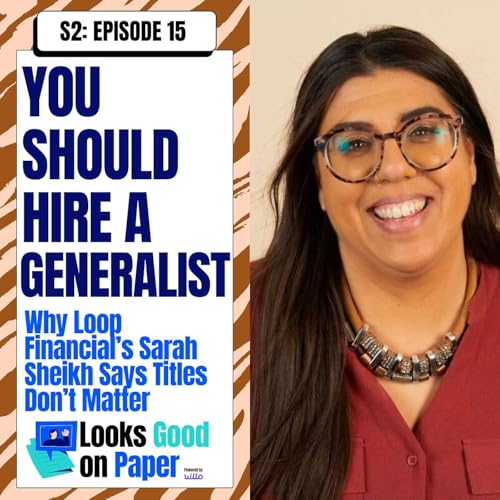
  • Stop Hiring for Titles: What Startup Hiring Actually Requires
    Feb 4 2026

    Startups don't need the person with the best title. They need the person who can do the work that exists right now — and probably three other things that don't have titles yet.

    Most early-stage hiring fails because founders write job descriptions for the company they want to be, not the company they actually are. They hire for structure that doesn't exist yet and miss the generalists who could build it.

    Sarah Sheikh, Chief of Staff at Loop Financial, has built and scaled teams inside the pressure of early-stage growth. In this episode of Looks Good on Paper, she shares why generalists consistently outperform specialists in startup environments, how task-forward hiring beats role-based hiring, and what most founders get catastrophically wrong when they're making their first critical hires.

    What you'll learn:

    → Why generalists outperform specialists in early-stage environments

    → How to write a job description based on actual work, not imagined structure

    → The hiring mistakes that compound fastest in the first 10 hires


    GUEST

    Sarah Sheikh — Chief of Staff, Loop Financial

    LinkedIn → https://www.linkedin.com/in/sarahsheikh/


    YOUR HOST

    Anita Chauhan — Fractional CMO, host

    LinkedIn → https://www.linkedin.com/in/anitachauhan/


    Chapters

    00:00 Intro + Sarah’s role at Loop Financial

    00:48 From fintech shutdown to startup “trial by fire”

    01:54 Why startup life is glamorized (and what it’s really like)

    02:57 What Loop does + how Chief of Staff connects to hiring

    05:19 The biggest hiring mistake: planning by titles vs tasks

    06:24 Quarterly “task audit”: automate, cut, or reassign work

    07:16 The case for hiring generalists (and letting them specialize)

    09:43 Hidden bias: “ex-[big company]” signal vs real work done

    10:55 Tough interview questions + upfront expectations (hours, ambiguity)

    12:20 Why fintech is hard in Canada (and why that matters for hiring)

    13:59 “Get rid of CVs”: what Sarah would replace them with

    14:51 Why LinkedIn tells you more than a resume

    16:18 Why traditional screening breaks—and what video enables

    16:53 The Catch-22: 279 applicants, limited time, and resume triage

    17:45 “Death by tool” + what AI should actually do in hiring

    18:12 AI mistakes: obvious copy/paste applications (and why they get rejected)

    19:20 AI for applicants: searching roles faster + reducing busywork

    19:50 AI for recruiters: smart sourcing tools (and what Sarah misses)

    20:47 Practical sourcing: target companies + find proven generalists

    21:35 Wrap-up + why Chief of Staff perspectives matter


    LISTEN & FOLLOW

    Spotify → https://open.spotify.com/show/0dbfz6y0tMq3crViHQD66H

    Apple Podcasts → https://podcasts.apple.com/podcast/id1625835562

    All episodes → https://looksgoodonpaper.buzzsprout.com


    WATCH ON YOUTUBE - https://youtu.be/3b08JzpBEzg


    POWERED BY WILLO

    Hire humans, not resumes → https://www.willo.video/looks-good-on-paper


    CONNECT WITH US

    LinkedIn → https://www.linkedin.com/company/10170893


    If this episode changed how you think about hiring, share it with one person who needs to hear it. And subscribe — we're rewriting the rules of

    Show Resources

    • Willo: willo.video - The most cost-effective way to screen candidates at scale. Interview candidates anywhere & at any time
    • CV Free Toolkit: cvfree.me/join - Break up with the CV and get everything you need to modernize your hiring approach with skills-based assessments
    • Anita Chauhan: linkedin.com/in/anitachauhan - Connect with the host
    Más Menos
    22 m
  • Fair, Equitable Hiring Needs a Retention Strategy (S2E14)
    Jan 28 2026

    Getting diverse candidates in the door is the easy part. Keeping them is where most companies quietly fail — and they usually don't notice until the people they worked hardest to recruit have already left.

    Diversity hiring without a retention strategy isn't equity. It's a pipeline with a hole in it. And the cost — in team morale, employer brand, and actual dollars — compounds every time it happens.

    Gillian Emerson, Head of Talent and Partnerships at Toast, knows what a retention strategy actually looks like versus what gets put in a deck. In this episode of Looks Good on Paper, she breaks down why equity has to be embedded in systems and not just hiring goals, what flexibility really means to employees versus what companies think it means, and how to build teams that don't just represent diversity on paper.

    What you'll learn:

    → Why diversity hiring without retention strategy produces churn, not equity

    → What flexibility actually means to employees versus what companies think it means

    → How to embed equity into hiring systems rather than just hiring targets


    GUEST

    Gillian Emerson — Head of Talent & Partnerships, Toast

    LinkedIn → https://www.linkedin.com/in/gillianemerson/


    YOUR HOST

    Anita Chauhan — Fractional CMO, host

    LinkedIn → https://www.linkedin.com/in/anitachauhan/


    Episode Chapters

    00:00 – Welcome & Gillian’s journey to Toast
    01:40 – Building Toast’s recruiting function from scratch
    03:50 – Why women leave tech—and why retention matters
    04:50 – The biggest hiring mistake companies keep making
    06:40 – Flexibility, choice, and return-to-office policies
    09:00 – Rethinking how candidates are evaluated
    11:00 – Why pedigree and big names can mislead hiring
    13:30 – Hiring beyond resumes and “shiny” credentials
    16:00 – How Toast experiments with different hiring approaches
    17:30 – AI in hiring and its unintended consequences
    19:00 – Hiring and recruiting trends for 2026


    LISTEN & FOLLOW

    Spotify → https://open.spotify.com/show/0dbfz6y0tMq3crViHQD66H

    Apple Podcasts → https://podcasts.apple.com/podcast/id1625835562

    All episodes → https://looksgoodonpaper.buzzsprout.com


    WATCH ON YOUTUBE - https://youtu.be/_w9ScoYMtCk

    POWERED BY WILLO

    Hire humans, not resumes → https://www.willo.video/looks-good-on-paper

    CONNECT WITH US

    LinkedIn → https://www.linkedin.com/company/10170893

    If this episode changed how you think about hiring, share it with one person who needs to hear it. And subscribe — we're rewriting the rules of hiring, one episode at a time.

    Diversity hiring without a retention strategy is a pipeline with a hole in it. Companies that focus on diverse recruitment but haven't examined their promotion criteria, pay equity, flexibility policies, and management culture will keep losing the people they worked hardest to hire.

    Show Resources

    • Willo: willo.video - The most cost-effective way to screen candidates at scale. Interview candidates anywhere & at any time
    • CV Free Toolkit: cvfree.me/join - Break up with the CV and get everything you need to modernize your hiring approach with skills-based assessments
    • Anita Chauhan: linkedin.com/in/anitachauhan - Connect with the host
    Más Menos
    20 m
  • Why Hiring More People Is the Wrong Fix (And What High-Growth Companies Do Instead) (S2E12)
    Jan 14 2026

    Headcount is not a growth strategy. But in high-pressure, high-growth environments, adding people feels like the most immediate lever — and it gets pulled too early, too often, and without enough clarity about what problem it's actually solving.

    The companies that scale well don't just hire more. They hire differently. They have a clearer picture of what they're optimising for before they open a role, and they treat team design as a strategic question rather than a reactive one.

    Mike Bettley, Senior Director of Talent at StackAdapt — one of Canada's most recognised high-growth adtech companies — has built and scaled hiring functions that have to perform under real pressure. In this episode of Looks Good on Paper, he breaks down what separates companies that scale cleanly from companies that bloat and stall, how to know when adding headcount will help versus when it will make things worse, and what a mature workforce planning process looks like before you're already in crisis mode.

    WHAT YOU WILL LEARN

    • The signals that tell you it's time to hire versus time to optimise
    • How high-growth companies think about team design before opening a role
    • The headcount planning practices that prevent over-hiring cycles

    Guest:

    Mike Bettley — Senior Director of Talent, StackAdapt

    LinkedIn: https://www.linkedin.com/in/michaelbettley/


    Hosts: Anita Chauhan

    High-growth companies that scale well treat headcount as a last resort, not a first response. Before opening a role, they ask what outcome the hire is meant to produce and whether that outcome can be achieved by redesigning how existing capacity is deployed. Companies that skip this question tend to over-hire, bloat their org, and face painful corrections 12 to 18 months later.


    ─── FOLLOW & CONNECT ───

    If this changed how you think about hiring, follow the show — we're one episode per week.


    Watch on YouTube: https://youtu.be/SO5y6HAasME

    Spotify: https://open.spotify.com/show/0dbfz6y0tMq3crViHQD66H

    Apple Podcasts: https://podcasts.apple.com/podcast/id1625835562

    Try Willo — video interviewing for skills-based hiring: https://www.willo.video/looks-good-on-paper

    LinkedIn: https://www.linkedin.com/company/10170893


    RELATED TOPICS

    Talent acquisition strategy, workforce planning, scaling teams, skills-based hiring, high-growth startups, future of work, HR strategy

    Show Resources

    • Willo: willo.video - The most cost-effective way to screen candidates at scale. Interview candidates anywhere & at any time
    • CV Free Toolkit: cvfree.me/join - Break up with the CV and get everything you need to modernize your hiring approach with skills-based assessments
    • Anita Chauhan: linkedin.com/in/anitachauhan - Connect with the host
    Más Menos
    23 m