Episodios

  • The Power of Mattering: Redefining Success in Schools and Leadership - S3E37 - Intro to Jennifer Wallace
    Apr 14 2026

    Summary

    In this episode, we explore the powerful work of Jennifer Wallace and her insights into the growing impact of toxic achievement culture on students and leaders alike.

    Drawing from Never Enough and her ongoing work on mattering, we unpack a central tension facing schools today: how do we pursue excellence without tying self-worth to performance?

    This conversation challenges leaders, educators, and parents to rethink success—not as a collection of outcomes, but as a culture where individuals feel seen, valued, and essential. As always, we bring it back to the Ted Lasso lens: high performance and high care are not opposing forces—they are deeply connected.

    Toxic achievement culture, Mattering, Education leadership, Student well-being, Purpose-driven success, Leadership strategies, School culture, Mental health, Identity and performance, Human-centered leadership

    • The hidden costs of toxic achievement culture in high-performing environments
    • Why students (and adults) begin to equate self-worth with outcomes
    • The concept of mattering and why it may be the most important leadership lever we have
    • Practical ways leaders can create environments where people feel seen, needed, and valued
    • The shared responsibility of schools and families in shaping culture
    • How “mattering” actually enhances performance rather than competing with it

    Quotes

    • “When self-worth is tied to performance, success becomes fragile.”
    • “Mattering isn’t soft—it’s the foundation of real performance.”
    • “You can belong and still feel invisible. Mattering is different.”
    • “High expectations and deep care can—and must—coexist.”

    Chapters

    00:00 – Setting the Stage: Why This Conversation Matters
    07:15 – The Rise (and Risk) of Achievement Culture
    14:30 – Understanding Mattering as a Leadership Practice
    20:05 – The Role of Schools, Parents, and Culture
    23:00 – Leadership Takeaways: From Performance to Purpose
    24:45 – Closing Reflections & Beards Book Club Outro

    Resources

    • Jennifer Wallace TED Talk
    • Never Enough
    • Mattering
    • Reese Witherspoon’s Book Club (featured selection of Never Enough)


    Más Menos
    27 m
  • Wrapping Up Drew Dudley - S3E36 - Authenticity, Self Care and Storytelling in Leadership
    Apr 7 2026

    Episode Summary

    In this episode, Jason and Garth explore leadership through a powerful and practical lens—authenticity, storytelling, and reflection—guided by insights from Drew Dudley.

    Together, they unpack how these three pillars show up in real leadership moments and how they can elevate trust, deepen connection, and strengthen culture. From the stories we choose to tell, to the time we take to reflect, this conversation is a reminder that leadership isn’t just what we do—it’s how we show up, every day.


    Key Take Aways

    • Authenticity as the foundation of leadership
    • Storytelling as a tool to build trust and culture
    • Reflection as a driver of growth and better decision-making
    • Creating safe spaces for honest, open communication
    • Using stories to reinforce values and shared purpose
    • Leadership starts with authenticity—sharing stories that reflect what you truly value
    • Reflection isn’t optional—it’s how leaders learn, process, and improve
    • Stories stick—what you say matters, but how you say it matters more
    • Trust is built when leaders are willing to be real and vulnerable
    • Consistent storytelling strengthens culture over time
    • Authenticity in Leadership
    • Storytelling as a Leadership Tool
    • Reflection and Self-Awareness

    Quotations

    • “Share stories that reflect your values.”
    • “Storytelling makes lessons memorable.”
    • “Building trust through personal stories.”

    Chapters

    00:00 — Introduction to Leadership Themes05:38 — Authenticity in Leadership08:33 — Reflection and Self-Care in Leadership11:45 — The Power of Storytelling17:40 — Teasing Future Conversations21:55 — Beards Book Club Outro


    Resources

    • Made to Stick by Chip Heath & Dan Heath
    • Drew’s Leadership Book (hypothetical reference)


    Más Menos
    24 m
  • Unlock Leadership Every Day with Drew Dudley's This is Day 1 - S3E35
    Mar 31 2026

    Episode Summary

    In this episode of Lassoing Leadership, Jason Rogers and Garth Nichols sit down with Drew Dudley to explore a simple but powerful idea: leadership isn’t defined by titles or big moments — it’s shaped by the small behaviors we practice every single day.

    Drawing from his book This Is Day One, Drew shares the mental models, questions, and habits that help leaders move from intention to impact. The conversation centers on the idea that leadership is not something we wait to grow into. Instead, it’s something we practice daily through decisions, behaviors, and the values we choose to live out in the moment.

    Drew reflects on personal stories that shaped his thinking about leadership and offers practical ways leaders can rethink their influence. From the importance of recognizing small moments of impact to the discipline of grounding decisions in values, the conversation highlights how meaningful leadership often grows out of everyday choices.

    Jason, Garth, and Drew also explore the idea of “Day One” leadership — the mindset that every day presents a new opportunity to lead with purpose. The discussion moves into the role of reflective questions, overcoming leadership paralysis, and finding the courage to act even when the path forward feels uncertain.

    It’s a thoughtful conversation about habits, humility, and how leaders can create lasting impact by focusing on the behaviors that matter most — one day at a time.

    Topics

    Leadership, Daily Habits, Values-Based Leadership, Impact, Drew Dudley, This Is Day One, Leadership Development, Behavioral Change, Leadership Questions

    Take Aways

    • Leadership as daily behavior grounded in values

    • The concept of “Day One” leadership

    • The impact of small actions and decisions

    • Mental models for effective leadership

    • Reflective questions that drive meaningful leadership behavior

    • Leadership impact is created through consistent daily behaviors.

    • Values should guide decisions, especially when leadership becomes complex.

    • Reflective questions help leaders move from intention to action.

    • Every day offers a fresh opportunity to lead with purpose.

    • “Every day is a new opportunity to lead.”

    • “Fight addiction one day at a time.”

    • “Keep leading the Lasso way.”

    Chapters

    00:00 — Introduction to Everyday Leadership
    06:05 — The Concept of Day One
    09:22 — Personal Stories and Insights
    12:08 — Leadership and Legacy
    15:13 — Behavior and Values in Leadership
    17:59 — Overcoming Leadership Paralysis
    21:10 — Making Leadership Impactful
    24:45 — Navigating Fear and Empathy in Leadership
    27:02 — The Power of Reflective Questions
    29:02 — Experiments in Leadership and Impact
    30:55 — Decision-Making and Values
    32:45 — The Complexity of Leadership
    36:39 — Ted Lasso as a Leadership Case Study

    Más Menos
    44 m
  • Redefining Leadership: Drew Dudley’s Micro Moments of Impact - S3E34 - This is Day One - Intro
    Mar 24 2026

    Episode Summary

    In this episode of Lassoing Leadership, Jason Rogers and Garth Nichols explore the ideas and leadership philosophy of Drew Dudley, whose work has helped reshape how many people think about leadership.

    For years, leadership has often been framed as something tied to titles, positions, or big moments on big stages. Drew challenges that idea. Instead, he reminds us that leadership shows up in small, everyday interactions — the quiet moments when we help someone feel seen, capable, or supported.

    Jason and Garth unpack Drew’s idea of “micro moments of leadership” and why these seemingly small actions can have lasting impact. They also reflect on the concept of “Day One,” Drew’s powerful reminder that leadership is something we recommit to every day, not something we achieve once and hold forever.

    The conversation also touches on a feeling many leaders experience but rarely talk about openly: imposter syndrome. Drew’s work invites leaders to reconsider the quiet ways they influence others and to recognize that leadership often happens in ways we never fully see.

    It’s a thoughtful discussion about vulnerability, authenticity, and the everyday moments where leadership truly lives.

    Leadership, Drew Dudley, Micro Moments, Imposter Syndrome, Authentic Leadership, Day One, TED Talk, Education Leadership, Personal Growth

    • Micro moments of leadership

    • The concept of Day One and continuous renewal

    • Vulnerability and authenticity in leadership

    • Leadership is about everyday actions, not titles.

    • Small moments of connection can have lasting impact.

    • Recognizing unnoticed acts of leadership can help overcome imposter syndrome.

      Soundbites:

    • “Leadership is about capacity, not titles.”

    • “Every day is Day One.”

    • “Small acts of leadership matter more than we often realize.”

    Chapters

    00:00 — Introduction to Leadership Themes
    06:30 — Drew Dudley’s Leadership Philosophy
    09:29 — Authenticity and Imposter Syndrome in Leadership
    12:36 — Micro Moments of Leadership
    15:23 — Embracing the Day One Mindset
    16:52 — Beard’s Book Club Outro

    KeywordsKey TopicsKey TakeawaysSound BitesChapters

    Más Menos
    19 m
  • Joy vs. Happiness: Why Joy Might Be the Secret to Great Leadership - S3E33 -
    Mar 17 2026

    Episode Summary

    In this episode of Lassoing Leadership, Garth Nichols and I dig into a conversation that’s been sitting with both of us for a while — the difference between joy and happiness, and why that distinction matters so much for leaders.

    Happiness is often momentary. It’s the result of something good happening in the moment. Joy, on the other hand, runs deeper. It’s the thing that carries you through difficult days, tough seasons, and the hard work of building something meaningful with other people.

    We reflect on a recent conversation with the Chief Joy Officer from Menlo Park, and it sparked a bigger discussion about what it actually looks like to build organizations — and schools — where joy is intentionally part of the culture.

    That leads us into a practical conversation about hiring, leadership, and culture-building. What does it mean to hire for joy? How do you design an interview process that reveals who someone really is? And maybe the simplest question of all: Would I actually want to work with this person every day?

    Along the way we talk about the return on investment of joyful workplaces, the power of storytelling in shaping culture, and the importance of creating environments where people genuinely feel connected to the work and to each other.

    It’s a thoughtful conversation about leadership, culture, and why joy might be one of the most underrated forces in building great organizations.

    Joy, Happiness, Leadership, Organizational Culture, Education Leadership, Hiring Practices, Well-being, Employee Engagement, Culture Building, Schools

    Soundbites:

    • “Joy gets you through the hard times.”

    • “Happiness is momentary. Joy runs deeper.”

    • “One of the best hiring questions might simply be: Would I want to work with this person every day?

    Chapters

    00:00 — Understanding Joy vs. Happiness
    06:39 — Hiring for Joy in Organizations
    09:39 — Interview Strategies for Candidates
    12:45 — Designing a Joyful Interview Process
    15:37 — The Return on Investment of Joy
    18:33 — The Role of Storytelling in Culture
    21:38 — Learning Through Organizational Visits
    24:29 — Upcoming Guests and Conversations
    26:59 — Beard’s Book Club Outro

    • Born to Run — Christopher McDougall

    • Rich Sheridan — Chief Joy Officer, Menlo Innovations

    • Drew Dudley — Day One

    • Kurt Gray — Beard’s Book Club

    • Claude Silver — Chief Heart Officer, VaynerMedia

    • Jennifer Wallace — Never Enough

    • Ashish Advani — Leadership author and speaker

    KeywordsEpisode TitlesSound BitesChaptersResources Mentioned

    Más Menos
    29 m
  • The Chief Joy Officer – Why Joy Isn’t Soft… It’s Strategic - S3E32 - Rich Sheridan
    Mar 10 2026

    Keywords

    Leadership, Joy, Mattering, Workplace Culture, Hiring for Character, Storytelling, Optimism, Resilience, Service, Organizational Health, Chief Joy Officer

    What if joy isn’t the byproduct of great leadership… but the job itself?

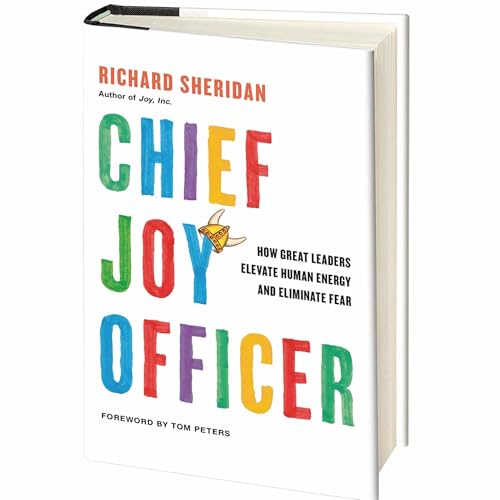
    In this episode of Lassoing Leadership, Jason Rogers and Garth Nichols sit down with Rich Sheridan, CEO of Menlo Innovations and author of The Chief Joy Officer, to explore a deceptively simple question: Why don’t more leaders take joy seriously?

    Rich makes the case that joy isn’t fluffy. It’s foundational. It drives engagement. It shapes culture. It improves outcomes. And perhaps most importantly—it reminds people that their work matters.

    We talk about what it really means to hire for joy (hint: it’s not about personality tests), how onboarding sets the emotional tone for an organization, and why optimism is often the braver choice. Rich shares stories from Menlo that demonstrate how intentional culture building can change not just performance—but people.

    This conversation weaves together storytelling, resilience, and service. It asks leaders to look in the mirror and consider:

    Take Aways

    • Joy is not a perk — it is a leadership responsibility.

    • Culture doesn’t happen by accident. It is designed, reinforced, and protected.

    • Hiring for collaboration and character beats hiring for résumé shine.

    • Onboarding is storytelling — it teaches people what really matters.

    • Optimism is a discipline, not a personality trait.

    • Service to others is the heartbeat of sustainable joy.

    • Leaders must model presence — joy requires engagement, not distance.

    • Resilient cultures are built on trust, safety, and shared purpose.

    • Storytelling is how leaders transfer belief.

      • Ted Lasso isn’t naïve — he’s intentional.

      Soundbites

      • “We need joy now more than ever.”
      • “Joy is in the service to others.”

      • “Optimism is the harder path — but it’s the better one.”

      • “Culture is built in the moments no one thinks matter.”

      • “Keep lassoing on.”

      Chapters

    • 00:00 – Why Joy Belongs in the Leadership Conversation
      05:35 – The Business Case for Joy
      09:25 – What Joy Actually Means (and What It Doesn’t)
      11:09 – Hiring for Collaboration, Not Ego
      14:26 – Onboarding as Cultural Storytelling
      16:04 – Optimism: Naïve or Necessary?
      20:26 – The Hard Work of Protecting Culture
      23:57 – If the Leader Isn’t Feeling Joy… Then What?
      26:05 – Why Storytelling Changes Everything
      28:57 – Service, Purpose, and the Long Game of Leadership


    Más Menos
    34 m
  • Introducing Chief Joy Officer - S3E31
    Mar 3 2026

    Summary

    In this episode, hosts Jason Rogers and Garth Nichols explore the transformative power of joyful leadership through insights from Rich Sheridan, author of 'Chief Joy Officer'. They discuss how joy, authenticity, humility, love, and optimism can be integrated into leadership practices to create highly performing and deeply human cultures.

    Keywords

    Joyful Leadership, Rich Sheridan, Chief Joy Officer, Positive Psychology, Organizational Culture, Leadership Discourse, Purpose-Driven Work, Storytelling in Leadership

    Key Topics

    • Joy as a leadership discipline
    • The role of storytelling in leadership
    • Balancing optimism and humility in leadership
    • The Power of Joyful Leadership: Insights from Rich Sheridan
    • How to End Human Suffering Through Joy in Organizations

    Sound Bites

    • "When purpose meets user delight, joy follows"
    • "Humility means always learning and growing"
    • "Find delight in everyday leadership moments"


    Guest Name:

    Rich Sheridan

    Chapters

    00:00 - Introduction to Joy in Leadership

    06:46 - Exploring the Concept of Joy

    09:57 - The Role of Storytelling in Leadership

    12:57 - Finding Joy in Leadership Practices

    15:58 - Connecting with Students and Purpose

    18:57 - Conclusion and Next Steps

    Más Menos
    22 m
  • Crisis Communicaitons... The Lasso Way - S3E30 - Benjamin Morgan
    Feb 24 2026

    Keywords

    Crisis Communication · Leadership · Empathy · Clarity · Trust · Communication Principles · Leadership Mistakes · Ted Lasso · Risk Management · Community Engagement

    Summary

    In this episode of Lassoing Leadership, Jason Rogers and Garth Nichols sit down with Benjamin Morgan, Senior Fellow in Crisis Communications, to unpack what really matters when the pressure is on.

    Drawing from decades of experience supporting leaders through high-stakes moments, Benjamin challenges the instinct to “get the message right” before getting the people right. Together, the trio explore why empathy, clarity, and repetition aren’t soft skills in a crisis—they’re survival skills.

    From common leadership missteps (including the temptation to clam up) to the long-term value of trust and relationship-building, this conversation reframes crisis communication as a deeply human practice. Along the way, Benjamin and the hosts even pull lessons from popular culture—yes, including Ted Lasso—to remind us that authenticity and care often matter more than perfect phrasing.

    Whether you’re leading a school, an organization, or a community, this episode offers practical wisdom for navigating uncertainty with calm, credibility, and compassion.

    Take Aways

    • Crisis communication starts with understanding how stressed your audience already is.

    • Empathy and clarity beat polish and perfection every time.

    • Repetition isn’t annoying—it’s necessary for understanding under pressure.

    • One of the biggest leadership mistakes in a crisis is going silent.

    • Trust is built long before a crisis—and spent during one.

    • Authenticity matters more than sounding “official.”

    • Crisis moments are both threats and opportunities for leadership.

    • Emotional context shapes how messages are received.

    • Positive communication deposits help cushion difficult conversations.

    • Strong leadership puts people first, message second.

    • Navigating Crisis Communication

    • Empathy in Leadership: When the Pressure Is On


    Chapters

    00:00 – Introduction to Crisis Communications
    03:22 – Crisis vs. Risk Communication: What’s the Difference?
    07:59 – Core Principles for Communicating Under Pressure
    11:58 – Navigating Ambiguity When Answers Aren’t Clear
    17:09 – Common Crisis Communication Mistakes Leaders Make
    21:36 – Choosing the Right Voice in a Crisis
    25:34 – Leadership Lessons from Ted Lasso


    Más Menos
    37 m