Episodios

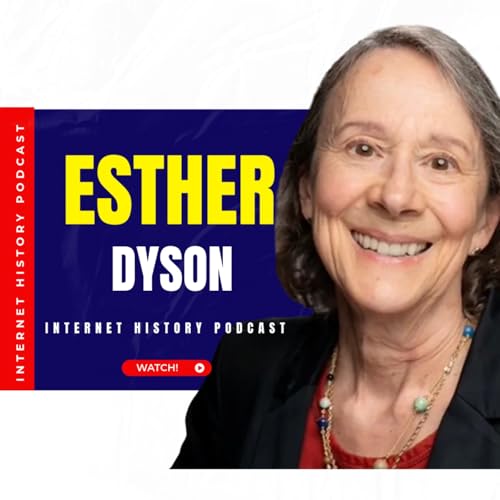
  • 210. Esther Dyson
    Nov 23 2025

    In the more than 200 episodes I’ve done for this podcast, never has the designation “legend” been more appropriate. Esther Dyson is a legend of modern technology, having been present for so many key moments from the early PC era through to the AI era. She’s advised, interviewed and mentored basically every major tech figure over the last several decades. Dyson shares her unique journey from growing up in a family of prominent scientists to becoming a leading figure in tech investing and journalism. She discusses her philosophy of embracing mistakes, the evolution of her career, and her insights into the tech landscape, including the dot-com bubble and the rise of AI. Dyson also reflects on her experiences in Eastern Europe, health tech initiatives, and her adventures in space, culminating in a captivating story about a cosmonaut suit.


    Chapters:


    00:00 Introduction and Connection

    03:42 Growing Up in a Unique Environment

    10:12 Transitioning to Tech and Investing

    18:03 Creating Impactful Conferences

    22:35 Navigating the Dot Com Bubble

    27:25 Reflections on Predictions and AI

    32:31 Governance and the Evolution of the Internet

    40:03 Investment Philosophy and Learning from Experience

    45:19 Eastern Europe: A Tech Narrative

    54:42 Investing in Space: A Personal Journey


    Takeaways


    Always make new mistakes to learn and grow.

    Understanding economics can change the world more than politics.

    Journalism trains you to ask the right questions.

    Investing is about learning, not just earning.

    Creating impactful conferences requires engaging formats.

    The dot-com bubble taught valuable lessons about business models.

    Investing in Eastern Europe was a rewarding experience.

    Health tech initiatives should aim to empower communities.

    AI's future is uncertain, but its impact is undeniable.

    Personal experiences shape investment decisions.

    Hosted on Acast. See acast.com/privacy for more information.

    Más Menos
    1 h y 10 m
  • 209. Henry Blodget, Founder Of Business Insider
    Nov 17 2025

    Henry Blodget shares his journey from a history major to a prominent figure in finance and journalism, discussing the rise of the internet, the dot-com bubble, and the lessons learned from that era. He reflects on his career, including his famous $400 price target Amazon prediction, the evolution of media with the launch of Business Insider, and the current landscape of AI and investing.


    Chapters


    00:00 Introduction and Early Life

    02:42 Career Beginnings in Journalism

    05:44 Transition to Finance and Technology

    08:19 Analyzing Internet Companies

    11:33 The Internet Boom and IPOs

    14:39 Lessons from the Dot-Com Bubble

    17:40 The Rise of Influencers in Finance

    20:34 The Amazon Call and Its Impact

    23:21 Wall Street's Perspective on Tech Companies

    26:45 The AOL Time Warner Lesson

    29:47 Merrill Lynch and Global Internet Research

    32:38 Post-Bubble Reflections and Reinvention

    35:31 The Birth of Business Insider

    38:39 The Evolution of Media and Journalism

    41:37 Building a Talented Newsroom

    44:28 Parallels Between AI and the Dot-Com Era

    47:46 Advice for Individual Investors

    50:33 New York City as a Startup Ecosystem

    53:44 Current Projects and Future Aspirations

    Hosted on Acast. See acast.com/privacy for more information.

    Más Menos
    1 h y 6 m
  • 208. Clément Delangue Of Hugging Face
    Nov 9 2025

    Hugging Face Founder Clément Delangue discusses his journey to founding Hugging Face, emphasizing the importance of community, collaboration, and open-source technology in the AI landscape. He reflects on the evolution of AI technology, the significance of user feedback, and the need for a diverse range of AI models.


    Takeaways


    • Clem's first computer experience involved internet trading with siblings.
    • Minitel was a significant early digital communication tool in France.
    • Clem transitioned from being a successful eBay seller to an intern at eBay.
    • Unishared aimed to create a collaborative platform for students.
    • Moot Stocks introduced Clem to computer vision and AI technologies.
    • Mention was a social listening startup that brought Clem to New York.
    • New York's tech scene offers a blend of European and American cultures.
    • Hugging Face started as a chatbot project but pivoted to open-source AI.
    • The name Hugging Face was inspired by the popularity of emojis.
    • Clem emphasizes the importance of community feedback in product development.


    Chapters:


    00:00 The Early Days of Computing and Internet Trading

    03:02 Minitel: A French Innovation in Digital Communication

    05:05 From eBay Seller to Intern: A Journey Begins

    07:10 The Birth of Unishared: Collaborative Learning for Students

    10:23 Moot Stocks: Exploring Computer Vision and AI

    12:55 Mention: Social Listening and the Move to New York

    14:44 The New York Tech Scene: A Blend of Cultures

    16:45 Founding Hugging Face: The AI BFF Chatbot

    19:06 The Name Behind Hugging Face: A Playful Choice

    21:02 Pivoting to Open Source: The Birth of a New Vision

    23:58 Building a Community: The Power of Collaboration

    26:37 Navigating User Feedback: Balancing Vision and Signals

    28:51 Investor Relations: Framing a Pivot

    31:19 Positioning as Switzerland: Neutrality in AI

    34:06 The Business Model of Hugging Face: Freemium Success

    35:51 Evaluating AI Models: A New Approach

    40:33 The Need for Open Source AI Models

    42:27 Fostering Open Data Initiatives: A Call to Action

    45:18 The Future of Open AI: Efficiency and Specialization

    48:05 The AI Bubble: Reality vs. Perception

    49:30 The Growing Startup Ecosystem in Europe

    51:11 Why New York City is Ideal for AI Startups


    Hosted on Acast. See acast.com/privacy for more information.

    Más Menos
    54 m
  • 207. John Borthwick Of Betaworks
    Nov 3 2025

    John Borthwick shares his journey from a tech-savvy youth to a prominent figure in the New York tech scene. He discusses his early experiences with computers, the transformative impact of the World Wide Web, and the vibrant tech culture of the 90s. Borthwick reflects on his role in creating Total New York, the lessons learned from the AOL acquisition, and the challenges faced during the dot-com bubble burst. He also highlights the rise of social media platforms like Photolog and the evolution of BetaWorks as a hub for innovation, particularly in the AI space. Throughout the discussion, Borthwick emphasizes the importance of creativity, constraints, and the ever-changing landscape of technology.


    Chapters:


    00:00 The Early Days of Tech and Personal Journey

    02:11 Education and Its Impact on Career

    05:15 Experiencing the World Wide Web

    08:09 The New York Tech Scene in the 90s

    11:08 Creative Projects and the Internet

    16:01 Total New York: A Local Information Hub

    21:40 Lessons in Distribution and Audience Engagement

    24:57 The Evolution of Internet Distribution

    27:58 AOL: The Internet's First Giant

    35:54 The Dot-Com Bubble and Its Aftermath

    37:46 Photolog: A Precursor to Social Media

    44:56 Navigating Abundance and Constraints in AI

    49:37 BetaWorks: A Hub for Founders and Innovation


    Hosted on Acast. See acast.com/privacy for more information.

    Más Menos
    57 m
  • 206. Jimmy Wales, Founder Of Wikipedia
    Oct 28 2025

    Welcome BACK to the Internet History Podcast. After essentially a 5 year hiatus, the Internet History Podcast is back, fully back, a whole slate of episodes coming to you, and I couldn’t be more thrilled to have our relaunch episode be with Jimmy Wales. What can I tell you? He’s the founder of Wikipedia. We get deep into the history of all that but also get into how he’s thinking about the web and Wikipedia in this age of AI.


    Chapters


    00:00 The Return of the Internet History Podcast

    00:58 Exploring Trust in the Digital Age

    04:09 Growing Up with Knowledge

    11:53 The Journey into Technology and Finance

    16:58 The First Encounters with the Internet

    18:38 The Spark of Entrepreneurship

    20:09 The Birth of Bomis and New Ideas

    27:13 The Transition from Newpedia to Wikipedia

    31:57 Navigating Challenges and Building Trust

    42:25 Moments of Realization and Trust in Wikipedia

    48:05 From Startup to Nonprofit: A New Direction

    51:17 Lessons in Nonprofit Fundraising

    53:02 Transparency and Community Engagement

    01:00:21 Wikipedia in the Age of AI

    01:07:29 The Future of the Open Web

    01:08:58 Defining Purpose in Knowledge Platforms

    01:12:05 Building Trust in Personal and Political Life


    Takeaways


    Wikipedia's growth was fueled by community engagement and open editing.

    Trust is essential for the success of any platform.

    The transition from Newpedia to Wikipedia was a pivotal moment.

    Transparency in operations fosters community trust.

    AI's impact on knowledge sharing is significant but manageable.

    Defining a clear purpose helps in moderating content.

    Wikipedia's model demonstrates the power of decentralized knowledge.

    The importance of assuming good faith in online interactions.

    Nonprofit status allows for a focus on mission over profit.

    Building trust in personal and political life is crucial for society.

    Hosted on Acast. See acast.com/privacy for more information.

    Más Menos
    1 h y 15 m
  • 205. Margit Wennmachers Of a16z
    Oct 27 2025

    People know that a16z changed tech by turning VCs and founders into rock stars. You know the names. But there’s one name you might not know, that real heads, deep inside the industry have known very well over the years. The legend, Margit Vennmachers. You know all those a16z names because of Margit, because of how she helped Marc Andreessen and Ben Horowitz and others build a16z into the most prominent VC firm in the world. This is a conversation with Margit about her entire career, her philosophy on coms and marketing and PR, and how a16z evolved. From the story behind Software Is Eating The World to how startups can build and burnish their own legend, from the woman who, behind the scenes, those in the know knew was making it happen.


    Chapters


    00:00 Intros

    02:13 From Farm Life to Tech Dreams

    03:56 Navigating Grief and Independence

    09:38 Cultural Shifts: From Germany to Silicon Valley

    12:25 The Early Days of Silicon Valley

    21:05 Launching Outcast Communications

    25:15 Building Credibility in the Startup World

    27:31 The Rise of Facebook and Industry Cycles

    29:43 Navigating Economic Cycles and Client Relationships

    30:53 The Decision to Sell Outkast

    32:43 Founding A16Z: The Backstory

    36:48 Marketing Strategies for A16Z

    42:00 The Evolution of Tech Leadership

    43:53 The Role of an Operating Partner

    46:39 Crisis Management in Tech

    51:42 The Concept of 'Software is Eating the World'

    55:41 Lessons from Two Decades with Mark and Ben

    56:49 The Future of Tech and AI

    58:06 Margit's Transition to Partner Emeritus


    Takeaways:


    Margit's upbringing on a small farm shaped her resilience.

    Grief can lead to early maturity and self-reliance.

    Her first tech job sparked a curiosity about the industry.

    Cultural differences in Silicon Valley were eye-opening.

    Founding Outcast Communications was driven by inspiration, not frustration.

    Crisis management is crucial in maintaining a company's reputation.

    PR for startups requires a focus on storytelling and relationships.

    The dot-com bubble taught valuable lessons about sustainability.

    A16Z's approach to venture capital emphasizes personality and visibility.

    The future of tech is intertwined with the responsible use of AI.

    Hosted on Acast. See acast.com/privacy for more information.

    Más Menos
    1 h y 5 m
  • 204. Fred Wilson, Of Union Square Ventures
    Oct 26 2025

    For my entire career in tech and startups, Fred Wilson has been like the god-level VC in the New York City ecosystem. Fred got his start investing before the dotcom bubble, rode the bubble investing in the earliest internet companies to great success, and then turned Union Square Ventures into the premier venture capital firm on the east coast. Hear the story of Fred’s investments in Geocities, Etsy, Coinbase, MongoDB among others. When I first started this podcast almost 12 years ago, Fred was one of the top 5 people I wanted to talk to.


    Chapters


    00:00 The Four Technological Revolutions

    11:08 Fred Wilson's Journey into Venture Capital

    21:34 The Rise of New York's Tech Scene

    34:53 Founding Union Square Ventures

    48:00 The Evolution of Web 2.0

    57:16 Current Technological Intersections and Future Outlook


    Takeaways


    There are four major technological revolutions happening simultaneously: AI, synthetic biology, energy transition, and crypto.

    Fred Wilson transitioned from naval engineering to venture capital due to a passion for technology and finance.

    The New York tech scene began to emerge in the early 90s with digital media and online services.

    Flatiron Partners was founded to focus on internet investments during the dot-com boom.

    Investing in companies like GeoCities and Etsy showcased the potential of the internet.

    The dot-com crash taught valuable lessons about sustainable business models.

    Union Square Ventures was founded during a challenging economic period, emphasizing the importance of the application layer of the internet.

    The rise of social media and user engagement became central to investment strategies in the 2000s.

    Fred's blog became a platform for sharing ideas and attracting founders to his firm.

    Current technological advancements are driven by the convergence of AI, biology, energy, and crypto.

    Hosted on Acast. See acast.com/privacy for more information.

    Más Menos
    1 h y 3 m
  • 203. Shirish Nadkarni On Microsoft, Hotmail, MSN and Blackberry Internet Email
    Oct 19 2021

    Serial entrepreneur Shirish Nadkarni came to the U.S. as a teenager with $25 in his pocket. After graduating from Harvard Business School, he worked at Microsoft where he engineered the $400 million acquisition of Hotmail and launched MSN.com, the world’s leading web portal.


    Striking out on his own in 1999 at the height of the dot-com boom, he founded TeamOn Systems, an early pioneer of mobile email that was later acquired by BlackBerry before becoming BlackBerry Internet Email servicing over 50 million users at its peak.


    His great new book is: From Startup to Exit: An Insider's Guide to Launching and Scaling Your Tech Business

    Hosted on Acast. See acast.com/privacy for more information.

    Más Menos
    34 m