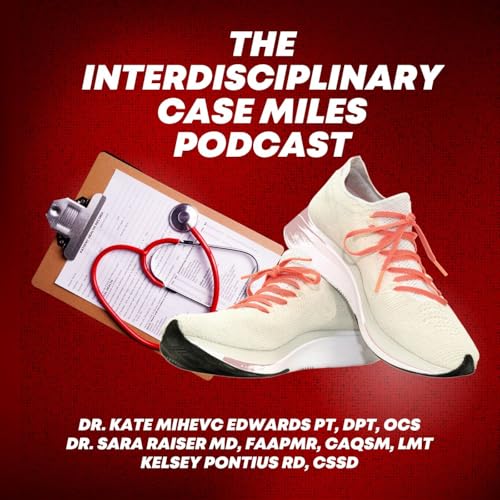
Interdisciplinary Case Miles Podcast Por Dr. Kate Mihevc Edwards PT arte de portada

Interdisciplinary Case Miles

Interdisciplinary Case Miles

De: Dr. Kate Mihevc Edwards PT
Escúchala gratis

Real runners. Real problems. Real solutions.

The Interdisciplinary Case Miles podcast dives deep into clinical cases affecting runners of all levels, analyzed through the lens of three leading experts in running health. Each episode presents a runner’s story—pain, performance, or puzzling symptoms—and explores it from the collaborative perspectives of an orthopedic physical therapist, a running medicine physician, and a sports dietitian. Tune in for practical, evidence-based strategies and behind-the-scenes insight into what really helps runners return to the roads stronger than before.

Dr. Kate Mihevc Edwards PT, DPT, OCS
Dr. Kate Mihevc Edwards is a board-certified orthopedic clinical specialist and founder of Precision Performance & Physical Therapy and Fast Bananas RUNsource. She is a researcher, author, and national speaker on running-related injuries, performance, and recovery. Kate treats runners of all levels—from recreational to professional—and specializes in working with those who haven’t had success elsewhere. She is part of the interdisciplinary team for the Atlanta Track Club Elite, serves as adjunct faculty at Emory University School of Medicine, and regularly lectures at running camps, universities, and team programs nationwide.

Dr. Sara Raiser MD, FAAPMR, CAQSM, LMT
Dr. Sara Raiser is a sports medicine physician and academic physiatrist at the University of Virginia Runner’s Clinic, where she specializes in the care of runners across all levels. Her clinical and research work focuses on bone stress injuries, gait mechanics, female athlete health, and interdisciplinary care models in running medicine. Dr. Raiser has served as team physician for Atlanta Track Club Elite, Stanford University, and several collegiate and high school programs. She brings a deeply collaborative and evidence-based approach to helping runners recover, adapt, and perform.

Kelsey Pontius, RD CSSD
Kelsey Pontius is a board-certified specialist in sports dietetics and the founder of Meteor Nutrition. A two-time U.S. Olympic Marathon Trials qualifier, she combines elite-level athletic experience with clinical expertise to help runners fuel for performance, recovery, and health. Kelsey is the sports dietitian for Atlanta Track Club Elite and consults with NCAA Division I teams, as well as individual runners across the country. Her practice focuses on endurance nutrition, gut health, injury recovery, and hormone balance through food.

Become a supporter of this podcast: https://www.spreaker.com/podcast/interdisciplinary-case-miles--6623567/support.Copyright Dr. Kate Mihevc Edwards PT
Carrera y Trote Enfermedades Físicas Higiene y Vida Saludable
Episodios
  • 12: Exertional Leg Pain in Runners — Diagnosis, Gait, and Fueling
    Feb 6 2026
    In this episode of Interdisciplinary Case Miles, Co-hosts Dr. Kate Mihevc Edwards (PT), Dr. Sara Raiser (MD) and Kelsey Pontius (RD) discuss a case about a exertional leg pain in a 19-year-old collegiate distance runner.

    Dr. Sarah Raiser leads this case and explains how exertional leg pain can present in runners, outlining key diagnoses such as chronic exertional compartment syndrome (CECS) and popliteal artery entrapment syndrome (PAES). The discussion also covers how these conditions differ from stress fractures, nerve-related pain, and other causes of lower-leg symptoms, as well as how these cases are properly evaluated and diagnosed.Dr. Kate Mihevc Edwards addresses the physical therapy and gait-related factors that may contribute to exertional leg pain, including overstriding, crossover gait, heavy landings, strength deficits, and footwear considerations. She discusses when conservative management may be appropriate, when surgery may be indicated, and the importance of runner-specific, functional strength training during rehabilitation.Sports dietitian Kelsey Pontius shares the nutrition considerations relevant to these cases, including hydration, blood flow, anti-inflammatory nutrition, nitrates, and the role of adequate fueling to support recovery, gait changes, and long-term adaptation—particularly in injured collegiate and high-level runners.Key topics in this episode include:
    • Common causes of exertional leg pain in runners
    • Chronic exertional compartment syndrome vs. other diagnoses
    • Gait retraining and physical therapy considerations
    • Surgical and non-surgical treatment options
    • The role of fueling and hydration in injury recovery
    This episode is relevant for runners experiencing persistent lower-leg pain, clinicians working with endurance athletes, athletes, coaches and anyone interested in an interdisciplinary, evidence-informed approach to running injuries.

    Become a supporter of this podcast: https://www.spreaker.com/podcast/interdisciplinary-case-miles--6623567/support.

    If you enjoyed this episode, don’t forget to follow and subscribe so you never miss a case.

    Have a question or a case you'd like us to explore on the show? We’d love to hear from you. Reach out anytime at runcasemiles@gmail.com.

    Más Menos
    25 m
  • 11: Shin Splints in Teen Runners: Growth, Fueling, and Injury Prevention
    Jan 23 2026
    Welcome to Interdisciplinary Case Miles, a podcast where real runner stories meet clinical expertise.

    In Episode 11, Dr. Kate Mihevc Edwards (PT), Dr. Sara Raiser (MD), and sports dietitian Kelsey Pontius break down a common but often misunderstood injury: shin splints (medial tibial stress syndrome) in adolescent runners.

    Using the case of a 15-year-old male cross-country runner with bilateral shin pain, the team explores why shin splints are so prevalent in this age group and how rapid growth, training load changes, biomechanics, footwear, surfaces, and nutrition all intersect. The discussion highlights the critical role of energy availability, especially during periods of rapid growth, and why skipping meals, inadequate fueling, and school-related barriers to eating can contribute to ongoing symptoms.

    The hosts also discuss how shin splints can look very different depending on the athlete’s age and training history ranging from sudden spikes in mileage to more complex, layered cases involving chronic pain, stress, and low energy availability. From a physical therapy perspective, the episode covers gait patterns during growth spurts, strength and mobility needs, and the importance of collaborating with coaches and parents to support young athletes.

    In this episode you’ll learn:
    • What shin splints are and how they differ from other bone stress injuries
    • Why adolescents are at higher risk during growth spurts
    • The role of nutrition and energy availability in healing shin pain
    • Common fueling challenges for high school athletes
    • How training load, surfaces, shoes, and spikes affect shin stress
    • Why interdisciplinary care leads to better outcomes for young runners

    As always, this episode reinforces a core message of Interdisciplinary Case Miles: shin splints aren’t just a “training issue” or a “nutrition issue” they’re often both. Supporting young runners requires understanding the whole picture and meeting athletes where they are.

    Subscribe for evidence-informed conversations on running health
    Like, rate, and share this episode with parents, coaches, and runners
    Have a case you’d like us to discuss? Email us at runcasemiles@gmail.com


    Become a supporter of this podcast: https://www.spreaker.com/podcast/interdisciplinary-case-miles--6623567/support.

    If you enjoyed this episode, don’t forget to follow and subscribe so you never miss a case.

    Have a question or a case you'd like us to explore on the show? We’d love to hear from you. Reach out anytime at runcasemiles@gmail.com.

    Más Menos
    22 m
  • 10: Glute Tendinopathy & The Impact of Hormones in a Female Runner During the Menopause Transition
    Jan 9 2026
    Welcome to Interdisciplinary Case Miles, a podcast where real runner stories meet clinical expertise. In this episode, Dr. Kate Mihevc Edwards (PT), Dr. Sara Raiser (MD), and sports dietitian Kelsey Pontius present a common but often misdiagnosed case of glute tendinopathy in a female runner during the menopause transition.

    This case goes over running biomechanics, hormonal changes, nutrition, sleep, and recovery. The team explores how perimenopause and menopause-related hormonal shifts particularly changes in estrogen can affect tendon health, joint lubrication, gut function, nutrient absorption, sleep quality, and overall healing capacity.

    This episode discusses misconceptions around weight, health, fueling, and aging, emphasizing that bodies are meant to change and that under-fueling, overtraining, and “black-and-white” health advice can slow recovery and increase injury risk. The hosts discuss why glute tendinopathy is often misdiagnosed as bursitis, how to properly evaluation lateral hip pain, and why a stepwise, individualized approach to care is essential.

    Some of the main topics include:
    -The role of hormones in tendon health and injury risk
    -Why weight is not a reliable indicator of health
    -The importance of adequate fueling, including carbohydrates, during midlife transitions
    -How sleep, stress, and digestion impact healing
    -Why interdisciplinary care leads to better outcomes for runners

    This episode reinforces a core theme of the podcast: there are no one-size-fits-all answers in medicine or performance. By understanding the whole person and working with the body rather than against it runners can recover more effectively, reduce injury risk, and continue doing what they love.
    00:00 Welcome to Interdisciplinary Case Miles
    01:25 Meet the Hosts & Their Clinical Roles
    04:00 What We’ve Been Working On Lately
    06:15 Kelsey’s New Ebook: Miles & Meals
    09:30 Outreach, Education & Bridging the Gap in Running Medicine
    13:10 Returning to Running After Health Challenges
    16:20 Introducing the Case: Lateral Hip Pain in a Midlife Runner
    19:45 Nutrition, Hormones & Gut Health in Perimenopause
    24:30 Bodies Are Meant to Change
    28:40 Weight Is Not Health & The Risk of Under-Fueling
    33:20 Why Glute Tendinopathy Is Often Misdiagnosed as Bursitis
    38:10 Estrogen, Collagen & Tendon Healing
    43:50 Biomechanics, Hip Load & Physical Therapy Considerations
    49:30 Pelvic Floor, Core Health & Hip Pain
    53:40 Sleep, Stress & Recovery During Midlife Transitions
    57:45 Doing Less to Heal More
    01:01:30 Key Takeaways from Each Expert
    01:04:10 Final Thoughts & How to Connect with the Team

    Become a supporter of this podcast: https://www.spreaker.com/podcast/interdisciplinary-case-miles--6623567/support.

    If you enjoyed this episode, don’t forget to follow and subscribe so you never miss a case.

    Have a question or a case you'd like us to explore on the show? We’d love to hear from you. Reach out anytime at runcasemiles@gmail.com.

    Más Menos
    32 m
Todavía no hay opiniones