Episodios

  • Time Blindness and Why You're Late
    Mar 26 2026

    🥒Welcome to Inside the Pickle Jar!

    Have you ever felt the heaviness that comes with being late? 💚
    It can sit in your chest like a stone.
    But I want you to know something important:
    You’re not the only one who feels that way, and you’re not doing anything wrong.

    Sometimes our brains experience time differently.
    For many neurodivergent folks, time doesn’t move in neat little boxes.
    It stretches… it shrinks… it slips away.
    And that can make getting places on time feel harder than it “should.”

    But here’s the truth:
    Chronic lateness isn’t a flaw in your character.
    It’s a pattern in your nervous system... one that deserves understanding, not shame.

    There are gentle ways to support yourself:
    - You can make time more visible with timers or alarms.
    - You can give yourself extra room to move between tasks.
    - You can prepare a few things ahead of time so the morning feels softer.
    - And you can pause for a breath before shifting gears, letting your body catch up to your mind.

    You are not broken.
    You are a human being doing your best in a world that wasn’t built with your brain in mind.

    And when we understand ourselves with kindness, something beautiful happens:
    We stop fighting who we are…
    and start building a life that fits.
    If this speaks to you, there’s more waiting in the links below.

    Patreon ~ www.patreon.com/InsideThePickleJar
    YouTube ~ www.youtube.com/@TonyaWeaverCoach
    Instagram ~ www.Instagram.com/tonya_weaver_coach
    LinkedIn ~ www.linkedin.com/in/tmweaver/
    Etsy ~ www.etsy.com/InsidethePickleJar
    TikTok ~ www.tiktok.com/tonyaweaver606
    Website ~ www.risingtidecoaching.org

    Full video from the HealthyGamerGG and is a great watch: https://youtu.be/1onkZGsknsk?si=rNDb5v0r83uPcyVy

    #Neurodiversity #SelfCompassion #InsideThePickleJar

    Support the show

    Más Menos
    30 m
  • Niksen - the Dutch Practice of Doing Nothing (5 min guided practice at the end)
    Mar 19 2026

    Ever felt guilty for doing nothing? Let’s talk about how embracing ‘Niksen’ can be your secret weapon. 👇

    Tag someone who needs to hear this!

    Niksen, the Dutch practice of doing nothing, is more than just a trend. For neurodivergent minds, it’s a lifeline.

    Imagine sitting quietly without a to-do list, allowing your thoughts to drift like leaves on a stream. In a world obsessed with productivity, this radical act of simply being is necessary.

    But why do we resist pausing? It’s tough! Our brains are wired for stimulation, making stillness feel unsafe. Yet, in this stillness lies the key to peace and creativity.

    In this episode, discover the Dutch principle of Niksen and learn how doing nothing can benefit neurodivergent individuals. Explore practical tips to embrace aimlessness for mental well-being. Listen to the last 5 minutes for a guided practice.

    🥒Connect with Tonya here:

    Patreon ~ www.patreon.com/InsideThePickleJar
    YouTube ~ www.youtube.com/@TonyaWeaverCoach Instagram ~ www.Instagram.com/tonya_weaver_coach
    LinkedIn ~ www.linkedin.com/in/tmweaver/
    Etsy ~ www.etsy.com/InsidethePickleJar
    TikTok ~ www.tiktok.com/tonyaweaver606
    Website ~ www.risingtidecoaching.org

    Support the show

    Más Menos
    18 m
  • Part 2: Guest Author Dr Lisa A Riegel - NeuroWell
    Mar 12 2026

    NeuroWell (Applying Brain Science to Build Safe, Supportive, and Proactive Schools)

    In this second half of the conversation, Lisa Riegel continues the discussion on how our brains shape the way we learn and behave. She talks more about her book NeuroWell and reminds us that every child and every grown‑up, too, carries a whole world inside their mind. When we understand a little more about how the brain works, it becomes easier to see behavior not as “good” or “bad,” but as communication.

    Lisa helps us notice how much context matters. A child’s actions often make perfect sense when we understand what their brain is trying to manage. Sometimes, misunderstandings about the brain can make teaching harder than it needs to be, so she encourages us to prepare educators with the science that helps them see children with compassion and clarity.

    She also talks about creating school communities where everyone feels supported...teachers, students, and families alike. Big changes don’t have to happen all at once; even tiny steps can lead to something wonderful. And when we walk together, especially with our neurodivergent neighbors, those steps feel a little lighter.

    Lisa offers simple, practical ways educators can build classrooms where every child’s nervous system feels welcome, understood, and safe. It’s a gentle reminder that when we care for the whole child, we help them grow into who they’re meant to be.

    ✨You can find Lisa connections here:

    www.lisariegel.com

    https://www.linkedin.com/in/lisariegel/

    www.epinstitute.net

    Lisa's author page

    JAKAPA About Us | JAKAPA

    🥒Connect with Tonya here:

    Patreon ~ www.patreon.com/InsideThePickleJar
    YouTube ~ www.youtube.com/@TonyaWeaverCoach Instagram ~ www.Instagram.com/tonya_weaver_coach
    LinkedIn ~ www.linkedin.com/in/tmweaver/
    Etsy ~ www.etsy.com/InsidethePickleJar
    TikTok ~ www.tiktok.com/tonyaweaver606
    Website ~ www.risingtidecoaching.org

    Support the show

    Más Menos
    29 m
  • Part 1: Guest Author Dr Lisa A Riegel - NeuroWell
    Mar 4 2026

    NeuroWell (Applying Brain Science to Build Safe, Supportive, and Proactive Schools)

    In this first half of the conversation, Lisa Riegel invites us to slow down and take a kind look at how our brains shape the way we learn and behave. She talks about her book NeuroWell and reminds us that every child and every grown‑up, too, carries a whole world inside their mind. When we understand a little more about how the brain works, it becomes easier to see behavior not as “good” or “bad,” but as communication.

    Lisa helps us notice how much context matters. A child’s actions often make perfect sense when we understand what their brain is trying to manage. Sometimes, misunderstandings about the brain can make teaching harder than it needs to be, so she encourages us to prepare educators with the science that helps them see children with compassion and clarity.

    She also talks about creating school communities where everyone feels supported...teachers, students, and families alike. Big changes don’t have to happen all at once; even tiny steps can lead to something wonderful. And when we walk together, especially with our neurodivergent neighbors, those steps feel a little lighter.

    Lisa offers simple, practical ways educators can build classrooms where every child’s nervous system feels welcome, understood, and safe. It’s a gentle reminder that when we care for the whole child, we help them grow into who they’re meant to be.

    ✨You can find Lisa connections here:

    www.lisariegel.com

    https://www.linkedin.com/in/lisariegel/

    www.epinstitute.net

    Lisa's author page

    🥒Connect with Tonya here:

    Patreon ~ www.patreon.com/InsideThePickleJar
    YouTube ~ www.youtube.com/@TonyaWeaverCoach Instagram ~ www.Instagram.com/tonya_weaver_coach
    LinkedIn ~ www.linkedin.com/in/tmweaver/
    Etsy ~ www.etsy.com/InsidethePickleJar
    TikTok ~ www.tiktok.com/tonyaweaver606
    Website ~ www.risingtidecoaching.org

    Support the show

    Más Menos
    30 m
  • Radical Self-Acceptance & Leo Buscaglia
    Feb 25 2026

    🌿 Summary

    In this episode, I wander into the heart of radical self‑acceptance and what it really means to love myself on purpose. I talk about the “pickle jar” as a way to understand how I’ve been shaped, and sometimes trapped, by expectations that were never designed for my particular wiring.

    I explore how shadow work helps me meet the parts of myself I once hid away, not to fix them, but to understand them. I share the small, doable steps that have helped me begin this journey, especially as a neurodivergent human learning to celebrate my own flavor. I also read a portion of the book Love by Leo Buscaglia, a childhood favorite author (I explain why and you might relate). My hope is that listeners feel invited to soften toward themselves, to honor their uniqueness, and to remember that self‑acceptance is something we practice, not something we perfect.

    🧡 Takeaways

    • Radical self‑acceptance is something I choose...an active, loving decision I make about myself.
    • I can’t offer others what I haven’t learned to give myself.
    • Understanding what makes me unique helps me feel more at home in my own life.
    • Shadow work helps me explore the parts of myself I’ve tucked away.
    • Naming my patterns without judgment is the first step toward accepting them.
    • Journaling helps me notice my emotional rhythms and truths.
    • Small moments of authenticity help me build trust with myself.
    • Celebrating tiny victories nourishes my sense of self‑worth.
    • My neurodivergence is a meaningful part of who I am, not a flaw.
    • Radical self‑acceptance is a practice I return to again and again.

    Connect with me

    Patreon ~ www.patreon.com/InsideThePickleJar
    YouTube ~ www.youtube.com/@TonyaWeaverCoach
    Instagram ~ www.Instagram.com/tonya_weaver_coach
    LinkedIn ~ www.linkedin.com/in/tmweaver/
    Etsy ~ www.etsy.com/InsidethePickleJar
    TikTok ~ www.tiktok.com/tonyaweaver606
    Website ~ www.risingtidecoaching.org

    Support the show

    Más Menos
    29 m
  • Shadow Work - Part 2 - The Actual Work
    Feb 18 2026

    🥒In this episode of Inside the Pickle Jar, I come back to the second part of our conversation about shadow work. It’s a tender kind of inner exploration, inspired by the ideas of Carl Jung. In the last episode, I talked about how easy it is for any of us to get tangled up in our own thoughts — especially when we’re carrying old beliefs or wearing a persona we think the world expects from us.

    🌟Today, I take your hand a little more gently and walk with you through some of the ways we can meet those hidden parts of ourselves. I talk about simple, comforting practices — like journaling, pausing to visualize what we’re feeling, and giving ourselves permission to be curious instead of afraid. These are small steps, but they help us turn toward our shadows instead of away from them.

    💚My hope is that, as you listen, you’ll feel encouraged to challenge the beliefs that have been holding you back and to welcome every part of who you are. Because when we do that, when we let all our pieces come home, we grow into more authentic, wholehearted versions of ourselves. And that’s such a lovely thing to witness.

    Visit my Patreon to join our community of neurodivergent souls: https://www.patreon.com/InsideThePickleJar

    🥒Connect with Tonya:

    🕸️Website - http://www.risingtidecoaching.org

    👏Patreon - https://www.Patreon.com/InsideThePickleJar

    📣Etsy - https://www.etsy.com/InsidethePickleJar

    🔗 LinkedIn ~ www.linkedin.com/in/tmweaver/

    🚇https://www.youtube.com/@TonyaWeaverCoach

    Support the show

    Más Menos
    26 m
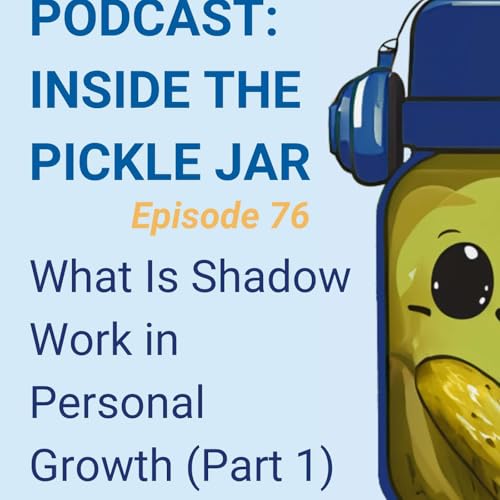
  • What Is Shadow Work in Personal Growth (Part 1)
    Feb 11 2026

    In this episode of Inside the Pickle Jar, I take a quiet little walk into something called shadow work. It’s a tender kind of inner exploration, inspired by the ideas of Carl Jung. I talk about how easy it is for any of us to get stuck inside our own heads especially when we’re carrying old beliefs about who we’re supposed to be, or when we’re wearing a “just‑fine” mask for the world.

    I share how each of us has a shadow self... those feelings, memories, and traits we’ve tucked away because they felt too big, too loud, or too confusing at the time. And just like a neighbor who’s been waiting patiently on the porch, that shadow part of us is always hoping we’ll open the door and say, “I see you. You matter too.”

    Together, we explore how understanding these hidden parts can help us grow into kinder, more authentic versions of ourselves. It’s gentle work. Brave work. And it’s something we don’t have to do alone.

    Takeaways —

    • Shadow work is a way of turning toward the feelings we’ve tucked away.
    • The persona, that social mask we wear, can sometimes keep us from being our truest selves.
    • Learning about the ego helps us understand why we react the way we do.
    • Being authentic means welcoming every part of who we are, even the parts we’re still getting to know.
    • Many of our inner conflicts come from the tug‑of‑war between who we think we should be and who we really are.
    • Shadow work invites us to gently integrate those forgotten or hidden traits so we can feel more whole.

    🥒Connect with Tonya:

    🕸️Website - http://www.risingtidecoaching.org

    👏Patreon - https://www.Patreon.com/InsideThePickleJar

    📣Etsy - https://www.etsy.com/InsidethePickleJar

    🚇https://www.youtube.com/@TonyaWeaverCoach

    LinkedIn ~ www.linkedin.com/in/tmweaver/

    Support the show

    Más Menos
    31 m
  • You're Not Lazy: The Neuroscience Behind Procrastination
    Feb 1 2026

    🥒In this episode, I wander into the twisty bramble of procrastination. Not as a flaw to fix or a sign that we're “bad at time,” but as a deeply human, deeply neurodivergent (and sometimes neurotypical) experience. I peel back the layers and show how procrastination has never really been about calendars or willpower. It’s about emotions, safety, and the way our uniquely wired brain responds to stress, pressure, and the promise of reward.

    🥒I'll explain the backstage of the mind, where the limbic system and prefrontal cortex negotiate like two travelers trying to share the same map. Sometimes the emotional brain grabs the wheel. Sometimes the planning brain mutters from the backseat. And sometimes… everything just goes still.

    🥒With a blend of science, kindness, and some storytelling, I share the strategies we can use that help unstick ourselves, breaking things into tiny, workable steps, shaping environments that feel like focused landings, and acknowledging the emotional waves underneath the delay. 🥒It’s not about forcing ourselves into productivity. It’s about understanding our wiring, honoring our nervous systems, and finding our way back to forward motion with kindness instead of shame.

    Check out the cool links below:

    https://www.sciencenewstoday.org/why-we-procrastinate-a-neuroscientific-view https://insightspsychology.org/the-neuroscience-of-procrastination/ https://scitechdaily.com/the-science-of-procrastination-a-neuroscientists-guide-to-getting-things-done/ https://scienceofmind.org/is-procrastination-harmful/ https://www.psychologicalscience.org/observer/why-wait-the-science-behind-procrastination

    🥒Connect with Tonya:

    🕸️http://www.risingtidecoaching.org

    👏YouTube www.youtube.com/@TonyaWeaverCoach

    📣Etsy https://www.etsy.com/InsidethePickleJar

    🔗LinkedIn https://www.linkedin.com/in/tmweaver/

    Support the show

    Más Menos
    39 m