Episodios

  • Marko Mijic: The Future of Health Ep. 11: Health Beyond The Hospital
    Apr 1 2026

    Send us Fan Mail

    A stroke gets treated in a hospital, but recovery can fall apart at home because of mold, missed meals, or the fear of eviction. That’s the gap we dig into with Marko Mijic, Vice President for Community Health at Kaiser Permanente, whose path to national health leadership starts in HOSA Future Health Professionals and a mentor who taught a surprisingly powerful lesson: how you show up matters.

    We trace Marko’s journey from thinking he would go to medical school to finding his calling in health policy, including work at the US Department of Health and Human Services and the California Health and Human Services Agency. Along the way, he shares what it means to be a first-generation American who immigrated as a refugee, and how mentors helped him navigate the doors he didn’t even know existed. The conversation gets practical fast as we break down social determinants of health and why clinical care can be only a fraction of what drives outcomes. If we want better community health, better health equity, and lower costs, we have to connect healthcare, public health, and social services.

    We also look forward: expanding access to coverage and access to care, tackling affordability, addressing the healthcare workforce crisis, integrating behavioral health, and preparing for an aging population. Marko closes with advice for students who want to shape the system beyond the bedside: bring your lived experience, stay curious, innovate, and give back through mentorship. Subscribe, share this with a future health professional, and leave a review, then tell us what community change would improve health the fastest where you live.

    Marko's Linkedin: https://www.linkedin.com/in/markomijic01/

    HOSA Podcast Page: https://hosa.org/podcast/

    Más Menos
    28 m
  • Ideagen Global Health and Wellbeing Summit 2026: Christian Howell on 40 Hz Brain Stimulation For Alzheimer’s
    Mar 27 2026

    Send us Fan Mail

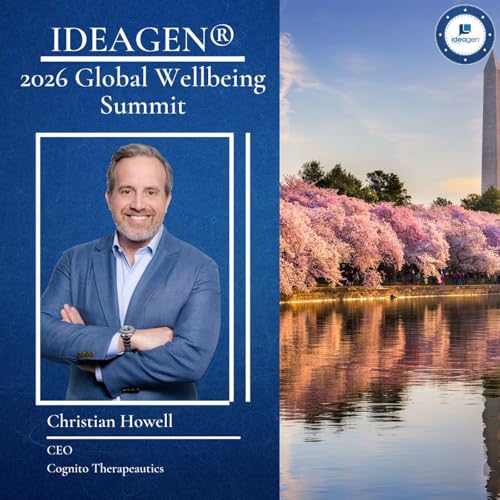
    A flash of light and a pulse of sound might sound too simple for a disease as complex as Alzheimer’s, but the science behind 40 Hz brain stimulation is forcing a serious rethink of what treatment can look like. We’re joined by Christian Howell, CEO of Cognito Therapeutics, to unpack how non-invasive sensory stimulation aims to modulate brain activity in the gamma band and why that “physics-based” path could support cognition, function, and day-to-day independence.

    We also get practical about proof. Christian walks us through Cognito’s clinical validation strategy, including a 12-month randomized clinical trial spanning 673 patients across 70 US sites, with an at-home therapy used for an hour a day. We talk about what matters in endpoints, why rigor is non-negotiable, and how the company is preparing to take its findings toward FDA submission. Along the way, we dig into the real work of translating neurotechnology into care that people can actually adopt.

    Then we zoom out to the systems that decide access. Innovation in brain health can move faster than reimbursement and coverage, so we explore what CMS, commercial payers, and health systems need in order to support breakthrough therapies, including evidence that extends beyond safety and effectiveness into cost effectiveness and real-world outcomes. We also touch stigma, language, and the huge number of people living with mild cognitive impairment who never get diagnosed.

    If brain health is heading toward an era of daily neuroprotection, this conversation is a map of the terrain ahead. Subscribe for more, share this with someone who cares about brain health, and leave a review with your take: what would make you trust a new neurotechnology enough to use it at home?

    Más Menos
    19 m
  • Ideagen Global Health and Wellbeing Summit 2026: Phyllis Ferrell on How Blood Tests And AI Could Change Alzheimer’s Diagnosis
    Mar 27 2026

    Send us Fan Mail

    Alzheimer’s science is moving fast, but the care most families experience still feels stuck, confusing, and late. We sit down with Phyllis Ferrell, Senior Advisor to the Davos Alzheimer’s Collaborative, to unpack the real bottleneck: diagnosis. When half of people may never receive a diagnosis and many others learn the truth only in late stage disease, breakthroughs in drugs and diagnostics cannot reach the people they’re meant to help. Phyllis shares the personal and professional moment that made the problem impossible to ignore and explains why “time is brain” should shape every healthcare decision.

    We get practical about what’s changing Alzheimer’s early detection right now. Phyllis walks us through the leap from PET scans that revealed amyloid plaque years before symptoms to today’s blood based biomarkers and cerebrospinal fluid testing. We also explore AI and digital cognitive assessments that can replace hours of expensive neuropsych testing with faster, repeatable tools that capture subtle changes earlier. Done well, these technologies can make brain health screening feel as normal as checking cholesterol.

    Then we confront the “last mile” barriers inside health systems: no brain health service lines, misaligned billing codes, slow reimbursement, conflicting guidance, and the high cost of integrating tools into fragmented electronic medical record systems. We end with a simple challenge for leaders and all of us: normalize brain health, reduce stigma, support caregivers, and build a pro aging culture that treats longevity as a gift worth planning for. Subscribe, share this with someone thinking about aging parents or their own risk, and leave a review with your biggest takeaway.

    Más Menos
    30 m
  • Ideagen Global Health and Wellbeing Summit 2026: Marcus Smith II On Identity And Mental Health
    Mar 27 2026

    Send us Fan Mail

    The applause fades. The cameras cut. What’s left when your identity has been welded to a jersey, a title, or a scoreboard? Marcus Smith II joins us at the Ideagen Global Wellbeing Summit with a candid look at life after peak performance and the quiet unraveling that can follow. He opens up about stepping away from the NFL, finding a therapist, and returning to “eight-year-old Marcus” to rebuild a self that didn’t depend on a stat line. The story is deeply personal, but the pattern is universal: executives, students, and athletes often carry heavy pressure behind polished results.

    We challenge the myth that success shields you from mental health struggles. Marcus breaks down a practical, proactive approach to wellness weekly therapy before crisis, positive self talk, journaling, movement, and daily rituals that feed the spirit. He explains why sharing lived experience changes team culture faster than any slide deck, and how humanizing high performers invites everyone to drop the armor. The conversation moves from awareness to action as we talk about solution-based partnerships with the American Psychiatric Association Foundation and programs that bring credible messengers into schools and workplaces to build emotional literacy early.

    Mentorship emerges as a lifeline. Marcus shares a powerful moment when coach Pete Carroll showed up as a human first during his darkest hours, modeling the kind of leadership that can save a life. We examine the intention action gap inside organizations and how to close it by treating the janitor and the owner as equally human, creating systems that make care routine, not reactive. If you’re navigating transition, grappling with identity, or trying to lead in a healthier way, this conversation offers clear tools and a hopeful path forward.

    Liked this conversation? Follow and subscribe, share it with someone who needs to hear it, and leave a review with one practice you use to stay grounded. Your story might be the spark someone else is waiting for.

    https://thecircleofm.com/

    https://www.linkedin.com/in/marcus-smith-ii-852725160/


    Más Menos
    19 m
  • Ideagen Global Health and Wellbeing Summit 2026: Joseph Eannello on Bipartisan Brain Health
    Mar 27 2026

    Send us Fan Mail

    The fastest way to lose a policymaker is to sound like science fiction. We sit down with Joe Eannello of Capital Counsel LLC to show how brain health innovators, clinicians, and advocates can speak with one voice—and turn breakthrough ideas into bipartisan policy that sticks.

    Joe lays out a practical blueprint for coalition building that avoids the trap of “boil the ocean” agendas. Start with a tight, two-part focus: accelerate accurate diagnosis so people are identified earlier, then rally behind a small set of interventions that deliver the biggest gains in outcomes, costs, and workforce stability. We explore how industry leaders bring operational stakes, scientists contribute validated evidence, and individuals share lived experience—together forming a narrative that resonates on Capitol Hill.

    We also dig into the challenge of translating complex advances like deep brain stimulation and emerging sleep therapies for decision-makers juggling global crises and domestic budgets. The key is plain language, quantified impact, and credible sources. That’s where the American Psychiatric Association Foundation shines, supplying trusted, nonpartisan data and training that elevate the whole ecosystem. By framing mental and brain health as economic strength and national resilience—not a siloed healthcare line item—coalitions can attract broad support and unlock durable funding.

    If you care about moving mental health from the margins to the mainstream of policy, this conversation maps the path: clear goals, authentic partners, and evidence that stands up under scrutiny. Subscribe, share with a colleague who works at the intersection of health and policy, and leave a review with the one metric you think would win bipartisan support next.


    https://capitolcounsel.com/team/joseph-eannello/https://www.linkedin.com/in/joseph-eannello/


    Más Menos
    13 m
  • Ideagen Global Health and Wellbeing Summit: Dr. Bovenkamp on Funding Breakthroughs In Alzheimer’s
    Mar 27 2026

    Send us Fan Mail

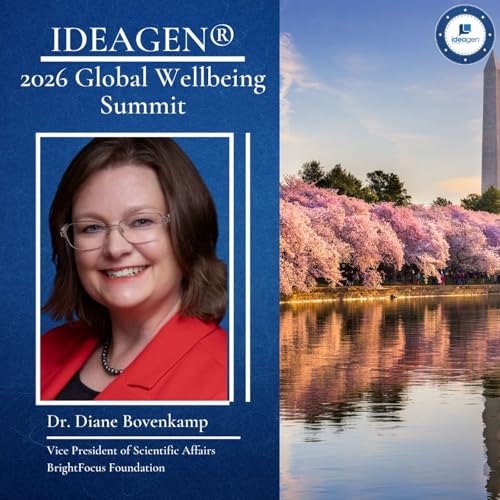
    A window into brain health can start with the eye. We sit down with Dr. Diane Bovenkamp, Chief Scientist and VP of Scientific Affairs at BrightFocus Foundation, to explore how cutting-edge research is converging across Alzheimer’s disease, glaucoma, and macular degeneration—and why this intersection is where diagnostics, prevention, and care can leap forward. Diane shares how AI and advanced imaging are turning retinal data into insights about the brain, and why using the eye to detect early neurodegenerative changes could reshape screening and treatment timelines.

    We dive into traumatic brain injury, connecting repetitive hits, blast exposures, and falls with later risks like depression and dementia. Diane outlines emerging ideas to deliver rapid, on-site interventions—imagine an oral pill on a battlefield or on the sidelines—that aim to reduce long-term damage. The conversation also underscores a powerful funding strategy: investing in early-career investigators when they need it most. BrightFocus grants don’t just spark projects; they catalyze careers, producing an eightfold return in follow-on funding and moving bold ideas toward clinical trials.

    Partnership matters, too. We highlight the role of nonprofit collaborations, from sustaining the scientific pipeline to translating research into real-world care. Caregiving innovation stands out with the “Mind at Home” model, which shows better outcomes at lower costs, keeping people where they want to be—at home—while supporting families and clinicians. Along the way, you’ll hear how BrightFocus engages a global community of researchers and affected families, providing education, resources, and flexible, investigator-initiated funding without borders.

    If you care about brain and vision health, or you’re a scientist looking to push an innovative idea forward, this conversation offers a clear path to action and hope grounded in data. Subscribe, share this episode with someone who needs it, and leave a review to help others discover these insights.


    https://www.brightfocus.org/personnel/diane-bovenkamp-phd/https://www.linkedin.com/in/dianebovenkamp/


    Más Menos
    10 m
  • Ideagen Global Health and Wellbeing Summit 2026: Dr. Jean Accius on How CHC Builds Trust
    Mar 27 2026

    Send us Fan Mail

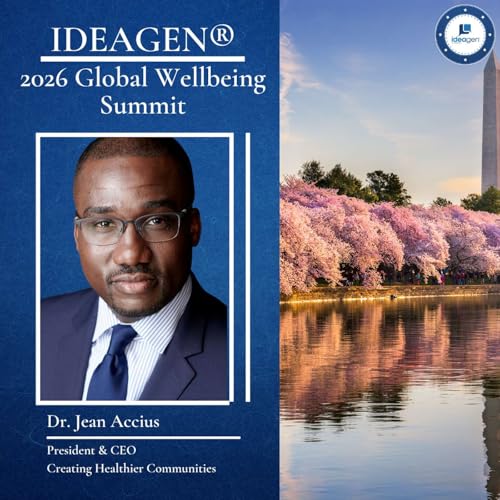
    Big promises don’t move communities—trusted partnerships do. We sit down with Dr. Jean Accius, CEO of Creating Healthier Communities (CHC), to unpack why collaboration operates like currency when resources are tight and needs are rising. From mental health in the workplace to maternal health and social isolation, Dr. Accius explains how shared goals, shared power, and shared accountability turn good intentions into measurable impact.

    Across the conversation, we dig into what makes a partnership truly transformational. Trust emerges as the social driver of health, and the data is clear: trust is narrowing at the national level yet strengthening locally. That shift changes the playbook. Jean shares how CHC builds credibility by getting close to lived experience, connecting with local leaders, and stitching together nonprofit networks, employers, and public agencies. The result: faster access to care, microgrants that fuel grassroots solutions, and initiatives that expand clinical services at speed.

    We also talk about the employer’s role in mental health. With mental health costs on track to reach $14 trillion by 2040, leaders can’t treat well-being as a perk. Jean outlines practical steps any organization can take—training managers to recognize distress, normalizing care-seeking, reducing wait times, and aligning benefits with real life. He challenges the hollow version of “bring your whole self to work” and replaces it with a culture that listens, adapts, and protects confidentiality.

    Finally, Jean offers a candid look at leadership in turbulent times. He frames the balance between the balcony and the dance floor, the discipline to say no so you can say yes to what matters, and the shift from chief everything officer to true executive stewardship. If you care about health equity, workplace well-being, and sustainable community resilience, this conversation delivers a clear path forward grounded in proximity, trust, and shared outcomes.

    If this resonates, follow the show, share it with a colleague who cares about mental health and equity, and leave a review so others can find it.


    Learn more about Creating Healthier Communities here: https://chcimpact.org/leadership/

    https://www.linkedin.com/in/accius4/

    Más Menos
    15 m
  • Ideagen Global Health and Wellbeing Summit 2026 : Col. Jim Paige and Rawle Andrews Jr. on How Trust, Mentorship, And Local Leadership Unlock Better Mental Health
    Mar 27 2026

    Send us Fan Mail

    The fastest way to expand mental health access isn’t a new slogan or a shiny app—it’s trust built where people actually live their lives. We sit down with leaders from the American Psychiatric Association Foundation and CCNA to unpack how national strategy meets neighborhood reality and why moving at the speed of trust turns concepts into care.

    We start with a clear map: wellbeing across five everyday settings—live, learn, work, worship, and play. From there, we dig into the gaps communities feel most: missing language support, overlooked cultures, and outreach that arrives without invitation. A vivid metaphor—cul-de-sac versus dead end—frames how investment creates safe U-turns while disinvestment strands families at a stop sign. You’ll hear how local partners become trusted messengers, how stigma fades when leaders share lived experience, and why the humble act of “holding the ladder” is the backbone of mental health infrastructure, especially for men and boys who are often told to carry the weight alone.

    Mentorship then takes center stage. First-gen students face hidden rules and heavy financial pressure that can steer them away from meaningful paths. We explore how targeted pipelines, early exposure to careers in care, and face-to-face connections with clinicians and community leaders shift what feels possible. The APA Foundation’s three-part engine—medical leadership, convening power, and microphilanthropy—powers initiatives across 43 states and 19 countries. And if you work in a school, there’s an immediate step to take: Notice Talk Act at School, a no-cost training that equips bus drivers, teachers, custodians, and principals to spot warning signs and connect students to help, with tens of thousands already trained and hundreds of thousands of students reached.

    If you care about practical solutions, this conversation offers tools you can use today and stories that travel. Join us to learn how to localize support, strengthen mentorship pipelines, and build the kind of trust that turns help-seeking into a community reflex. Ready to get involved or bring training to your school? Visit apaf.org and ccnaalexandria.org. If this resonated, follow, share with a friend who needs it, and leave a review to help more people find these resources.


    https://ccnalexandria.org/leadership/jim-paige/https://www.linkedin.com/in/coljimpaige/

    https://www.linkedin.com/in/rawle-andrews-jr-esq-5233baa/https://www.apaf.org/about/administration/


    Más Menos
    18 m