ICRC Humanitarian Law and Policy Blog Podcast Por ICRC Law and Policy arte de portada

ICRC Humanitarian Law and Policy Blog

ICRC Humanitarian Law and Policy Blog

De: ICRC Law and Policy
Escúchala gratis

The International Committee of the Red Cross (ICRC) Humanitarian Law & Policy blog is a unique space for timely analysis and debate on international humanitarian law (IHL) issues and the policies that shape humanitarian action.All rights reserved Política y Gobierno
Episodios
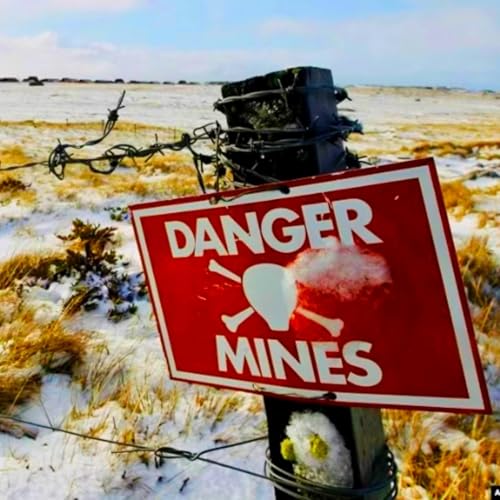
  • Why Nordic governments must uphold the global ban on anti-personnel mines
    Apr 2 2026
    As security concerns intensify across Europe following the escalation of the international armed conflict between Russia and Ukraine in 2022, several states – including Finland, Poland, and the Baltic countries – have moved to withdraw from the Anti-Personnel Mine Ban Convention (APMBC), while similar calls have emerged in other Nordic countries. These developments reflect a growing perception that existing humanitarian disarmament commitments may constrain military effectiveness in a deteriorating security environment. Yet they also raise fundamental questions about the continued relevance of these commitments at a time when they are most needed. In this post, the Secretaries-General of the Danish, Finnish, Norwegian and Swedish Red Cross Societies argue that withdrawing from the APMBC would not enhance security but risk weakening civilian protection and eroding long-standing humanitarian norms. Drawing on legal, operational and humanitarian considerations, they show that anti-personnel mines remain inherently indiscriminate and of limited military utility, and that their prohibition is fully compatible with modern military cooperation frameworks. They call on the remaining Nordic governments to remain committed to the Convention even – and especially – in times of heightened insecurity.
    Más Menos
    14 m
  • Restoring education after armed conflict: an IHL-guided framework
    Mar 26 2026
    When armed conflict ends, education does not always return with it. In many post-conflict settings, schools remain closed long after ceasefires, while children stay at home, enter work, remain displaced or navigate unsafe environments. Education systems remain constrained by destroyed infrastructure, militarization, unexploded ordnance, trauma and fear. Although international humanitarian law (IHL) and international human rights law (IHRL) require the continuity of education even during armed conflict, schooling is frequently disrupted in practice, raising questions about how education can be safely restored after conflict. IHL regulates the conduct of hostilities and contains important protections for children and access to education during armed conflict. Lessons drawn from these protections can help inform recovery decisions as societies transition from conflict to peace, including after the cessation of hostilities, when recovery begins but IHL may still apply. In this post, as part of our Emerging Voices series, Geeta Mahapatra proposes a framework to facilitate children’s safe return to education, centred on child-specific harm assessments, safe access and inclusive recovery. It contends that stronger compliance with IHL rules protecting schools and children during armed conflict helps preserve the conditions necessary for restoring education in post-conflict settings.
    Más Menos
    16 m
  • When the perpetrator is the climate
    Mar 19 2026
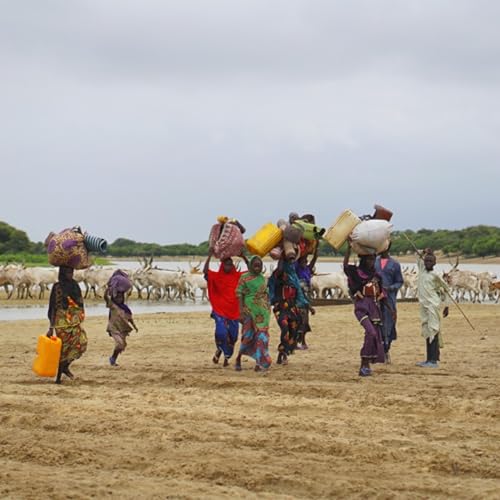
    Climate change and armed conflict increasingly intersect in humanitarian settings. While the sector is now alert to climate-related risks – particularly in disaster response, resilience programming, and displacement governance – the ways these risks are interpreted and operationalized vary across institutional mandates and operational contexts. In protection practice within conflict-affected settings, climate impacts are still often framed primarily as “conflict multipliers” rather than direct drivers of civilian harm. This narrow lens risks overlooking the very insecurities communities experience most acutely: displacement, restricted movement, isolation, and livelihood collapse. In this post, researcher and former ICRC delegate Lina Aburas argues that our current conflict-centered analysis has a dangerous blind spot. Drawing on her experience in northeast Nigeria, she explores how communities define their own insecurity amid climate and conflict pressures. Practitioner and community perspectives reveal how climate-related hazards reshape mobility, access to livelihoods and assistance, and exposure to protection risks in ways not fully captured by prevailing conflict-centered analyses. Centering these lived experiences reveals that adapting humanitarian action isn’t about mission creep or expanding mandates; it’s about fundamentally shifting how we interpret and prioritize the risks already in front of us.
    Más Menos
    15 m
Todavía no hay opiniones