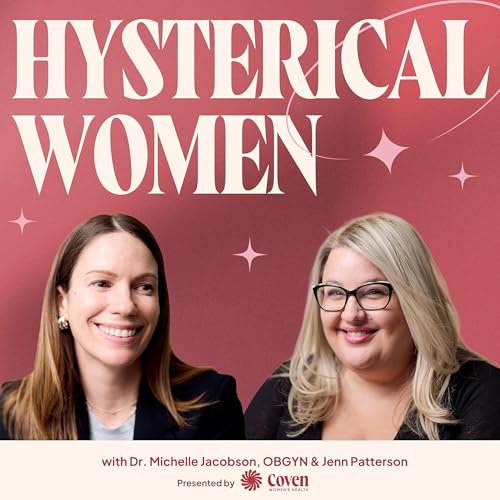
Hysterical Women Podcast Por Coven Women's Health arte de portada

Hysterical Women

Hysterical Women

De: Coven Women's Health
Escúchala gratis

For too long, women have been called “too emotional,” “too much,” or simply “hysterical” and our hormones have been blamed for it all. Hysterical Women is the podcast reclaiming women’s health from centuries of dismissal and misinformation.


Hosted by Dr. Michelle Jacobson OBGYN and Jenn Patterson, co-founders of Coven Women’s Health, this show makes hormones make sense and creates a safe space where women can be as hysterical as they’d like.


We’re here to dig into the questions you’ve been Googling at 2 a.m., the symptoms that freak you out and the things your doctor can’t explain – from PMS and perimenopause to insomnia, sex (or lack of), and everything in between.


With evidence, empathy, humour, we’ll decode your hormones, bust myths, and help you feel heard in your health. Because support, clarity, and care shouldn’t be rare. They should be the standard.


This isn’t your typical doctor’s waiting room. It’s the women’s health conversation you actually want to be a part of.

© 2026 Coven Women's Health
Higiene y Vida Saludable
Episodios
  • Why Would We Need Horny Women? A Conversation About The Pink Pill Film With Cindy Eckert and Joanna Griffiths
    Mar 6 2026

    In this episode of Hysterical Women, we dive into the story behind the documentary The Pink Pill: Sex, Drugs & Who Has Control — a film that exposes the decade-long fight to bring the first medication for low sexual desire in women to market.

    Joining us are two incredible women behind the story:

    • Cindy Eckert, founder of Sprout Pharmaceuticals and the driving force behind Addyi
    • Joanna Griffiths, founder of Knix, women’s health advocate, and executive producer of the film

    Together we unpack the staggering bias that shaped how women’s sexual health has been studied, regulated, and dismissed — and why the road to approval for a women’s drug looked nothing like the path that led to the little blue pill.

    From shocking quotes inside FDA hearings to the women who bravely shared their stories in public, this episode explores what happens when systems designed around men attempt to define women’s health.

    We also talk about resilience, advocacy, the power of getting angry, and what it actually takes to push change forward in women’s health.

    Spoiler: sometimes it requires women who are willing to be a little mad.

    In this episode, we’re talking about:

    • The documentary The Pink Pill: Sex, Drugs & Who Has Control
    • The fight to bring Addyi, the first medication for low sexual desire in women, to market
    • The shocking statements made during the FDA approval process
    • Why women’s sexual health has historically been dismissed or trivialized
    • The double standard between drugs for men’s sexual function and women’s desire
    • How bias in medicine and regulation can delay progress for decades
    • What it felt like for women to publicly share their most personal health struggles
    • How advocacy movements are often fueled by anger, injustice, and purpose
    • The role of resilience when fighting systems that resist change
    • Why women’s health conversations have historically been rooted in shame and stigma
    • How simply sharing our stories can drive cultural and medical change

    Let’s Connect:

    If this resonated, leave a review or share it with someone who needs to hear it. Follow us and find more information about Coven at @covenhealth or visit www.covenhealth.com


    • Follow Cindy at @cindypinkceo
    • Follow Joanna at @joannaknix
    • Follow the film at @thepinkpillfilm
    Más Menos
    27 m
  • Wide Awake at 3 am? Let’s Fix Your Perimenopause Sleep Cycle with Dominique Williams
    Feb 25 2026

    Sleep problems are common in perimenopause and menopause — but what makes them feel especially brutal is the no end in sight part. One bad night turns into worry about the next night… which makes it even harder to sleep… and suddenly you’re stuck in a cycle of anxiety + exhaustion.

    In this episode, Dr. Michelle is joined again by Coven Women’s Health Registered Social Worker, Dominique Williams, to talk about why sleep gets disrupted in midlife, what “best practice” support actually looks like, and what to do when you wake up in the middle of the night with a blank mind and still can’t fall back asleep.

    This conversation is part education, part validation, and part “okay but what do I do at 3 a.m. when I’m wide awake?”


    In this episode, we’re talking about:

    • Why perimenopause and menopause sleep disruption can become a self-perpetuating anxiety cycle
    • The most common sleep patterns Michelle sees in clinic: trouble falling asleep, staying asleep, waking too early, and “wake after sleep onset (WASO)”
    • Why disrupted sleep isn’t always caused by night sweats (and why identifying the actual trigger matters)
    • How a sleep diary, stimulus control, and structured wind-down routines help retrain your brain for sleep
    • What to do when you wake up and can’t fall back asleep: the “15-minute rule” and why getting out of bed matters
    • Nervous system tools that can help your body downshift (breath work + progressive muscle relaxation)
    • The small things that make a big difference: room temperature, darkness, fans, night sweats strategies, and minimizing clock-watching
    • Progesterone and sleep: why feeling sedated doesn’t always mean better quality sleep
    • Sleep medications vs. sleep architecture: what’s changing in perimenopause and why newer options are emerging
    • The daytime habits that quietly impact sleep at night (caffeine, movement, late eating, alcohol — and the “be an adult, accept the consequences” approach)

    Let’s Connect:

    If this resonated, leave a review or share it with someone who needs to hear it. Follow us and find more information about Coven at @covenhealth or visit www.covenhealth.com

    Más Menos
    15 m
  • Not Here to F*ck Spiders: Mental Health, Menopause & Feeling Like Yourself Again with Dominique Williams
    Feb 11 2026

    In this episode, Dr. Michelle is joined by Dominique Williams, a Registered Social Worker at Coven Women’s Health, for a deeply honest and empowering conversation about mental health in perimenopause/menopause, and why so many women feel dismissed, invisible, or like they’re “losing it” during this transition.

    Dominique shares her personal journey through perimenopause, a breast cancer diagnosis, and the moment she was told by a healthcare provider that there was “nothing” that could help her symptoms - an experience that shaped her work supporting other women today.

    Together, they unpack the emotional, psychological, and neurological changes that can happen during hormonal transitions, the role therapy (especially CBT) can play in symptom relief, and why addressing mental health is not optional care, it’s essential.


    In this episode, we’re talking about:

    • Dominique’s personal experience with perimenopause, breast cancer, and medical dismissal
    • Why so many women feel invisible or minimized when they raise menopause concerns
    • The most common mental health symptoms in perimenopause and menopause
    • Anxiety, low mood, irritability, rage, and why your “bullshit tolerance” suddenly drops
    • Brain fog, memory lapses, and why they don’t mean you’re developing dementia
    • How hormonal changes impact the brain, including the amygdala
    • Why therapy, especially Cognitive Behavioural Therapy (CBT), is evidence-based care for menopause
    • How CBT can help with hot flashes, sleep disruption, anxiety, and mood changes
    • A simple, practical CBT grounding exercise you can try when your mind won’t stop racing
    • Why thoughts can intensify physical symptoms and how to interrupt that cycle
    • What it really means to say “I don’t feel like myself” and why that feeling is valid

    If you’ve ever wondered whether what you’re feeling in perimenopause or menopause is “normal,” or if mental health support actually belongs in menopause care - this conversation is for you.

    Let’s Connect

    If this resonated, leave a review or share it with someone who needs to hear it. Follow us and find more information about Coven at @covenhealth or visit www.covenhealth.com

    Más Menos
    29 m
Todavía no hay opiniones