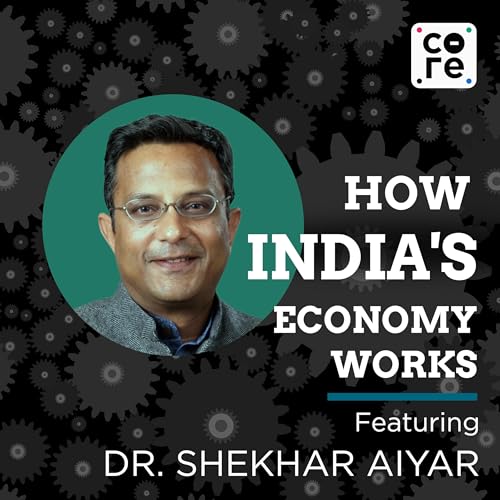
How India's Economy Works Podcast Por The Core arte de portada

How India's Economy Works

How India's Economy Works

De: The Core
Escúchala gratis

Join journalist Puja Mehra as she breaks down one story to give you all the context you need to understand how it fits into the larger picture of India's economy.The Core Política y Gobierno
Episodios
  • How Global Conflicts are Rewiring the World’s Financial Architecture and India in this new world
    Mar 11 2026

    In this episode, journalist and author Puja Mehra speaks with Hemant Mishr, Co-Founder and Group CIO of SCUBE Capital, and former Managing Director & Head- Financial Markets, South East Asia, SCCG at Standard Chartered Bank. They talk about how rising geopolitical tensions—from the Iran conflict to great-power rivalry—are beginning to reshape the foundations of the global financial system. They discuss how the post-1970s financial architecture was built on three pillars: globalization, a rules-based order backed by the United States, and relative geopolitical consensus.

    Mishr explains how that system evolved around the oil shocks of the 1970s and the emergence of the petrodollar, which helped anchor the dominance of the US dollar and the recycling of global capital through American markets. But today, shifting power balances, the expanding use of financial sanctions, and growing geopolitical fragmentation are testing that framework.

    What does this mean for the future of the dollar, global capital flows, and emerging economies like India?

    Tune in for insights into how geopolitics is reshaping the world’s financial architecture.


    SHOW NOTES

    (00:00) Introduction

    (00:52) Pillars of Financial Architecture

    (02:18) Rise of the Petrodollar

    (03:25) Shift to Petrodollar 2.0

    (04:06) Three Scenarios for Finance

    (06:05) India’s Role as Swing State

    (07:25) Economic Impact of Oil Prices

    (09:37) Risks to Rupee and Remittances

    (11:02) Managing Complex Geopolitical Ties

    (12:59) Timelines for Market Recovery

    (16:17) Resilience of India’s Growth

    (18:31) Investing in Indian Markets

    (20:41) Lessons from China’s Model

    (22:49) Managing Exchange Rate Volatility

    (24:45) Deepening Local Credit Markets

    (26:23) China’s Strategic Currency Policy

    (29:57) Attracting Global Institutional Capital

    (32:21) Developing International Financial Hubs

    (34:24) Technology and Data Security


    For more of our coverage check out ⁠⁠⁠⁠⁠⁠⁠⁠⁠⁠⁠⁠⁠⁠⁠⁠⁠⁠⁠⁠thecore.in⁠⁠⁠⁠⁠⁠⁠⁠⁠⁠⁠⁠⁠⁠⁠⁠⁠⁠⁠⁠

    ⁠⁠⁠⁠⁠⁠⁠⁠⁠⁠⁠⁠⁠⁠⁠⁠⁠⁠⁠⁠⁠⁠⁠⁠⁠⁠⁠⁠⁠⁠⁠⁠⁠⁠⁠⁠Subscribe to our Newsletter⁠⁠⁠⁠⁠⁠⁠⁠⁠⁠⁠⁠⁠⁠⁠⁠⁠⁠⁠⁠⁠⁠⁠⁠⁠⁠⁠⁠⁠⁠⁠⁠⁠⁠⁠⁠

    Follow us on:⁠⁠⁠⁠⁠⁠⁠⁠⁠⁠⁠⁠⁠⁠⁠⁠⁠⁠⁠⁠⁠⁠⁠⁠⁠⁠⁠⁠⁠⁠⁠⁠⁠⁠⁠⁠⁠⁠⁠⁠⁠⁠⁠⁠⁠⁠⁠⁠⁠⁠

    ⁠⁠⁠⁠⁠⁠⁠⁠⁠⁠⁠⁠⁠⁠Twitter⁠⁠⁠⁠⁠⁠⁠⁠⁠⁠⁠⁠⁠⁠⁠⁠⁠⁠⁠⁠⁠⁠⁠⁠⁠⁠⁠⁠⁠⁠⁠⁠⁠⁠⁠⁠ |⁠⁠⁠⁠⁠⁠⁠⁠⁠⁠⁠⁠⁠⁠⁠⁠⁠⁠⁠⁠⁠⁠⁠⁠⁠⁠⁠⁠⁠⁠⁠⁠⁠⁠⁠⁠Instagram⁠⁠⁠⁠⁠⁠⁠⁠⁠⁠⁠⁠⁠⁠⁠⁠⁠⁠⁠⁠⁠⁠⁠⁠⁠⁠⁠⁠⁠⁠⁠⁠⁠⁠⁠⁠ |⁠⁠⁠⁠⁠⁠⁠⁠⁠⁠⁠⁠⁠⁠⁠⁠⁠⁠⁠⁠⁠⁠⁠⁠⁠⁠⁠⁠⁠⁠⁠⁠⁠⁠⁠⁠Facebook⁠⁠⁠⁠⁠⁠⁠⁠⁠⁠⁠⁠⁠⁠⁠⁠⁠⁠⁠⁠⁠⁠⁠⁠⁠⁠⁠⁠⁠⁠⁠⁠⁠⁠⁠⁠ |⁠⁠⁠⁠⁠⁠⁠⁠⁠⁠⁠⁠⁠⁠⁠⁠⁠⁠⁠⁠⁠⁠⁠⁠⁠⁠⁠⁠⁠⁠⁠⁠⁠⁠⁠⁠Linkedin⁠⁠⁠⁠⁠⁠⁠⁠⁠⁠⁠⁠⁠⁠⁠⁠⁠⁠⁠⁠⁠⁠⁠⁠⁠⁠⁠⁠⁠⁠⁠⁠⁠⁠⁠⁠ |⁠⁠⁠⁠⁠⁠⁠⁠⁠⁠⁠⁠⁠⁠⁠⁠⁠⁠⁠⁠⁠⁠⁠⁠⁠⁠⁠⁠⁠⁠⁠⁠⁠⁠⁠⁠Youtube

    Más Menos
    38 m
  • The Legal Setback to Trump's Tariffs is an Advantage for India. This Is How
    Mar 4 2026

    In this episode, journalist Puja Mehra speaks with economist Dr. Shekhar Aiyar about the recent US Supreme Court ruling that struck down the use of the International Emergency Economic Powers Act (IEEPA) as the legal basis for President Trump’s sweeping tariffs. As Washington recalibrates its trade strategy, Aiyar argues that the judgment is more than a legal setback — it reshapes the balance of power in ongoing trade negotiations, including those with India.

    They discuss what this means for the current 15% global tariff, the earlier 50% duties imposed on Indian imports, and whether companies can realistically expect refunds. The episode also examines how the timing of the ruling intersects with India–US trade deal negotiations, and why India’s bargaining position may have improved significantly.

    They also talk about the broader geopolitical implications of the decision — from the use of tariffs as strategic leverage to the erosion of the World Trade Organization’s dispute settlement system. As global trade becomes more fragmented, Aiyar makes the case for diversification, institutional reform, and a more assertive Indian role in shaping the next phase of multilateral trade rules. Tune in for insights on the reshaping of India’s trade strategy.


    SHOW NOTES

    (00:00) Introduction

    (00:20) US Supreme Court Ruling on Trump Tariffs

    (02:47) Impact on Indian Exports and Alternative Trade Instruments

    (04:39) Prospects for Tariff Refunds for Indian Exporters

    (06:30) Status of India-US Trade Deal Negotiations

    (10:13) Limits of Executive Power in Setting High Tariff Rates

    (11:10) Duration and Renewal of Section 122 Tariffs

    (12:32) Recommendations for Indian Trade Negotiators

    (14:55) Geopolitical Implications and Trade Diversification

    (17:18) WTO Ministerial and Reforming Dispute Resolution


    For more of our coverage check out ⁠⁠⁠⁠⁠⁠⁠⁠⁠⁠⁠⁠⁠⁠⁠⁠⁠⁠⁠thecore.in⁠⁠⁠⁠⁠⁠⁠⁠⁠⁠⁠⁠⁠⁠⁠⁠⁠⁠⁠

    ⁠⁠⁠⁠⁠⁠⁠⁠⁠⁠⁠⁠⁠⁠⁠⁠⁠⁠⁠⁠⁠⁠⁠⁠⁠⁠⁠⁠⁠⁠⁠⁠⁠⁠⁠Subscribe to our Newsletter⁠⁠⁠⁠⁠⁠⁠⁠⁠⁠⁠⁠⁠⁠⁠⁠⁠⁠⁠⁠⁠⁠⁠⁠⁠⁠⁠⁠⁠⁠⁠⁠⁠⁠⁠

    Follow us on:⁠⁠⁠⁠⁠⁠⁠⁠⁠⁠⁠⁠⁠⁠⁠⁠⁠⁠⁠⁠⁠⁠⁠⁠⁠⁠⁠⁠⁠⁠⁠⁠⁠⁠⁠⁠⁠⁠⁠⁠⁠⁠⁠⁠⁠⁠⁠⁠

    ⁠⁠⁠⁠⁠⁠⁠⁠⁠⁠⁠⁠⁠Twitter⁠⁠⁠⁠⁠⁠⁠⁠⁠⁠⁠⁠⁠⁠⁠⁠⁠⁠⁠⁠⁠⁠⁠⁠⁠⁠⁠⁠⁠⁠⁠⁠⁠⁠⁠ |⁠⁠⁠⁠⁠⁠⁠⁠⁠⁠⁠⁠⁠⁠⁠⁠⁠⁠⁠⁠⁠⁠⁠⁠⁠⁠⁠⁠⁠⁠⁠⁠⁠⁠⁠Instagram⁠⁠⁠⁠⁠⁠⁠⁠⁠⁠⁠⁠⁠⁠⁠⁠⁠⁠⁠⁠⁠⁠⁠⁠⁠⁠⁠⁠⁠⁠⁠⁠⁠⁠⁠ |⁠⁠⁠⁠⁠⁠⁠⁠⁠⁠⁠⁠⁠⁠⁠⁠⁠⁠⁠⁠⁠⁠⁠⁠⁠⁠⁠⁠⁠⁠⁠⁠⁠⁠⁠Facebook⁠⁠⁠⁠⁠⁠⁠⁠⁠⁠⁠⁠⁠⁠⁠⁠⁠⁠⁠⁠⁠⁠⁠⁠⁠⁠⁠⁠⁠⁠⁠⁠⁠⁠⁠ |⁠⁠⁠⁠⁠⁠⁠⁠⁠⁠⁠⁠⁠⁠⁠⁠⁠⁠⁠⁠⁠⁠⁠⁠⁠⁠⁠⁠⁠⁠⁠⁠⁠⁠⁠Linkedin⁠⁠⁠⁠⁠⁠⁠⁠⁠⁠⁠⁠⁠⁠⁠⁠⁠⁠⁠⁠⁠⁠⁠⁠⁠⁠⁠⁠⁠⁠⁠⁠⁠⁠⁠ |⁠⁠⁠⁠⁠⁠⁠⁠⁠⁠⁠⁠⁠⁠⁠⁠⁠⁠⁠⁠⁠⁠⁠⁠⁠⁠⁠⁠⁠⁠⁠⁠⁠⁠⁠Youtube

    Más Menos
    20 m
  • India’s Climate Governance Gap
    Feb 18 2026
    In this episode, journalist Puja Mehra speaks with Economist Dr. Anoop Singh about the gap between India’s ambitious climate commitments and the institutional framework required to deliver them. As India moves closer to its 2030 targets, Singh argues that the real challenge lies not in announcing goals but in building the legal and fiscal architecture to implement them.Drawing on international experience and recent developments — including the Supreme Court’s landmark ruling recognising the constitutional right to be free from the adverse effects of climate change — Singh explains why India remains one of the few major economies without a comprehensive national climate law. They discuss how fragmented, sector-specific policies have led to uneven implementation, why coordination between the Centre and states remains weak, and how climate finance cannot be mobilised or monitored effectively without clear institutional structures and climate budget tagging.The conversation also examines state-level innovations in places like Kerala, Tamil Nadu, Odisha and Assam, and asks whether these “islands of excellence” can evolve into a coherent national framework. Tune in for a closer look at the structural reforms needed to move India from fragmented efforts to a unified climate strategy.SHOW NOTES(00:00) Introduction(01:05) India’s Current Climate Change Targets(02:11) Supreme Court’s Landmark Climate Ruling(04:13) Why India Lacks National Laws(06:04) Improving Cooperation Between Indian States(07:45) Reviewing Current National Climate Institutions(09:15) Securing International Climate Finance Needs(11:39) How States Spend Climate Funds(13:12) Global Models for Climate Accountability(16:12) Closing the Macroeconomic Data Gap(18:04) Success Stories From Indian States(20:59) Parliament's Role in New Legislation(22:45) Building a National Climate Consensus(23:53) Final ThoughtsRegister for India Finance and Innovation Forum 2026⁠https://tinyurl.com/IFIFCORE⁠For more of our coverage check out ⁠⁠⁠⁠⁠⁠⁠⁠⁠⁠⁠⁠⁠⁠⁠⁠⁠⁠thecore.in⁠⁠⁠⁠⁠⁠⁠⁠⁠⁠⁠⁠⁠⁠⁠⁠⁠⁠⁠⁠⁠⁠⁠⁠⁠⁠⁠⁠⁠⁠⁠⁠⁠⁠⁠⁠⁠⁠⁠⁠⁠⁠⁠⁠⁠⁠⁠⁠⁠⁠⁠⁠Subscribe to our Newsletter⁠⁠⁠⁠⁠⁠⁠⁠⁠⁠⁠⁠⁠⁠⁠⁠⁠⁠⁠⁠⁠⁠⁠⁠⁠⁠⁠⁠⁠⁠⁠⁠⁠⁠Follow us on:⁠⁠⁠⁠⁠⁠⁠⁠⁠⁠⁠⁠⁠⁠⁠⁠⁠⁠⁠⁠⁠⁠⁠⁠⁠⁠⁠⁠⁠⁠⁠⁠⁠⁠⁠⁠⁠⁠⁠⁠⁠⁠⁠⁠⁠⁠⁠⁠⁠⁠⁠⁠⁠⁠⁠⁠⁠⁠Twitter⁠⁠⁠⁠⁠⁠⁠⁠⁠⁠⁠⁠⁠⁠⁠⁠⁠⁠⁠⁠⁠⁠⁠⁠⁠⁠⁠⁠⁠⁠⁠⁠⁠⁠ |⁠⁠⁠⁠⁠⁠⁠⁠⁠⁠⁠⁠⁠⁠⁠⁠⁠⁠⁠⁠⁠⁠⁠⁠⁠⁠⁠⁠⁠⁠⁠⁠⁠⁠Instagram⁠⁠⁠⁠⁠⁠⁠⁠⁠⁠⁠⁠⁠⁠⁠⁠⁠⁠⁠⁠⁠⁠⁠⁠⁠⁠⁠⁠⁠⁠⁠⁠⁠⁠ |⁠⁠⁠⁠⁠⁠⁠⁠⁠⁠⁠⁠⁠⁠⁠⁠⁠⁠⁠⁠⁠⁠⁠⁠⁠⁠⁠⁠⁠⁠⁠⁠⁠⁠Facebook⁠⁠⁠⁠⁠⁠⁠⁠⁠⁠⁠⁠⁠⁠⁠⁠⁠⁠⁠⁠⁠⁠⁠⁠⁠⁠⁠⁠⁠⁠⁠⁠⁠⁠ |⁠⁠⁠⁠⁠⁠⁠⁠⁠⁠⁠⁠⁠⁠⁠⁠⁠⁠⁠⁠⁠⁠⁠⁠⁠⁠⁠⁠⁠⁠⁠⁠⁠⁠Linkedin⁠⁠⁠⁠⁠⁠⁠⁠⁠⁠⁠⁠⁠⁠⁠⁠⁠⁠⁠⁠⁠⁠⁠⁠⁠⁠⁠⁠⁠⁠⁠⁠⁠⁠ |⁠⁠⁠⁠⁠⁠⁠⁠⁠⁠⁠⁠⁠⁠⁠⁠⁠⁠⁠⁠⁠⁠⁠⁠⁠⁠⁠⁠⁠⁠⁠⁠⁠⁠Youtube
    Más Menos
    25 m
Todavía no hay opiniones