Hot Spots with Kay Brown Podcast Por United America Network arte de portada

Hot Spots with Kay Brown

Hot Spots with Kay Brown

De: United America Network
Escúchala gratis

From the shifting landscapes of politics and culture, to the urgent challenges facing our planet and our communities, this is where the conversations that matter most come alive.United America Network Ciencia Política Ciencias Sociales Política y Gobierno
Episodios
  • How Cruise Ships Are (Legally) Dumping Toxic Waste Into the Ocean | Aaron Brakel
    Apr 6 2026

    Aaron Brakel from the Southeast Alaska Conservation Council is Kay Brown’s guest to address the the complex and urgent issue of ocean pollution caused by ship emissions, especially from the use of scrubbers on large vessels. They explore how this technology, intended to reduce sulfur emissions, inadvertently dumps toxic pollutants into marine ecosystems and affects human health. The conversation highlights ongoing legislative efforts and actions individuals can take to advocate for cleaner shipping practices.

    Key Takeaways:

    • Heavy fuel oil and scrubber discharge pollute oceans with toxins like heavy metals and PAHs, which damage marine life and contaminate seafood.
    • Ships burn heavy fuel oil due to historical international regulations, leading to an increase in the use of scrubbers, which bypass sulfur limits but transfer toxins into the water.
    • Scrubber water use is immense—up to 3,600 tons per hour—equivalent to 1.5 Olympic swimming pools, harming aquatic ecosystems.
    • Toxic pollutants from scrubbers persist and bioaccumulate, impacting organisms from the smallest plankton to humans consuming seafood.
    • International regulations via the IMO have limited local and national control, but more than 45 countries have implemented bans or regulations on scrubber discharges.
    • The use of scrubbers and heavy fuel oil contributes additional black carbon, accelerating melting sea ice and climate change.
    • Heavy fuel oil spills are particularly hazardous because they are persistent, sink, and are difficult to clean, especially in cold Arctic waters.
    • Advocates suggest banning scrubber discharges or mandating cleaner fuels to protect marine environments and public health; grassroots action and policy change are crucial.

    Resources & Links:

    • Southeast Alaska Conservation Council (SEAC)
    • Amazon: "Our Water" by Bob Saunier
    • IMO Regulations Overview
    • California Cleaner Fuel Legislation
    • Washington State Clean Fuel Policy

    Connect with AARON Brakel:

    • SEAC - Twitter
    • SEAC - Website

    Más Menos
    12 m
  • Rev. Ian Riddell | Can 3.5% of Us Topple a Regime?
    Mar 26 2026

    As the nation prepares for the "No Kings 3" protests, Reverend Ian Riddell of the Unitarian Universalist Church of the Desert joins Kay Brown to discuss his role as a leader in "the Singing Resistance," a movement born in Minneapolis that uses communal singing to challenge authoritarianism and federal overreach. The conversation delves into the psychological and political power of nonviolent resistance, as Kay highlights the "3.5% rule"—the theory that sustained participation from a small fraction of the population can topple regimes. Riddell explains how music builds a unique emotional connection that slogans cannot, providing healing and solidarity for those fighting for justice. From songs aimed at changing the hearts of ICE agents to the upcoming rally in Palm Springs, this episode serves as a call to action for anyone looking to protect civil liberties through the transformative power of collective voice

    Takeaways:

    • The 3.5% Rule: Sustained participation by 3.5% of the population can topple regimes.
    • Singing Resistance: A Minneapolis-born movement using music as political pushback.
    • Healing Harmony: Communal singing builds community and heals activist burnout.
    • Deep Traditions: The movement builds on Civil Rights and anti-war musical legacies.
    • Targeted Lyrics: Songs specifically designed to appeal to the humanity of ICE agents.
    • No Kings 3: Rev. Riddell leads the Palm Springs community in song on March 28th.
    • Grassroots Creativity: New protest songs are being written locally by "entrepreneurial musicians."
    • Political Impact: Using musical momentum to drive accountability in upcoming elections

    Más Menos
    12 m
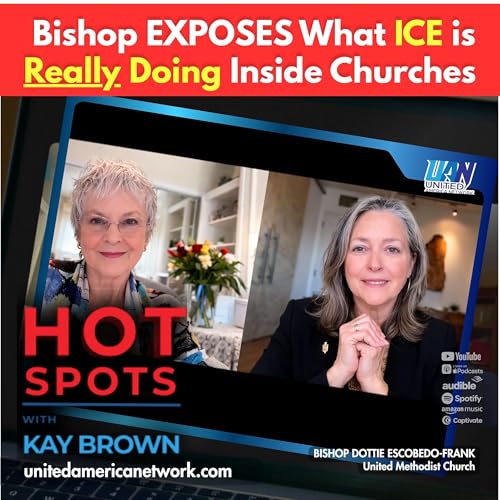
  • Bishop Exposes What ICE Is Really Doing Inside Churches | Bishop Dottie Escobedo-Frank
    Mar 20 2026

    United Methodist Bishop Dottie Escobedo-Frank joins Hot Spots with Kay Brown to confront what she describes as escalating fear, violence and injustice facing immigrant communities across California and the nation. Drawing from firsthand accounts, she details ICE actions in and around churches, including warrantless detentions, family separations and the lasting trauma inflicted on children and congregations. Escobedo-Frank explains why faith leaders felt compelled to speak out, framing the moment as a moral crisis rooted in human dignity and the call to protect the vulnerable. She shares powerful stories from local congregations, where fear has disrupted daily life, worship and education. The discussion also explores the broader implications of immigration enforcement, the role of community resistance and the growing tension between faith values and political power. Ultimately, the bishop urges listeners to show up, speak out and stand in solidarity with those most affected in communities nationwide today.

    Más Menos
    23 m
Todavía no hay opiniones