

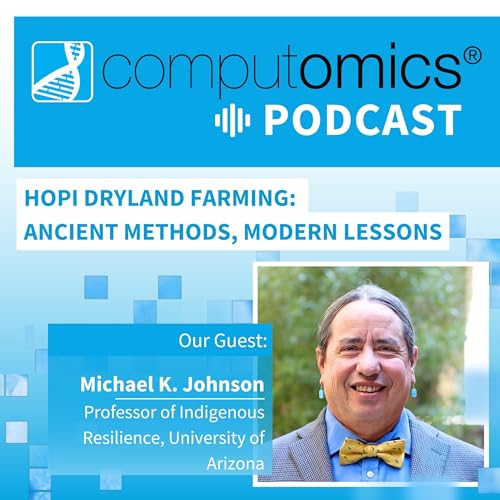
Hopi Dryland Farming: Ancient Methods, Modern Lessons
No se pudo agregar al carrito
Add to Cart failed.
Error al Agregar a Lista de Deseos.
Error al eliminar de la lista de deseos.
Error al añadir a tu biblioteca
Error al seguir el podcast
Error al dejar de seguir el podcast

Hopi Dryland Farming: Ancient Methods, Modern Lessons
-
Narrado por:
-
De:
This episode features Dr. Michael Kotutwa Johnson, a Hopi dryland farmer from Arizona’s Colorado Plateau. He shares how his community has grown crops for 3,000 years on just 6-10 inches of annual rain without irrigation. Using deep planting, wide spacing, clumped seeds, and reading native vegetation, Indigenous farming conserves moisture and maintains biodiversity. It yields nutrient-rich crops without chemicals, protects soil, and integrates spiritual traditions. Climate change impacts - shorter summers, longer winters, less precipitation - are addressed by adapting planting practices and trusting in seed adaptation through continual cultivation. Michael advocates for growing seeds annually to keep them climate-resilient, and for revitalizing Indigenous food systems to combat health crises like diabetes. Beyond yields, the Hopi system offers values of stewardship, sharing, and hope, which he believes can inspire global agricultural approaches.
More:
- "Dr. Hopi Farmer" on Instagram
- Michael K. Johnson on LinkedIn
- Indigenous Resilience Center
- Indigenous Landscapes: An example from Hopi (Lecture)