

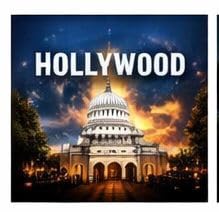
Hollywood & The Government (The Case of The Strange BedFelloows)
No se pudo agregar al carrito
Add to Cart failed.
Error al Agregar a Lista de Deseos.
Error al eliminar de la lista de deseos.
Error al añadir a tu biblioteca
Error al seguir el podcast
Error al dejar de seguir el podcast

Hollywood & The Government (The Case of The Strange BedFelloows)
-
Narrado por:
-
De:
The Case Of The Strange BedFellows The relationship between Hollywood and the U.S. government is a complex, long-standing, and often symbiotic one, marked by cooperation, influence, and occasional tension. Here’s a detailed breakdown of that “long strange” relationship:
1. Early Foundations: Propaganda and Public Morale
World War I & II: Governments recognized cinema as a powerful tool for shaping public opinion. During WWII, Hollywood produced films, shorts, and newsreels that bolstered morale, encouraged enlistment, and promoted war bonds. The Office of War Information (OWI) worked closely with studios to ensure content aligned with government messaging.
Documentary Influence: Filmmakers like Frank Capra (“Why We Fight” series) were commissioned to create educational and persuasive films for soldiers and civilians, blending cinematic storytelling with government objectives.
2. The Cold War and the Red Scare
House Un-American Activities Committee (HUAC): During the late 1940s and 1950s, government investigations into alleged Communist influence led to blacklisting in Hollywood. Careers were destroyed based on political affiliations or suspected sympathies.
Soft Power and Ideology: Hollywood became a tool for promoting American ideals abroad. Anti-communist and pro-capitalist narratives dominated films, often with subtle or overt support from U.S. agencies like the State Department and the CIA.
3. The CIA, FBI, and Hollywood Cooperation
Technical Advising: Starting in the 1950s, intelligence agencies began advising filmmakers on scripts, often providing authenticity in exchange for portraying agencies in a favorable light.
Propaganda and Image Management: Some films were effectively “co-produced” with government agencies to shape public perception. Examples include:
Top Gun (1986) – U.S. Navy support boosted recruitment.
Zero Dark Thirty (2012) – Controversially collaborated with the CIA, though the film drew debate about ethics and accuracy.
Selective Script Approval: The military and intelligence agencies often condition cooperation on script approval or adjustments, subtly influencing narratives.
4. Modern Collaborations and Mutual Benefit
Recruitment and Branding: Modern Hollywood often works with government agencies for technical accuracy, access to equipment, and locations. In return, films serve as promotional tools:
Transformers movies featured U.S. military hardware prominently.
Independence Day showcased government preparedness and military heroism.
National Security Influence: Films and TV shows sometimes receive guidance or restrictions if content touches on classified techniques or sensitive operations.
5. Tensions and Criticisms
Artistic Freedom vs. Government Influence: While some collaboration is welcomed, critics argue it can lead to self-censorship, overly patriotic narratives, or sanitizing controversial subjects.
Political Messaging: Governments have occasionally pressured studios to avoid content that might undermine foreign policy or domestic agendas.
Moral Quandaries: Films like Zero Dark Thirty raised questions about depicting torture and ethical boundaries when agencies provide access.
6. The Symbiotic Dynamic
Hollywood Gains: Access to locations, equipment, and insider expertise.
Government Gains: Shaping public perception, boosting recruitment, and fostering soft power.
Public Gains (Sometimes): Authenticity, entertaining propaganda, and awareness of societal issues, though filtered through political and ideological lenses.
Conclusion
The Hollywood-government relationship is neither entirely conspiratorial nor fully benign; it is pragmatic, often transactional, and reflective of the broader political, cultural, and ideological climate. It’s a “long strange trip” because it alternates between cooperation, coercion, and mutual self-interest, shaping both cinematic history and public consciousness.