Episodios

  • At Play in the Theater of Dionysus
    Jan 5 2026

    At Play in the Theater of Dionysus

    The Theater of Dionysus as Aeschylus, Sophocles, and Euripides knew it was very different than the theater whose remains you see today in Athens. Listen to Emily and Cam walk you through the development of the space, and through the creation of the genre associated most strongly with it: Greek tragedy.

    Visit our homepage to subscribe, to find us on social media, and to contact us by email:

    1. https://havetogawilltravel.com


    For images of the Theater and Sanctuary of Dionysus, visit our blog:

    1. https://havetogawilltravel.com/blog/the-sanctuary-and-theater-of-dionysus


    ----------


    00:10 - Introduction

    01:37 - Visiting the Theater and Sanctuary

    1. 01:42 - Where to find the Theater and Sanctuary
    2. 02:16 - Don’t confuse it with the Odeion of Herodes Atticus!
    3. 03:26 - An overview of the physical remains

    04:01 - The Origins of the Sanctuary, the Theater, and the Festival

    1. 04:02 - The Sanctuary, the Festival, and the Temples of Dionysus
    2. 04:58 - The Theater through Time: The Fifth Century, the Lycurgan Theater, the Hellenistic Theater, and the Roman Theater
    3. 07:59 - The Festivals of Dionysus: The Origins of the City Dionysia and celebrations for Dionysus in Ikaria and other demes

    11:44 - The Origins of Scripted Drama in Athens

    1. 11:50 - The Dithyramb
    2. 12:41 - The legend of Thespis, the first actor
    3. 13:15 - The importance of the chorus in Greek drama
    4. 14:10 - Masking and actors playing multiple characters
    5. 14:30 - The Development of the Three-Actor Model in the Age of Aeschylus, Sophocles, and Euripides

    19:09 - The City Dionysia

    1. 19:42 - The Schedule: The Procession and its Ithyphallic Floats; the Dithyrambic Competitions; the Dramatic Competitions
    2. 22:50 - Dionysus, the most important spectator
    3. 23:48 - The Organization of the Dramatic Competitions: Tragedies, Satyr Plays, Choruses, and Choregoi!

    30:09 - The Performance Space and its Evolution

    1. 30:20 - The Fifth-Century Theater: the Orchestra, the Skēnē, and the Paradoi
    2. 33:30 - Technical Innovations: the ekkyklēma and the mechanē
    3. 36:36 - The Deus Ex Machina in ancient Drama
    Más Menos
    45 m
  • Emily and Cam’s Excellent Adventure (in Athens and Rome, of course!)
    Dec 20 2025

    Emily and Cam talk about their recent trip to Athens and Rome in an episode that features some talk about marathons, tsipouro, and cats.

    Visit our homepage to subscribe, to find us on social media, and to contact us by email:

    • https://havetogawilltravel.com

    For images of the Museum of the Forma Urbis, visit our blog post:

    • https://havetogawilltravel.com/blog/the-museum-of-the-forma-urbis


    Links to some of the places we mention in this episode:

    • Athena’s Cook
    • Paradosiako Serron
    • Noctua Brewing
    • Esthio
    • Βαυβώ (Vafvo)
    • Hotel Santa Maria
    • San Clemente Archaeological Zone
    • Museum of the Forma Urbis


    ----------


    00:10 - Introduction

    01:25 - Our second walk through the Athens Marathon

    • 01:38 - Faliro: tourist sites, getting there, and the Marathon Expo
    • 05:06 - Carb loading before the Marathon
    • 06:32 - The trip to Marathon and the wait in the Stadium
    • 09:27 - The race itself (drinking tsipouro in the footsteps of Spiridon Louis!)


    15:19 - Our stay in Athens

    • 15:41 - How we travel
    • 17:11 - Old neighborhoods (Plaka and Monastiraki) and ancient sites (the Acropolis and the Theatre of Dionysus)
    • 19:01 - A field trip to Ilion (the Athens suburb, not Troy!) to eat at Paradosiako Serron
    • 21:06 - Modern Athens: Pangrati
    • 23:23 - Modern Athens: Koukaki and its restaurants (including Esthio) and our view of the Acropolis
    • 29:36 - Modern Athens: Neos Kosmos and Βαυβώ


    33:41 - Our Stay in Rome

    • 33:53 - Rome’s “feel” compared to Athens: geography and tourism
    • 35:39 - Trastevere and the Hotel Santa Maria
    • 37:12 - Culture shock: coffee and language issues
    • 40:01 - The Archaeological Zone at San Clemente
    • 43:45 - Castel Sant’Angelo
    • 44:42 - The Museum of the Forma Urbis
    • 46:34 - Wandering the city (and the Temple of Vibia Sabina and Hadrian)
    • 49:30 - Hangin’ on the Janiculum


    50:26 - Wrap-up

    Más Menos
    52 m
  • Something for everyone! Plautus and “A Funny Thing Happened on the Way to the Forum”
    Dec 1 2025

    Emily and Cam tackle “A Funny Thing Happened on the Way to the Forum”—an uproarious adaptation of Plautus’ Roman comedy.

    Visit our homepage to subscribe, to find us on social media, and to contact us by email:

    • https://havetogawilltravel.com

    Some plays of Plautus referenced in this episode:

    • Pseudolus
    • Mostellaria
    • Miles Gloriosus
    • Menaechmi

    Cover Image:

    • Mosaic of Masks. Second or third century CE. Found on the Aventine, possibly on the site of the ancient Thermae Decianae; now held in the Capitoline Museums. Photo by Carole Raddato, Wikimedia Commons.


    ----------


    00:11 - Introduction

    • 00:38 - A Funny thing Happened on the Way to the Forum: Sonheim’s Musical and the 1966 film

    03:19 - Our approach to reviewing adaptations of ancient literature

    05:20 - Plautus and Roman Comedy

    • 05:29 - What we know about Plautus himself (his dates, his name, his background)
    • 09:41 - Plautus' style: Roman comedy, exotic settings, stock plots, and stock characters

    17:56 - A Funny Thing Happened on the Way to the Forum: Plautus on Screen

    • 18:51 - The setting: “A less fashionable suburb of Rome”
    • 19:44 - The characters (Pseudolus, Hysterium, Marcus Lycus, Hero, Philia, Miles Gloriosus, and others)
    • 23:33 - The plot, in all of its messiness
    • 27:15 - The movie’s sources: Plautus’ Pseudolus, Mostellaria, Miles Gloriosus, and other plays
    • 33:01 - Metatheatre in Plautus and in A Funny Thing
    • 36:25 - The movie’s departures from Plautus: More is more! (Expansive sets, elaborate scenes, and exaggerated physical comedy)

    43:36 - Cam and Emily discuss their reactions (and we learn the dirty secrets of Emily’s history with this film!

    49:01 – Wrap-up

    Más Menos
    50 m
  • Stranger Things: Eleven’s Heroic Journey
    Nov 15 2025

    Emily and Cam break down the character arc of Eleven in Stranger Things and argue that she is on a “heroic journey” like that of Herakles.

    Visit our homepage to subscribe, to find us on social media, and to contact us by email:

    • https://havetogawilltravel.com/

    For more information about Herakles and about “heroes” in Ancient Greece, listen to our previous episode:

    • https://havetogawilltravel.com/episode/holding-out-for-a-hero-in-ancient-greece

    Key literature mentioned in this episode:

    • Joseph Campbell, The Hero with A Thousand Faces
    • David Adams Leeming, Mythology: The Voyage of the Hero
    • Maureen Murdock, The Heroine’s Journey
    • Valerie Estelle Frankel, From Girl to Goddess

    —————

    00:11 - Introduction

    01:28 - Reprise: The Hero’s Journey

    • 01:47 - Campbell’s “Everyman” model
    • 04:06 - Leeming’s “Chosen One” model
    • 06:04 - Herakles and Eleven as Leeming-style, “Chosen One” Heroes
    • 08:24 - Gender and the Hero’s Journey: Maureen Murdock and Valerie Estelle Frankel

    11:29 - Eleven’s Heroic Journey so far: Eleven as Herakles with a Gendered Twist

    • 11:59 - Stranger Things: An Overview
    • 13:10 - Season One: Eleven as a character in the model of Obi Wan?
    • 16:54 - Season Two: Eleven emerges as a Hero on a Leeming-style journey, with elements of Murdock’s and Frankel’s models
    • 25:11 - Season Three: the (metaphorical) death of the hero, Eleven
    • 28:21 - Season Four: Eleven descends to the underworld, and is reborn?
    • 33:28 - Recap: Leeming’s model and the stages of Eleven’s Heroic Journey

    37:30 - Predictions for Season Five: How will Eleven’s Heroic Journey end?

    • 38:14 - The three basic possibilities: (1) Eleven as superhero; (2) Eleven as Campbell-style “Everyman” hero; (3) Eleven as a “Chosen One” hero
    • 41:52 - What Herakles’ journey tells us about Eleven and about Stranger Things

    43:26 - Wrap-up

    Más Menos
    46 m
  • Holding Out for a Hero (in Ancient Greece)
    Nov 1 2025

    What’s a “hero”, and what kinds of stories do we tell about them? Emily and Cam explore how heroes were imagined in ancient Greece as they lay the groundwork for next episode’s discussion of Eleven’s heroic journey in Stranger Things.

    Visit our homepage to subscribe, to find us on social media, and to contact us by email:

    • https://havetogawilltravel.com


    Links:


    • NYPL’s list of “Heroines in Fairytales, Folklore, Fables and Legends for Young Readers


    Cover Image:


    Pylades, Orestes, and Elektra perform rites at the tomb of Agamemnon. Painted in the late fourth century BCE on an amphora made in one of the Greek cities of southern Italy (which is now held at the MFA in Boston). Photo by Emily.


    ----------


    00:11 - Introduction

    01:15 - What is a hero?

    • 01:33 - Some modern definitions of hero
    • 02:52 - The roots of the word “hero” in ancient Greek (and maybe earlier)
    • 04:12 - The various meanings of “hero” in ancient Greece: leaders, godlike heroes, and mortals given divine honors
    • 13:09 – The flexibility of the hero concept in ancient Greece, and some examples: Achilles, Sarpedon, Theagenes of Thasos, and Kleomedes of Astypalaia
    • 20:15 – Death and the hero in ancient Greece, and some strange cases: Asklepios and Herakles

    26:51 - The stories we tell about heroes

    • 27:39 – Two models of the “hero’s journey”: Joseph Campbell, “The Hero with a Thousand Faces”, and David Adams Leeming, “Mythology”
    • 30:57 - A digression on problematic treatments of gender in hero studies
    • 33:40 - Odysseus as the Cambell-style “everyman” hero
    • 36:00 - Herakles as the Leeming-style “Chosen One”
    • 42:26 – Coda: Alexander the Great and Herakles

    44:17 - Wrap-up and teaser for our next episode on Stranger Things’ “Eleven”

    Más Menos
    46 m
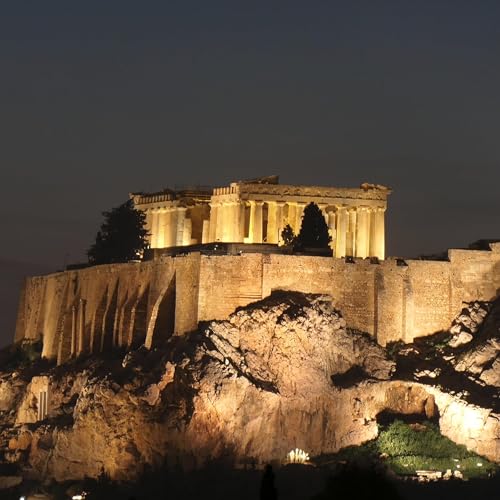
  • The Athenian Acropolis, Throughout the Ages
    Oct 15 2025

    The Athenian Acropolis, Then and Now

    The Athenian Acropolis had a long life both before and after the construction of the Parthenon in the fifth century BCE. Join Emily and Cam as they explore the long history of Athens’ most iconic landmark.

    Visit our homepage to subscribe and to find us on social media:

    • https://havetogawilltravel.com

    Cover Image: Illustration from Atene Attica Descritta da suoi Principii sino all’acquisto fatto dall’Armi Venete nel 1687, by Francesco Fanelli. (Venice, Antonio Bortoli, 1695 edition.)


    Links:


    • Our short blog post featuring pictures of Bronze Age remnants on the Acropolis.
    • Parthenon, by Costa-Gavras. A short video depicting the Parthenon and its evolution through time (featuring Byron’s poem about Elgin).
    • The Acropolis of Athens, 3500 BC – 2010 AD, by Ancient Athens 3D. Another short video, this one depicting the evolution of the Acropolis as a whole.
    • A concept drawing of Schinkel’s vision for the new royal palace on the Acropolis.
    • A ground plan of Schinkel’s vision for the new royal palace on the Acropolis.


    ----------


    00:11 - Introduction


    02:24 - The Acropolis in the Bronze Age

    • 02:29 - An overview of the Bronze Age in Greece
    • 03:15 - The Bronze Age citadel on the Acropolis
    • 04:43 - Traces of the Bronze Age on the Acropolis today

    06:36 - The Acropolis in the Archaic Period

    • 06:37 - The Bronze Age Collapse
    • 07:29 - Ancient interpretations of Bronze Age monuments
    • 08:48 - The great temples of the Archaic period: what can we know?
    • 11:45 - The Pre-Parthenon

    13:34 - The Hellenistic and Roman Acropolis

    • 13:43 - Post-classical Athens as a cultural center
    • 14:40 - Alexander the Great, the Hellenistic rulers of Pergamon, and the Romans
    • 15:57 - Pausanias visits the Acropolis in the 2nd century CE

    17:11 - The Byzantine period and the coming of Christianity

    • 17:17 - The Parthenon: from temple, to church, to the Cathedral of Theotokos Atheniotissa
    • 18:28 - Medieval architectural modifications to the Parthenon
    • 20:09 - The ancient metopes of the Parthenon defaced
    • 21:51 - The Parthenon as a site of Christian pilgrimage

    22:28 - The Fourth Crusade and its impact in Athens

    • 22:41 - The crusaders sack Constantinople and conquer Greece
    • 23:24 - The Acropolis in the era of the Franks

    25:12 - The Acropolis under Ottoman Rule

    • 25:19 - Mehmet II and the conquest of Greece
    • 25:44 - The Parthenon becomes a mosque
    • 26:23 - The Venetian siege of Athens and the explosion heard round the world
    • 29:34 - Lord Elgin removes many of the Parthenon’s sculptures

    37:38 - The Acropolis after the Greek War of Independence

    • 38:14 - The new king of the Hellenes and plans for the Acropolis
    • 39:24 - The “restoration” of the fifth-century BCE Acropolis
    • 42:12 -...
    Más Menos
    49 m
  • The Athenian Acropolis, Then and Now
    Oct 1 2025

    In this episode, Emily and Cam talk about what it’s like to visit the Athenian Acropolis today; how that experience compares to what visitors would have seen in the fifth century BCE; when and why the remains of the structures there today were created (especially the Parthenon and the Erechtheion); and what those structures meant to ancient Athenians.

    Visit our homepage to subscribe and to find us on social media:

    • https://havetogawilltravel.com

    Episode Links:

    • Our short blog post featuring pictures of Nashville’s replica of the Athena Parthenos statue.

    ----------

    00:11 - Introduction

    02:05 - Visiting the Acropolis: the modern experience

    • 02:32 - The geography of Attica
    • 03:41 - Our first impressions of the Acropolis (and how Goethe did it better)
    • 05:45 - What visiting the Acropolis is like: sacred and profane space; the temple of Athena Nikē (and aspects of the gods); the Propylaia; the Parthenon; the Erectheion; the Dörpfeld Foundations

    14:23 - What visiting the Acropolis was like in the fifth century BCE

    • 14:30 - The ramp
    • 16:28 - Athena Promachos
    • 17:01 - Colorful temples
    • 17:38 - Dedications everywhere (and why dedications mattered)

    20:20 - How and when the structures on the Acropolis came to be

    • 20:25 - The basic context: Darius, Xerxes, and the Persian invasions of Greece
    • 22:20 - The Oath of Plataia: the Greeks swear not to rebuild their temples
    • 23:59 - What changed? War in the Aegean, the Peace of Kallias, and the Athenian Empire

    29:01 - The Parthenon

    • 29:26 - The basics of the Parthenon and Greek architectural orders
    • 32:38 - The Parthenon’s pediment sculptures: the west pediment group and the east pediment group
    • 37:31 - The metopes: the Amazonomachy (west), the Trojan War (north), the Gigantomachy (east), Lapiths vs. Centaurs (south)
    • 40:37 - The Ionic frieze and various interpretations of its imagery
    • 43:53 - Pheidias’ statue of Athena and its decoration
    • 46:04 - The meaning of the Parthenon’s sculpture: the Athenians, their empire, and their imperial mission

    49:41 - The Erechtheion

    • 49:49 - The fundamental weirdness of the Erechtheion
    • 52:08 - Why is it so strange? The persistence of ancient ritual.
    • 52:54 - The most sacred image of Athena: the Xoanon
    • 54:08 - Is the building we call the Erechtheion the building the ancient Athenians (and Pausanias) called the Erechtheion? Or is it the temple of Athena Polias?
    • 56:48 - Emily delivers a fine rant about the perils of “received wisdom” in Classics
    • 1:01:08 - Cam footnotes Emily’s rant with a digression on horror vacui

    1:02:02 - Wrap-up

    Más Menos
    1 h y 4 m
  • Spartacus in Fact and Fiction
    Sep 15 2025

    In this episode—the final episode in a three-part series on gladiators—Emily and Cam focus on Spartacus, the most famous gladiator of all. They first discuss the causes of Spartacus’ rebellion against the Romans, and then explore how Spartacus has been represented in modern literature and film.

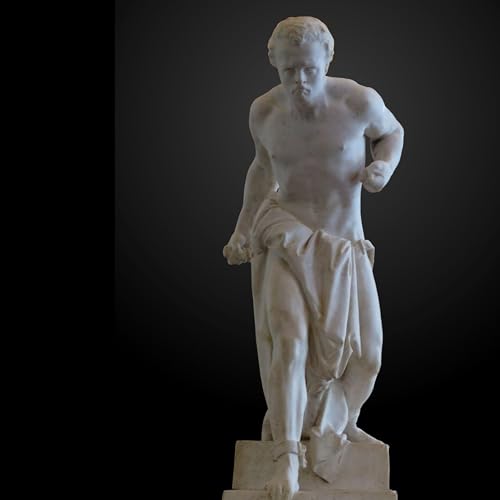
    • Cover image: Vincenzo Vela, Spartacus (1848); photograph by Rama (Wikimedia commons)

    Links:

    • “I am Spartacus”: an iconic scene from Kirk Douglas’ 1960 film
    • Pepsi’s “Spartacus” commercial
    • “The Son of Spartacus”: an unofficial 1962 sequel to the Kirk Douglas movie, starring Steve Reeves

    Visit our homepage to subscribe and to find us on social media:

    • https://havetogawilltravel.com

    ----------

    00:10 - Introduction

    01:11 - The sources: what can we know about Spartacus?

    • 01:27 - Plutarch, Appian, and their interest in Spartacus
    • 02:17 - Sallust: the original source

    02:58 - Spartacus: a basic biography

    • 03:05 - Spartacus' origin in Thrace, among the Maidi
    • 03:16 - Spartacus' brief career as a Roman auxiliary and as a latro
    • 03:49 - Spartacus enslaved and sold to the ludus of Lentulus Batiatus
    • 04:44 - The gladiators escape from Batiatus’ ludus, seek refuge on Mount Vesuvius, and defeat several forces sent to suppress them
    • 07:07 - As the rebellion gathers steam, Spartacus and his supporters drive north, and defeat three Roman armies along the way
    • 10:04 - After Spartacus’ army turns south again, winning yet another major battle, the Romans entrust Crassus with the responsibility of ending the rebellion
    • 11:49 - The Romans outmaneuver Spartacus and defeat the rebels

    15:31 - Why did Spartacus and his supporters rebel?

    • 15:51 - Enslaved people and small-scale resistance
    • 17:28 - What made large-scale rebellions so difficult
    • 18:40 - Poor living conditions as a motivation for rebellion: gladiators, enslaved herdsmen, enslaved agricultural workers
    • 21:16 - Poor prospects for winning manumission as a further motivation for rebellion
    • 23:03 - Many of the rebels had been enslaved only recently and longed to reclaim their freedom

    24:52 - What were Spartacus and his supporters attempting to accomplish?

    • 25:15 - To escape from Italy, or not? The sources and the problem of reconstructing Spartacus’ plans
    • 27:01 - Modern approaches: (1) The sources had it right; (2) Spartacus had a larger agenda—whether to destroy the hegemony of Rome in Italy, or to end slavery
    • 28:15 - A critique of these approaches, and an alternative: staying together was the best guarantee of freedom

    31:16 - The ongoing resonance of Spartacus in modern literature, film, and television

    • 32:29 - The discovery of Spartacus by French and Italian thinkers in the 18th and 19th centuries
    • 33:35 - The Marxist and communist take on Spartacus
    • 35:40 - 20th century novels: Koestler’s “The Gladiators” and Fast’s “Spartacus”
    • 38:20 - Spartacus goes to Hollywood: Kirk Douglas’ 1960 film and Spartacus as social revolutionary
    • 49:08 - A Spartacus for the 20th century: Andy Whitfield as Spartacus

    51:05 - Wrap-up

    Más Menos
    53 m
adbl_web_global_use_to_activate_DT_webcro_1694_expandible_banner_T1