Episodios

  • Episode 158: AI Reshapes Business Processes with Josh Lawman
    Mar 24 2026

    Most organisations are still treating AI as a chatbot or productivity layer. In this episode, Andrew Gaule and Josh Lawman discuss why that mindset is too limited, and what leaders should do instead.
    They explore where companies are under leveraging AI, why expert heuristics still matter, how to make organisations more legible to AI, and what practical implementation looks like in financial analysis, bookings, customer interaction, and investment workflows.

    Chapters
    00:00 Introduction
    02:12 Where organisations really are with AI
    06:02 Why Copilot is not enough
    07:04 Financial analysis and expert heuristics
    12:17 Bookings, missed calls, and AI in operations
    17:31 Education, leadership, and implementation
    19:15 AI for investment screening and support
    24:27 Agents talking to agents
    33:19 AI hype versus the dot com era
    39:40 Oxtech Week and closing thoughts

    If you are leading AI strategy or implementation, share the one workflow in your organisation that should be redesigned first.


    Más Menos
    40 m
  • Episode 157: From University Patent to Trade Sale with Carolyn Hicks of Brill Power
    Mar 6 2026

    Carolyn Hicks shares the Brill Power journey from early university IP through grants, fundraising, product development, corporate engagement, and acquisition integration. Practical lessons for founders building in complex B2B and hardware-heavy markets.

    Chapters
    00:00 Intro and background
    01:00 How Brill Power started
    02:00 The technology and early IP
    07:00 Grants, pitch events, and early traction
    09:40 First meaningful investment and investor fit
    17:10 Scaling products, hiring, and manufacturing
    20:20 Corporate partnering, decision makers, and IP risk
    24:20 Acquisition and integration
    27:00 Gender, confidence, and founder communication

    If you are building deep tech in a regulated or complex market, message Andrew Gaule for a discussion on your experiences.

    Más Menos
    35 m
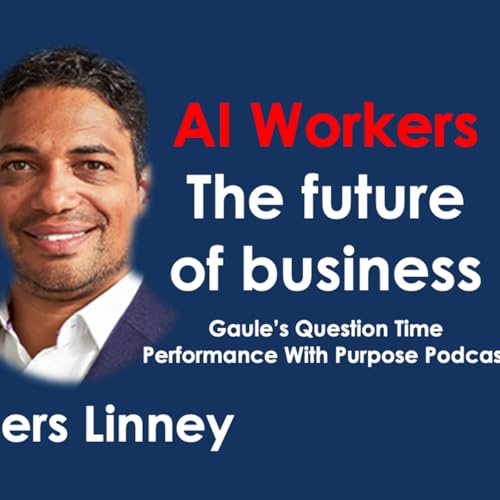
  • Episode 156: AI Is Not A Project: How To Deploy Digital Workers with Piers Linney
    Feb 24 2026

    In this episode, Andrew Gaule (linkedin.com/in/andrew-gaule-aimava) speaks with Piers Linney about how organisations can deploy AI workers and agents in a governed, measurable way. The discussion moves beyond productivity tools into the reality of implementation, ownership, integrations, and risk controls.

    Chapters:
    00:00 Intro and Piers’ background
    02:00 Why AI adoption is hard in real organisations
    05:00 AI workers, agent teams, and integrations
    10:30 Reactivation, out of hours revenue, and mystery shopping
    14:40 Jobs concern and redeployment reality
    23:40 Think big, start small, Lens then Action
    28:10 Ownership, governance, and who decides
    30:15 Why AI speed changes the competitive set
    31:15 Robotics and what is coming next

    If you want to lead change, contact Andrew to discuss a “Lens then Action” pilot.
    To book a meeting to discuss where we can add value https://calendly.com/andrew-gaule/15min

    Más Menos
    34 m
  • Episode 155: Bridging the Talent Gap, How Universities and Employers Must Rethink Engagement - Blayne Cooper, Henley Business School
    Jan 7 2026

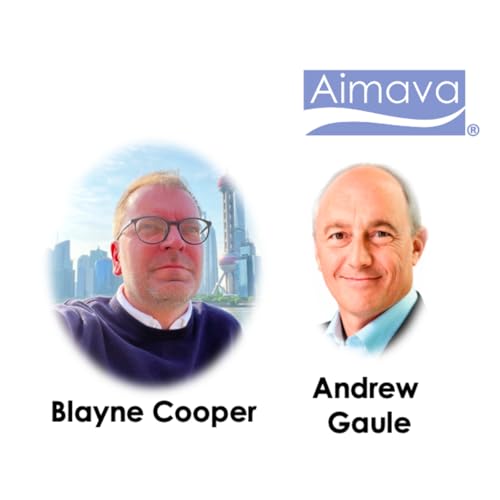
    The way organisations attract, assess and develop early career talent is under pressure. Hybrid work, global competition, AI driven automation and shifting student expectations are fundamentally reshaping employer engagement. In this episode of Gaule’s Question Time, Andrew Gaule is joined by Blayne Cooper, Head of Employer Engagement at Henley Business School, to explore how universities and employers must evolve together to keep pace with this change. More details below.

    You can listen to this interview as a podcast on Gaule's Question Time on Apple, Spotify, Google and many other podcast channels. https://www.podomatic.com/podcasts/gaulesqt
    Subscribe for future interviews.
    See this and other video content at Aimava Purpose to Performance Channel https://www.youtube.com/@P2PfromAimava

    Drawing on Henley’s scale and experience across undergraduate and pre experience postgraduate programmes, Blayne explains how placements, internships and strategic projects are becoming critical bridges between education and employment. He shares why real world experience dramatically improves student outcomes, how competition for placements is intensifying, and why businesses that engage early gain access to fresh thinking, digital fluency and diverse perspectives.

    The conversation also tackles the growing role of AI in hiring and work itself. From automated graduate roles to the rise of virtual internships, Andrew and Blayne explore how organisations can blend AI capability with human judgement, creativity and adaptability. The discussion highlights new low risk models for employers, including funded master’s internships, and why employer engagement is no longer just a recruitment activity, but a strategic investment in future capability.

    Questions and Answers

    1. How is employer engagement changing today
      Blayne explains that employers are no longer just hiring for technical skills, but for adaptability, emotional intelligence and work ethic. Hybrid and virtual models have forced universities and employers to rethink how experience is delivered and assessed.

    2. How big is Henley’s student population and engagement activity
      Blayne outlines Henley’s scale, with around 800 undergraduates per year group and more than 1,000 pre experience postgraduates, supported through placements, internships, projects and study abroad options.

    3. Why are placements so important for students
      Blayne highlights that over 95 percent of students who complete a placement year achieve a two one or first class degree, with significant long term employability benefits.

    4. What value do students bring to employers
      Students bring fresh knowledge, digital capability, diversity and new perspectives, often delivering project based work that rivals traditional consulting at a fraction of the cost.

    5. What is the master’s internship scheme
      Henley funds six week paid internships for master’s students, covering national living wage costs, reducing risk for employers while preserving proper recruitment standards.

    6. How is AI changing early career roles
      AI is automating some graduate level tasks, but Blayne stresses that organisations succeeding with AI are those that embed it while retaining human interaction, feedback and judgement.

    Más Menos
    37 m
  • Episode 154: China in the New World, AI, Supply Chains and Global Strategy with Dr Edward Tse
    Nov 20 2025

    This interview brings together two long-time observers of China’s technological transformation, Andrew Gaule ( https://www.linkedin.com/in/andrew-gaule-aimava? ) and Dr Edward Tse ( https://www.linkedin.com/in/edward-tse-8a951916? ), to explore how China has rapidly moved from a manufacturing base to a global centre of AI, robotics, digital payments and supply-chain innovation.

    Discussing "China in the New World: Why global companies must put China at the core of their global plans" Edward's new book available on Amazon https://amzn.eu/d/2c4UNn0

    See more information below....

    You join an AI Academy program see Aimava Eventbrite. https://www.eventbrite.co.uk/o/aimava-global-advisory-firm-11938296163
    To book a meeting to discuss entrepreneurship, AI and other business change with Andrew - https://calendly.com/andrew-gaule/30min?

    You can listen to this interview as a podcast on Gaule's Question Time on Apple, Spotify, Google and many other podcast channels. https://www.podomatic.com/podcasts/gaulesqt
    Subscribe for future interviews.
    See this and other video content at Aimava Purpose to Performance Channel https://www.youtube.com/channel/UCV9o-htFNIk9Yt7jp2XcdWw

    Reflecting on more than three decades of advising multinational and Chinese companies, Edward explains the ideas behind his new book China in the New World, which outlines China’s resilience, its evolving economic model and why global CEOs must now put China at the core of their strategy. China’s innovation is no longer limited to foundational technologies, but increasingly driven by AI applications across manufacturing, healthcare, pharmaceuticals, consumer devices and mobility. Andrew adds perspective from his own experience building products in China, noting the unmatched speed, flexibility and scale of its supply chain ecosystems. Together they discuss why Western companies must shift from trying to replicate China’s scale to forming new forms of partnership as Chinese manufacturers and digital ecosystems globalise. They also explore the next wave of digital finance, including stablecoins, central bank digital currencies and real world asset structures, and how these may reshape global supply chains. This conversation provides critical insight for global executives navigating the next era of technology driven competition and collaboration.

    Más Menos
    28 m
  • Episode 153: Inside Workday Ventures: Strategic Innovation with Barbry McGann
    Nov 3 2025

    In this episode of Gaule's Question Time, Andrew Gaule welcomes Barbry McGann, SVP and Managing Director of Workday Ventures, for a deep dive into the strategic investment arm of enterprise SaaS giant, Workday. Barbry provides an insightful overview of how the $500M fund operates—not as a traditional VC but as an innovation accelerator, aligning startups with Workday’s core mission in HR and finance applications.

    See more information below....

    You join an AI Academy program see Aimava Eventbrite. https://www.eventbrite.co.uk/o/aimava-global-advisory-firm-11938296163
    To book a meeting to discuss entrepreneurship, AI and other business change with Andrew - https://calendly.com/andrew-gaule/30min?

    You can listen to this interview as a podcast on Gaule's Question Time on Apple, Spotify, Google and many other podcast channels. https://www.podomatic.com/podcasts/ga...
    Subscribe for future interviews.
    See this and other video content at Aimava Purpose to Performance Channel https://www.youtube.com/channel/UCV9o-htFNIk9Yt7jp2XcdWw

    Barbry explains the Ventures team’s approach to investing in AI-driven, enterprise-focused SaaS companies that complement Workday's product suite. She breaks down the rigorous investment process, from due diligence to integration support, and highlights the unique value offered through access to Workday’s partner ecosystem.

    The conversation explores how AI is transforming enterprise software and venture capital itself—from changing job roles to redefining investment strategies and performance metrics. Barbry also reflects on how Workday Ventures is adapting to shifting startup dynamics, including the disappearance of traditional Series A rounds due to rapid acquisitions.

    With a background in product leadership and strategic alignment, Barbry shares her optimistic yet grounded perspective on how AI augments human capability, reshaping the future of work. This interview offers a compelling look at corporate venturing done right, with strategic alignment, partnership, and long-term vision at its core.

    To book a meeting to discuss entrepreneurship, AI and other business change with Andrew - https://calendly.com/andrew-gaule/30min?

    Más Menos
    23 m
  • Episode 152: AI’s Exponential Moment, China’s Rise & What Comes Next – Azeem Azhar of Exponential View
    Oct 20 2025

    In this captivating episode of Gaule’s Question Time, Andrew Gaule sits down with Azeem Azhar (https://www.azeemazhar.com ) technologist, investor, and creator of Exponential View—to unpack the seismic shifts being driven by artificial intelligence, clean energy, and exponential technologies. Azeem reflects on three decades in the tech industry and the patterns he has observed around innovation, economic change, and institutional adaptation.

    More information below..
    To book a meeting to discuss entrepreneurship, AI and other business change with Andrew - https://calendly.com/andrew-gaule/30min?

    You can listen to this interview as a podcast on Gaule's Question Time on Apple, Spotify, Google and many other podcast channels. https://www.podomatic.com/podcasts/gaulesqt
    Subscribe for future interviews.
    See this and other video content at Aimava Purpose to Performance Channel - https://www.youtube.com/@P2PfromAimava

    Links to content mentioned in the Podcast
    Exponential View by Azeem Azhar https://www.exponentialview.co
    Exponential Age Book https://amzn.eu/d/gCcOwRI
    Is AI a Bubble? https://www.exponentialview.co/p/is-ai-a-bubble
    China Perspective by Andrew and Aimava with High Speed Train and Electric Vehicle insights from 7 years and more ago - https://youtube.com/playlist?list=PL1uoHtDaXwmVP_bPDCeSB3ucFETNd-L5O&si=XFpgEIz7jddePh5Z

    Together, Andrew and Azeem explore the parallels between AI’s current trajectory and past transformative moments like the internet and electricity, contemplating whether we’ve reached the “iPhone moment” for AI—or whether that leap is still on the horizon. They delve into how organizations are (and aren’t) keeping pace, why general purpose technologies are different this time, and what this means for productivity, education, and the future of jobs.
    The conversation also turns global, highlighting China’s rapid adoption of electric vehicles, AI, and open-source collaboration, contrasted with Western market hesitations. They conclude with a candid discussion on whether we’re heading for an AI investment bubble—or a productivity boom. This episode offers timely and thought-provoking insights for anyone interested in the future of business, technology, and society.

    Q&A Summaries
    1. Can business and society keep up with exponential change?
    Azeem: Businesses move faster than governments, but adapting fully still takes time. While technologies like AI spread rapidly, institutions, education, and norms lag, creating an adaptation gap.
    2. When will AI have its 'iPhone moment'?
    Azeem: We're not there yet. GPT tools are like Ferraris—powerful but hard to use well. Full AI integration into everyday life and business could happen within 3–5 years for early adopters.
    3. How will AI affect jobs and young graduates?
    Azeem: Graduate hiring is already slowing, partly due to AI, but also economic uncertainty. The key for young people is developing judgment, metacognition, and the ability to work with AI tools effectively.
    4. Is an AI bubble coming?
    Azeem: Possibly. He outlines 5 markers to watch: economic strain, industry stress, revenue growth, valuation misalignment, and funding quality. Right now, indicators suggest potential for a future bust—but not imminently.
    5. What role is China playing in the AI and tech race?
    Azeem: China is deploying AI rapidly and taking a pragmatic, open-source approach. Their advancements in EVs and infrastructure outpace the West. The West underestimates China's strategic capabilities.
    6. How should leaders use AI today?
    Azeem: Leaders should experiment and train themselves. Roleplaying with Claude, GPT, or HeyGen avatars can help develop customer engagement and leadership skills in a rapidly changing environment.

    To book a meeting to discuss with Andrew - https://calendly.com/andrew-gaule/30min?

    Más Menos
    40 m
  • Episode 151: Investor Insights & Startup Resilience with Spacebands Founders
    Oct 10 2025

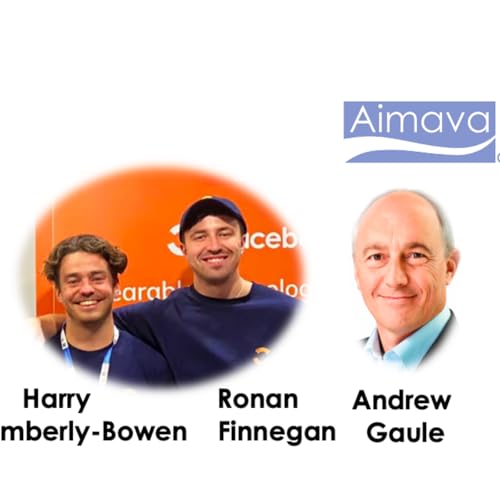
    In this episode of Gaule’s Question Time, Andrew sits down with Harry Kimberly-Bowen ( https://www.linkedin.com/in/harrykimberley-bowen/ ) and Ronan Finnegan (https://www.linkedin.com/in/ronanfinnegan/ ) , co-founders of Spacebands https://www.spacebands.com —a health and safety wearable technology startup born during the COVID-19 pandemic. What began as a simple proximity alert device has since evolved into a cutting-edge, multi-sensor wearable designed for industries like construction, manufacturing, and logistics. Harry and Ronan share their candid journey from university side-hustles and tech startups to scaling a hardware business during one of the most disruptive periods in recent history.

    See more information below.

    You join an AI Academy program see Aimava Eventbrite. https://www.eventbrite.co.uk/o/aimava...
    To book a meeting to discuss entrepreneurship, AI and other business change with Andrew - https://calendly.com/andrew-gaule/30min?

    You can listen to this interview as a podcast on Gaule's Question Time on Apple, Spotify, Google and many other podcast channels. https://www.podomatic.com/podcasts/gaulesqt
    Subscribe for future interviews.
    See this and other video content at Aimava Purpose to Performance Channel - https://www.youtube.com/@P2PfromAimava

    Bootstrapped from a kitchen table and grown through customer insight and grit, Spacebands’ founders talk openly about the challenges of hardware development, the transition from UK to Asian manufacturing, and the rollercoaster of raising capital—from angel investors to institutional seed rounds. Their story reflects resilience, creativity, and a relentless pursuit to solve real-world problems in the workplace. If you're a founder, investor, or simply curious about what it takes to build a tech startup from scratch—this is a must-listen.

    Q&A Summaries
    What is Spacebands and how did it start?
    A proximity alert wearable developed during the pandemic to prevent COVID transmission, later evolved into a comprehensive health & safety device through customer feedback.

    How did you pivot post-COVID?
    They consulted existing users—primarily heads of health & safety—to identify new industry needs, such as forklift proximity alerts, hand-arm vibration, and noise monitoring.

    What were the challenges in developing new hardware?
    The second-gen product was far more complex with 10+ sensors, requiring multi-year development, multiple prototypes, and a complete shift from UK to Asian manufacturing.

    What lessons were learned in working with development agencies?
    They initially struggled with an under-resourced UK agency and later succeeded by finding a trusted Asian manufacturer through network referrals.

    What was their fundraising journey like?
    Started with angels using LinkedIn automation, raised a £750k pre-seed, and are now closing a seed round. They've learned how to improve their pitch and attract higher conversion.

    Why do early-stage startups need traction, not just ideas?
    Investors need to see real-world validation, not just pitch decks. Their ability to show working products and early sales was key to gaining investment and credibility.

    To book a meeting to discuss entrepreneurship, AI and other business change with Andrew - https://calendly.com/andrew-gaule/30min?

    Más Menos
    25 m