Episodios

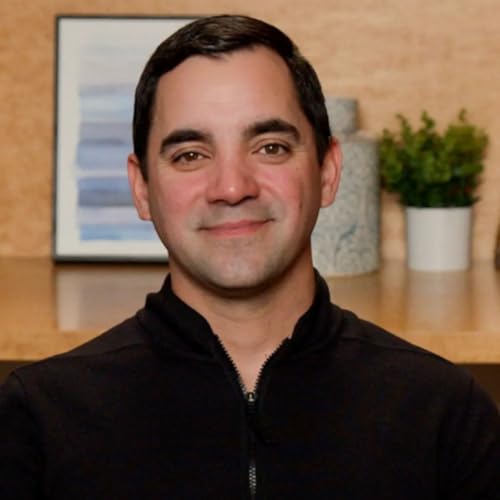
  • Elevating Digital Experiences with Terry Peters
    Dec 12 2025

    The most enjoyable part of doing the podcast is talking to a wide range of people who, regardless of their industry or role, share a common goal: making things better. At the end of the day, that’s what it’s all about. Sometimes we make things better by selling something people need. Other times, it’s by teaching them something new, creating an art installation that moves them, designing a workplace where they feel fulfilled, or building tools that make tasks easier. Whatever the approach, the mission remains the same—to make things better.

    This simple goal can often get lost behind the different names our work has taken over time. Take “UX,” for example. It started as “Human Factors,” then became “Human-Computer Interaction,” and eventually evolved into “User Experience” and “Human-Centered Design.” Whatever the term, it all comes back to the same principle: improving lives. The more we keep that in mind, the better we understand what this work is truly about.

    There’s a lot of talk today about creating a “Digital First” strategy. But perhaps we should think in terms of a Human First strategy—focusing on what people want, what they need, and how we can help close the gap. One of the great things about being a podcast host, educator, and thought leader in this space is providing the tools that help others create the tools people need.

    My guest on this episode of Experience by Design understands what it means to elevate human potential and create “human-powered excellence.” Terry Peters discovered his passion for computers and coding through his high school football coach. Over his 20+ year career, he has helped organizations shape their digital strategies through user research, systems design, and user-focused experiences. His systems perspective emphasizes the importance of employee experience within technological and digital design—prioritizing their voices to create solutions that truly make things better.

    We discuss Terry’s journey into management information systems and eventually user experience. We explore the challenges of requirements gathering, the role of AI as a supportive tool in human-centered design (rather than a replacement), and Terry’s work with Veracity, now part of RGP, where empathy is central to projects that impact employees’ work and lives.

    Finally, we reflect on the ethos of user experience: improving people’s lives and making things better. By integrating diverse perspectives, we can build tools that help people achieve that goal.

    Terry Peters on LinkedIn: https://www.linkedin.com/in/terry-peters-m-s-8198b61b/

    RGP: https://rgp.com/

    Más Menos
    1 h y 6 m
  • Mind Congruency and Leadership Design with Manny Fiteni
    Dec 5 2025

    As listeners would have heard previously, I attended a FinTech event which got me thinking about financial literacy and financial experiences. I’ve started to write some thoughts down related to that which I am posting on my Substack. You can find that at https://garycdavid.substack.com/.

    This post was about financial literacy as financial inclusion, and how knowledge is power especially in relation to financial decision making for oneself. I will admit this gets tricky because it can seem like the financial game at the highest levels may be for lack of a better term ‘rigged.’ Financial literacy may not go very far when the game is a ‘heads you win, tails I lose’ proposition. Nevertheless, it is important that people understand the nature of finance and financial decision making. FinTech in its variety of forms provides an opportunity to do this. There is a lot to explore and discuss in this realm, especially in relation to the creation of financial experiences.

    My guest today on Experience by Design actually has a work background in financial services. Manny Fiteni worked in wealth management and financial planning. But that’s not why we talked. Rather, we talked about his work “The Mind Congruency Effect” and how it applies to leadership and more effective employee experiences. The book and his larger body of work explore how inner obstacles keep us from achieving greater potential, which is something that we can all relate to.

    Beyond that, we discuss how this also stops managers from more effectively managing. I’ve often said, “If you call people managers, that’s what they’ll do.” We discuss how this is not necessarily the best role for managers. Employees need to have levels of autonomy in which they can have agency and some level of authority over their work. But it is not just employees acting alone, but together toward a shared goal and purpose. This is why managers need to act more like community organizers and facilitators which bring people together.

    However, people in management roles are rarely if ever taught those kind of skills, and why they are important.

    We talk about the traits of being a high-performing leader, and what an employee-centric manager looks like. We discuss how managing is different from leading, and how the people side is more important than the technical and compliance side. We also talk about how he is creating new training and development approaches to help better prepare managers to become leaders in a more employee-centric way. And we also talk about how he was working at a bank that was robbed, and how imagining that scenario prepared him on how best to respond. Like an athlete, if you rehearse something enough times, the mind creates patterns of how best to respond.

    Manny Fiteni: https://mannyfiteni.com/

    Manny Fiteni on LinkedIn: https://www.linkedin.com/in/manny-fiteni-b0173637/

    “The Mind Congruency Effect”: https://www.amazon.com.au/Mind-Congruency-Effect-Transforming-Direction/dp/1763745406/

    Más Menos
    1 h y 14 m
  • National Medal of Honor Museum Experience
    Nov 28 2025

    For those listeners in the United States, a Happy Thanksgiving to you all. Thanks for being part of Experience by Design podcast and making putting on the show worthwhile and rewarding. And for those of you in Canada, Happy Belated Thanksgiving. And for those in other parts of the world, I hope you can take a moment to give thanks for whatever you feel thankful.

    Giving thanks is not just something that should be reserved for one day a year. Giving gratitude should be something that we all do everyday. I know that I am trying to do so, especially for the small things in life. Gratitude is a practice like any other practice, and the more we do it, the better we can get at it. Not that I am good at it yet, but I am definitely trying to get better.

    Today’s episode is about giving thanks for those who served in such a way that they were awarded the highest honor in the US military: The Medal of Honor. I welcome Alexandra Rhue (SVP, Museum Engagement and Strategic Initiatives from the National Medal of Honor Museum) and Michael Lewis (Executive Creative Director from G&A) to talk about their work in creating and developing the National Medal of Honor Museum, located in Arlington, TX.

    We talk about the 3500 plus stories behind each person who was awarded the medal, but how each story comes down to the same elements of courage, sacrifice, commitment, integrity, citizenship, and patriotism. A major element of the museum is to inspire all visitors to recognize how these elements are in all of us as well. In other words, we talk about the hero that is within us all by exploring the stories and lives of those who have been recognized for their supreme valor and in many instances ultimate sacrifice.

    We talk about the symbolism that is layered throughout the National Medal of Honor Museum, starting with the very architecture of the structure. We explore the ways that US society has evolved in terms of recognizing and discussing military conflict and service. Alex and Michael emphasize the ultimate goal is not just recognition, but getting people to leave with a renewed sense of service to their own communities in whatever capacity they can, and to live the values embodied in the Medal of Honor.

    We also discuss the design and visitor experience of a museum and memorial. We explore the balance between immersive technology and traditional museum elements, aiming to create an emotional and personal experience. Michael and Alexandra explained the use of multimedia, including large-scale images, VR installations, and interactive projections, while emphasizing the importance of technology that enhances rather than distracts from the visitor journey. Alexandra and Michael emphasized the importance of placing visitors' perspectives at the center of storytelling, incorporating both human narratives and technological elements to enrich the visitor experience.

    Alexandra Rhue: https://www.linkedin.com/in/alexandra-rhue/

    National Medal of Honor Museum: https://mohmuseum.org/

    Instagram: https://www.instagram.com/mohmuseum/

    Twitter/X: https://x.com/MohMuseum

    Facebook: National Medal of Honor Museum | Arlington TX | Facebook

    Michael Lewis: https://www.linkedin.com/in/mgelewis/

    G & A: https://gallagherdesign.com/

    G & A Instagram: https://www.instagram.com/g.ampersand.a/

    G & A LinkedIn: https://www.linkedin.com/company/g-a-strategy-and-design/

    Más Menos
    1 h y 4 m
  • Blue Collar Financial Experiences with Chad Hufford
    Nov 21 2025

    Yesterday I had the privilege of attending the Assistive Technology Conference of New England, put on by TechACCESS of Rhode Island. It was a great event that brought together professionals and companies that are trying to improve accessibility through technology for those with ranges of physical and intellectual challenges. Walking around, looking at the exhibits, and talking with people, I was continuously impressed by the innovation and dedication around me.

    I would say it was “inspiring” but not in the way that one might usually think. The word “inspiring” can have a negative connotation in this world because it puts people with such challenges on a pedestal, as if their job is to be inspiring, or all they are is their disability, or makes people with these challenges a spectacle. Having a child who is intellectually and developmentally disabled, I totally get that argument.

    When I say “inspiring”, I am referring to the people who are working and creating products in this space. It is inspiring for me to see professionals dedicate their work to improve and enhance the lives of others, no matter who that population is. That is very cool, and inspirational. No matter what job we are doing, we should be thinking of ways that we can improve the lives and experiences of others. That is what experience design and this podcast is all about: showcasing the work of those who are trying to apply their time, knowledge, and creativity to improving experiences and lives in ways large and small.

    One of the things I need to do more of is highlight people who are working in the world of accessible technology. So stay tuned for that!

    And my guest today on Experience by Design is doing the work to improve people’s lives as well in his own way. Like many guests on ExD, Chad Hufford of Veritas Wealth Management in Anchorage, Alaska is a behavioral scientist at heart, fascinated with what makes people act the way they do and what can be done to get them to make changes. He has applied this interest in the work he does as a financial planner.

    He does this up in Alaska, focusing his efforts on those who are working in those uniquely blue-collar Alaskan jobs where high risk can come with good pay. His goal is to help them make the best decisions possible with what they earn, but also help to create cultural and behavioral change in his clients. Part of this is to get people to not just think, but to act. His new book “Forging Financial Freedom: Constructing Blue-Collar Millionaires with Seven Wealth Building Lessons Extracted from the Alaska Oilfield”, lays out his experiences and lessons from doing this work.

    We talk about Chad’s fascination with fitness, and how that led him to be interested in medical school. Biochemistry taught him a lot about problem solving and complex interactions within systems. The same can be said for the financial world, where a lot is beyond your control. Despite that, you can control how you act and what your vision of your future is.

    We also talk about unique aspects of Alaskan culture, overcoming complexity in financial decision making, how to build trust in financial planning, and making for better financial literacy and experiences. He emphasizes the importance of emotional connection and empathy in financial advising, and why friction is required to allow for thoughtful consideration. We explore how AI and technology can reduce friction in financial transactions but should not replace human empathy.

    Chad Hufford: https://www.linkedin.com/in/chad-hufford-066208100/

    Forging Financial Freedom: https://www.forgingfinancialfreedom.com/single

    Veritas Wealth Management: https://www.veritasalaska.com/

    Más Menos
    1 h y 6 m
  • Authentic Digital Experiences with Victor Cho
    Nov 14 2025

    I am back from the FTT Fintech Festival, hosted by VC Innovations and taking place in London. I was hosting a panel on attracting the next generation of customers to mutuals, which are member-owned financial institutions offering different types of services and products. I was lucky enough to have a great group of panelists, and it was a great event over two days. To say that I learned a lot would be an understatement. The event was full of really engaging conversations and panels around a host of topics in the intersection of finance and technology. Since I’m not a finance professional, I wasn’t sure how I would integrate into the event and conversations with people there. Plus it was the British and Irish financial systems that were being discussed, which I know basically nothing about. However, despite these important and obvious differences between my knowledge and the knowledge of other attendees, there was enough in common to make conversations pretty easy.

    The main thing we had in common was that we were all interested in creating experiences of all kinds. There were conversations around customer, user, employee, and digital experiences. There was also mention of frictionless financial experiences, security experiences, and experience-driven identity. It was pretty easy to find the common ground since everything was about experience research and design at some level. Those in industry were interested to hear what us in academia were doing around experience design teaching.

    Another theme was the impact of artificial intelligence as an element of fintech. Amongst all the conversations of AI was the question of whether or not a “digital first” strategy makes sense for customers seeking financial services. It was clear that people in general, and some specific populations, want to experience the authentic touch of a human being in their interactions. This led to some discussion about what to do with the bank branch. If we are moving to a digital first strategy, then why have branches? At the same time, people want to have the convenience of digital.

    What if we could have both? The warm touch of a human being at a branch along with the convenience of digital.

    Enter my guest today on Experience by Design, Victor Cho. Victor has a long career of digital transformation and now is CEO of Emovid. Emovid’s product combines the authenticity of face-to-face conversations with the improved efficiency outcomes of AI through the use of video-based communication. Another element of his work is an emphasis on stakeholder capitalism, and businesses contributing to improving society.

    We talk about his path to CEO success, and how his interest in his Commodore 64 started it. He describes how his business education and religious upbringing combined to prioritize social responsibility over personal gain.

    We also talk about how we need to create authentic communication in a tech era. Victor shared updates on Emovid’s progress, including their platform launch and plans for a new generative AI imaging solution focused on maintaining authenticity in communications. He highlighted the importance of considering the broader impacts of technology and the need for ethical decision-making in its implementation.

    This conversation would have been right at home at the FTT Fintech Festival, and it is a perfect time to share the conversation with you.

    Vincent Cho: https://www.linkedin.com/in/victor-cho-/

    Emovid: https://www.emovid.com/

    Más Menos
    1 h y 2 m
  • Changing Healthcare Experiences with Kate Katz
    Nov 7 2025

    It is that time of year again when employees have to make a selection of their benefits package, which includes your healthcare plan. I just got the announcement from HR that the enrollment period is now for that uniquely American thing that we call “employer-based healthcare.” It is fascinating that a healthcare program that is unlike any other developed country is taken so for granted as “that’s just how it is” because that is how we have come to know it and we are used to it. For the most part, this is how people think healthcare is supposed to work.

    But beyond that, what do we know about how it works or how it can or should work?

    I’ve done some research in healthcare, primarily around the creation and use of medical records. While that might seem to be a trivial topic, let me assure you that everything in healthcare happens around the record. That’s because of how our billing systems works, how coding factors into it, how things like case mix indices and severity of illness indicators function, and all the other assorted features that rely on paper to make happen. When you see how healthcare in the United States actually functions, it can be pretty eye opening.

    With the government shutdown, there has been more discussion of healthcare and how it is provided in a way that is accessible and affordable. In politics, healthcare is an evergreen topic in that it is always present and you can rely on it to stir strong reactions. Despite all the chatter, we still can use help in better understanding just what is happening and how we might think about possibilities related to it.

    This is why we are lucky to have Kate Katz as my guest today on Experience by Design. Kate comes from the UK, where you might have heard they have a different healthcare system than in the United States. While in the UK, Kate worked with healthcare organization to help them improve the delivery of services. Kate now works with hospitals in the US to help them improve the delivery of their medical services. As a result, she is in a great position to help us understand healthcare experiences from a variety of angles and perspectives.

    We talk about the challenges of implementing change in healthcare systems, and how it is not just about the rules and regulations, but about bringing people along for the changes. We discuss service-oriented versus profit-oriented approaches in healthcare, as well as efficiency and making use of existing resources matters in both.

    Since everything seems to be about AI, we also explore AI implementation challenges in healthcare, and why hospitals are good at piloting but not terribly good at scaling. Part of this is because there are so many other elements tied into healthcare, leading to the need of a systems orientation when thinking about behavioral changes.

    Finally we talk about visible versus invisible conditions and diagnoses. Kate shares her own story about how just because something is not visible doesn’t make it less impactful. Even though we may not see the factors impacting people, we need to be constantly aware and empathetic from a personal and organizational perspective. This extends not just to those who are being treated in healthcare, but those who are working in it as well.

    Kate Katz: https://www.linkedin.com/in/katekatz/

    Más Menos
    1 h y 14 m
  • Sports Conflict and Equity with Josh Gordon
    Oct 31 2025

    I went to a Catholic all-boys high school run by the Christian Brothers, a teaching order founded by St. John the Baptist De La Salle. I will give them credit for giving me great preparation for future academic success, and even maybe this podcast. So at the foundation of Experience by Design are the Christian Brothers.

    But that wasn’t my first brush with Catholicism. I did a fair number of the sacraments growing up and into adulthood, a process which included learning about the tenets and history of such central figures like Jesus. One of the things I recall learning about was the Sermon on the Mount and the Beatitudes. I also preferred the Beatitudes to things like the Ten Commandments. In a way the Commandments can read like the rules of a HOA of all the things you can’t do. It is important to remember things like “Thou shall not kill” and not to “covet thy neighbor’s wife.” But I liked the Beatitudes because they gave props to people already doing good things.

    A really good one is “Blessed are the peacemakers, for they will be called children of God.”

    Regardless of your religious or spiritual beliefs, I think we can all get behind that, especially at a time when there is so much conflict. The Armed Conflict Location and Event Data global monitor organization states, “Recent levels of violence have been unprecedentedly high, with several ‘record-breaking’ months in the past year.” But this just doesn't mean armed conflict on the international stage. Things are tense all over with all kinds of conflict everyday.

    Which is why we have Josh Gordon as a guest on Experience by Design. I’ve known Josh for a long time, but primarily in the capacity of a fellow runner and training partner. Josh also is a faculty member at the University of Oregon, a leader in the area of sports mediation, and the founder of the Sports Conflict Institute. In his career, Josh has done work with FIFA, Major League Baseball, Court of Arbitration for Sport, and others.

    We talk about fairness and equity in sports, and why emphasizing the opportunities provided by sports are meaningful and should not be derailed. We explore how we can build inclusive cultures through sports. He takes us into his work at the collegiate level, and how setting expectations ahead of time can produce greater satisfaction and happiness with ensuing experiences. We also talk about the difference between ‘distress’ and ‘eustress’, and why a little bit of friction can be essential to growth.

    Finally we explore how we can create equitable organizational cultures, and why the perception of fairness can be more important that the presence of outcome.

    Sports Conflict Institute: https://sportsconflict.org

    Josh Gordon: https://www.linkedin.com/in/joshuagordon

    Sports Conflict Institute TV: https://sportsconflict.org/sci-tv/

    Más Menos
    1 h y 12 m
  • Blending Ingredients and Experiences with James Shin
    Oct 24 2025

    My first jobs were in restaurants washing dishes and busing tables. I would go on to do other jobs in restaurants, including cooking, waiting on tables, hosting on occasion. I think working in restaurants is a great first job because it teaches you to deal with people, and work in collaboration with different functions. So no matter what you do in a restaurant, it is a great experience to prepare for life.

    While I for sure was ‘cooking,’ I wouldn’t call myself a “cook.” And definitely wouldn’t consider myself being a “chef.” I was just a person following instructions and performing it in a way that was consistent with expectations. I was told how to prepare something, and I followed those instructions. I know that not everyone can accomplish that, but I don’t consider it a great mark of distinction.

    Being able to successfully combine ingredients in a way that is proscribed is another one of those life lessons that can be applied in a lot of areas. Including organizational leadership.

    Organizations after all are just assemblies of ingredients. There are proscribed ways of putting these organizational ingredients together. Accountants go in the accounting department. Sales people in sales. Marketers in marketing. Etc. And these people sit in the same areas as each other, and they do the work that is related to their areas. And on it goes. That doesn’t take a lot of visionary ability. It typically is the way it goes in all organizations.

    Now if you think of the ingredients right now in your kitchen, there are the staples that you typically rely on and use. You are comfortable with them and know how to deploy them. There are also those things that are seldom used, and you even forget you have. I’m thinking here of the spices I have that I forgot I have and never get included. There also is the stuff in the shelves and freezer that got buried, or maybe I got to use once. So lots of ingredients with no clear idea of what to do with them. There used to be a show with Chef Alton Brown where he would just go into someone’s house and make a meal with what was there. That’s talent.

    On today’s episode, we welcome someone who knows about putting things together, something about how leaders use ingredients, and something about food. Dr. James Shin got his PhD from Penn State in Industrial Engineering, writing a dissertation that looks at (in part) simplicity versus complexity in the design process. Part of what he learned is that if we minimize the problems from the start, they can become more manageable, allowing us to make more progress.

    Rather than go the academic route, he went into industry given his interest in applying knowledge to practical problems. Working in a global organization, he also learned how approaches used by different cultures may work in that particular culture, but may not work as well in other cultures and contexts. Another thing he learned from his global work is that middle management is typically overstressed and underappreciated no matter where in the world they are located.

    We talk about his new book “The Leader’s Soul: 52 Reflections for Unlocking Your Inner Leader.” In it, he looks at his own upbringing in South Korea, moving to the US as part of his PhD completion, his journey through corporate America, and his return to Asia in capacities that included speaking at universities.

    We also talk about his company Blue Koi, and how the koi fish symbolizes growth. However, as he shares, the best kind of sustainable growth occurs not necessarily through focusing on rapid achievement, but through pacing ourselves in our efforts and life. He also reflects on the importance of nuance, and how he had to break from the black and white thinking that can be more prominent in engineering and how humans need to be factored into design.

    And there was some conversation about preparing food, and the importance of not just using the right ingredients, but using the ingredients you have in creative ways.

    Blue Koi: https://www.bluekoiglobal.com/

    James Shin: https://www.linkedin.com/in/james-j-shin/

    "The Leader's Soul": https://www.amazon.com/Leaders-Soul-James-Shin/dp/1963701534

    Más Menos
    1 h y 5 m