Evidence Based Birth® Podcast Por Rebecca Dekker PhD RN arte de portada

Evidence Based Birth®

Evidence Based Birth®

De: Rebecca Dekker PhD RN
Escúchala gratis

In the Evidence Based Birth® podcast, we cover the research evidence on hot topics about pregnancy and childbirth! Our mission is to help birth workers build the evidence based knowledge, skills, and power they need to protect families' ability to give birth with empowerment. The work we do has a huge impact on parents who are searching for accurate information to empower their prenatal, birth, and postpartum experiences!Evidence Based Birth® Crianza y Familias Enfermedades Físicas Higiene y Vida Saludable Relaciones
Episodios
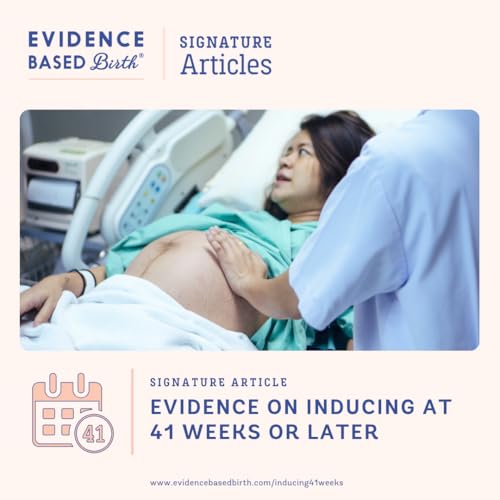
  • EBB 393 - Evidence on Inducing at 41 Weeks or Later
    Apr 1 2026
    At the 41-week mark in pregnancy, conversations and decisions about induction can start to feel more urgent and complex. In this episode, Dr. Rebecca Dekker and Dr. Sara Ailshire share why the 41st week has become such a focus in maternity care and what the evidence actually says about induction at this milestone. They discuss elective induction versus expectant management and key findings from major studies like the INDEX and SWEPIS trials. They also talk through potential benefits and risks, including changes in stillbirth risk, newborn outcomes, and maternal experiences. Content Warning: This episode contains discussion of stillbirth. Please take care while listening. (00:05:58) How common is labor induction? U.S. rates and challenges with data accuracy (00:09:25) Medically indicated vs. elective induction (00:15:24) The limits of research on induction vs. expectant management (00:20:18) The INDEX trial (00:28:36) Follow-up observational study to INDEX: preferences, Cesarean rates, and outcomes (00:32:51) The SWEPIS trial (00:41:59) Impact of SWEPIS on guidelines and outcomes in Sweden (00:44:40) Benefits of elective induction at 41 weeks (00:46:34) Risks and potential downsides of induction (00:49:18) FAQ: Induction and VBAC considerations For a full list of resources and references, visit ebbirth.com/inducingduedates. For more information about Evidence Based Birth® and a crash course on evidence based care, visit www.ebbirth.com. Follow us on Instagram and YouTube! Ready to learn more? Grab an EBB Podcast Listening Guide or read Dr. Dekker's book, "Babies Are Not Pizzas: They're Born, Not Delivered!" If you want to get involved at EBB, join our Professional membership (scholarship options available) and get on the wait list for our EBB Instructor program. Find an EBB Instructor here, and click here to learn more about the EBB Childbirth Class.
    Más Menos
    1 h
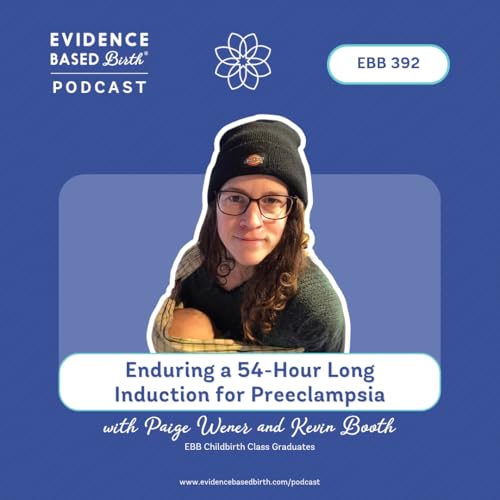
  • EBB 392 - Enduring a 54-Hour Long Induction for Preeclampsia with Paige Wener and Kevin Booth, Graduates of the EBB Childbirth Class
    Mar 25 2026
    EBB Childbirth Class Graduates Paige Wener and Kevin Booth hoped for a low-intervention water birth at their midwife-led birth center in rural Vermont. But at 38 weeks and 6 days, a routine prenatal visit led to a surprise diagnosis of preeclampsia and recommendation for induction. In this episode, Paige and Kevin share the story of their 54-hour induction, including misoprostol, a Cook catheter, Pitocin, and eventually an epidural after more than a day of labor, with Kevin supporting Paige with counterpressure, movement, and comfort measures along the way. Paige also shares about recovering from a rare postpartum complication, temporary nerve damage that caused foot drop, and how rest and supportive care helped her heal. (03:26) Taking the EBB Childbirth Class together (07:33) Birth preferences and planning for a water birth (10:50) High blood pressure at a prenatal visit and preeclampsia diagnosis (15:01) Preparing to return for an induction (18:56) Induction begins with misoprostol (21:45) Adding the Cook catheter and overnight labor (27:35) Starting Pitocin and continuing labor support techniques (29:45) Comfort measures and partner support during labor (34:00) Trying Nubain and deciding on an epidural (41:07) Pushing phase and position changes (45:33) Immediate postpartum and first breastfeeding (47:28) Early postpartum recovery in the hospital (49:11) Discovering postpartum nerve injury (55:34) Advice for birth partners (58:51) Postpartum advice and safe sleep resources Resources EBB 194 – Nutrition and Real Food in Pregnancy with Lily Nichols RDN EBB 365 – Battling a Birth Injury with Leah Van Dale, Former WWE Wrestler and EBB Childbirth Class Graduate Get in touch with Paige and Kevin's EBB Instructor, Lucy Paradiso: lucyparadiso-doula.com/ Learn more about Spinning Babies: spinningbabies.com/ Check out Paige's safe sleep resources: Safe Infant Sleep, Dr. James McKenna How Babies Sleep, Helen Ball La Leche League @cosleepy For more information about Evidence Based Birth® and a crash course on evidence based care, visit www.ebbirth.com. Follow us on Instagram and YouTube! Ready to learn more? Grab an EBB Podcast Listening Guide or read Dr. Dekker's book, "Babies Are Not Pizzas: They're Born, Not Delivered!" If you want to get involved at EBB, join our Professional membership (scholarship options available) and get on the wait list for our EBB Instructor program. Find an EBB Instructor here, and click here to learn more about the EBB Childbirth Class.
    Más Menos
    1 h y 2 m
  • EBB 391 - Electronic Fetal Monitoring Advocacy Tips with Dr. Jennifer Lincoln, OB/GYN and Author of The Birth Book
    Mar 18 2026

    Electronic fetal monitoring is one of the most common interventions in hospital birth, but it's also one of the least understood. In this episode, Dr. Rebecca Dekker talks with board-certified OB-GYN Dr. Jennifer Lincoln about what continuous electronic fetal monitoring actually does, what the research says, and why it became such a routine part of labor care in the first place. With recent media attention shining a spotlight on this technology, they break down the history, the evidence, and the real-world pressures that shape how it's used today.

    Learn why continuous monitoring can increase Cesarean rates in low-risk births, when it may be helpful in higher-risk situations, and how it can influence movement, comfort, and decision-making during labor. Dr. Lincoln also shares practical ways to ask questions, understand what terms like "reassuring" and "indeterminate" mean, and partner with your care team so you can make informed choices without feeling powerless or pressured.

    (02:26) Dr. Jennifer Lincoln's updates: doctors' strike, leadership, and writing The Birth Book
    (10:09) Why electronic fetal monitoring is in the spotlight and what it actually measures
    (13:40) The history of fetal monitoring and what it was designed to prevent
    (17:37) The biggest drawbacks: false positives, rising C-section rates, and medical-legal pressures
    (23:18) How continuous monitoring can affect movement, comfort, and labor experience
    (26:28) Artifact, wireless monitors, and challenges with accuracy
    (28:27) Intermittent monitoring: what it is and how it works
    (30:11) When continuous monitoring may be more beneficial in higher-risk situations
    (37:53) Understanding "reassuring," "indeterminate," and "non-reassuring" patterns
    (39:46) What care teams may try before recommending a cesarean
    (45:15) Questions parents can ask when concerns arise about the fetal heart rate
    (48:03) Continuous monitoring during VBAC and navigating autonomy and policy
    (51:01) Why these conversations should happen before labor and how to advocate collaboratively

    Resources

    Hear about the new research on home birth with Dr. Dekker on Dr. Lincoln's "Let's Talk about Birth" podcast: drjenniferlincoln.substack.com/p/announcing-my-new-podcast

    Get a copy of Dr. Lincoln's book, The Birth Book: An OB-GYN's Guide to Demystifying Labor and Delivery: penguinrandomhouse.com/books/785889/the-birth-book-by-dr-jennifer-lincoln/

    Learn more about Three for Freedom: threeforfreedom.com/

    For more information about Evidence Based Birth® and a crash course on evidence based care, visit www.ebbirth.com. Follow us on Instagram and YouTube! Ready to learn more? Grab an EBB Podcast Listening Guide or read Dr. Dekker's book, "Babies Are Not Pizzas: They're Born, Not Delivered!" If you want to get involved at EBB, join our Professional membership (scholarship options available) and get on the wait list for our EBB Instructor program. Find an EBB Instructor here, and click here to learn more about the EBB Childbirth Class.

    Más Menos
    55 m
Todavía no hay opiniones