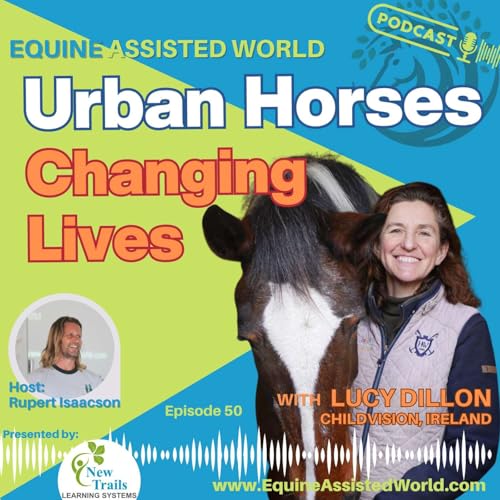
Equine Assisted World with Rupert Isaacson Podcast Por Rupert Isaacson arte de portada

Equine Assisted World with Rupert Isaacson

Equine Assisted World with Rupert Isaacson

De: Rupert Isaacson
Escúchala gratis

OFERTA POR TIEMPO LIMITADO | Obtén 3 meses por US$0.99 al mes

$14.95/mes despues- se aplican términos.
Here on Equine Assisted World. We look at the cutting edge and the best practices currently being developed and, established in the equine assisted field. This can be psychological, this can be neuropsych, this can be physical, this can be all of the conditions that human beings have that these lovely equines, these beautiful horses that we work with, help us with. Your Host is New York Times bestselling author Rupert Isaacson. Long time human rights activist, Rupert helped a group of Bushmen in the Kalahari fight for their ancestral lands. He's probably best known for his autism advocacy work following the publication of his bestselling book "The Horse Boy" and "The Long Ride Home" where he tells the story of finding healing for his autistic son. Subsequently he founded New Trails Learning Systems an approach for addressing neuro-psychiatric conditions through horses, movement and nature. The methods are now used around the world in therapeutic riding program, therapy offices and schools for special needs and neuro-typical children.  You can find details of all our programs and shows on www.RupertIsaacson.com.Horse Boy LLC Desarrollo Personal Higiene y Vida Saludable Medicina Alternativa y Complementaria Éxito Personal
Episodios
  • Animals as Relatives: Native Wisdom, Trauma & Healing with Brandy Tomhave | EAW 46
    Jan 14 2026

    In this powerful and far‑reaching episode of Equine Assisted World, Rupert Isaacson speaks with Brandy Tomhave, Executive Director of the Native American Humane Society and an enrolled member of the Choctaw Nation.

    This conversation goes far beyond animal welfare. Together, Rupert and Brandy explore how animals—especially dogs and horses—serve as bridges between cultures, as carriers of medicine, and as essential companions in communities shaped by historical trauma, systemic neglect, and extraordinary resilience.

    Brandy shares her journey from decades of Native American legal advocacy into animal welfare, describing how colonial systems, poverty, and misunderstood cultural differences have deeply affected both people and animals on reservations. She explains why animal wellness cannot be separated from human wellbeing, and how concepts like relationality, balance, generosity, and One Health have long existed in Indigenous cultures.

    From the lived realities of reservation life to the ethical challenges of modern animal rescue, from horses as cultural relatives to dogs as potential lifelines in communities facing suicide and mental health crises, this episode invites listeners to rethink what it truly means to be humane.

    This is a conversation about humility, listening, ambiguity, and the radical idea that being a “good relative”—to animals and to each other—might be the most important work we can do.

    If you want to support the show, you can do so at Patreon: https://www.patreon.com/LongRideHome

    🔍 What You’ll Learn in This Episode

    • Why Native American identity is political and sovereign—not racial
    • How colonial trauma affects animals as well as people
    • Why many “rescued” reservation dogs were never abandoned
    • How dogs and horses function as spiritual, emotional, and cultural relatives
    • What “One Health” really means from an Indigenous perspective
    • Why poverty‑based narratives often do more harm than good
    • How animals can act as bridges between divided human communities
    • The ethical tensions around wild horses, land use, and survival
    • Why animal welfare systems must be culturally grounded
    • What it means to be a “good relative” in animal‑assisted work

    🎤 Memorable Moments from the Episode

    [00:03:12] Brandy explains Native American sovereignty and why it shapes everything else

    [00:08:45] The Flagstaff shelter visit that changed Brandy’s life

    [00:16:16] The historical parallel between removing children and removing dogs

    [00:19:00] Why animal wellness is one of the few areas free from federal control

    [00:25:33] Dogs and horses as ambassadors between cultures

    [00:35:00] Relationality: animals as relatives, not property

    [00:39:02] The link between animal abuse and future human violence

    [00:44:31] Animals as companions in communities facing suicide and trauma

    [00:51:28] “Be a good relative” as a guiding principle

    [01:02:08] What animal‑assisted practitioners worldwide can learn from Native wisdom

    📚 Contact, Projects, and Resources Mentioned

    Native American Humane Society https://nativeamericanhumanesociety.org

    New Trails Learning Systems – Horse Boy Method, Movement Method & Takhin Equine Integration https://ntls.co

    Rupert Isaacson / Long Ride Home https://rupertisaacson.com

    🌍 Follow Us

    Long Ride Home
    https://longridehome.com
    https://facebook.com/longridehome.lrh
    https://instagram.com/longridehome_lrh
    https://youtube.com/@longridehome

    New Trails Learning Systems
    https://ntls.co
    https://facebook.com/horseboyworld
    https://instagram.com/horseboyworld
    https://youtube.com/newtrailslearningsystems

    📊 Affiliate Disclosure

    Links to books and products may include affiliate tracking. We may earn a commission if you make a purchase, at no extra cost to you. Thank you for supporting the show.

    Más Menos
    1 h y 59 m
  • Why Learning Stops When Curiosity Is Lost | Katja Mehlhorn | EAW 45
    Jan 1 2026

    In this episode of Equine Assisted World, Rupert Isaacson speaks with Katja Mehlhorn — psychologist, academic, and founder of Horse Kids Groningen in the Netherlands. Katja bridges two worlds that rarely meet: university‑level research and deeply embodied, nature‑based equine‑assisted practice.

    From her early work in PATH programs in the United States to building a highly individualized, child‑led practice on a Dutch farm, Katja shares how curiosity, movement, imagination, and horse welfare shape everything she does. Together, Rupert and Katja explore how neuroplasticity, safety, and play support learning in children who struggle with anxiety, school refusal, autism, and social‑emotional challenges.

    This conversation ranges widely — from teaching maths through Formula One role‑play on horseback, to helping traumatized clients rebuild self‑worth by caring for horses, to using landscapes, wildlife, foraging, and even horse poo as gateways to regulation and learning. Along the way, Katja reflects on leaving a secure university career to grow her farm‑based work, and on what the equine‑assisted field must do to stay ethical, relevant, and humane.

    If you want to support the show, you can do so at Patreon: https://www.patreon.com/LongRideHome

    🔍 What You’ll Learn in This Episode

    • How curiosity and play create safety and open the brain for learning
    • Why following the child matters more than following a protocol
    • How movement and balance activate neuroplasticity through the vestibular system
    • Ways to introduce maths, numbers, and academics without fear or pressure
    • How horses provide emotional feedback when children cannot verbalize
    • Why horse welfare, fitness, and variety of work are essential in equine‑assisted programs
    • How in‑hand and classical groundwork benefit both horses and humans
    • Why nature, foraging, animals, and landscape are powerful therapeutic tools
    • How rescue horses paired with at‑risk youth can transform both
    • What equine‑assisted practice can offer to struggling schools and post‑COVID students

    🎤 Memorable Moments from the Episode

    [00:03:35] Katja describes her first experiences volunteering at a PATH center and witnessing profound changes in children

    [00:09:18] Using Formula One racing games on horseback to gently reintroduce maths and numbers

    [00:16:00] Teaching balance through playful exercises inspired by weighted “Russian doll” toys

    [00:18:38] The role of vestibular activation in long‑term learning and neuroplasticity

    [00:27:01] Reading horses’ calming and stress signals to understand what children cannot express

    [00:32:57] Integrating fitness, trick training, and in‑hand work into therapy sessions

    [00:40:17] How helping horses heal can rebuild self‑worth in traumatized clients

    [00:43:00] Research findings from Brook Hill Farm showing improved school outcomes for at‑risk youth

    [00:50:55] Using landscape, imagination, wildlife, and foraging to reconnect children with nature

    [01:21:12] Why longer sessions allow children time to truly arrive and regulate

    📚 Contact, Projects, and Resources Mentioned

    • Katja Mehlhorn / Horse Kids Groningen https://katjamehlhorn.nl
    • Horse Boy Method, Movement Method & Takhin Equine Integration https://ntls.co
    • Long Ride Home / Rupert Isaacson https://rupertisaacson.com

    🌍 Follow Us

    Long Ride Home
    https://longridehome.com
    https://facebook.com/longridehome.lrh
    https://instagram.com/longridehome_lrh
    https://youtube.com/@longridehome

    New Trails Learning Systems
    https://ntls.co
    https://facebook.com/horseboyworld
    https://instagram.com/horseboyworld
    https://youtube.com/newtrailslearningsystems

    📊 Affiliate Disclosure

    Links to books and products may include affiliate tracking. We may earn a commission if you make a purchase, at no extra cost to you. Thank you for supporting the show.

    Más Menos
    1 h y 59 m
  • When the Healer Burns Out: Burnout, Menopause & Sustainability in Equine Therapy | Suzie Latchford of Heal With Horses | EAW 44
    Dec 18 2025

    In this episode of Equine Assisted World, Rupert Isaacson speaks with Suzie Latchford, founder of Heal With Horses in Ontario, Canada — a long‑running equine‑assisted program working with autistic children, families, and communities in a demanding four‑season climate.

    Suzie shares how Heal With Horses grew organically over more than fifteen years, often without a clear roadmap, and what that growth revealed about sustainability, invisible structure, horse welfare, staff leadership, and practitioner wellbeing. What begins as a conversation about weather and logistics becomes a deeply honest exploration of burnout, menopause, identity, delegation, and the hidden costs of purpose‑driven work.

    Rather than presenting easy answers, this episode offers lived experience from someone who has stayed in the work long enough to feel its strain — and to find ways through it. From following the child and respecting nature‑led limits, to building mobile animal programs and planning for succession, Suzie reflects on what it really takes to keep equine‑assisted work ethical, human, and sustainable over decades.

    If you want to support the show, you can do so at Patreon: https://www.patreon.com/LongRideHome

    🔍 What You’ll Learn in This Episode

    • How following the child builds communication and trust before any therapeutic goals are imposed
    • Why nature‑based limits — weather, seasons, and animals — can support regulation better than rigid schedules
    • What invisible structure looks like in real equine‑assisted programs, and why it matters
    • How long‑term practitioners experience burnout, including emotional, physical, and hormonal factors
    • Why delegation, staff leadership, and succession planning are essential for program survival
    • How mobile animal programs extend equine‑assisted work into seniors’ homes, schools, and community spaces
    • What sustainable horse welfare looks like in cold climates through herd living and 24/7 turnout

    🎤 Memorable Moments from the Episode

    [00:01:40] Suzie reflects on the unplanned beginnings of Heal With Horses and how Horse Boy Method shaped her early direction

    [00:06:53] Navigating winter cancellations, financial strain, and client expectations in extreme Canadian weather

    [00:16:26] A clear, lived example of “following the child” through imagination, animals, and choice

    [00:32:37] Suzie speaks candidly about burnout, depression, and losing joy in work she once loved

    [00:40:00] An open discussion about menopause, identity loss, and rebuilding self‑trust

    [00:50:00] How stepping back allowed younger staff to step up — and why delegation matters

    [01:25:24] The mobile animal program: bringing pigs, goats, and bunnies into nursing homes and universities

    [01:41:00] Redefining success beyond money, productivity, and traditional metrics

    📚 Contact, Projects, and Resources Mentioned

    Heal With Horses (Canada) https://healwithhorses.ca

    Horse Boy Method, Movement Method & Takhin Equine Integration https://ntls.co

    Long Ride Home / Rupert Isaacson https://rupertisaacson.com


    🌍 Follow Us

    Long Ride Home

    • https://longridehome.com
    • https://facebook.com/longridehome.lrh
    • https://instagram.com/longridehome_lrh
    • https://youtube.com/@longridehome


    New Trails Learning Systems

    • https://ntls.co
    • https://facebook.com/horseboyworld
    • https://instagram.com/horseboyworld
    • https://youtube.com/newtrailslearningsystems


    📊 Affiliate Disclosure

    Links to books and products may include affiliate tracking. We may earn a commission if you make a purchase, at no extra cost to you. Thank you for supporting the show.

    Más Menos
    1 h y 54 m
Todavía no hay opiniones