

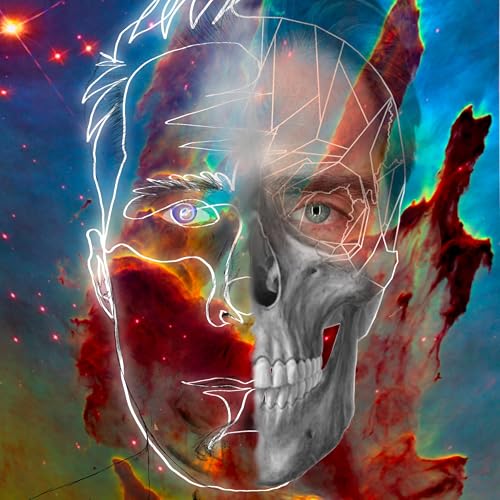
Ep 39 - Callsign: "LOGOS" - Philosopher, PhD, Author, Podcaster
No se pudo agregar al carrito
Add to Cart failed.
Error al Agregar a Lista de Deseos.
Error al eliminar de la lista de deseos.
Error al añadir a tu biblioteca
Error al seguir el podcast
Error al dejar de seguir el podcast

Ep 39 - Callsign: "LOGOS" - Philosopher, PhD, Author, Podcaster
-
Narrado por:
-
De:
In this episode of Zen & Callsigns, Blake sits down with Dr. Matt Segall, professor at the California Institute of Integral Studies, for a wide-ranging conversation on philosophy, spirituality, consciousness, and artificial intelligence. Dr. Segall reflects on his path from journalism and cognitive science into philosophy, the psychedelic experience that radically altered his spiritual trajectory, and the philosophical framework he calls a process-relational view of reality. The conversation moves through Eastern and Western thought, the idea of a Second Axial Age, and the deeper civilizational questions underneath today’s AI acceleration. The result is a dense but grounded discussion on what intelligence is, what consciousness may be becoming, and why the real issue is not just what AI is doing, but what it is doing to us.
Dr. Matt Segall is a philosopher and professor at the California Institute of Integral Studies in San Francisco. His background includes cognitive science, philosophy, neuroscience, and interdisciplinary inquiry into metaphysics, religion, and consciousness. In the episode, he discusses growing up in South Florida, studying cognitive science after starting in journalism, and eventually realizing that teaching philosophy allowed him to keep exploring the deepest questions for life.
Matt’s early life, intellectual formation, and the role of hockey in shaping discipline and virtue
Why journalism led him toward philosophy and cognitive science
A pivotal psilocybin experience at age 19 and its lasting impact
Encountering the Christ / Logos through psychedelic experience
The relationship between Christianity, Buddhism, Daoism, and Western esoteric traditions
Why philosophy should preserve wonder rather than defend dogma
Matt’s process-relational philosophical operating system
Parmenides, Heraclitus, being, becoming, and reality as ongoing process
The difference between Eastern and Western streams of thought, and why they now need integration
The First Axial Age and the possibility of a Second Axial Age
Animism, monotheism, pantheism, and panentheism explained in plain language
AI, machine intelligence, and the danger of mistaking simulation for consciousness
Whether we are already living inside an emergent collective intelligence
The difference between luck and skill
What civilization is refusing to ask about capitalism, technology, and meaning
Why AI may represent one of the greatest enclosures of the human knowledge commons in history
A formative psilocybin experience brought him face to face with what he describes as the Christ being or Logos, despite having distanced himself from Christianity. That encounter redirected his spiritual life toward Christian mysticism while preserving his engagement with Buddhism, Daoism, and other traditions.
Matt argues that philosophy dies when it becomes rigid defense of a single theory. For him, real philosophy keeps open the experience of wonder and remembers that no framework fully captures reality.
His “operating system” is process-relational: reality is not fixed substance but ongoing becoming. He frames this through the polarity between Parmenides and Heraclitus, being and becoming, arguing both are partial truths that need one another.
One of the strongest parts of the conversation is Matt’s explanation of a possible Second Axial Age: a civilizational shift that would reintegrate transcendence with embodiment, spirit with matter, and divinity with the living world. He points toward panentheism as a key frame for that reintegration.
Matt sees AI as part of a long human story of technologically extended intelligence, from fire to language to writing to machine learning. But he stresses that the present moment is qualitatively dangerous because of speed, scale, and the illusion that language simulation equals consciousness.
Dr. Matt Segall: Website / blog / Substack / YouTube: footnotes2plato.com