Episodios

  • What Multilingual Classrooms Really Need (and how to get there) with Karen Nemeth
    Apr 16 2026

    In today's early childhood classrooms, children are learning two, three, sometimes even four languages at once. The question isn't whether multilingual learners will be in your classroom—it's how you'll support them.

    In this episode of Early Childhood Chapters, Karen Nemeth—author of Many Languages, One Classroom, 2nd Edition—shares practical, research-informed strategies for creating classrooms where every child's language and culture are valued.

    From rethinking how we define language development to building stronger partnerships with families, this conversation offers clear, actionable guidance for educators and leaders alike.

    In this episode, we discuss:

    • Why language must be connected to meaning—not just speech sounds—to support development
    • How shifting from a "deficit" view to a strengths-based view changes everything for multilingual learners
    • The "4 Cs" framework: comprehension, communication, connection, and collaboration—and how they work together
    • Why relationships and belonging are essential for language and literacy growth
    • Practical strategies for connecting with families—even when you don't share a language
    • How to use play, storytelling, and everyday routines to support language development
    • Why supporting a child's home language actually strengthens English learning

    Key takeaway:
    Start with what's familiar to each child—and build from there.

    Más Menos
    45 m
  • Let Nature Lead: Rethinking Creativity in Early Childhood
    Apr 9 2026

    Before children ever pick up a paintbrush, nature has already given them a palette.

    In this episode of Early Childhood Chapters, we talk with Janine Kloiber, author of Nature's Palette, about how natural materials can spark creativity, deepen sensory experiences, and help children build meaningful connections with the world around them.

    Janine shares how slowing down, following children's interests, and embracing open-ended exploration can transform both teaching and learning. Whether you're in a nature-rich environment or a city classroom, this conversation offers practical, accessible ways to bring the natural world into children's daily experiences.

    What You'll Learn:

    • Why nature-based learning supports creativity, focus, and emotional regulation
    • How Montessori principles align with outdoor and sensory exploration
    • The difference between process art and product-driven activities
    • How to follow children's curiosity and become a co-explorer
    • Simple ways to bring nature into any classroom (even without outdoor access)
    • How these experiences build confidence, collaboration, and early literacy skills

    Key Takeaway:
    When we slow down and truly observe the natural world with children, we open the door to deeper learning, creativity, and connection.

    Más Menos
    31 m
  • Understanding Transitions in Early Childhood With Rae Pica
    Apr 1 2026

    Transitions are one of the most challenging parts of the day in early childhood settings—but what if we've been thinking about them all wrong?

    In this episode of Early Childhood Chapters, host Emily Garman sits down with early childhood expert Rae Pica, author of Teachable Transitions, to explore why transitions continue to be a daily struggle and how educators can approach them differently.

    Together, they unpack what's really happening for young children during transitions, why these moments are so developmentally demanding, and how simple shifts in practice can transform stress into meaningful learning.

    In this episode, you'll learn:

    • Why transitions are developmental challenges, not behavior problems
    • What skills children are actually using during transitions
    • How predictability and preparation reduce stress and resistance
    • Why movement, music, and play are powerful tools for smoother transitions
    • Common mistakes educators make—and how to avoid them
    • How transitions can build self-regulation, cooperation, and problem-solving skills

    Key Takeaway:
    Transitions aren't something to rush through—they are opportunities to support development, build skills, and create more joyful classrooms.

    About the Guest:
    Rae Pica is an early childhood expert and author of Teachable Transitions, a widely respected resource that helps educators turn everyday transitions into engaging, developmentally appropriate learning experiences.

    Learn More:
    Explore Teachable Transitions and more at Gryphon House.

    Más Menos
    41 m
  • Coming Back Gently: Helping Children (and Adults) Re-Settle After Breaks
    Feb 3 2026

    January is often framed as a "fresh start," but for early childhood educators, it's something very different—it's the middle of the year. After winter break, classrooms are filled with children (and adults) who may feel tired, dysregulated, emotionally tender, or disconnected from routines that once felt familiar.

    In this episode of Early Childhood Chapters, host Emily Garman is joined by Angela Searcy, early childhood consultant and author of Push Past It and Elevating Equity, for a deeply affirming conversation about what a true mid-year reset can look like—one rooted in compassion, realism, and care rather than pressure or perfection.

    Together, Emily and Angela explore how children, educators, families, and entire school systems experience reentry after winter break—and why regulation, routines, and relationships matter more than rigid expectations during this season.

    In this episode, you'll hear about:
    • Why post–winter break behavior shifts are normal—for children and adults

    • How sensory-rich, calming environments support reentry and regulation

    • Why routines should be engaging, relational, and playful—not punitive

    • The importance of being visually quiet in classroom spaces

    • How educators can reset without "starting over" or feeling like they've failed

    • What equitable (not equal) responses look like when children return from very different home experiences

    • Why adult regulation and co-regulation are always the starting point

    • How systems, leadership, and colleagues can support educator well-being

    • Practical ways to communicate compassionately with families during a challenging season

    • Mindset shifts that help educators move through heavy, human moments—without shame

    This episode offers reassurance, practical tools, and a powerful reminder: midyear isn't about pushing harder. It's about slowing down, reconnecting, and giving ourselves—and the children in our care—what we truly need.

    Listen now and take a deep breath. You're not behind. You're human.

    Más Menos
    48 m
  • Every Drop Counts: Exploring Water with Young Learners
    Oct 28 2025

    What can water teach young children about science, curiosity, and caring for the planet? Author and educator Ann Gadzikowski, MEd, joins host Emily Garman to discuss her new book, Every Drop Counts: Exploring Water Science with Young Children in a Changing Climate (Gryphon House, 2025). Drawing on her collaboration with her daughter, a water scientist, Ann shares how educators can inspire scientific thinking and environmental stewardship—beginning with joyful, hands-on play.

    In This Episode, You'll Learn:

    • How simple water play helps children develop curiosity, problem-solving, and early STEM thinking.

    • Ways to introduce environmental awareness and stewardship through age-appropriate exploration.

    • How the book aligns with the Head Start Early Learning Outcomes Framework and Next Generation Science Standards.

    • Strategies for addressing children's (and adults') eco-anxiety with reassurance and curiosity.

    • Why play—and time outdoors—is the foundation for future scientific and environmental understanding.

    • Practical classroom ideas for introducing water systems, the water cycle, and conservation through play.

    Key Quote:

    "Go outside and play as much as you can. Get wet, play in the mud, and get messy—that's the most important thing." — Ann Gadzikowski

    Guest:
    Ann Gadzikowski, MEd is an award-winning educator, author, and curriculum designer specializing in early childhood STEM and critical thinking. Her latest book, Every Drop Counts, empowers educators to teach science through wonder, play, and environmental care.

    Learn More:
    Explore Every Drop Counts: Exploring Water Science with Young Children in a Changing Climate at gryphonhouse.com.

    Más Menos
    30 m
  • Every Child Can Fly: Including Children of All Abilities
    Oct 9 2025

    In this inspiring conversation, author and educator Jani Kozlowski shares her personal and professional journey toward creating more inclusive early learning environments. Drawing from her own experience as a person with a disability—and as the parent of a child with a disability—Jani helps educators and families see that inclusion is not a place, but a culture of belonging.

    She offers practical advice for educators who want to welcome every child, explains the importance of people-first language, and highlights how high expectations paired with support help all children grow and thrive.

    Listeners will walk away with a renewed sense of confidence and compassion for creating classrooms where every child can fly.

    Key Topics:
    • Jani's personal story and how it shaped her work in early childhood inclusion

    • Why inclusion is a culture of belonging, not just a setting

    • People-first language and how words shape perceptions

    • How teachers and families can partner to support each child's success

    • The benefits of inclusive classrooms for all children

    • Balancing high expectations with appropriate support

    • How educators can start building inclusive practices today

    Featured Guest:

    Jani Kozlowski, MEd
    Author of Every Child Can Fly: An Early Childhood Educator's Guide to Inclusion and Empowering Your Child to Fly: A Parent's Guide to Inclusion (Gryphon House Books)

    Más Menos
    38 m
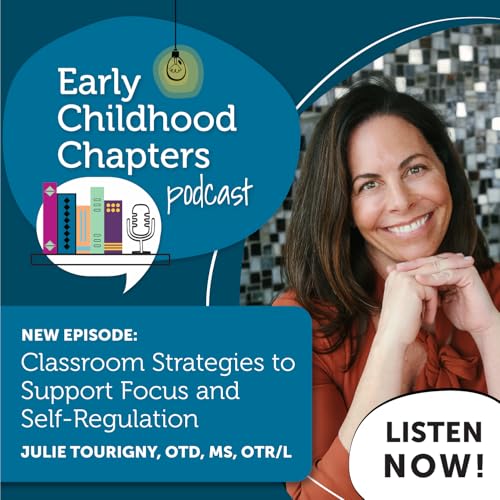
  • Classroom Strategies to Support Focus and Self-Regulation
    Sep 16 2025

    In this episode of Early Childhood Chapters, host Emily Garman sits down with Dr. Julie Tourigny, pediatric occupational therapist and author of Calm and in Control, Organized and Engaged, and her upcoming release, Alert and Attentive. Together, they explore why attention is not a fixed trait but a skill that can be taught and strengthened in early childhood. Dr. Tourigny shares practical strategies educators and caregivers can use to help children regulate emotions, sustain focus, and thrive in both learning and play.

    Listeners will learn:

    • Why attention and focus are developmental skills, not personality traits.
    • How self-regulation and emotional control directly affect a child's ability to concentrate.
    • Simple classroom environment adjustments that reduce distractions and support focus.
    • The power of games, play, and routines in building attention span.
    • How screen time has shifted children's ability to self-regulate and why boredom is essential for growth.
    Más Menos
    31 m
  • Conversations That Count: Making Parent-Teacher Conferences Work
    Sep 3 2025

    Parent-teacher conferences can feel rushed, overwhelming, or even intimidating—for both educators and families. But when done well, these conversations can build trust, strengthen relationships, and set children up for success.

    In this episode of Early Childhood Chapters, we talk with Tricia Shelton, EdD, author of Partnering for Success: Effective Strategies for Parent-Teacher Conferences. Drawing from her dual perspective as both an educator and a parent, Dr. Shelton shares practical strategies for turning conferences into meaningful two-way conversations rather than checklist-style meetings.

    Listeners will learn:

    • How to avoid common mistakes educators make in conference preparation

    • Ways to build trust with families before, during, and after the meeting

    • How to balance academic updates with insights into the whole child

    • Why culturally responsive communication matters—and how to practice it

    • Tips for handling difficult or emotional conversations with empathy and clarity

    Whether you're a classroom teacher, administrator, or parent, this episode will help you reimagine conferences as opportunities for collaboration and connection.

    Más Menos
    27 m