Episodios

  • Persistent Flight in the Stratosphere - Justin Selfridge, Phd. and CEO of Devorto
    Apr 9 2026

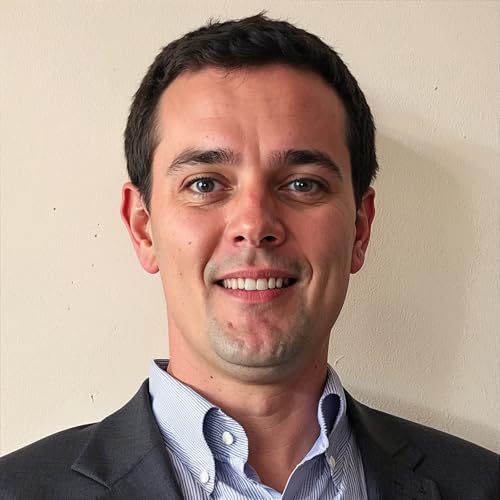
    Justin Selfridge, PhD, is Founder and CEO of Devorto Corporation. Devorto is developing a breakthrough high-altitude platform called the Tethered Uni-Rotor Network, or TURN—a completely new aircraft architecture designed to combine the vertical lift and loitering capability of a helicopter with the aerodynamic efficiency of an airplane, enabling long-duration, solar-powered flight in the stratosphere.

    At Devorto, leads the development of this next-generation persistent drone technology. Backed by both private investment and government support from organizations like NASA, the U.S. Air Force, and the U.S. Space Force, Justin and his team are working to redefine how we think about high-altitude operations, with the potential to disrupt both satellite and traditional aerial platform markets.

    In this episode of the Drone Radio Show, Justin talks about why the stratosphere is such a critical domain for future aviation systems, how the TURN platform works and what makes it different from anything we've seen before, and the real-world applications and impact this technology could have across commercial and defense sectors.

    Más Menos
    35 m
  • Uncrewed Systems in the Arctic: Security, Surveillance, and NATO's Growing Role - Federico Borsari, CEPA
    Mar 3 2026

    Federico Borsari is a Non-Resident Fellow with the Transatlantic Defense and Security Program at the Center for European Policy Analysis, or CEPA for short. The Center for European Policy Analysis is a nonprofit, nonpartisan public policy institution headquartered in Washington, DC, with hubs in London and Brussels. The organization focuses on strengthening the transatlantic alliance through research, analysis, and programs. CEPA provides insight on trends affecting democracy, security, and defense to government officials and agencies, helps transatlantic businesses navigate changing strategic landscapes, and builds networks of future leaders committed to transatlantic cooperation.

    At CEPA, Federico focuses on issues at the intersection of technology and international security, with particular emphasis on unmanned systems and autonomy. His work also covers NATO and transatlantic defense and security. He has authored several analyses and publications on the use and security implications of unmanned aerial systems by both state and non-state actors, and recently co-authored the first-ever report on drone warfare and its implications for NATO.

    Federico previously served as a Pan-European Fellow and later a Visiting Fellow with the European Council on Foreign Relations, and until October 2021 he worked as an analyst and project officer at the International Institute for International Political Studies in Milan, where he also helped organize the last three editions of the Mediterranean Dialogues Conference.

    He holds a BA in History from the University of Modena and an MA in International Relations and Strategic Studies from the University of Bologna. He also earned a second MA in Middle Eastern Studies from the Catholic University in Milan, and conducted fieldwork in Iraqi Kurdistan for a research project on the institutionalization and depoliticization of the Peshmarga.

    Federico is a frequent commentator on defense and drone technology in national and international media, and he regularly participates in conferences on defense technology and the use of drones.

    In this episode of the Drone Radio Show, Federico talks about how uncrewed systems are being used in the Arctic, and the challenges and opportunities they present for security, monitoring, and protecting critical infrastructure in this increasingly strategic region.

    Más Menos
    39 m
  • Protecting Stadiums in the Age of Drone Incursions: Melissa Swisher, CRO at SkySafe
    Feb 17 2026

    Melissa Swisher is Chief Revenue Officer at SkySafe, a company delivering the intelligence organizations need to detect, analyze, and act in today's increasingly complex airspace environment.

    SkySafe specializes in airspace intelligence — providing real-time drone detection, analytics, and forensic capabilities that help organizations determine whether a drone is authorized, where it originated, how it's flying, and in some cases, who is operating it. The company works with state agencies, public safety organizations, and major event operators to bring greater visibility and accountability to the skies above critical infrastructure and large public gatherings.

    As Chief Revenue Officer, Melissa leads SkySafe's strategic partnerships and revenue growth initiatives, helping expand the company's footprint across government and commercial markets. She brings extensive C-level experience, having played key roles in two successful IPOs — SuccessFactors and Castlight Health — as well as multiple strategic acquisitions. Prior to SkySafe, she co-founded Socrates.ai, which was recently acquired by Simpplr. Known for building high-performing teams and driving customer-focused growth, Melissa combines operational expertise with a deep understanding of scaling emerging technologies.

    In this episode of the Drone Radio Show, Melissa discusses the evolution of airspace intelligence, the biggest gaps in current drone defense systems, what new legislation means for local law enforcement, and how organizations are preparing for large-scale global events in an era of rapidly expanding drone activity.

    Más Menos
    33 m
  • Making Autonomous Cargo Work at Real-World Scale: Charles Acknin, CEO Skyways
    Feb 4 2026

    Charles Acknin is Co-Founder and CEO of Skyways. Skyways is building unmanned aircraft systems designed to revolutionize autonomous cargo transportation. Unlike many competitors still in development, Skyways' aircraft are operational today — carrying meaningful payloads over significant distances for both military and commercial customers. Based in Austin, Skyways is now shifting toward mass production of its autonomous aircraft, building confidence through real-world cargo missions that could ultimately enable future passenger applications.

    At Skyways, Charles leads the company's strategic vision and oversees operations, product development, and growth initiatives in autonomous aviation.

    Prior to Skyways, Charles co-founded and served as CEO of Elixir Labs. Before that, he was a Senior Software Engineer at Google, where he worked on the company's search engine for nearly five years and spent a year advancing Google's mission of universal accessibility.

    Earlier in his career, Charles held engineering roles at Oracle, Cosworld-Asia in Shanghai, and Amadeus. He also participated in Google Summer of Code, contributing to the open-source version control system Subversion.

    Charles holds a Master of Science in Software Engineering from Oxford Brookes University and a Master of Science in Computer Science from SUPINFO.

    In this episode of the Drone Radio Show, Charles shares how Skyways is turning autonomous cargo drones from experimental technology into dependable, scalable logistics systems.

    Más Menos
    34 m
  • Securing the Skies: Detecting and Responding to Drone Threats - Logan Harris, CEO Spotter Global
    Jan 8 2026

    Logan Harris is CEO, President, and Founder of Spotter Global—a company specializing in compact radar and drone detection technologies.

    Spotter Global imagines, designs, manufactures, and coordinates the software development of compact surveillance radars, Remote Drone ID, NetworkedIO command and control, and its Integrated Management Center.

    The company was originally founded to meet the needs of U.S. Special Forces, who required a very small, wide-area radar to protect small units conducting Village Stability Operations in Iraq and Afghanistan. From that need, the first Compact Surveillance Radar—the M600—was developed to protect warfighters operating in austere environments.

    In 2013, the attack on the Metcalf substation in California highlighted the need to detect threats far beyond the fence line. In response, Spotter introduced its first Compact Security Radar, the C40. Since then, the company has expanded its commercial off-the-shelf offerings to include 17 radar models covering areas from one acre to more than 380 acres, serving markets well beyond critical infrastructure—and far beyond North America.

    Logan is widely recognized as the inventor of the compact surveillance radar category. With deep expertise in RF engineering and digital signal processing, he launched SpotterRF in 2009 to help prevent harm to critical infrastructure and protect warfighters.

    Previously, Logan served as CTO at Wavetronix and as CTO and co-founder of ImSAR, the creator of NanoSAR. His engineering background also includes roles at IBM, TRW, Sensar Larson Davis, and Vantage.

    Logan holds both Bachelor's and Master's degrees in Electrical Engineering from Brigham Young University. Known for his innovation and leadership, he has positioned Spotter Global as a trusted radar provider across government and commercial sectors.

    In this episode of the Drone Radio Show, Logan talks about the growing reality of drone threats, how Spotter Global is using advanced detection and Remote ID technology to protect critical infrastructure and large public events, and what the future of airspace security looks like as agencies, regulations, and technologies continue to evolve.

    Más Menos
    41 m
  • Defending the Skies: Oklahoma State University's Mission to Counter Emerging Drone Threats: Dr. Jamey Jacobs, Exe Director of OAIRE
    Nov 25 2025

    Dr. Jamey Jacob is Executive Director of the Oklahoma Aerospace Institute for Research and Education and the Williams Chair in Energy Technology at Oklahoma State University. Under his leadership, OSU launched the Counter-UAS Center of Excellence, now the nation's central hub for coordinated research, development, testing and evaluation of counter-drone systems. Working closely with the Joint Force CUAS University at Fort Sill, the center assesses vendor technologies, establishes performance standards and accelerates next-generation defenses—all while addressing the growing national shortage of highly trained engineers in this mission-critical domain. With unique testing environments and deep alignment with military needs, OSU plays a pivotal role in strengthening national security and maintaining U.S. leadership in UAS innovation.

    Beyond directing the Center, Dr. Jacob is a Regents Professor of Aerospace Engineering and a nationally recognized leader in emerging aerospace systems, securing nearly $50 million in research funding from federal agencies and industry partners. He has testified before Congress on the critical need for sustained investment in drone research and advanced air mobility, and he leads major initiatives including the EDA-funded LaunchPad and UAS Flight Corridor, NASA's WINDMAP weather program, OSU's work within the Tulsa Hub for Ethical and Trustworthy Autonomy, and the NIST initiative developing certification standards for next-generation aircraft. A native Oklahoman, he holds degrees from the University of Oklahoma and UC Berkeley, and is an FAA Part 107 pilot with roughly 500 flight hours.

    In this episode of the Drone Radio Show, Dr. Jacob talks about OSU's efforts to advance the nation's counter-UAS capabilities; what Ukraine's drone innovations reveal about the future of warfare, and how OSU's research in atmospheric science, public safety, and wildlife applications is shaping the next generation of drone operations.

    Más Menos
    35 m
  • Building a Decentralized Drone Imagery Network: Bill Lakeland, CEO Spexi
    Nov 11 2025

    Bill Lakeland is CEO of Spexi, the world's largest decentralized drone imagery network. Spexi provides a scalable, sustainable, and cost-efficient alternative to traditional Earth imaging methods, with its network of drone pilots delivering detailed, near-real-time imagery to support disaster preparedness, smart city planning, AI model training, and gaming applications. The network has mapped over 3.5M acres in 200+ cities across the world.

    Bill has over 20 years of experience in geospatial imagery, having led and exited as both a Co-Owner and Vice President of two aerial imagery firms. Before launching Spexi, he spent two decades in traditional aerial mapping, operating fixed-wing aircraft with high-resolution cameras to capture imagery for municipalities and insurers.

    In this episode of the Drone Radio Show, Bill talks about Spexi's network of drone pilots and the company's efforts to provide high-resolution imagery of urban areas.

    Más Menos
    28 m
  • 10 Years of the Drone Radio Show: A Look Back, A Flight Forward: Randy Goers, Host and Creator
    Jul 29 2025

    In this special anniversary episode of the Drone Radio Show podcast, I reflect on a decade of conversations that have helped shape and document the evolution of the drone industry. Since 2015, the Drone Radio Show has featured 446 interviews with the pioneers, innovators, regulators, and changemakers redefining what drones can do. I revisit the major themes that emerged—from commercial adoption and regulatory milestones to lifesaving missions, educational advances, and the rise of autonomous systems. More than just a retrospective, this episode is a heartfelt thank-you to the guests, listeners, and global drone community who've made the show a trusted voice in the UAS world. Whether you're a longtime fan or new to the podcast, join me in celebrating ten years of insight, impact, and imagination—and get ready for what's next.

    Más Menos
    13 m