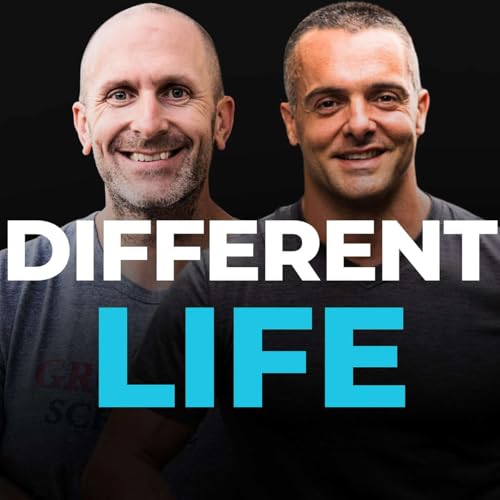
Different Life Podcast Por Gary Donia & Peter Brouillard arte de portada

Different Life

Different Life

De: Gary Donia & Peter Brouillard
Escúchala gratis

Most people don’t need more motivation. They need a different approach. Hosted by Gary Donia and Peter Brouillard, Different Life draws on years of experience helping people navigate pain, movement, recovery, and performance — but the conversation goes far beyond health alone. We talk about: • Strength training as a life skill • Back pain, mobility, and injury recovery • Pelvic floor health and durability • Sleep, stress, hormones, and energy • Performance and longevity over 40 • Discipline, habits, and identity shifts • Parenting and modeling health • Relationship-based healthcare We discuss these not as isolated topics, but as part of a bigger question: What does it look like to live differently, not just try to live better? If you feel stuck in patterns that no longer fit who you want to become, this show is for you. Because better often keeps you in the same cycles. Different changes your trajectory.Whole Health Solutions Podcast Network Actividad Física, Dietas y Nutrición Ejercicio y Actividad Física Higiene y Vida Saludable
Episodios
  • 006 | Buying Back Your Time: The Most Valuable Investment You Can Make
    Apr 13 2026

    Episode Summary

    Time is the one resource that every person shares, yet it is also the one we often waste the most without realizing it. In this episode, Gary and Peter explore the idea of “buying back your time” and why sometimes spending money is actually the smartest way to reclaim hours of your life.

    The conversation explores everyday examples, from outsourcing lawn care and home cleaning to using grocery pickup and airport services that eliminate unnecessary frustration and wasted time. These small decisions can add up to hours saved every week.

    But reclaiming time is only the first step. The real value comes from how you choose to spend it. Whether it is investing more energy into family, physical health, or meaningful work, the goal is to align your time with what truly matters in your life.

    Ultimately, this episode challenges listeners to audit how they spend their time, identify activities that drain it, and intentionally replace those activities with things that add meaning and fulfillment.

    Key Topics Discussed

    • Why time is the most valuable currency in life
    • The mindset shift from saving money to buying back time
    • Everyday examples of outsourcing tasks to reclaim time
    • The relationship between productivity, money, and happiness
    • How businesses are essentially systems for buying back time
    • The importance of intentionally using reclaimed time
    • Auditing activities and commitments in your life
    • Replacing low value activities with meaningful experiences

    Chapters with Timestamps

    00:00 Introduction and opening conversation
    02:00 Why time is the most valuable currency
    05:30 The mindset shift around spending money
    08:45 Outsourcing everyday tasks like lawn care
    13:10 How businesses buy back time through delegation
    16:30 Hiring cleaning services and home support
    20:10 Grocery pickup and eliminating wasted time
    23:30 The caveat of needing financial resources
    26:10 Auditing relationships and commitments
    30:15 What to do with the time you reclaim
    35:00 Work, family, and physical health priorities
    39:30 The danger of wasting reclaimed time
    43:00 Practical examples of reclaiming time


    Notable Quotes

    “Time is the greatest currency that we have available. It’s finite.”

    “If you spend hours every week doing things you hate just to save a few dollars, you might actually be losing the most valuable resource you have.”

    “Buying back time only works if you replace it with something meaningful.”

    “A business is essentially a system for buying back your time.”

    Resources Mentioned

    Alex Hormozi
    https://www.acquisition.com

    Slack
    https://slack.com

    ChatGPT
    https://chat.openai.com


    Connect With Us Here:

    YouTube: https://www.youtube.com/@WholeHealthSolutions
    Website: https://wholehealthsolutions.life/
    Facebook: https://www.facebook.com/wholehealthsolutions.life
    Instagram: https://www.instagram.com/wholehealthsolutions.life
    LinkedIn: https://www.linkedin.com/company/whole-health-solutions-sports-performance

    Más Menos
    28 m
  • Why Running Won’t Help You Lose Weight (And What Actually Works)
    Apr 6 2026

    Episode Summary

    Many people believe the fastest way to lose weight is by doing more cardio. Running, cycling, and treadmill workouts are often the first strategies people turn to when they want to lose body fat.

    But despite the effort, many people find that their weight barely changes.

    In this episode, Gary and Peter break down why cardio alone is rarely an effective fat loss strategy. They explain how calorie balance ultimately drives weight loss and why people often overestimate how many calories exercise actually burns. The conversation also explores the difference between exercising for general health and exercising to change body composition.

    The discussion then shifts to what actually works for sustainable weight loss. The hosts explain why strength training is essential for preserving muscle mass while losing fat, how whole foods help control hunger, and why processed foods often lead to overeating.

    By the end of the episode, listeners will understand a practical framework for approaching fat loss that prioritizes nutrition, strength training, and long-term lifestyle habits.

    Key Topics Discussed

    • Why running alone rarely leads to meaningful weight loss
    • The difference between exercising for health vs fat loss
    • Why calorie balance ultimately determines weight loss
    • The importance of strength training during a fat loss phase
    • How losing weight without strength training can lead to muscle loss
    • Why whole foods help control hunger and improve adherence
    • The role of fiber and food volume in satiety
    • How processed foods increase hunger and overeating

    Chapters with Timestamps

    00:00 – Why people start running to lose weight
    03:30 – The calorie burn myth of cardio machines
    07:15 – Why people eat back the calories they burn
    11:40 – Cardio for health vs cardio for weight loss
    16:10 – The importance of strength training during fat loss
    20:45 – Muscle loss vs fat loss explained
    25:30 – Why whole foods help control hunger
    30:20 – How processed foods drive overeating
    35:00 – The practical hierarchy for sustainable weight loss

    Notable Quotes

    “Cardio is great for your health, but it’s not a strategy for fat loss.”

    “If you overeat calories, you gain weight. If you under eat calories, you lose weight.”

    “You can lose weight eating junk food, but you won’t be able to sustain it.”

    “Two people can lose the same weight on the scale and look completely different depending on whether they strength train.”

    Resources Mentioned

    Lose It App
    https://www.loseit.com


    Connect With Us Here:

    YouTube: https://www.youtube.com/@WholeHealthSolutions
    Website: https://wholehealthsolutions.life/
    Facebook: https://www.facebook.com/wholehealthsolutions.life
    Instagram: https://www.instagram.com/wholehealthsolutions.life
    LinkedIn: https://www.linkedin.com/company/whole-health-solutions-sports-performance

    Más Menos
    28 m
  • Being Present in a Distracted World
    Mar 16 2026

    Episode Summary

    In a world engineered to hijack your attention, being present has become a rare and powerful skill.

    In this episode, we explore how divided attention quietly erodes leadership, relationships, and culture. What starts as a quick glance at your phone during a meeting or a notification during a conversation compounds into something bigger: weakened trust, shallow communication, and fractured connection.

    From staff meetings to family dinners, from sales calls to patient care, attention is currency. If your brain leaves the room every time your phone lights up, you are not truly leading. You are multitasking your relationships.

    This conversation breaks down why presence matters, why modern technology makes it difficult, and how small, intentional changes can dramatically improve communication, business performance, and personal relationships.

    Key Topics Discussed

    • Why being physically present is not the same as being mentally engaged
    • How phone notifications disrupt focus and relational trust
    • The illusion of multitasking
    • The impact of distraction on team culture
    • Active listening as a performance skill
    • Community and belonging in modern life
    • Practical strategies to reduce distraction and improve presence

    Chapters with Timestamps

    00:00 – Opening banter and distracted moments
    05:30 – The staff meeting example and leadership blind spots
    12:15 – How notifications hijack attention
    18:40 – Work culture and constant connectivity
    24:10 – Phone habits and personal strategies
    32:00 – The illusion of multitasking
    40:15 – Curiosity and active listening
    48:30 – Finding community and connection
    55:00 – Practical steps to reclaim focus

    Notable Quotes

    “If your phone lights up and your brain leaves the room, you’re not actually present.”

    “Attention is leadership currency.”

    “You’re not multitasking your work. You’re multitasking your relationships.”

    “In a distracted world, presence becomes a competitive advantage.”

    Resources Mentioned

    ChatGPT
    https://chat.openai.com

    Slack
    https://slack.com

    Cheers (TV Series Reference)
    https://www.imdb.com/title/tt0083399/


    Connect With Us Here:

    YouTube: https://www.youtube.com/@WholeHealthSolutions
    Website: https://wholehealthsolutions.life/
    Facebook: https://www.facebook.com/wholehealthsolutions.life
    Instagram: https://www.instagram.com/wholehealthsolutions.life
    LinkedIn: https://www.linkedin.com/company/whole-health-solutions-sports-performance

    Más Menos
    30 m
Todavía no hay opiniones