Episodios

  • Episode 5 - RIchard Shah and Navigating Global Life Science Projects
    Mar 25 2026

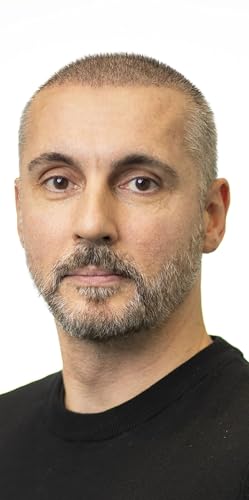
    Our guest in this episode is Richard Shah. Richard currently serves as a Project Director and heads up the US Global Engineering Dept at WuXi Biologics.

    In this conversation on Design, Build and Deliver with Hart Companies with host Samir Gondalia, Richard shares his journey from being a chemist to leading global life science projects. He discusses the nuances of managing projects across different regions, the importance of site selection, and the evolving conversation around speed to market in the pharmaceutical industry. Richard also highlights the design drivers for biopharma facilities and the future technologies that will shape the industry, including the role of AI and digitalization. The discussion concludes with personal insights and reflections on the industry.

    Takeaways
    - Richard's transitioned from a chemist to a global engineering leader.
    - Site selection involves multiple factors including tax incentives and labor market.
    - Speed to market has become a critical focus post-COVID.
    - Design drivers for biopharma include ESG, single-use technology, and digitalization.
    - Flexibility and future-proofing are essential in facility design.
    - Cost differentials exist between construction in the US and Ireland.
    - Single-use technologies are preferred for speed and flexibility.
    - Richard emphasizes the importance of continuous learning and adaptation.

    Quotable quotes:
    "Flexibility and future proofing are key."
    "Good data is confidential."

    Whether you are a global life science facilities leader or an industry follower, this episode is full of real-world insights and implementable tips.

    The links to the various platforms are in comments.

    Más Menos
    36 m
  • Episode 4 - George Skillin and Mastering Life Science Facility Projects
    Feb 23 2026

    My guest in this episode is George Skillin. George is VP of Strategy Services with Project Farma, a Perkin Elmer Company. George has over 35 years of BioPharmaceutical Experience in all aspects of manufacturing including Bulk Active Ingredient, Biotech Drug Substance, Aseptic Processing & Filling, Packaging and Serialization.

    In this conversation, George and I discuss the intricacies of designing, building, and delivering life science facility projects. We explore the importance of speed and quality in project delivery, effective budget management, and the critical role of operational readiness. Our discussion also highlights changes in the industry post-COVID, the significance of local sourcing for talent, and the challenges of scaling up processes. Additionally, we touch on the potential impact of AI in validation and commissioning, future trends in facility design, and the need for robust training programs to address the talent shortage in the life sciences sector.

    Key Takeaways:

    • Good planning and scheduling are crucial for speed.
    • Managing scope tightly minimizes project changes.
    • Operational readiness should start during facility construction.
    • Life science facilities are increasingly modular and prefabricated.
    • Local sourcing of talent is becoming a priority.
    • AI has potential but lacks real-world applications in validation.
    • Training programs are essential for new hires in GMP environments.
    • The industry faces a talent shortage as investments increase.
    • Process development must align with facility capabilities.
    • Future trends include a focus on smaller, more efficient facilities.

    Quotable quotes:

    • "Good planning and scheduling are crucial for speed."
    • "Managing scope tightly minimizes project changes."
    • "Local sourcing of talent is becoming a priority."

    I have known George for many years and worked with him during our Pfizer days.
    I thoroughly enjoyed talking to him in this chat. Hope you do too.

    Here's George Skillin.

    Más Menos
    36 m
  • Episode 3 - Jimmy O'Keefe and Navigating Life Science Capital Projects
    Oct 23 2025

    My guest in this episode is James O'Keefe. James is Vice President at Hart Engineering Corporation, where he oversees complex mechanical construction projects across the life sciences, pharmaceutical, and industrial sectors. Since joining Hart in 2008 as a Northeastern University Co-Op student, James has advanced through multiple engineering and project management roles. From a Co-op to VP - a real example if you need one.

    With nearly 20 years of experience, he has led some of Hart's most demanding installations in New England. He is deeply engaged in advancing life science industry standards through active participation in the New England Mechanical Contractors Association (NEMCA), the International Society for Pharmaceutical Engineers (ISPE), and the UA Local 51 Joint Apprenticeship Training Committee (JATC). Jim holds a degree in Mechanical Engineering from Northeastern University.

    In this chat, Jim and I delve into
    - the intricacies of capital projects,
    - the differences between design build and design assist methodologies,
    - the importance of various drawing types in project management,
    - strategies to avoid delays and cost overruns, and
    - the growing trend of local sourcing in the life science construction industry.

    Additionally, we address the critical shortage of skilled labor and the value of apprenticeship programs, while also touching on personal insights regarding work-life balance and the importance of effective communication in project execution.

    Takeaways:

    • Design build integrates engineering and contracting under one entity.
    • Design assist involves contractor input during the design phase.
    • Different drawing types serve specific purposes in project management.
    • Early conversations with stakeholders can prevent project delays.
    • Local sourcing is becoming more popular for better control and quality.
    • Choosing the right materials can lead to significant cost savings.
    • The construction industry faces a shortage of skilled labor.
    • Apprenticeship programs provide valuable education without debt.
    • Work-life balance is essential for long-term career satisfaction.

    Quatable Quotes:

    • "It's a lot easier to change things on paper than in a facility."
    • "We can streamline everything."

    Jim can be reached at jokeefe(at)hartcompanies.com and on LinkedIn.

    I found my discussion with Jim very timely and insightful. I hope you do too.

    Here's James O'Keefe.

    Más Menos
    32 m
  • Episode 2 - Michael Kelly and the Future of Pharmaceutical Facilities
    Oct 17 2025

    My guest in this episode is Michael Kelly.

    Mike is the Director of Bio-process Engineering at Hart Design Group, where he has been leading innovative process solutions. With a career spanning top-tier biotech and engineering firms like Parsons Corporation, Biogen, Amgen, and Moderna, Mike has held increasingly senior roles across engineering, project management, and facilities operations.

    He has a degree in Chemical Engineering from Widener University, and an MBA from Bentley University. He brings technical acumen along with strategic thinking which were abundantly clear in this interview. Michael enjoys traveling, ice hockey, golf, and a good book.

    In this chat, Mike and I discuss
    - the evolving landscape of the pharmaceutical industry,
    - the facility retrofitting and the integration of new technologies,
    - the importance of flexibility in facility design,
    - the role of innovative tools like 3D scanning and augmented reality, and
    - the challenges of managing operations during retrofitting.

    Takeaways

    • The pharmaceutical industry is shifting towards retrofitting existing facilities rather than building new ones.
    • Flexibility in facility design is crucial to accommodate various modalities and future needs.
    • 3D scanning technology enhances the retrofitting process by providing accurate facility layouts.
    • Logistics planning is essential to minimize disruptions during facility upgrades.
    • Underrated causes of delay often stem from site conditions and communication issues.
    • Choosing an engineering partner with in-house capabilities can streamline project execution.
    • Proactive planning is necessary to avoid disruptions in GMP operations during retrofitting.
    • Collaboration with trades and construction teams is vital for successful project outcomes.
    • Utilizing augmented reality (AR) can improve rigging and installation processes.
    • Future-proofing facilities requires anticipating scientific advancements and designing accordingly.

    Quotable quotes:

    • "It's all about time and money."
    • "Logistics planning is crucial."

    Additionally, we highlight underrated causes of project delays and provide insights on how life science companies can choose the right engineering partners to ensure successful project execution.

    Mike can be reached at mkelly(at)hartcompanies.com and on LinkedIn.

    I enjoyed my chat with Mike. Hope you do too.

    Here's Michael Kelly.

    Más Menos
    30 m
  • Episode 1 - David Rampone and Life Science Industry Changes and Challenges
    Oct 17 2025

    My guest in today's episode is David Rampone, a leader whose impact extends far beyond engineering and construction.


    David is President of Hart Engineering Corporation. He has spent decades not just building facilities - but building trust, excellence, and a legacy of craftsmanship that stands the test of time.

    David's leadership reaches deep into the heart of Rhode Island and the life sciences industry. In addition to guiding Hart Engineering, he serves as Chairman of the Miriam Hospital Foundation Board of Trustees, and chairs or sits on the boards of numerous education, labor, safety, trade, and charitable organizations.

    In our conversation, David and I talk about how timeless organizations are built - not through slogans, but through integrity, rigor, and relationships. David shares what it really takes to get life science facility projects done on time and under budget, why some projects succeed while others stall, and the biggest - and most avoidable - causes of delays.

    Takeaways

    • The original Hart Engineering was formed in 1942 and has evolved significantly since then.
    • Industry changes have led to incomplete construction documents, complicating project budgeting.
    • Accurate project planning can save millions in costs and time.
    • Building a strong company foundation relies on hiring dedicated and honest people.
    • Long-term career success involves broadening horizons and understanding team needs.
    • Involvement in industry associations enhances professional relationships and knowledge.
    • Strong relationships with labor unions foster mutual respect and collaboration.
    • Life lessons from golf emphasize patience and resilience in business.
    • Work-life balance is crucial for long-term success and personal well-being.

    Quotable quotes:

    • "We have a thing called the 10 Hart ideals."
    • "Don't stay in your own little silo."
    • "Work is not your whole life though."

    For anyone leading or managing facilities and capital projects in life science, this episode is packed with practical wisdom earned through decades of real-world experience.

    So, whether you're a facility leader, an engineering manager, or just someone who appreciates the art of building things that last - this conversation will give you a rare inside look at how great projects, and great organizations, come to life.

    David can be reached at drampone(at)hartcompanies.com.

    I enjoyed and learned a lot from my chat with David. Hope you do too. Here's David Rampone.

    Más Menos
    29 m