Episodios

  • Understanding Volatility in a Structurally Shifting Market
    Feb 25 2026

    In the latest episode of dakota live!, we step into a part of the market that rarely gets explained well — the mechanics of volatility trading.

    As equity markets move through higher dispersion, regime shifts, and increasingly systematic flows, some of the most interesting price discovery is happening in derivatives.

    Volatility isn’t just a hedge or a headline metric. It’s an asset shaped by positioning, liquidity, and structural supply-demand imbalances.

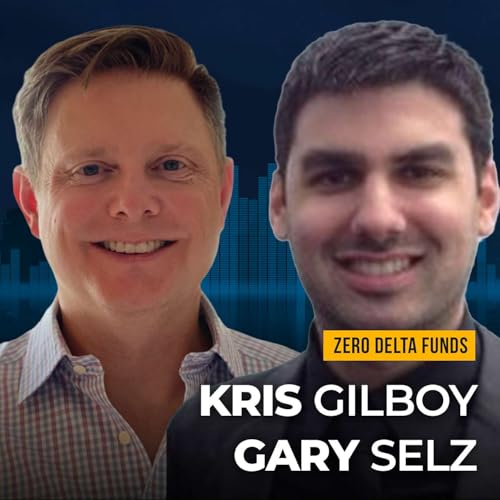
    We discuss how firms like Zero Delta, a hedge fund of funds, allocating to specialists trading single-name and index options — evaluate markets where dealer gamma positioning, liquidity fragmentation, and flow-driven distortions can create temporary pricing inefficiencies.

    This is a conversation about process.

    How experienced volatility traders:

    ✓ Interpret skew and term structure
    ✓ Think about convexity and asymmetric payoffs
    ✓ Adjust exposure as opportunity sets expand or compress
    ✓ Trade relative value rather than directional views

    The broader takeaway for institutional allocators is structural. As passive flows grow and options volumes reach record levels, derivatives markets increasingly reflect stress and opportunity in real time.

    Volatility trading — when executed as disciplined relative value — can become a way to engage dislocations created by crowding and hedging demand, rather than simply reacting to them.

    If you allocate to hedge funds — or evaluate them — understanding how volatility traders actually think beneath the surface of the VIX is imperative.

    If you’re an individual market participant trading your own account, appreciating how professionals interpret skew, positioning, liquidity, and convexity can sharpen how you think about risk.

    This episode is about framework — a closer look at the mechanics that drive derivatives markets and the discipline required to navigate them.

    Más Menos
    53 m
  • How University Endowments Invest | Private Equity & Institutional Strategy
    Feb 18 2026

    In this special “On the Road” episode of the Dakota Live! Podcast, Robert Morier travels to the University of Tennessee in Knoxville for a live CIO panel discussion on endowment management, private equity, private credit, asset allocation, and manager research & due diligence.
    Featuring:

    • Rip Mecherle, CIO, University of Tennessee System ($1.8B endowment)

    • Cathy Ulozas, CIO, Drexel University

    • Bridget Sproles, Partner & Co-Head of Healthcare Practice, Cambridge Associates

    • Ryan Farley, Professor and Director, Torch Fund Program, University of Tennessee

    Recorded in front of students from Drexel University and the University of Tennessee, this episode explores how institutional investors think about:

    • Endowment portfolio construction (public vs. private markets)

    • Private equity allocation strategy and long-term commitments

    • The risks and realities of private credit in today’s market

    • How CIOs underwrite managers and assess integrity, culture, and risk

    • Teaching students to think like real-world investors

    The panel also shares candid career lessons — including trading mistakes, surviving market crises, and the importance of adaptability in finance.
    If you’re interested in institutional investing, asset allocation strategy, manager due diligence, endowment management, OCIO relationships, hedge funds, private markets, or building a career in investment management, this conversation is essential listening.
    Learn how top CIOs make capital allocation decisions under uncertainty — and how students can prepare to enter the world of institutional asset management.

    Más Menos
    1 h y 22 m
  • Why Banks Are Increasing Private Market Exposure—A Manager Research View from PNC Bank
    Feb 11 2026

    Retail and wealth management platforms inside large banks are increasing exposure to private markets—but not through hype, shortcuts, or “democratization” headlines.

    They’re doing it through institutional-grade manager research, governance, and due diligence.

    In this episode of Dakota Live, host Robert Morier sits down with Scott Lavelle, Managing Director and Head of Investment Advisor Research & Product Management at PNC Bank, to unpack how one of the largest U.S. bank platforms evaluates, selects, and monitors investment managers across public and private markets.

    Scott oversees the teams responsible for sourcing, vetting, and monitoring external managers—while also determining how private market strategies are structured, governed, and delivered to retail and wealth clients at scale.

    What this episode covers

    • Why retail bank platforms are expanding private market allocations—and why most clients are still under-allocated relative to policy targets
    • How banks are introducing evergreen private market structures cautiously, selectively, and with fiduciary discipline
    • The manager research process behind private equity, private credit, venture, and hedge fund strategies inside a regulated bank environment
    • Why due diligence—not product demand—drives platform decisions
    • The role of operational due diligence in private markets (and why it’s risk you never get paid to take)
    • How banks think about fees, access, and manager skill when evaluating private strategies
    • Where fund-of-funds still make sense (and where they no longer do)
    • How institutional governance changes the pace—but improves the durability—of private market adoption

    Rather than relying on industry buzzwords, Scott explains—step by step—how PNC has selectively added private market strategies, expanded alternatives exposure, and evolved its platform only where investment merit, manager capability, and client outcomes align.

    This is a rare look inside how retail banks actually make private market decisions—from the perspective of the people accountable for getting them right.

    Más Menos
    46 m
  • The Joy of Discovery | GP Seeding, Hedge Funds & Manager Research with Scott Schweighauser (Borealis Strategic Capital Partners)
    Feb 4 2026

    In this episode of Dakota Live!, host Robert Morier sits down with Scott Schweighauser, Managing Partner of Borealis Strategic Capital Partners, for a wide-ranging conversation on GP seeding, hedge fund history, and why now is such a compelling moment to back emerging managers.

    Scott brings decades of experience across trading, fund-of-funds investing, and early-stage hedge fund seeding to unpack how the hedge fund industry has evolved—from the early, relationship-driven days through institutionalization, the GFC, and today’s renewed focus on differentiated alpha.

    The discussion explores why emerging managers can outperform early in their lifecycle, how thoughtful seed structures create alignment, and what allocator-grade manager research and due diligence really look like in practice.

    The conversation also weaves in Scott’s lifelong passion for rowing—using the sport as a powerful metaphor for teamwork, trust, grit, and leadership. From sunrise rows on the Charles to building durable investment partnerships, Scott shares why having fun in the work matters, and how joy, curiosity, and discipline coexist in great investing organizations.

    Key topics covered:

    • GP seeding and strategic capital for emerging hedge fund managers
    • A brief history of hedge fund investing—and why the opportunity set is changing
    • Why “why now” matters for seeding and early-stage manager selection
    • Manager research, sourcing, and qualitative due diligence
    • Alignment, structure, and avoiding adverse selection in seeding deals
    • Early-stage performance dynamics and the “emerging manager premium”
    • Rowing, leadership, trust, and building teams under pressure
    • Why curiosity and enjoyment are underrated edges in long-term investing


    Whether you’re an allocator, GP, institutional sales professional, student of the markets, or simply curious about how investment talent is identified and supported, this episode offers a thoughtful, experience-driven look at hedge funds, seeding, and the human side of manager selection.

    Más Menos
    1 h y 23 m
  • Aksia, Alternatives & the Wealth Channel | Chris Schelling on Private Markets Today
    Jan 28 2026

    In this episode of the Dakota Live! Podcast, host Robert Morier welcomes back Chris Schelling for his second appearance on the show—and his first since joining Aksia.

    Aksia is one of the world’s leading alternatives research and portfolio advisory firms, advising on approximately $400+ billion across private equity, private credit, real assets, and hedge funds.

    With deep institutional roots and a global footprint, Aksia is known for its rigorous manager research, operational due diligence, and portfolio construction expertise—capabilities that have made it a trusted partner to pensions, endowments, sovereign wealth funds, and increasingly, the private wealth channel.

    Chris brings a rare perspective to this conversation. Having served as a senior institutional allocator, a multi-family office CIO, and now a Managing Director at Aksia focused on the wealth channel, he sits at the intersection of institutional-grade alternatives and advisor-led portfolio construction.

    This conversation goes beyond headlines. Topics include:

    • Why Aksia’s institutional research engine matters as alternatives move into private wealth
    • How private credit, hedge funds, and private equity are evolving post-2025
    • The role of portfolio construction, liquidity management, and governance in alternatives
    • Where Chris sees real opportunity—and real risk—across private markets
    • What wealth advisors often misunderstand about alternatives (and how Aksia is addressing it)

    This episode offers a first look at how Aksia is translating decades of institutional expertise into the wealth channel, and how Chris is helping advisors think more clearly about alternatives—not as products, but as portfolio tools.

    If you’re an allocator, advisor, GP, or investment professional navigating the next phase of private markets, this is a conversation worth your time.

    Más Menos
    48 m
  • Inside a Single Family Office: How CIOs Allocate Capital, Select Managers, and Think Long-Term
    Jan 21 2026

    In this episode of dakota live, host Robert Morier sits down with Stephanie Szymanski, Chief Investment Officer of Lakeview Capital Management, for a wide-ranging, practitioner-level conversation on how single-family offices actually invest.

    Stephanie pulls back the curtain on what it means to run portfolio construction inside a single-family office, covering how family office CIOs think differently from endowments and foundations when it comes to asset allocation, manager selection, liquidity, and after-tax outcomes.

    This episode is essential viewing for:
    • Asset managers seeking to work with single-family offices
    • Emerging managers navigating early allocations
    • Allocators and CIOs comparing family office vs institutional models
    • Students and analysts interested in family office careers

    Topics covered include:
    • How single family offices structure multi-asset portfolios across public and private markets
    • The role of hedge funds as diversifiers, return enhancers, and risk reducers
    • Why many family offices invest earlier than institutions—and how they assess manager risk
    • Active vs passive decision-making in global equities
    • How family offices evaluate emerging market and ex-US equity managers
    • The realities of private equity pacing, distributions, and capacity constraints
    • Why many family offices do not focus on direct investing
    • Manager due diligence, triangulation, and relationship-driven underwriting
    • What asset managers misunderstand most about family offices
    • Career advice for analysts and investors interested in allocator roles

    Stephanie also shares practical insight into:
    • Running a lean investment team
    • Hiring and developing junior analysts
    • Building conviction without rigid RFP processes
    • Why focus and strategy discipline matter more than scale

    If you want a real-world look at how single family offices make investment decisions, this conversation delivers clarity, nuance, and uncommon transparency.

    Más Menos
    1 h y 8 m
  • How to Earn Investment Conviction: From Mean Reversion to Manager Selection with Springtide Partners
    Jan 14 2026

    In this episode of dakota live!, host Robert Morier sits down with Aaron Dirlam, Co-Founder and Chief Investment Officer of Springtide Partners, for a wide-ranging conversation on building conviction in uncertain markets—and why humility remains one of the most underappreciated edges in investing.

    Founded in 2017, Springtide Partners has grown into a trusted investment partner for RIAs, family offices, and financial institutions, advising on over $80 billion in client assets. In this discussion, Aaron shares how Springtide’s mean reversion framework, disciplined research process, and client-first mindset have been refined through multiple market cycles—from pre-COVID volatility to today’s rapidly shifting macro environment.

    Key topics include:
    ・How Springtide approaches manager research and due diligence, with a heavy emphasis on qualitative judgment, succession, and culture
    ・Why mean reversion remains central to portfolio construction—and where the opportunity set looks most compelling today
    ・The evolution of the OCIO model, rising client service expectations, and what RIAs truly need from outsourced partners
    ・Springtide’s framework for private markets, including secondaries, venture capital, private credit, and niche real assets
    ・The role of humility—in founders, portfolio managers, and investment teams—and how it shows up in long-term performance

    Aaron also reflects on nearly two decades of partnership with his co-founder, the lessons learned building a boutique investment firm, and how Springtide balances conviction with risk control in an increasingly competitive landscape.

    This episode is a must-listen for CIOs, manager research professionals, RIAs, and allocators seeking a clearer lens on conviction-driven investing—and what it truly means to earn a seat at the table.

    Más Menos
    58 m
  • Inside SEI: New Year, New Mandate | A 2026 CEO Conversation with Ryan Hicke
    Jan 7 2026

    We’re kicking off 2026 the same way many investors are setting their New Year’s resolutions: by going straight to the source.
    In our first episode of the new year, Dakota Live goes on site to SEI’s headquarters in Oaks, Pennsylvania to sit down with Ryan Hicke, CEO of SEI Investments (NASDAQ: SEIC).
    These on-location CEO episodes consistently generate the strongest engagement across our audience of allocators, asset managers, advisors, and institutional sales professionals—and this one delivers on every front.
    What This Episode Covers (and Why It Matters in 2026)
    As a publicly traded, global financial services firm operating at the intersection of asset management, technology, operations, and advice, SEI offers a unique lens on where the industry is headed. In this wide-ranging conversation, Ryan Hicke and his colleagues Michael Lane, Head of Asset Management and Sean Lawlor, Head of Strategic Growth Initiatives share how SEI is thinking about:

    • Growth vs. Risk: Why SEI focuses on accelerating good outcomes rather than merely avoiding bad ones

    • Culture as Strategy: How SEI’s open, meritocratic culture drives innovation and accountability

    • Private Markets & Alternatives: What the future portfolio really looks like beyond the traditional 60/40

    • Tokenization, AI, and Technology: Why SEI wants a “courtside seat” to emerging technologies instead of watching from the sidelines

    • Stratos Wealth Acquisition: How integrating advice reshapes SEI’s long-term strategy across administration, asset management, and client outcomes

    • Public Company Discipline: Balancing quarterly earnings pressure with long-term shareholder value creation

    • Leadership in a Changing Market: What it actually means to lead through complexity, regulation, and rapid industry change

    This is not a headline-driven discussion. It’s a candid look at how a public company CEO thinks about decision-making, capital allocation, talent, and culture when the stakes are real and the time horizon matters.
    A New Year Perspective from the C-Suite
    We close the episode with a New Year reflection—professional and personal—on leadership, judgment, balance, and what it means to build durable organizations in a world that rewards speed but punishes shortsightedness.
    If your 2026 resolution includes:

    • Understanding how publicly traded investment firms think strategically

    • Gaining insight into where asset management, alternatives, and advice are converging

    • Learning how CEOs actually weigh growth, risk, and culture behind closed doors

    This episode is for you.

    Más Menos
    56 m