Episodios

  • Living Independently with an Aide
    Sep 16 2025

    Living Independently with an Aide w/ John McFadden and Kate Waltermeyer

    Listen Here: https://youtu.be/G7zl20s5BCw

    In this episode of Creating Communities for Neurodivergent People, we explore how learning and growth continue long after high school for neurodivergent individuals. Even as adults living independently, executive function and social learning remain essential parts of daily life.

    Key topics include:

    • Kate’s unique perspective as both John’s aide and someone who has ADHD and is on the Autism Spectrum

    • The value and challenges of self-diagnosis as people age

    • Kate’s lived experiences with ADHD (focus challenges, hyper-fixation, depression/anxiety, sleep and eating difficulties, and task overwhelm)

    • Autism-related needs such as safe spaces, sensory sensitivities, overstimulation, and managing strong emotions

    • How Kate and John support each other’s learning in reading, math, cooking, executive function, and social skills

    • Why empathy, patience, and mutual respect create a strong aide–client relationship

    • The ongoing importance of education and community engagement for neurodivergent adults

    Takeaways:

    Education never ends, being in community is vital, and independence is an evolving process supported by understanding and collaboration.

    How to find the right aide for my special needs adult child, reality of independent living disability, living independently with an aide, autism independent living info must see, living on my own, independently taking care of my own house, how to manage living in a household of a special needs family, making my own schedules and appointments, special needs support living care, extra care housing, supported living pros and cons, what makes someone a good aide, steps to take towards independent living, what are my best accommodation options for my special needs adult child, transition from living at home to my own place, moving out on my own, special needs kid moving out

    #NeurodivergentVoices #ADHDAwareness #AutismAcceptance #ExecutiveFunction #NeurodiversityMatters #InclusiveEducation #CreatingCommunities #IndependenceJourney #independantliving #specialneeds #disabilityhousing #housingaccommodations

    Más Menos
    33 m
  • Working Without Losing Disability Benefits
    Apr 1 2026

    Working Without Losing Disability Benefits w/ Mary Judy, Alpine Square

    Navigating government benefits while trying to work can feel overwhelming: especially for neurodivergent individuals and people with disabilities. In this in-depth conversation, Mary Judy breaks down how benefits actually work, how employment is supported and what resources are available to help individuals build sustainable, fulfilling careers without losing essential support. These benefits include:

    • People receiving SSI, SSDI, SNAP, or Medicaid

    • Families and caregivers seeking clarity on benefits

    • Employment professionals and disability advocates

    • Anyone interested in disability inclusion and economic participation

    Be sure to subscribe to Creating Employment for Neurodivergent People on YouTube for more educational resources! https://youtube.com/@creatingemploymentnp

    Contact Mary Judy:

    https://www.alpinesquare.net/about/

    Mary explains Social Security Disability Insurance, Supplemental Security Income, Medicaid, and Supplemental Nutrition Assistance Program. Alpine Square services include personalized benefits analysis reports, one-on-one counseling, and long-term planning to help individuals maintain stability while entering or re-entering the workforce.

    A major focus of this discussion is dismantling the myth that working automatically leads to losing benefits. Many programs are designed with gradual income thresholds that allow individuals to earn more while still retaining critical supports. Mary explains how systems like SSI include grace periods and income adjustments that often result in individuals having more financial stability when they work.

    Mary introduces ABLE accounts and PASS plans, that allows individuals to save money and invest in their future without jeopardizing eligibility for benefits.

    Mary points to national resources like National Association of Benefits and Work Incentives Specialists, where individuals can find certified benefits counselors across the United States or explore private services.

    #neurodivergentemployment #disabilitybenefits #SSIexplained #SNAPbenefitsexplained #Medicaidexplained #workingwhileonSSI #workingwhileondisability #canyouworkonSSI #canyouworkonSSDI #benefits planning #benefitscounseling #disabilityemploymentsupport #neurodiversity workplace #autismemploymentsupport #ADHDemploymentsupport #disability inclusion #inclusiveemployment #vocationalrehabilitation

    Más Menos
    56 m
  • Non-Speaking Does Not Mean Non-Thinking
    Mar 18 2026

    Unlocking Communication for Employment for Neurodivergent Individuals

    Watch Here: https://youtu.be/9MJhMglC0Cc

    What if someone could think clearly… but their body simply couldn’t express the words?

    In this important conversation, we explore the powerful idea that non-speaking does not mean non-thinking. Many individuals who cannot speak verbally still possess complex thoughts, intelligence, creativity, and aspirations. The challenge often lies not in cognition, but in the body’s ability to coordinate speech and movement.

    Abbi Fletcher of the Colorado Spellers Collective explains how communication can be unlocked for individuals with motor-planning challenges such as Apraxia.

    Apraxia can create a disconnect between the brain and the muscles needed for speech, making it difficult to control the fine motor movements of the lips, tongue, eyes, or fingers. While speech may be difficult or impossible for some individuals, their cognitive abilities remain intact.

    Abbi shares how her organization helps non-speaking individuals develop communication through spelling and typing systems. Using specially designed boards and tools, individuals gradually build motor coordination while learning to point to letters and form words.

    One key takeaway: during job interviews, employers should focus on a person’s skills and abilities, not solely on how they communicate.

    • Why non-speaking individuals are often misunderstood

    • How apraxia affects motor coordination and speech production

    • Communication methods using spelling boards and typing systems

    • The role of sensory regulation and motor development in communication training

    • How employers can create inclusive workplaces for neurodivergent individuals

    • Why parents and families play a critical role in supporting communication and career goals

    • Creating opportunities for neurodivergent individuals benefits everyone. Diverse workplaces gain new perspectives, stronger creativity, and deeper empathy toward customers and communities.

    If you’re interested in neurodiversity, inclusive hiring, communication access, or supporting non-speaking individuals, this conversation offers valuable insight into a topic that deserves far more awareness.

    About Abbi Fletcher

    Abbi Fletcher is a certified Spelling to Communicate Practitioner and the founder and owner of Colorado Spellers Collective. She has been working with the neurodiverse community since 2016 in both classroom and clinical settings; and previously served as Director of Talent Acquisition at Stride Autism Centers. Abbi is passionate about supporting individuals in their communication journey so that their most authentic selves can be heard, known and understood. Outside of her practice, she actively volunteers with Friends of Red Rocks, Calling All Crows, and Feel the Beat.

    Contact Abbi:

    info@coloradospellerscollective.com

    #apraxiaawareness #apraxiaofspeech #speechtherapylife #speechthereapy #neurodivergentcommunication #autismacceptance #neurodivergentemployment #NeurodivergentPodcast #neurodivergentempowerment #apraxia #spellers

    Más Menos
    44 m
  • Should Disabilities Be Disclosed to Employers w/Victoria and Austin Thiery, Know Limits
    Feb 26 2026

    Should Disabilities Be Disclosed to Employers? | Know Limits Film interview w/ Victoria and Austin Thiery

    Watch Here: https://youtu.be/79hrMvpLNh4

    In this powerful interview, Judith sits down with producers Austin and Victoria Thiery to discuss their documentary project Know Limits: a story centered around Colin, an epileptic and autistic lacrosse player who earns a professional team tryout and uncovers corruption within the organization.

    At its core, Know Limits explores employment, independence, and identity for neurodivergent individuals. The film examines the complex decision parents face when choosing whether to disclose their child’s autism or epilepsy to an employer. It also raises critical ethical questions about transparency, legal responsibility, privacy rights, and personal freedom in the workplace.

    Austin shares personal insight about his best friend Adam, an autistic accountant; and also his brother with cerebral palsy and the real-world barriers neurodivergent individuals face during interviews, hiring processes, and social workplace dynamics. Together, the conversation explores how neurodivergent individuals bring unique strengths, loyalty, focus, creativity, and perspective into professional environments when supported with empathy and patience.

    About Austin & Victoria Thiery:

    As an experienced writing team Austin and Victoria understand the business behind the art: production and timelines, budgets, and audience trends. Austin and Victoria have a shared love of storytelling that started their collaboration in 2016, deepening their professional growth and personal connection.

    At the heart of it all, their greatest ambition is to create emotionally grounded, suspenseful dramas – narratives that feel raw and human beneath their sharp, edgy exterior. With every script they develop, they move closer to that vision, committed to telling stories that leave a mark both on screen and in the hearts of the audiences.

    Topics covered in this interview include:

    • Building confidence to leave the house and pursue employment

    • Autism, epilepsy, and workplace disclosure dilemmas

    • Legal vs ethical considerations in hiring

    • Parental decision-making and protection

    • Employment rights and privacy boundaries

    • Representation of neurodivergent individuals in film and media

    • Empowering neurodivergent career pathways

    • Community support and advocacy

    building confidence to find employment, employment for autistic adults, autism job interview tips, disability disclosure to employer, should you disclose disability at work, epilepsy and employment, neurodiversity in the workplace, autism workplace rights, employment confidence tips, neurodivergent job search, autistic adult independence, disability employment rights, know limits documentary, austin and victoria thiery interview, employment ethics discussion, disclosing medical condition to employer

    #disabilityjobhunting ..#disabilityemployment #disability #disabilityfilmmaking #disabledmovieactors #findingemployment #disabilityjobtips #bestjobhuntingpratices #NeurodivergentPodcast

    building confidence to find employment, neurodivergent employment, autism and employment, employment for autistic adults, leaving the house anxiety, autism job interview tips, disability disclosure to employer, should you disclose disability at work, epilepsy and employment, neurodiversity in the workplace, autism workplace rights, employment confidence tips, neurodivergent job search, autistic adult independence, disability employment rights, know limits documentary,

    Más Menos
    42 m
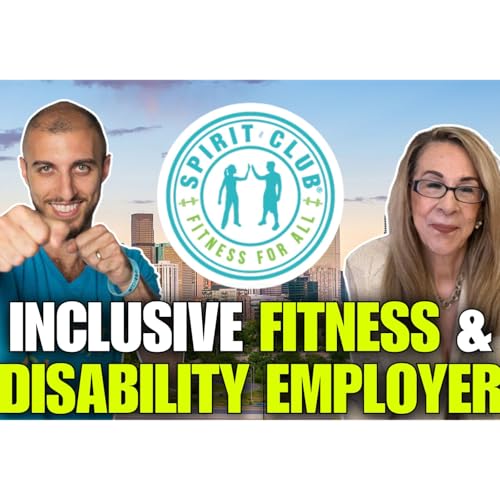
  • Inclusive Fitness & Disability Employer w/ SPIRIT Club Founder Jared Ciner
    Feb 12 2026

    Watch Here: https://youtu.be/noGwk_tMysE

    What if fitness truly worked for everyone?

    In this interview with Jared Ciner, Founder and Director of SPIRIT Club, shares how he built one of the most impactful inclusive fitness programs in the country: designed to include neurodivergent and physically divergent individuals.

    Jared explains how his background in psychology and personal training revealed a major gap between the traditional fitness industry and the disability community—and how SPIRIT Club was created to bridge that gap by meeting people exactly where they are.

    Jared Ciner is the Founder and Director of SPIRIT Club, a fitness organization that provides inclusive and supportive programs for people of all abilities.

    Jared earned his personal training certification through NASM and began working as a fitness trainer at a local gym and as a Support Counselor for adults with disabilities, including autism, Down syndrome, and cerebral palsy. He founded SPIRIT Club in 2012 to create a model that welcomes and accommodates people of ALL abilities.

    O: (301) 933-3722

    www.spirit-club.com

    What we discuss:

    • How inclusive exercise programs adapt workouts for autism, Down syndrome, cerebral palsy, physical divergencies

    • Why people with disabilities are 58% more likely to experience obesity

    • How exercise builds confidence, self-esteem, mental health, emotional regulation and independence

    • Success stories::

    • A young autistic boy who went from refusing group fitness to working at the front desk

    • A child with a limb difference who learned adaptive exercise skills

    • Neurodivergent individuals becoming fitness instructors and leaders

    What Makes SPIRIT Club Different?

    • Inclusive group and one-on-one fitness programs

    • Employment opportunities for neurodivergent individuals

    • A virtual fitness platform with seated and standing instructor options

    • The SPIRIT Club Foundation, providing scholarships

    inclusive fitness, disability exercise, SPIRIT Club, Jared Ciner, disability exercise instructors, autism exercise, Down syndrome fitness, cerebral palsy exercise, inclusive personal training, adaptive exercise programs, inclusive gym, neurodivergent health, disability health, inclusive wellness, adaptive personal training, exercise and self esteem, confidence through exercise, exercise for mental health

    #MobilityImparments #IdealWorkOuts #ExercisesForDisabilities #ChairWorkout #DenverColorado #FitCoach #LimitedMobility #AcessableGym #PhysicalActivity

    Más Menos
    34 m
  • Empowering Deaf Careers|Inclusive Hiring, Accessibility & Workplace Accommodations w/Lorna Riff
    Feb 5 2026

    Empowering Deaf Careers | Inclusive Hiring, Accessibility & Workplace Accommodations w/ Lorna Riff

    Listen Here: https://youtu.be/C-QvcTGIbbw

    During this interview, Judith Weigle and Lorna Riff discuss inclusive hiring practices, empowering deaf job seekers, and the real-world challenges deaf individuals face in the workplace. Lorna speaks on her approach to overcoming barriers to employment.

    Lorna shares her firsthand experiences hiring deaf and physically divergent employees, highlighting the importance of accessibility, communication accommodations, and flexibility in modern work environments. Together, Judith and Lorna explore how disability does not equate to inability, and how inclusive hiring benefits both employers and all of the employees.

    About Lorna:

    Lorna was born and raised by deaf parents in Honolulu, Hawaii, and is fluent in ASL. She is on nonprofit boards that aid people who cannot afford legal representation, and is a volunteer for court programs. Her hobbies include painting, geneology, exploring LA’s food culture, and cooking.

    What we discussed:

    • Challenges deaf individuals face during job applications and interviews

    • The importance of interpreters, closed captioning, and ASL access

    • Hiring and onboarding deaf employees in remote and in-person roles

    • Overcoming communication barriers using tools like Microsoft Teams closed captions

    • Recruiting deaf students and interns through accessible career events

    • Creating inclusive, welcoming workplace cultures

    • Advocacy, the Americans with Disabilities Act, and long-term change

    • Why inclusive hiring is both a personal and professional value

    Lorna also shares her mother’s career journey at a major accounting firm, where she created her own opportunities by advocating for accommodations like a phone assistant. She also discusses recruiting deaf interns by providing interpreters at college events, resulting in long-term employment success and teammates learning sign language to better communicate.

    This conversation highlights how small accommodations can lead to meaningful inclusion, stronger teams, and lasting cultural change.

    If you’re an employer, HR professional, educator, advocate, or job seeker, this interview offers practical insight into how to create accessible, equitable workplaces for deaf and neurodivergent individuals.

    #deafemployment #inclusivehiring #deafjobseekers #disabilityinclusion #accessibleworkplaces #hiringdeafemployees #deafcareers #ASLworkplace #disabilityisnotinability #workplaceaccessibility #inclusiveworkplaces #deaf professionals #employmentaccessibility #ADAworkplace #diversehiringpractices #neurodivergentemployment #physicaldisabilityemployment #deafinclusion #inclusiveemployment #workplaceaccommodations

    Más Menos
    45 m
  • My Experience Creating Employment for Neurodivergent People
    Jan 29 2026

    My Experience Creating Employment for Neurodivergent People | Judith Weigle

    Listen Here: https://youtu.be/Wr4CHYZHKkM

    During this recap, Judith Weigle shares her real-world experience as an employer dedicated to creating meaningful employment opportunities for neurodivergent people. Drawing from years of hands-on leadership, Judith discusses what it truly takes to empower neurodivergent employees, including the daily practice of patience, understanding, and intentional support.

    Please be sure to like and subscribe to Creating Employment for Neurodivergent People for even more career support tips, strategies and advice: https://youtube.com/@CreatingCommunitiesNP?si=Gv83gvQqWM7o-VsS

    This episode explores the challenges neurodivergent individuals face in employment, how workplaces can better support neurodivergent employees, and why inclusion is not just a policy-but a mindset that must be cultivated every day. Judith highlights practical insights for employers, managers, HR professionals, and advocates who want to build workplaces where neurodivergent talent can thrive.

    Whether you are an employer, a neurodivergent professional, or an ally seeking to create more inclusive environments, this conversation offers honest reflection, encouragement, and actionable perspective on neurodiversity in the workplace.

    #neurodivergentemployment #neurodiversityatwork #employeeengagement

    #inclusiveleadership #inclusiveemployment #autismawareness

    #aurismacceptance #autismempowerment #independentliving

    #specialneedscareers #workplaceinclusion

    neurodiversity education, inclusive HR practices, inclusive supervision, inclusive performance management, workplace empathy, inclusive communication, employee wellbeing, workplace mental health, inclusive organizational leadership, inclusive employer branding, neurodivergent job inclusion, disability workforce participation, inclusive recruitment, inclusive onboarding, workplace accommodations law, inclusive employment policies, inclusive leadership development, neurodivergent inclusion training, workplace accessibility, inclusive talent development

    Más Menos
    5 m
  • Job Search Strategies for Neurodivergent Professionals w/Neurodivergent Career Coach Jacob Levy
    Jan 22 2026

    Job Search Strategies for Neurodivergent Professionals w/ Neurodivergent Career Coach Jacob Levy

    Listen Here: https://youtu.be/Mnl_2UJ8AA4

    In this episode of Creating Employment for Neurodivergent People, Judith Weigle interviews Jacob Levy, a special education teacher and neurodivergent career coach about effective job-search strategies for neurodivergent and disabled individuals. Jacob shares his personal journey with hydrocephalus, how it shaped his professional mission, and why there is no single path to career success. Together, they explore how neurodivergent job seekers can leverage LinkedIn optimization, personal branding, content creation, and strategic outreach to secure meaningful, well-paid employment

    Contact Jacob Levy

    LinkedIn: Jacob Levy

    https://www.linkedin.com/in/searchable4u?utm_source=share&utm_campaign=share_via&utm_content=profile&utm_medium=ios_app

    Website: https://searchable.work

    Our conversation emphasizes empowerment, creativity, and visibility, helping job seekers communicate their value while navigating systemic barriers.

    Empowering neurodivergent job seekers

    • Disability doesn’t mean inability

    LinkedIn strategy & algorithm awareness

    • Resume optimization and outreach to companies

    Personal branding for neurodivergent professionals

    • Content creation as a career tool

    • Documenting your learning journey and expertise

    • Highlighting soft skills and niche interests

    Side hustles for extra income, including Amazon product reviewing

    • Turning lived disability experience into career strength

    • Parents supporting neurodivergent adults

    • Navigating a non-traditional career path

    neurodivergent employment, Creating Employment for Neurodivergent People, Judith Weigle, Jacob Levy, neurodivergent job search, job searching with disabilities, autistic adults employment, disability employment, neurodivergent careers, neurodivergent job seekers, LinkedIn job search, LinkedIn optimization, personal branding stories, neurodivergent personal branding, neurodivergent career coach, disability is not inability, neurodivergent workforce, career coaching disabilities,

    #jobsearchstratagies #jobhunting #careerdevelopment #disabiltyadult #linkedInStrategy #disabilityjobhunting #neurodivergentJobs #careercoach

    Más Menos
    44 m