Episodios

  • Perennial Grains: Could Kernza Replace Wheat?
    Dec 17 2025
    Dr. Russell Sharp explores perennial arable crops such as kernza, perennial rice, and sorghum; discussing their advantages (reduced tillage, deeper roots, soil health), current commercial status, and practical challenges such as lower yields, pests, and multi-year management. The episode also covers breeding and gene-editing targets to improve traits, global research efforts, and the potential for growing perennials in hydroponic systems and niche value markets. https://eutrema.co.uk/ Norman Borlaug — CIMMYT Sanjaya Rajaram — CIMMYT Surinder Vasal — CIMMYT Ravi Prakash Singh — CIMMYT Neelamraju G. P. Rao — Indian Agricultural Research Institute / Vasantrao Naik MAU Gebisa Ejeta — Purdue University Ronnie Coffman — IRRI / Cornell University Dilbagh S. Athwal — Punjab Agricultural University / IRRI William L. Brown — Pioneer Hi-Bred Richard Boyles — Clemson University John Holland — USDA Agricultural Research Service Stephen Jones — Kansas State University Jeffery Dahlberg — USDA Agricultural Research Service Kulvinder Gill — University of Saskatchewan Peter Langridge — University of Adelaide Matthew Reynolds — CIMMYT Mark Sorrells — Cornell University Jorge Dubcovsky — University of California Davis Peter Snape — NIAB Brian Quinlan — CSIRO Susan McCouch — Cornell University Guoyou Ye — Huazhong Agricultural University Rod Wing — University of Arizona Hei Leung — International Rice Research Institute Edgardo Ibanez — International Rice Research Institute Rajeev Varshney — University of Queensland David Mackill — University of California Riverside Takuji Sasaki — Kyoto University Qifa Zhang — Huazhong Agricultural University Yulin Jia — USDA Agricultural Research Service Acharya H. D. Upadhyaya — ICRISAT Ashok Kumar — ICRISAT Sean Mayes — ICRISAT Ephrem Habyarimana — ICRISAT Vijay Reddy — ICRISAT Tim Setter — Kansas State University David Jordan — Texas A&M University William Rooney — Texas A&M AgriLife Mark Burow — Texas A&M University Amir Ibrahim — Texas A&M University Jackie Rudd — Texas A&M University Dirk Hays — Texas A&M University Jesse Poland — Kansas State University Kuldeep Singh — CIMMYT Yiping Tong — CIMMYT B. S. Gill — University of Missouri Ian King — University of Adelaide David Hodson — CIMMYT Jose Hernandez Prado — CIMMYT Brian Moore — University of Minnesota Tom Blake — Montana State University Kent McCue — USDA Agricultural Research Service Hamlyn Jones — NIAB Graham Moore — John Innes Centre Tianyou Wang — Chinese Academy of Agricultural Sciences Lijia Qu — Institute of Crop Sciences, CAAS Jianfeng Xu — Sichuan Agricultural University Zonglie Hong — China Agricultural University Shizhong Xu — China National Rice Research Institute Jen-Tsung Chen — Taiwan Rice Research Institute Chih-Hsiung Huang — Taiwan Agricultural Research Institute Chris Proud — Rice Breeding Australia Guy McMullen — NSW Department of Primary Industries Maqbool Ahmad — RAGT Australia Sam Willsmore — LongReach Plant Breeders Vicki Kokolakis — Australian Grain Technologies Jacob Hayes — Australian Grain Technologies Simon Crane — Seednet Tara King — Nuseed Kirk Brehaut — RAGT Kristy Hobson — NSW Department of Primary Industries B. R. Barwale — Mahyco Abdul Shafi Ali — Agricultural Research Center, Egypt Getinet Gebeyehu — Ethiopian Institute of Agricultural Research Bement Gashawbeza — Debre Zeit Agricultural Research Center James Owuoche — Kenya Agricultural and Livestock Research Organization Mohammed Siddig — Sudan Agricultural Research Corporation Mahdi Ali — Agricultural Research Corporation, Sudan Ahmed Elwali — Agricultural Research Corporation, Sudan Ali Zeghida — Technical Institute of Field Crops, Algeria S. K. Singh — Indian Agricultural Research Institute R. K. Singh — Indian Council of Agricultural Research M. S. Swaminathan — M. S. Swaminathan Research Foundation N. K. Singh — Indian Agricultural Research Institute A. K. Singh — ICRISAT P. S. Rao — University of Hyderabad S. L. Sheshshayee — ICRISAT Bharat B. Chattoo — University of Delhi Bruce Roe — Clemson University Yves Vigouroux — CIRAD Ping Yu — Chinese Academy of Agricultural Sciences Mark Tucker — University of Nottingham June Simpson — CSIRO Tom Payne — CIMMYT Brian Steffenson — University of Minnesota Harold Stalker — USDA Agricultural Research Service Shyamal Talukder — Texas A&M University David Stelly — Texas A&M University Rajaram V. — CIMMYT Peter Snape — NIAB
    Más Menos
    13 m
  • Fertilizer Fraud? The Truth Behind 60–90 Element Claims
    Nov 4 2025

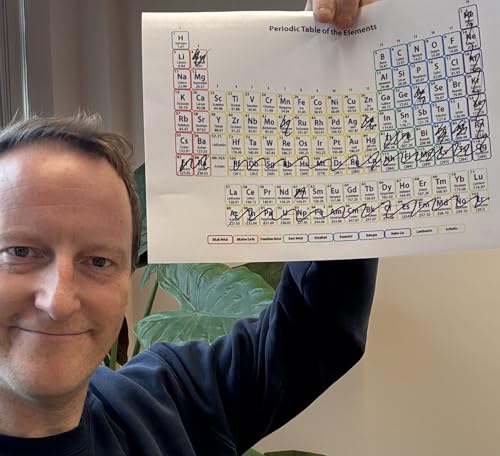
    Dr. Russell Sharp examines fertiliser products that claim to contain dozens to 90+ chemical elements, using the periodic table to show why many of those claims are impossible, radioactive, or potentially toxic.

    He explains that plants only need around a dozen essential nutrients (plus a few beneficials), points out which elements can’t realistically be present, and urges listeners to question manufacturers and check ingredient lists.

    https://eutrema.co.uk/shop/fertiliser/liquid-gold-unique-complete-fertiliser/

    Croptec

    Cereals Diddly Squat Farm Jeremy Clarkson

    Más Menos
    10 m
  • Trehalose 6‑Phosphate: The Next Big Biostimulant for Wheat?
    Sep 30 2025

    In this episode Dr. Russell Sharp explains trehalose 6‑phosphate (T6P) as a plant sucrose‑status signal and its potential to boost wheat yields. He compares products from SugarRox and Unium, discusses trial evidence, ROI claims, and the challenges of bringing a single‑compound biostimulant to market. Dr. Sharp also covers intellectual property and public‑sector spinouts, the need for larger independent field data, and why farmers may view biostimulants as optional investments. He finishes with notes on upcoming industry events and calls for more transparency and real‑world results.

    https://eutrema.co.uk/category/biostimulants/

    Más Menos
    10 m
  • Latvia's Lost Harvest: Floods Wipe Out Crops
    Sep 17 2025

    Dr. Russell Sharp examines the severe crop losses in Latvia caused by heavy spring and late-season rainfall, flooding and seed washout that destroyed vegetables like onions, carrots, cabbages and potatoes. He explains how these conditions have left farmers facing large economic losses and likely increased imports and prices.

    The episode contrasts Latvia’s wet, unstable “climate frontline” with the UK’s recent drought conditions, touches on Estonia’s high organic output, and asks listeners for feedback on which season they prefer.

    https://eutrema.co.uk/shop/biostimulants/potassium-silicate-20-litres/

    Más Menos
    4 m
  • ICL, White Phosphorus and Gaza war crimes: A Follow-Up
    Sep 14 2025

    Dr. Russell Sharp revisits previous claims about ICL (formerly Israel Chemicals Limited), clarifying that there is no evidence they manufacture white phosphorus but detailing findings that ICL supplies white phosphorus to the US Army and onward to Israel, who use White Phosphorus against civilian populations.

    The episode also examines ICL’s sponsorship ties to an IDF battalion that has been filmed burning greenhouses in Gaza, the high proportion of staff serving in the Israeli military.

    https://eutrema.co.uk/

    Más Menos
    5 m
  • CHELATION!
    Jun 27 2025

    In this engaging episode, Dr. Russell Sharp delves into the intricate world of chelation, uncovering its crucial role in agriculture and hydroponics. Explaining the process of nutrient bonding, Dr. Sharp highlights the common misconceptions and misleading products in the market, particularly focusing on iron and boron management. Listeners will discover the groundbreaking developments from the Utreema lab, revealing a natural and eco-friendly alternative to synthetic chelates, particularly for boron, optimized around pH 6.5. This episode serves as an essential guide for both soil-based farmers and hydroponic enthusiasts, exploring effective ways to improve nutrient uptake while ensuring environmental sustainability. Stay tuned for exciting product trials and advancements in natural chelation techniques that promise to optimize crop health and yield.

    https://eutrema.co.uk/shop-crop-care/

    Más Menos
    13 m
  • DROUGHT (WATER DEFICITS)!
    May 6 2025

    Welcome back to Cereal Killers, the podcast dedicated to exploring the challenges faced by arable crops, including pests, diseases, and environmental stresses. In this episode, we delve into the intricate topic of water deficits, debunking the common association with drought and focusing on the scientific perspective. Discover how water deficits affect plant yield and growth and learn about innovative irrigation techniques used to manipulate horticultural crops for optimal results.

    Our discussion extends to the broader agricultural landscape, examining soil water deficits in arable and field vegetable crops and their impact on crop resilience. Explore the fascinating contrast between traditional farming methods and regenerative practices, highlighting the potential benefits of incorporating organic matter and using advanced measurement tools like thermal imaging cameras and dielectric sensors.

    Join us as we explore practical strategies for mitigating water deficits and maintaining healthy crops, such as stress-resistant bioactives and seaweed extract applications. This episode provides valuable insights for both traditional and hydroponic farmers looking to enhance crop resilience in the face of prolonged dryness and drought-like conditions.

    Dr Russell Sharp

    https://eutrema.co.uk/shop/organic-fertilisers/seaweed-extract-cold-processed

    Más Menos
    27 m
  • From Chemicals to Biologicals: The Future of Crop Management
    Mar 11 2025

    In this episode of Cereal Killers, we dive into the evolving world of agriculture as we explore the transition from chemical-based agrochemicals to biological solutions. Discover how a comprehensive biological program for cereals can be adapted for other crops, offering a way to improve plant health while supporting sustainable farming practices. From the benefits of seaweed extracts and beneficial bacteria to the use of mycorrhizae and other biostimulants, this episode provides valuable insights for farmers, horticulturalists, and gardeners alike.

    Learn why early application of biostimulants is crucial for crop establishment, how products like chitosan and potassium silicate can naturally defend against fungal pathogens, and the potential cost implications of integrating these biologicals into crop management. Whether you're experimenting with incorporating biologicals or seeking expert advice on the best products, this episode offers a wealth of information for anyone interested in sustainable and effective agricultural practices.

    www.eutrema.co.uk

    Más Menos
    17 m