Episodios

  • New John Lennon Material Just Dropped—Here's Why It Matters (Extended Version) 🎹 🎶
    Apr 18 2026
    See today's hot Beatles Memorabilia Collectibles Auctions: https://BeatlesFinds.com/ Okay, so this is the kind of thing that makes you stop scrolling for a minute. 👀 A genuinely rare piece of new John Lennon material is hitting record stores this weekend, and if you’re any kind of serious collector, you’re going to want to know about it before it’s gone—because with only 4,500 copies in existence, “gone” is going to happen sometime on Saturday. LOVE (Meditation Mixes) drops tomorrow as a “Record Store Day 2026 exclusive”, and it was produced by none other than Sean Ono Lennon. The source material is “Love”—that gorgeous, spare ballad from the 1970 Plastic Ono Band album, one of the rawest and most emotionally direct things Lennon ever recorded. Sean went back to the original 1970 multitrack tapes and built nine immersive “Meditation Mixes” out of them, stretching the track into ambient soundscapes that run up to 23 minutes long. 🎵 It’s worth pausing on what “Love” actually is before we talk about what’s been done to it. The song sits near the end of Plastic Ono Band—an album that arrived in December 1970, just months after the Beatles officially dissolved, and which remains one of the most emotionally confrontational records in rock history. Where most of that album is raw, screaming, primal therapy made audible, “Love” is the exhale at the end. It’s just John at the piano, a gentle string arrangement from Klaus Voormann’s session, and a lyric so simple it almost defies analysis: love is real, real is love. John stripped himself down to the studs on that entire record, and “Love” is what you find underneath all the pain—something quiet and certain and undefended. It’s one of the most beautiful things he ever committed to tape. 🎹 What Sean has done with that source material is genuinely interesting from a production standpoint. Working from the original 1970 multitracks—the same stems his father sang and played into more than fifty years ago—he’s essentially deconstructed “Love” and rebuilt it as a series of ambient environments. The nine mixes aren’t remixes in the conventional sense; they’re more like extended meditations on the song’s emotional DNA. Elements surface and recede. The piano becomes texture. The vocal drifts in and out like something half-remembered. At their longest, these pieces run 23 minutes, which puts them firmly in the territory of composers like Brian Eno or Harold Budd rather than anything you’d call pop music. Whether that’s your thing or not, the ambition is real, and the fact that Sean is working directly with his father’s original performances gives the whole project an intimacy that no outside producer could replicate. 🎛️ It’s also worth noting that Sean has been quietly carving out his own genuinely interesting artistic identity for years now—his band Ghost of a Saber Tooth Tiger, his solo work, his production credits—and this project feels like a natural extension of that sensibility rather than a purely curatorial exercise. He clearly hears something in “Love” that he wanted to explore rather than simply preserve. That creative investment shows, and it’s one of the reasons this release feels different from a standard anniversary reissue. 🎶 As a piece of music it’s a fascinating experiment—think less “rock artifact” and more “drift into a warm sonic bath while contemplating your existence.” Very on-brand for the Lennon estate’s recent archival instincts. But honestly? The music might not even be the most interesting thing about this release. It’s the physical package that makes this a genuine collector’s item. We’re talking three 180g LPs pressed on iridescent Pearl Arctic vinyl—that transparent, shimmery colorway that exists nowhere else. The sleeve is a triple gatefold finished in lilac mirrorboard, which if you’ve been paying attention to the estate’s recent super-deluxe releases, has become their signature look for the premium stuff. It photographs beautifully and it looks extraordinary on a shelf. 📦 Let’s talk about what 4,500 copies actually means in the context of the collector market, because the number is worth unpacking. Standard Record Store Day releases for major artists typically press anywhere from 10,000 to 25,000 copies. Even the more limited RSD titles from catalog legends usually clear 7,500 or 8,000. Dropping to 4,500 for a Lennon release—with the estate’s global fanbase and the built-in demand that comes with the RSD format—is a deliberate choice. It signals that the Lennon estate isn’t treating this as a volume play. They’re treating it as an artifact. Compare it to something like the Imagine super-deluxe box set from 2018, which sold through rapidly at a much higher price point and now commands significant premiums on the secondary market, and you start to understand the logic. Scarcity at ...
    Más Menos
    6 m
  • John Lennon’s Rarest 2026 Release—Don’t Miss This
    Apr 18 2026
    See this week's hot Beatles Memorabilia Auctions: https://wp.me/P2x2Mt-k56 , an affiliate link. Something New From John Lennon Just Dropped—And Collectors Need to Pay Attention Okay, so this is the kind of thing that makes you stop scrolling for a minute. 👀 A genuinely rare piece of new John Lennon material is hitting record stores this weekend, and if you’re any kind of serious collector, you’re going to want to know about it before it’s gone—because with only 4,500 copies in existence, “gone” is going to happen sometime on Saturday. LOVE (Meditation Mixes) drops tomorrow as a “Record Store Day 2026 exclusive”, and it was produced by none other than Sean Ono Lennon. The source material is “Love”—that gorgeous, spare ballad from the 1970 Plastic Ono Band album, one of the rawest and most emotionally direct things Lennon ever recorded. Sean went back to the original 1970 multitrack tapes and built nine immersive “Meditation Mixes” out of them, stretching the track into ambient soundscapes that run up to 23 minutes long. 🎵 It’s worth pausing on what “Love” actually is before we talk about what’s been done to it. The song sits near the end of Plastic Ono Band—an album that arrived in December 1970, just months after the Beatles officially dissolved, and which remains one of the most emotionally confrontational records in rock history. Where most of that album is raw, screaming, primal therapy made audible, “Love” is the exhale at the end. It’s just John at the piano, a gentle string arrangement from Klaus Voormann’s session, and a lyric so simple it almost defies analysis: love is real, real is love. John stripped himself down to the studs on that entire record, and “Love” is what you find underneath all the pain—something quiet and certain and undefended. It’s one of the most beautiful things he ever committed to tape. 🎹 What Sean has done with that source material is genuinely interesting from a production standpoint. Working from the original 1970 multitracks—the same stems his father sang and played into more than fifty years ago—he’s essentially deconstructed “Love” and rebuilt it as a series of ambient environments. The nine mixes aren’t remixes in the conventional sense; they’re more like extended meditations on the song’s emotional DNA. Elements surface and recede. The piano becomes texture. The vocal drifts in and out like something half-remembered. At their longest, these pieces run 23 minutes, which puts them firmly in the territory of composers like Brian Eno or Harold Budd rather than anything you’d call pop music. Whether that’s your thing or not, the ambition is real, and the fact that Sean is working directly with his father’s original performances gives the whole project an intimacy that no outside producer could replicate. 🎛️ It’s also worth noting that Sean has been quietly carving out his own genuinely interesting artistic identity for years now—his band Ghost of a Saber Tooth Tiger, his solo work, his production credits—and this project feels like a natural extension of that sensibility rather than a purely curatorial exercise. He clearly hears something in “Love” that he wanted to explore rather than simply preserve. That creative investment shows, and it’s one of the reasons this release feels different from a standard anniversary reissue. 🎶 As a piece of music it’s a fascinating experiment—think less “rock artifact” and more “drift into a warm sonic bath while contemplating your existence.” Very on-brand for the Lennon estate’s recent archival instincts. But honestly? The music might not even be the most interesting thing about this release. It’s the physical package that makes this a genuine collector’s item. We’re talking three 180g LPs pressed on iridescent Pearl Arctic vinyl—that transparent, shimmery colorway that exists nowhere else. The sleeve is a triple gatefold finished in lilac mirrorboard, which if you’ve been paying attention to the estate’s recent super-deluxe releases, has become their signature look for the premium stuff. It photographs beautifully and it looks extraordinary on a shelf. 📦 Let’s talk about what 4,500 copies actually means in the context of the collector market, because the number is worth unpacking. Standard Record Store Day releases for major artists typically press anywhere from 10,000 to 25,000 copies. Even the more limited RSD titles from catalog legends usually clear 7,500 or 8,000. Dropping to 4,500 for a Lennon release—with the estate’s global fanbase and the built-in demand that comes with the RSD format—is a deliberate choice. It signals that the Lennon estate isn’t treating this as a volume play. They’re treating it as an artifact
    Más Menos
    4 m
  • Is This The Ultimate Beatles Toy? Ed Sullivan Mega-Lego! 🧱🎸🥁
    Apr 17 2026

    See this week's hot Beatles Memorabilia Auctions: https://wp.me/P2x2Mt-k56

    This video reviews a 681-piece MEGA building set that allows fans to recreate The Beatles' iconic 1964 performance on the Ed Sullivan Show. Rather than being a traditional toy for children, the product is described as a high-end collectible designed specifically for adult fans who value nostalgia and display-ready detail. The source explains that the premium price accounts for licensing fees and specialized features like LED stage lights, which elevate the set to a "plastic trophy" status. It further explores the broader trend of adult building kits, where complex assemblies serve as meditative activities or office decor rather than playthings. Ultimately, the set is portrayed as a historical tribute that captures a specific cultural milestone for those willing to pay for a tangible piece of musical history.

    Más Menos
    5 m
  • Beatles Bass Mystery: Why Their Early Songs Sound So Thin! 🎸🥁
    Apr 17 2026

    Ever notice the thin bass on early Beatles records? Blame EMI engineers terrified of your record player! New remixes finally fix it. #Beatles #MusicHistory #RecordingStudio #ClassicRock #AudioEngineering #BeatlesRevisited

    Más Menos
    1 m
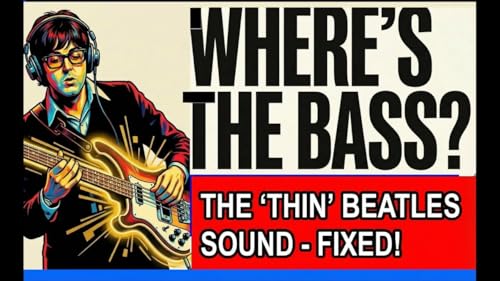
  • Where’s the Bass? The Mystery of the “Thin” Beatles Sound 🎸 🥁
    Apr 16 2026

    If you grew up listening to the Beatles in the early sixties like I did, you probably remember that initial rush of energy—that “raw” John Lennon vocal and the snap of Ringo’s snare. The brilliance of “I Saw Her Standing There” and “Please Please Me” captured a lightning-strike intensity that remains unsurpassed—and is likely unrepeatable.

    See this week's hot Beatles Memorabilia Collectibles Auctions: https://BeatlesFinds.com/

    And if you’re like me, you might have noticed something different came along in the 1970s. When bands like Kiss were hitting the scene, their records had a new thump that practically shook the floorboards. The song “I Wanna Rock and Roll All Nite” had bass you could feel in your chest, not just in your ears. When you went back to play “Please Please Me”, it suddenly sounded... thin.

    It wasn’t your imagination. There was a real bass gap in those early years, and it wasn’t because Paul McCartney wasn’t playing loud enough or hard enough. The Beatles were fighting a losing battle against the customs and limited technology of the era.

    Más Menos
    12 m
  • Why You Can’t Hear Beatles Bass
    Apr 16 2026

    Where’s the Bass? The Mystery of the “Thin” Beatles Sound

    See this week's hot Beatles Collectibles Auctions: https://wp.me/P2x2Mt-k56

    Ever wonder why early Beatles records sound "thin" compared to the heavy "thump" of 70s rock like Kiss? In this video, I’m diving deep into the technical battle that took place inside Abbey Road. From the "Needle Jump" paranoia of 1963 to the "illegal" experiments for Paperback Writer, we explore why Paul McCartney was obsessed with getting a "beefier" sound—and how modern AI technology is finally "un-baking" those tracks to give us the bass we’ve been missing for 60 years.

    In this video, we cover:

    Why EMI engineers were terrified of loud bass.

    Paul McCartney’s obsession with the Motown sound.

    How Geoff Emerick used a loudspeaker as a microphone.

    Peter Jackson’s "MAL" technology and the 2023 Red/Blue remixes.

    Más Menos
    12 m
  • McCartney’s $800,000 Lyric Sheet 🎸 🥁 🎹 🎶
    Apr 14 2026

    See this and today's other hot Beatles Memorabilia Collectibles Auctions: https://BeatlesFinds.com/

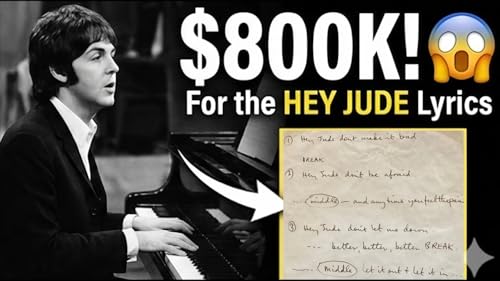
    "Hey Jude" was more than just a chart-topping hit; it was a profound act of empathy, a technical marvel of the analog recording era, and a sprawling seven-minute-and-eleven-second masterpiece that proved the public had an appetite for musical evolution.

    The Inspiration: A Song for Julian

    The genesis of "Hey Jude" is famously rooted in a moment of personal domestic crisis. In June 1968, John Lennon had separated from his first wife, Cynthia, as his relationship with Yoko Ono became the focal point of his life. Paul McCartney, long considered a "secondary uncle" to John’s five-year-old son, Julian, felt a deep sense of compassion for the boy caught in the middle of a high-profile divorce.

    While driving his Aston Martin to visit Cynthia and Julian at Kenwood, McCartney began humming a melody. He initially conceived the song as "Hey Jules," a direct message to the young boy to "take a sad song and make it better." McCartney later reflected that he changed "Jules" to "Jude" because it sounded a bit more country-and-western and carried a more universal, rhythmic weight. It was an attempt to offer comfort to a child, yet as the lyrics evolved, the song transformed into a broader message of hope and the necessity of vulnerability.

    Más Menos
    3 m
  • Is This Lyric Sheet Real? 🎸 🥁
    Apr 14 2026

    See this and today's other hot Beatles Memorabilia Collectibles Auctions: https://BeatlesFinds.com/

    The complete handwritten lyrics to “Here Comes the Sun” on vivid yellow paper decorated with the iconic Yellow Submarine cartoon illustration of the Fab Four—all four signatures clearly present, with Lennon and McCartney across the top, Harrison along the left side, and Starr at lower left. The piece arrives in a museum-quality black frame measuring 21” × 25” with suede matting and individual portrait photographs of each Beatle flanking the display.

    George Harrison wrote “Here Comes the Sun” in the spring of 1969 while sitting in Eric Clapton’s garden, playing Clapton’s guitar—taking what he later described as a “mental health day” from Apple’s increasingly toxic business atmosphere. It became the opening track of Side Two of Abbey Road, and one of the most beloved songs in the entire Beatles catalog, Harrison’s gentle optimism cutting directly against the tension that was tearing the band apart in its final months. The yellow paper and Yellow Submarine illustration give the piece an additional visual coherence that makes it genuinely display-worthy.

    Authentication is by GFA (Guaranteed Forensic Authentication), Certificate #GFAA-22077, examined January 7, 2021, with full forensic analysis of writing style, slant, spacing, pen lifts, stroke patterns, and letter formation. Affirmative results for both medium and signatures. The full Letter of Authenticity and tamper-evident holographic certificate are included.

    Más Menos
    12 m