Balanced Not Boring Podcast Por Judy Daghestani (Laurus Organics) and Tamara Khoury (Teal Bakehouse) arte de portada

Balanced Not Boring

Balanced Not Boring

De: Judy Daghestani (Laurus Organics) and Tamara Khoury (Teal Bakehouse)
Escúchala gratis

Welcome to the Balanced Not Boring Podcast. A safe space where wellness entrepreneurs & cohosts, Judy Daghestani (Cofounder of Laurus Organics) & Tamara Khoury (Founder of Teal Bakehouse) talk about all things Mind, Body & Soul, live from Dubai. Stay tuned to hear from our balanced babe community, certified practitioners, doctors, healers and more, to learn how to live a realistic 80/20 in today's hectic pace. It's time to debunk 'wellness' and make it inclusive, as it was always meant to be ❤️ Follow us on TiktTok and Instagram at @balancednotboringpodcastJudy Daghestani (Laurus Organics) and Tamara Khoury (Teal Bakehouse) Desarrollo Personal Éxito Personal
Episodios
  • Decluttering Your Home to Calm Your Mind: How Design, Color & Energy Affect Your Nervous System
    Mar 9 2026

    This episode is brought to you by Aqua Aligner.

    Use code BNB10 for 10% off on your next treatment.

    https://aquaaligners.com/

    From spaces that look fine on the outside… to homes that quietly drain us the moment we walk through the door – this episode opens a conversation about clutter, design, and the nervous system in a world where our homes are doing more jobs than ever.

    Hosts Judy Daghestani and Tamara Khoury sit down with two women who approach space from very different but deeply connected angles: Reem Shakarchi, founder of Wallpaper Kids, and Salam Shaban, founder of The Tidy Mess and a Marie Kondo-certified decluttering and organization expert. Together, they explore how design, color, and clutter aren't just aesthetic choices – they're emotional ones.

    They dig into why letting go of things feels so hard, how visual noise dysregulates us without our realizing it, and why a space can look beautiful yet still feel heavy. This isn't a conversation about perfect homes or Instagram-worthy interiors – it's about creating spaces that actually support how you feel.

    We dive into:

    – Why our homes feel heavier now than ever before

    – How color, pattern, and visual rhythm affect mood and regulation

    – The emotional psychology behind why we hold on to things

    – How clutter carries energetic weight – and what that actually means

    – Feng shui principles applied to real, lived-in family homes

    – Design choices for children's spaces that support calm, not chaos

    – Practical decluttering steps that create immediate emotional relief

    – The difference between organizing for perfection vs. organizing for flow

    – Keep, Release, or Rethink: a rapid-fire round on common household habits


    If this conversation resonated, share it with someone who needs permission to let go.

    🎧 Listen on Apple, Spotify & YouTube @balancednotboringpodcast

    🔁 Share with a parent or woman who needs better answers

    🔔 Subscribe to Balanced Not Boring for real conversations about modern life, wellness, and womanhood


    Timestamps:

    00:00 – Intro

    01:08 – Sponsor Message

    01:36 – Welcome & Why This Episode

    02:00 – When Space Becomes Overloaded

    02:35 – Guest Introduction: Reem Shakarchi

    03:00 – Guest Introduction: Salam Shaban

    03:35 – How Salam Got Into Decluttering

    05:00 – Practical Influence & Lasting Systems

    06:00 – How Reem Got Into Wallpaper Kids

    08:00 – From Aesthetics to Emotional Safety

    09:00 – How Motherhood Changed How Reem Sees Space

    09:35 – Do Children's Spaces Shift Their Behavior?

    10:10 – Emotional Safety, Trains & Bedtime Imagery

    11:00 – Why Children Build Deep Connections With Their Spaces

    12:15 – How Salam Integrates Color at Home

    14:00 – Do Objects Hold Energy?

    14:40 – How to Decide What to Keep vs. Let Go

    17:20 – One In, One Out & Charitable Giving

    18:30 – Buying Better After the Decluttering Exercise

    19:20 – The Emotion of Holding On: Guilt, Identity & Fear

    20:30 – When Kids Overconsume – and Why It's Often the Parents

    23:00 – Does Your Home Feel Like a Sacred Space?

    25:00 – Creating Zones & Boundaries Within the Home

    28:30 – Why Adults Are Gearing Toward Minimalism

    29:20 – Step-by-Step: How to Start When You're Overwhelmed

    32:00 – Why Letting Go Is Emotionally Hard

    33:15 – Does Every Space Need to Be Functional?

    33:50 – The Dumping Room Debate

    35:00 – When Partners Have Different Clutter Styles

    36:15 – Spring Cleaning: Necessary Ritual or Old Myth?

    38:00 – The Clutter Cycle & Mental Clarity

    38:20 – Keep, Release, or Rethink: Overflowing Storage Bins

    38:45 – Keep, Release, or Rethink: "Just in Case" Items

    38:55 – Keep, Release, or Rethink: Kids' Artwork

    40:20 – Keep, Release, or Rethink: Pinterest-Perfect Homes

    41:05 – Minimalism vs. Maximalism – There's No One Size Fits All

    41:30 – Keep, Release, or Rethink: Hand-Me-Downs

    42:50 – Keep, Release, or Rethink: Sentimental Clutter

    43:05 – Closing Reflections: Space as Nervous System Care

    43:30 – Where to Find Reem Shakarchi & Salam Shaban

    44:19 – Closing Notes & Outro

    Más Menos
    44 m
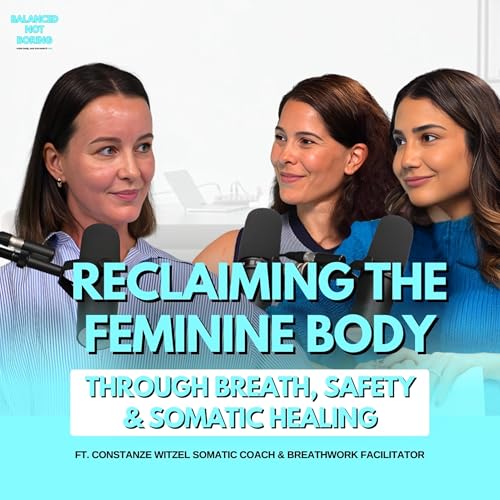
  • High-Achieving, Always On: How to Calm Your Nervous System w/ Constanze Witzel
    Feb 17 2026

    From high-functioning burnout to quiet disconnection in the body, this episode explores why so many women feel “fine” on the outside, yet chronically tense, exhausted, or overwhelmed underneath.

    Hosts Judy Daghestani and Tamara Khoury sit down with Constanze Witzel, Frankfurt-born, Dubai-based trauma-informed somatic coach and breathwork facilitator, to unpack what nervous system regulation actually means, beyond trends, performative healing, or surface-level wellness.

    Together, they explore how stress, trauma, and modern life live in the body, why many women move through life in a state of functional freeze, and how true healing begins with safety, not force, discipline, or optimization. Constanze shares her own journey through early instability, modeling, and spiritual bypassing, and explains why embodiment, gentleness, and awareness are the missing pieces for many high-achieving women.

    This conversation reframes healing as a process of listening rather than fixing and offers grounded tools that can be integrated into real life, not just retreats or perfect routines.

    In this episode, we explore: – What the nervous system really is and how it shapes daily life – Somatic healing vs performative wellness trends – Why women burn out in their 30s despite “doing everything right” – Functional freeze, over-stimulation, and chronic tension – The role of safety in trauma-informed healing – Why intensity (ice baths, forceful breathwork) can backfire for women – Somatic breathwork explained in plain language – Micro practices that support regulation in work, family, and relationships – Technology, AI, and why human presence still matters

    At its core, this episode is a reminder that your body isn’t broken, it’s responding intelligently to the world around you. Healing doesn’t require becoming someone else. It starts with remembering how to feel safe inside yourself.

    If this conversation resonates, share it with a woman who needs permission to slow down without guilt.

    🎧 Listen on Apple, Spotify & YouTube @balancednotboringpodcast

    🔁 Share with a parent or woman who needs better answers

    🔔 Subscribe to Balanced Not Boring for real conversations about modern life, wellness, and womanhood

    Más Menos
    1 h y 5 m
  • The “Forever 35” Face: Aesthetic Medicine, Aging & Losing Ourselves” w/ Dr. Dany Touma
    Feb 2 2026

    From filters that turn faces into templates… to procedures that promise “fixes” instead of understanding – this episode opens a conversation about aesthetics, aging, and identity in a culture where women feel pressure to look forever 35.

    Host Judy Daghestani sits down with Dr. Dany Touma, a US-trained, board-certified dermatologist and laser surgeon, to unpack the rise of esthetic medicine, the psychology behind “tweak-ments,” and why wanting to look good doesn’t have to mean losing yourself in the process.

    They explore how social media and technology distort our perception of beauty, why so many people regret being “overdone,” and how true expertise can make the difference between aging well and erasing individuality. This isn’t a debate about whether cosmetic work is right or wrong – it’s a conversation about context, safety, and self-connection.

    If you’ve ever felt torn between embracing aging and keeping up with unrealistic standards, this episode offers nuance instead of judgment.

    We dive into: – The cultural shift toward cosmetic enhancement – Filters, AI, and why beauty feels more performative – How medical expertise changes safety + results – Identity loss from look-alike trends and over-filled faces – Why some people reverse cosmetic work – What “aging well” actually looks like – Boundaries, pressures, and choosing for yourself

    At its core, this episode reframes aesthetic medicine as a tool – not a mandate – and invites women to make informed, aligned decisions rather than reactive ones.

    If this episode resonates, pass it to someone navigating the noise around beauty, aging, and modern aesthetics.

    🎧 Listen on Apple, Spotify & YouTube @balancednotboringpodcast

    🔁 Share with a parent or woman who needs better answers

    🔔 Subscribe to Balanced Not Boring for real conversations about modern life, wellness, and womanhood

    Más Menos
    1 h y 9 m
Todavía no hay opiniones