Episodios

  • The First 90 Days: How to Take Over a Purchasing Organization and Win
    Mar 30 2026
    What does it really take to walk into a new purchasing leadership role and make it work?Not the strategy deck. Not the org chart. The real work: the people, the data, the relationships, and the hard lessons learned along the way.In this episode, Jan Griffiths and co-host Tom Roberts sit down with Marty Rathsburg, newly appointed Head of Purchasing at the Gemini Group, a tier one and tier two automotive supplier with 17 locations across North America. Marty brings decades of experience in operations, purchasing, quality, and private equity. But this episode isn't about what he's done before. It's about what he's doing right now and what he's learning in real time.One of the challenges Marty ran into? The ERP. Gemini operates on a single ERP platform across all 17 locations, which sounds like an advantage until you realize every plant has customized it differently. Job shops, serial production, different commodity codes, and different supplier codes for the same vendor. The data is there. Getting it to mean something is another challenge entirely. It's a problem that plays out across the industry every day, and it's exactly the kind of execution gap that the right technology and the right systems of action are designed to close.This is Episode 1 of a two-part journey. We're bringing Marty back in six months to find out how it actually went.Themes Discussed in This EpisodeWhy do people come before strategy in any new leadership roleThe myth of "one ERP" and why it doesn't solve your data problemHow to prioritize suppliers when everything feels urgentStakeholder alignment: building credibility without the egoWhat vulnerability looks like in a purchasing leadership roleThe courage to call out your own misstepsFeatured GuestName: Marty RathsburgTitle: Head of Purchasing, Gemini GroupAbout: Marty is a transformation-focused operations and procurement leader known for bringing clarity to complex challenges. With 20+ years' experience improving performance and developing high‑impact teams, he’s delivered consistent growth by aligning people, simplifying systems, and driving action. Marty is recognized for his hands-on leadership style, building relationships at every level, and creating cultures where teams move fast and win together. Whether integrating acquisitions or strengthening supply resilience, He brings a grounded, people-first approach to automotive and industrial supply chains.Connect: LinkedInAbout Your HostsJan GriffithsJan is the host and producer of the Auto Supply Chain Champions Podcast and The Automotive Leaders Podcast. A former automotive manufacturing and supply chain executive, Jan is recognized as a Champion for Culture Change in the automotive industry. She brings direct, grounded conversations to leaders navigating execution, disruption, and transformation across the global automotive ecosystem.Tom Roberts (Co-host)Tom is Co-host of the Auto Supply Chain Champions Podcast and Vice President of Strategic Industry Development at QAD. He works closely with automotive and industrial manufacturers to close the gap between insight and execution, helping leaders move from visibility to systems of action that drive real operational outcomes.Mentioned in the Episode:Tony Trecapelli, CEO of Gemini Group, on the Automotive Leaders PodcastEpisode Highlights[00:01:22] The Real Challenge of a New Role: Jan sets the stage: stepping into a purchasing and supply chain role is not about strategy on paper. The real challenge is deciding what to focus on first amid complexity.[00:02:47] Why Marty Chose Gemini Group: Marty shares what drew him to Gemini, rooted in firsthand experience working with them as a supplier and seeing their culture in action.[00:04:59] Start with People, Not Process: Marty’s first move: sit down with every buyer, listen, take notes, and understand the human dynamics before making any changes.[00:07:01] One ERP, Many Realities: Despite having a single ERP across the organization, inconsistencies and plant-level differences require deep validation and gut-checking of data.[00:09:11] The Danger of Silo Optimization: Jan calls out a common industry issue: optimizing at the plant level at the expense of enterprise-wide visibility. The mindset must shift to the full ecosystem.[00:12:59] Prioritizing Suppliers Beyond Spend: Marty explains how prioritization goes beyond spend, factoring in risk, single sourcing, and future growth. A four-hour car ride with a plant manager becomes a strategic turning point.[00:14:51] Building Stakeholder Alignment Through Action: Alignment is not achieved in meetings. It is built through listening, collaboration, and solving problems together. Walking in with all the answers is the fastest way to lose trust.[00:18:17] Three Principles for New Leaders: Marty’s advice: build relationships first, be relentless about understanding the data, and stay focused on outcomes while adapting the path to get there.Top Quotes[00:07:01] Marty Rathsburg: “You ...
    Más Menos
    20 m
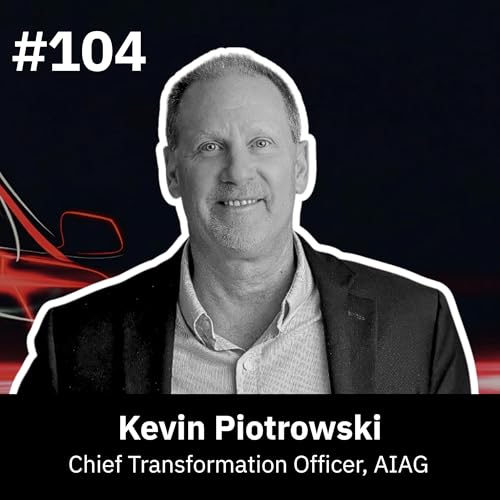
  • Your Data Supply Chain Is Broken - Here's How to Fix It
    Mar 16 2026
    Your physical supply chain is optimized. Your data supply chain is broken. That's the hard truth at the center of this conversation and it's one most automotive leaders haven't fully faced yet.In this episode, Jan Griffiths and Tom Roberts sit down with Kevin Piotrowski, Chief Transformation Officer at AIAG, to break down Catena-X: what it is, why it matters, and why the automotive industry can no longer afford to ignore it.Kevin makes the case clearly: the data that companies need to make decisions no longer lives inside their four walls. 60, 70, 80% of decision-critical data now comes from outside the enterprise, from supply chains both upstream and downstream. Catena-X is the ecosystem built to move that data securely, at scale, across the entire supply chain, while protecting IP, maintaining data sovereignty, and enabling AI and robotics to act on it.This is not another IT initiative. It's a movement. Approaching its fifth anniversary in Europe and hitting year one or two in North America, Catena-X is entering the adoption phase and AIAG is driving that effort as the North American hub. The Readiness Booster Program, a 12-week onboarding, is already helping companies of all sizes get connected. From small suppliers using an Excel file to large manufacturers building their own certified connectors, there's an on-ramp for everyone.The challenges are real. Trust between OEMs and suppliers has never been a strength of this industry. Data extraction from fragmented ERP systems is hard. And many companies haven't even defined a data strategy yet. But the companies that wait will absorb the cost. The companies that move will build a competitive advantage that compounds: in quality, sustainability, carbon footprint reporting, digital twins, and beyond.Jan and Tom will both be at the AIAG Elevate conference in Detroit on May 21st. If you want to understand what's coming and where the real tension between OEMs and suppliers sits, that's the room to be in.Themes Discussed in This EpisodeWhy the data supply chain is the next frontier for automotiveWhat Catena-X is and why it's more than a data exchangeData sovereignty: how suppliers protect IP while sharing across the chainThe path from data to AI to robotics and why it's now one integrated systemThe Readiness Booster Program: how to get connected in 12 weeksWhy every supplier needs a data strategy before they pick a solutionThe trust deficit between OEMs and suppliers, and why it has to changeCatena-X in two years and five years: the global expansion roadmapAIAG Elevate Detroit Conference, May 21st: what to expectFeatured GuestName: Kevin PiotrowskiTitle: Chief Transformation Officer, AIAGAbout: Kevin Piotrowski serves as Chief Transformation Officer at AIAG, where he leads North American efforts around Catena-X adoption and digital transformation across the automotive supply chain. Kevin brings deep expertise in data strategy, supply chain technology, and industry collaboration, working directly with OEMs, suppliers, and solution providers to accelerate the shift toward connected, AI-ready supply chains.Connect: LinkedInAbout Your HostsJan GriffithsJan is the host and producer of the Auto Supply Chain Champions Podcast and The Automotive Leaders Podcast. A former automotive manufacturing and supply chain executive, Jan is recognized as a Champion for Culture Change in the automotive industry. She brings direct, grounded conversations to leaders navigating execution, disruption, and transformation across the global automotive ecosystem.Tom Roberts (Co-host)Tom is Co-host of the Auto Supply Chain Champions Podcast and Vice President of Strategic Industry Development at QAD. He works closely with automotive and industrial manufacturers to close the gap between insight and execution, helping leaders move from visibility to systems of action that drive real operational outcomes.Mentioned in the Episode:American Manufacturing SummitCatena-X North America HubAIAG North American Catena-X ConferenceEpisode Highlights[00:00:00] The Broken Data Supply Chain: Jan explains that while automotive perfected the physical supply chain, the data supply chain remains fragmented across disconnected systems. Catena-X aims to connect and standardize how critical supply chain data moves.[00:03:04] What Catena-X Actually Is: Kevin explains Catena-X simply: a secure way for companies to exchange complex supply chain data across the entire network, not just point-to-point.[00:04:56] Data Sovereignty in Practice: Kevin describes how Catena-X protects sensitive relationships. Data moves only one level up or down the chain, so companies see outcomes without exposing supplier identities.[00:08:00] From Data to AI to Robotics: Clean data feeds Catena-X, which enables secure exchange, powers AI decision-making, and ultimately drives automation and robotics.[00:10:07] The Readiness Booster Program: AIAG’s 12-week onboarding program helps companies quickly join the Catena-X network with ...
    Más Menos
    20 m
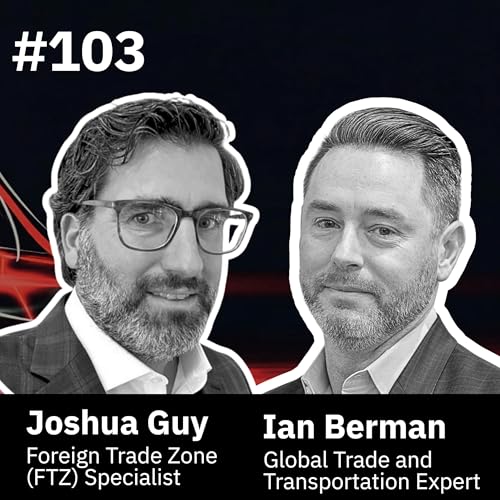
  • You’re Looking at Global Trade the Wrong Way
    Mar 2 2026
    Contact Ian at ian.berman@qad.com and Joshua at joshua.guy@qad.com for further conversationGlobal trade does not have a compliance problem. It has an execution gap. The classifications exist. The brokers are in place. The duties are being paid. Yet too often, trade is treated as documentation instead of strategy. In this episode, Jan Griffiths and Tom Roberts sit down with Ian Berman, Global Trade and Transportation expert, and Joshua Guy, Foreign Trade Zone specialist, to challenge that mindset and introduce a new one.Ian and Joshua make the case that tariffs are no longer a temporary disruption. They are a structural operating condition. With layered duties, stacked exposure, and policy volatility, organizations cannot afford to treat trade compliance as a cost center. The companies that will win are the ones that shift from a system of record to a system of action. That means modeling exposure before it hits. Scenario planning under uncertainty. Using infrastructure like FTZs deliberately. And building systems that react at the speed policy changes.The honesty in this conversation sets the tone. Jan openly admits she once treated trade compliance as something to “just like keep me clean. Don’t get me into trouble.” Ian confirms how common that mindset is, saying, “They look at that as just a cost center. Honestly, Jan…” That old-world thinking no longer works.Joshua explains why the stakes have changed: “This is way too complicated of an environment that is changing daily, and so you have to be dependent on systems for this. You cannot be dependent on the old way of how things work.” In a world where executive orders drop on Friday and implementation happens Tuesday, modeling tools and automation are no longer optional. They are survival mechanisms.This episode is a reminder that global trade is not back-office reporting. It is strategic infrastructure. Leaders who treat it as such gain flexibility, cash flow timing advantages, and margin recovery. Those who do not will absorb cost and call it unavoidable.Themes Discussed in This EpisodeWhy treating trade compliance as a cost center is a strategic mistakeThe shift from system of record to system of action in global tradeTariffs as a structural operating condition, not a temporary disruptionModeling exposure before policy changes hitThe critical role of data accuracy under refund and audit scrutinyBuilding scenario capability to react at the speed of volatilityForeign Trade Zones as strategic infrastructure, not paperworkTurning landed cost management into a competitive advantageFeatured GuestName: Ian BermanTitle: Global Trade and Transportation ExpertAbout: Ian is the Manager of Business Consulting with QAD Supply Chain. Ian has been with QAD for 11 years and has 20 years of experience in global trade and transportation management. He holds a Masters Degree in Supply Chain Management as well as an ASCM CLTD Certification.Connect: LinkedInName: Joshua GuyTitle: Foreign Trade Zone (FTZ) SpecialistAbout: For more than 25 years, Joshua has worked at the intersection of engineering, product leadership, and global trade, helping organizations bring structure and clarity to complex supply chains. Today, he leads strategy for Foreign-Trade Zone solutions that enable multinational importers to manage tariff exposure, reduce compliance risk, and strengthen financial performance. He also led the development of QAD FTZ, an industry-leading Inventory Control and Recordkeeping System that supports manufacturers, distributors, and 3PLs as they move from reactive compliance to proactive, resilient trade strategy in a volatile global environment.Connect: LinkedInAbout Your HostsJan GriffithsJan is the host and producer of the Auto Supply Chain Champions Podcast and The Automotive Leaders Podcast. A former automotive manufacturing and supply chain executive, Jan is recognized as a Champion for Culture Change in the automotive industry. She brings direct, grounded conversations to leaders navigating execution, disruption, and transformation across the global automotive ecosystem.Tom Roberts (Co-host)Tom is Co-host of the Auto Supply Chain Champions Podcast and Vice President of Strategic Industry Development at QAD. He works closely with automotive and industrial manufacturers to close the gap between insight and execution, helping leaders move from visibility to systems of action that drive real operational outcomes.Episode Highlights[01:38] Falling on the Sword: Jan opens with honesty, acknowledging that she once viewed trade compliance as protection, not potential. It was about staying out of trouble, not driving advantage. That mindset, she admits, is exactly what leaders must now challenge.[03:58] Cost Center Thinking: Ian names the pattern many organizations fall into. Trade teams are treated as overhead, brought in after decisions are made, measured by cost instead of contribution. In today’s environment, that thinking leaves value on the ...
    Más Menos
    24 m
  • Beyond Dashboards: Building a Connected Workforce
    Feb 18 2026
    Manufacturers do not have a data problem. They have an execution gap. The dashboards exist. The reports are generated. The KPIs are reviewed. Yet too often, action stalls between insight and impact. In this episode, Jan Griffiths and Tom Roberts sit down with Zack Sosebee, SVP of Operations & Customer Success at Redzone, to explore what changes when data moves beyond visibility and into the hands of the people closest to the work.Zack shares a clear and practical vision of the connected workforce. Not as another layer of software. Not as another reporting system. But as a system of action. By giving frontline operators simple, real-time visibility through red, yellow, and green performance signals, manufacturers create clarity in the moment decisions are being made. That clarity builds accountability. And accountability drives results.What makes this approach powerful is its simplicity. Instead of overwhelming teams with endless metrics, Redzone focuses on a few meaningful signals that operators can influence hour by hour. When teams see performance in real time, they respond in real time. Maintenance is called sooner. Problems are escalated faster. Peer-to-peer competition becomes a positive force. Execution accelerates because ownership shifts to the frontline.But technology alone does not transform a factory. Coaching does. Zack explains how culture change happens when leaders reinforce new behaviors, close feedback loops, and respond quickly to issues raised by operators. When a long-tenured employee logs a safety concern and sees it fixed the same day, trust is built. When a retiring expert captures knowledge that strengthens the next generation, pride returns to the shop floor. These are not software wins. They are human wins.This conversation is a reminder that digital transformation is not about collecting more data. It is about empowering people to act with confidence and clarity. When operators think like supervisors and supervisors think like leaders, performance improves. More importantly, culture evolves. And in today’s manufacturing environment, the companies that win will be the ones that move from reporting yesterday to deciding what happens next.Themes Discussed in This EpisodeWhat “connected workforce” really means in manufacturingWhy digital transformation often stalls at dashboardsOverall Equipment Effectiveness explained in simple termsRed, yellow, green real-time visibility on the shop floorCoaching vs training in culture changeTurning skeptics into championsEliminating paper logs and manual downtime reportingUsing simplicity to accelerate adoptionTechnology as an enabler of ownership, not oversightEmpowering operators to think like leadersFeatured GuestName: Zack SosebeeTitle: SVP Operations & Customer Success, RedzoneAbout: Zack is Senior VP of Operations & Customer Success at Redzone, where he leads the entire customer experience across coaching, implementation, and support, with a clear focus on delivering measurable results. A member of the early Redzone team, Zack helped build the company’s coaching organization and drives a people-first, customer-focused approach that empowers frontline teams and creates sustainable operational impact. Prior to Redzone, he held operations leadership roles at Ignite Solutions, Lockheed Martin, Porsche Cars North America, and Ford Motor Company. Zack holds both a bachelor’s and a master’s degree in Mechanical Engineering from the Georgia Institute of Technology.Connect: LinkedInAbout Your HostsJan GriffithsJan is the host and producer of the Auto Supply Chain Champions Podcast and The Automotive Leaders Podcast. A former automotive manufacturing and supply chain executive, Jan is recognized as a Champion for Culture Change in the automotive industry. She brings direct, grounded conversations to leaders navigating execution, disruption, and transformation across the global automotive ecosystem.Tom Roberts (Co-host)Tom is Co-host of the Auto Supply Chain Champions Podcast and Vice President of Strategic Industry Development at QAD. He works closely with automotive and industrial manufacturers to close the gap between insight and execution, helping leaders move from visibility to systems of action that drive real operational outcomes.Episode Highlights[01:30] Data in the Right Hands: Jan challenges the idea of simply “moving data to the shop floor” and raises the deeper issue of empowerment. Technology alone is not enough. Culture must enable action.[03:11] The Connected Workforce Vision: Zack explains Redzone’s founding vision: take critical executive-level data and put it directly in the hands of operators so they can think like supervisors and leaders.[04:42] Speed to Value Over Analysis Paralysis: Instead of overwhelming teams with data, Redzone focuses on just a few signals that drive immediate decisions and measurable operational gains.[09:33] Red, Yellow, Green in Real Time: Operators see hour-by-hour efficiency through ...
    Más Menos
    21 m
  • 2026 Is Where Comfortable Strategies Go to Die
    Feb 2 2026
    Automotive supply chains are no longer being reshaped by crisis. They are being reshaped by clarity, and clarity is forcing hard choices.In this episode of the Auto Supply Chain Champions Podcast, Jan Griffiths and co-host Tom Roberts are joined by Paul Eichenberg, Chief Strategist and author of The Road Ahead: Five Key Predictions for the Global Automotive Industry in 2026, for a blunt, reality-check conversation about what lies ahead for suppliers.The industry has moved past the chaos of shortages and disruptions, but that does not mean conditions are improving. Flat volumes. Thin launch schedules. Policy volatility. Long-standing assumptions that once protected supplier business models no longer apply.Paul makes the case that 2026 is not about recovery. It is about reckoning. Growth will not lift all boats. Outgrowth will be selective. Capital allocation, portfolio focus, and strategic intent will determine who wins and who fades.This conversation challenges automotive leaders to confront the most dangerous assumption still in play: that the industry is operating under the same rules it always has. The leaders who succeed in 2026 will be decisive, intentional, and willing to make hard bets instead of spreading resources thin.Themes Discussed in This EpisodeWhy flat volumes expose weak supplier strategiesThe end of “a rising tide lifts all boats” thinkingWhat outgrowth really means in a 0–1% marketCapital allocation as the ultimate strategy leverWhy the next decade is the hybrid decadePortfolio focus vs being all things to all customersWhy clarity, not comfort, defines 2026 leadershipFeatured GuestName: Paul EichenbergTitle: Chief Strategist, Automotive IndustryAbout: Paul is a seasoned automotive strategist and industry advisor with decades of experience supporting OEMs and suppliers through major market transitions. He is the author of The Road Ahead: Five Key Predictions for the Global Automotive Industry in 2026, where he outlines the structural shifts redefining growth, competition, and portfolio strategy across the global automotive value chain.Connect: LinkedInAbout Your HostsJan GriffithsJan is the host and producer of the Auto Supply Chain Champions Podcast and The Automotive Leaders Podcast. A former automotive manufacturing and supply chain executive, Jan is recognized as a Champion for Culture Change in the automotive industry. She brings direct, grounded conversations to leaders navigating execution, disruption, and transformation across the global automotive ecosystem.Tom Roberts (Co-host)Tom is Co-host of the Auto Supply Chain Champions Podcast and Vice President of Strategic Industry Development at QAD. He works closely with automotive and industrial manufacturers to close the gap between insight and execution, helping leaders move from visibility to systems of action that drive real operational outcomes.Mentioned in This EpisodeThe Road Ahead: Five Key Predictions for the Global Automotive Industry in 2026Episode Highlights[02:52] The most dangerous assumption suppliers are still making as they enter 2026[05:27] Why outgrowth, not volume recovery, will separate winners from losers[09:44] Why the next decade belongs to hybrids, not single-path electrification[17:17] Why portfolio and footprint choices now define competitiveness[22:22] The one bold move Tier One CEOs must make in 2026Top Quotes[05:19] Paul Eichenberg: “The idea that the tide raises all boats is no longer the assumption that suppliers should have going forward.”[07:23] Paul Eichenberg: “Strategy execution comes down to how you allocate capital in your talent or your resources.”[22:51] Paul Eichenberg: “Being all things to all people is a path to failure in this type of constricting market.”[23:17] Paul Eichenberg: “This is a year of clarity.”Follow the Auto Supply Chain Champions Podcast for real conversations with leaders who are making hard choices, focusing their bets, and leading with intent.🎧 Follow the podcast: 🔗 Learn more about QAD Redzone: https://www.qad.com/
    Más Menos
    24 m
  • Agentic AI Isn’t the Future. It’s the Line Between Winners and Laggards
    Jan 19 2026
    Automotive manufacturing leaders have no shortage of data, but only those who turn it into action are winning, and AI is the accelerator.In this milestone episode, Jan Griffiths is joined by Sanjay Brahmawar, CEO of QAD, and Dr. Bryan Reimer, MIT Research Scientist and author of How to Make AI Useful, for a grounded conversation about how AI is creating real advantage in automotive manufacturing.The challenge facing automotive manufacturing leaders is not visibility. Leaders know where problems exist. The issue is that action often stalls between insight and execution. Dashboards explain what happened. They do not decide what happens next.Sanjay and Bryan draw a clear distinction between systems of record and systems of action. Systems of record observe. Systems of action decide, execute, and learn. Agentic AI belongs in the second category. It creates value when it removes friction from work, accelerates routine decisions, and gives people better context at the moment action is required.Frontline teams in automotive manufacturing do not resist AI. They adopt it when it respects their expertise and helps them do their jobs better. Adoption follows usefulness, not mandates. When AI amplifies human judgment instead of supervising it, execution speed improves and results follow.This episode challenges automotive manufacturing leaders to stop treating AI as a reporting layer and start using it as an execution engine. The organizations pulling ahead are not waiting for perfect conditions. They are starting small, learning fast, and letting action build confidence.Themes Discussed in this episode:Why data visibility alone does not drive performance in automotive manufacturingSystems of record vs systems of actionHow AI removes friction from automotive manufacturing operationsFrontline-first AI adoption in plantsAgentic AI as an execution multiplierLeadership ownership of decisionsBuilding momentum with 60 to 90-day winsFeatured Guests: Name: Sanjay BrahmawarTitle: CEO of QAD About: Sanjay Brahmawar is the CEO of QAD, a cloud software company delivering cloud-based solutions for manufacturers and global supply chains. With more than two decades of experience leading global technology businesses, he brings deep expertise in digital transformation, AI, IoT, and data-driven platforms, built through senior leadership roles at IBM and Software AG.Connect: LinkedInName: Dr. Bryan ReimerAbout: Dr. Bryan Reimer is a Research Scientist at the MIT Center for Transportation & Logistics and a key member of the MIT AgeLab. He is also the author of How to Make AI Useful: Moving beyond the hype to real progress in business, society and life. His work focuses on how drivers behave in an increasingly automated world, using a combination of psychology, big data, and real-world testing to study attention, distraction, and human interaction with vehicle technology. He leads three major academic-industry consortia that are developing new tools to measure driver attention, evaluate how people use advanced driving systems, and improve in-vehicle information design, thereby guiding automakers and policymakers toward safer, human-centered mobility solutions.Connect: LinkedInAbout Your Host – Jan GriffithsJan Griffiths is the host and producer of the Auto Supply Chain Prophets podcast and The Automotive Leaders Podcast, and is recognized as the Champion for Culture Change in the automotive industry. A former automotive manufacturing and supply chain executive, Jan focuses on leadership, culture, and execution, bringing practical, real-world conversations to the forefront of industry change.Mentioned in this episode:QAD Champion AIHow to Make AI Useful: Moving beyond the hype to real progress in business, society, and lifeEpisode Highlights:[03:16] Data Isn’t Enough: Automotive manufacturers often have abundant data, but without ownership, trust, and decisive follow-through, insights fail to drive real results.[06:28] Trust Through Action: Leaders in manufacturing must embrace experimentation and small steps, because confidence in AI and new systems grows only when action precedes certainty.[10:53] 90-Day Mindset: Transformative leadership in manufacturing means challenging norms, leveraging AI, and rallying teams to achieve ambitious goals in record time.[15:20] Sandbox Leadership: Automotive leaders stall by overthinking and seeking perfect solutions, while real progress comes from small experiments, empowering teams, and proving concepts before scaling.[19:53] Manufacturing Love: Sanjay’s passion comes from his shop floor roots and belief that AI and modern tools can empower people, attract talent, and transform the future of manufacturing.[22:20] Process Passion: Bryan’s focus is optimizing workflows, amplifying teams with AI, and shifting the narrative from fear to the positive impact of technology in manufacturing.[24:46] Start Small, Win Big: Leaders can kick off AI adoption with role-based agents, targeted ...
    Más Menos
    33 m
  • Wrapping 2025: Farewells, Milestones, and Next Year’s Plans
    Dec 29 2025
    At the heart of The Prophets’ vision are “The 24 Essential Supply Chain Processes.” What are they? Find out, and see the future yourself. Click here As 2025 wraps up, the Auto Supply Chain Prophets podcast looks back on its journey and shares thoughts about what’s next. Hosts Jan Griffiths, Jim Liegghio, and Terry Onica take a moment to celebrate the podcast’s impact, highlighting 15,000 downloads in over 20 countries, and look forward to their 100th episode in 2026, a milestone only a few podcasts achieve.Jim encourages listeners to revisit past episodes to hear how industry leaders think, solve problems, and approach supply chain challenges. Terry shares her retirement from QAD after 23 years, celebrating a career spent promoting supply chain excellence and promising to continue contributing to projects she loves.Jan confirms the podcast isn’t going anywhere. In 2026, it will return with a refreshed format and new energy. For now, listeners can check out past episodes, dive deeper into the content on the website, and follow along as the hosts continue sharing conversations that shape the automotive supply chain.Featured on this episode: Name: Jan GriffithsTitle: President and Founder, Gravitas Detroit About: Jan is the architect of cultural change in the automotive industry. As the President & Founder of Gravitas Detroit, Jan brings a wealth of expertise and a passion for transforming company cultures. Additionally, she is the host of the Automotive Leaders Podcast, where she shares insightful conversations with industry visionaries. Jan is also the author of AutoCulture 2.0, a groundbreaking book that challenges the traditional leadership model prevalent in the automotive world. With her extensive experience and commitment to fostering positive change, Jan is at the forefront of revolutionizing the automotive landscape.Connect: LinkedInName: James “Jim” LiegghioTitle: Manager, Customer Experience & Engagement, Automotive Industry Action Group (AIAG)About: Jim is a seasoned supply chain leader with over 25 years of experience, particularly in the automotive sector. His expertise spans a wide range of areas, from hands-on plant-level material and production control to high-level corporate logistics roles at major OEMs like FCA. He has navigated the complexities of international logistics, trade compliance, and cross-functional collaboration, gaining a global perspective that enhances his approach to supply chain management. He excels at working across departments to achieve strategic goals, with a strong focus on optimizing operations and fostering relationships. His work isn’t just about logistics; it’s about cultivating a culture of continuous improvement, community, and diversity. Throughout his career, Jim has remained committed to lifelong learning, driven by a genuine curiosity and a passion for leadership.Connect: LinkedInName: Terry OnicaTitle: Director, Automotive at QADAbout: For two decades, Terry has been the automotive vertical director of this provider of manufacturing Enterprise Resource Planning software and supply chain solutions. Her career began in the supply chain in the late 1980s when she led a team to implement Electronic Data Interchange for all the Ford assembly and component plants.Connect: LinkedInMentioned in this episode:Check out every episode of the Auto Supply Chain Prophets podcast here.
    Más Menos
    6 m
  • Lessons We’re Taking Forward From Our Favorite 2025 Episodes
    Dec 15 2025
    At the heart of The Prophets’ vision are “The 24 Essential Supply Chain Processes.” What are they? Find out, and see the future yourself. Click here This episode takes a break from our usual detailed discussions to reflect on the conversations that shaped the year for the Auto Supply Chain Prophets podcast. Jan Griffiths, joined by co-hosts Jim Liegghio and Terry Onica, looks at why specific episodes stuck with them and what those moments reveal about where the automotive supply chain is heading.Live podcasting quickly rises to the top, especially the Midwest User Group episodes. Hearing customers talk openly about what they deal with every day brought everything back to reality. The hosts agree that these conversations stood out because they were raw, unscripted, and focused on real-life challenges rather than polished talking points.From there, the focus shifts to the next generation of supply chain leaders. Episodes recorded at the GM Wayne State Case Competition and other student-focused events captured something rare: genuine excitement about supply chain careers. Hearing students wrestle with real GM case studies and receive direct feedback from senior leaders reinforced why investing time in education and mentorship matters.Jim then reflects on episodes centered on leadership under pressure, including Kyle Price from Caterpillar and Darrin Lucas from Nissan. Both talked about disruption as something you plan for, not something that throws you off balance. Tariffs, volatility, aftersales pressure, none of it was treated as a crisis. The focus remained on preparation, trusting teams, and staying level-headed. The takeaway was simple but powerful. The way leaders respond sets the tone for everyone else.For Jan, Kate Vitasek’s work on collaborative agreements stood out because it moved beyond talk and into how collaboration actually works. But with structure, accountability, and measurable business impact.Ted Mabley’s data-driven discussion on RFQs exposed how outdated processes still slow the industry down and why technology only works when people are willing to rethink habits and silos.The episode closes with a grounded reminder: AI, standards, and platforms matter, but they are not shortcuts. Progress depends on people, relationships, and the willingness to unlearn old ways of working. With that perspective, the hosts wrap up 2025 grateful for the conversations, the community, and the momentum heading into the year ahead.Featured on this episode: Name: Terry OnicaTitle: Director, Automotive at QADAbout: For two decades, Terry has been the automotive vertical director of this provider of manufacturing Enterprise Resource Planning software and supply chain solutions. Her career began in the supply chain in the late 1980s when she led a team to implement Electronic Data Interchange for all the Ford assembly and component plants.Connect: LinkedInName: Jan GriffithsTitle: President and Founder, Gravitas Detroit About: Jan is the architect of cultural change in the automotive industry. As the President & Founder of Gravitas Detroit, Jan brings a wealth of expertise and a passion for transforming company cultures. Additionally, she is the host of the Automotive Leaders Podcast, where she shares insightful conversations with industry visionaries. Jan is also the author of AutoCulture 2.0, a groundbreaking book that challenges the traditional leadership model prevalent in the automotive world. With her extensive experience and commitment to fostering positive change, Jan is at the forefront of revolutionizing the automotive landscape.Connect: LinkedInName: James “Jim” LiegghioTitle: Manager, Customer Experience & Engagement, Automotive Industry Action Group (AIAG)About: Jim is a seasoned supply chain leader with over 25 years of experience, particularly in the automotive sector. His expertise spans a wide range of areas, from hands-on plant-level material and production control to high-level corporate logistics roles at major OEMs like FCA. He has navigated the complexities of international logistics, trade compliance, and cross-functional collaboration, gaining a global perspective that enhances his approach to supply chain management. He excels at working across departments to achieve strategic goals, with a strong focus on optimizing operations and fostering relationships. His work isn’t just about logistics; it’s about cultivating a culture of continuous improvement, community, and diversity. Throughout his career, Jim has remained committed to lifelong learning, driven by a genuine curiosity and a passion for leadership.Connect: LinkedInMentioned in this episode:QAD Midwest Users Conference: Community, Culture and InnovationDeveloping Future Leaders: Inside the General Motors and WSU Supply Chain Case CompetitionResilient by Design: Embedding Risk Strategy into Procurement Decisions with Kyle PriceNissan Redefines Aftersales Across the Americas with Darrin LucasVested ...
    Más Menos
    25 m