Asia Tech Podcast Podcast Por Michael Waitze Media arte de portada

Asia Tech Podcast

Asia Tech Podcast

De: Michael Waitze Media
Escúchala gratis

OFERTA POR TIEMPO LIMITADO | Obtén 3 meses por US$0.99 al mes

$14.95/mes despues- se aplican términos.
All Things Asia, All Things TechMichael Waitze Media
Episodios
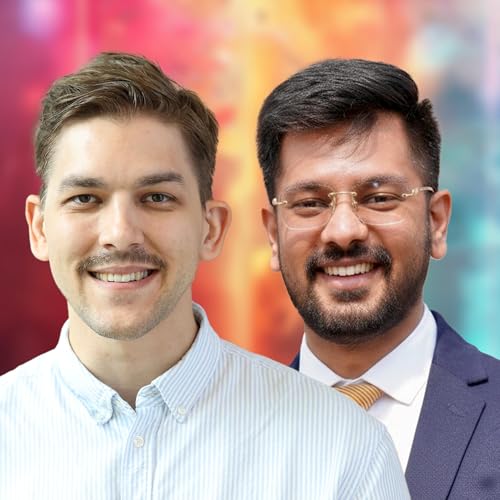
  • EP 408 - Building Autonomous Operations in Financial Institutions - Julien Condamines and Chee Beh
    Jan 6 2026

    Financial institutions are entering a new phase in which automation is no longer the goal, autonomy is. Instead of tools that simply expedite tasks, agentic AI is beginning to observe, reason, and take action across operational workflows. This shift can fundamentally change how work gets done.

    In this episode of ATP, Julien Condamines, co-Founder and Chief Revenue Officer at NOVO.ai and Chee Beh, SVP and GM of APAC at Yuno explain that agentic AI is beginning to handle not just tasks, but entire operational outcomes, freeing humans from repetitive workflows and pushing them toward higher-order judgment, empathy, and strategic thinking.

    Some of the topics that Julien and Chee discussed in detail include:

    • Automation improves efficiency, but agentic autonomy changes the fundamental design of work.
    • Expertise matters more than ever in an AI-Driven world and the quality of AI output depends on the quality of human input.
    • Human intuition does not go away, it becomes much more valuable.
    • Every transformative tech cycle predicts massive job losses; yet that has historically been wrong. As new tools increase productivity, organizations generate new problems for humans to solve.
    • Removing tedious work suddenly frees teams to pursue ideas for which they never had time. Projects that had been stuck in “dream” mode now have the opportunity to flourish.
    Más Menos
    37 m
  • EP 407 - What’s Shaping the Future of Financial Innovation in Asia? - Samantha Ghiotti and Shwetank Verma
    Dec 29 2025

    Asia’s financial landscape is evolving along uneven but deeply revealing lines. Southeast Asia is shaped by speed, experimentation, and the need for financial inclusion at scale, while Japan is defined by stability, institutional trust, and a deliberate approach to modernization.

    In this episode of ATP, Samantha Ghiotti, a co-Founder and CEO of Habitto and Shwetank Verma, a co-Founder and Managing Partner at Leo Capital, discuss how these differences illuminate why digital public infrastructure, identity systems, interoperable payment rails, and secure data-sharing frameworks, will be central to the region’s next phase of fintech growth.

    Some of the topics that Samantha and Shwetank discussed in detail included:

    • Digital public infrastructure will be the primary catalyst of innovation
    • India’s public digital infrastructure is more advanced than much of the rest of the world
    • Southeast Asian startups still cannot scale like founders imagined back in 2012
    • Data sovereignty is the next big battle and the markets where data portability becomes a norm will see faster innovation
    • The next decade of Asian FinTech will be defined by convergence, building infrastructure that prioritizes stability, trust, and long-term consumer protection
    Más Menos
    33 m
  • EP 406 - Is AI a Game Changer or a Threat in Insurance? - Bernhard Kotanko and Julien Condamines
    Dec 23 2025

    Artificial intelligence is rapidly becoming one of the most influential forces inside modern enterprises, and insurance is no exception. Its potential to automate underwriting, accelerate claims, and deliver unprecedented predictive insight is immense.

    While AI is starting to reshape insurance with speed and scale, it also exposes a hard paradox: the industry that prices uncertainty is hesitant to insure AI-driven uncertainty. In this episode of ATP, Bernhard Kotanko, Senior Partner at McKinsey and Asia-Pacific Insurance Practice Leader, and Julien Condamines, co-Founder & Chief Revenue Officer at Novo AI, argue that AI creates two intertwined risk fronts—enterprises deploying AI and insurers using it themselves.

    Some of the topics that Bernhard and Julien discussed in detail include:

    • Although insurers may be stepping back from covering AI liabilities today, the industry’s history proves it eventually develop frameworks for new and unprecedented threats.
    • Insurance contracts will be forced to change as AI inserts new third parties into every process and liability becomes fragmented.
    • Both reject the idea that AI should autonomously make underwriting or claims decisions. Humans should remain in the loop.
    • Artificial intelligence enables massive underwriting productivity, but only with good data.
    • Insurance remains an emotional business. AI may be able to process documents, detect patterns, and generate proposals, but only humans can reassure someone in crisis.
    Más Menos
    39 m
Todavía no hay opiniones