Art · The Creative Process: Artists, Curators, Museum Directors Talk Art, Life & Creativity Podcast Por Artists Curators Museum Directors Talk Art & Creativity · Creative Process Original Series arte de portada

Art · The Creative Process: Artists, Curators, Museum Directors Talk Art, Life & Creativity

Art · The Creative Process: Artists, Curators, Museum Directors Talk Art, Life & Creativity

De: Artists Curators Museum Directors Talk Art & Creativity · Creative Process Original Series
Escúchala gratis

Art episodes of the popular The Creative Process podcast. We speak to artists, curators, museum directors about their work & how they made their creative careers. To listen to arts episodes across a variety of disciplines, follow our main podcast: “The Creative Process · Arts, Culture & Society”. You’ll find us on Apple: tinyurl.com/thecreativepod, Spotify: tinyurl.com/thecreativespotify, or wherever you get your podcasts!

Exploring the fascinating minds of creative people. Conversations with writers, artists & creative thinkers across the Arts & STEM. We discuss their life, work & artistic practice. Winners of Oscar, Emmy, Tony, Pulitzer, leaders & public figures share real experiences & offer valuable insights. Notable guests and participating museums include: Laurent Le Bon (Centre Pompidou, Fmr. Musée Picasso), Dwandalyn Reece (Smithsonian Nat’l Museum of African American History & Culture), Chris Dercon (Grand Palais · Fmr. TATE Modern), Mechtild Rössler (UNESCO World Heritage Centre), Dimitrios Pandermalis (Acropolis Museum), Marilyn Minter, Ian Wardropper (The Frick Collection), Hans-Ulrich Obrist (Serpentine Galleries), Mark Seliger, Paul Chaat Smith (Smithsonian National Museum of the American Indian), Susan Fisher Sterling (National Museum of Women in the Arts, Ioannis Trohopoulos (Stavros Niarchos Foundation Cultural Center), Richard Flood (New Museum), John Marciari (Morgan Library & Museum), Jacques Villeglé, Nicole Fleetwood, Sébastien Gokalp (Musée national de l'histoire de l’immigration, Fondation Louis-Vuitton), Ralph Gibson, Jennifer Flay (FIAC), Bénédicte Alliot (Cité Internationale des Arts), Mojeb Al Zahrani (Institut du Monde Arabe), Valerie Steele (Museum at the Fashion Institute of Technology), Eric Fischl, Alicia Longwell (Parrish Art Museum), George Manginis (Benaki Museum), Elissa Auther (Museum of Arts and Design), Christina Mossaides Strassfield (Guild Hall of East Hampton), among others.

The interviews are hosted by founder and creative educator Mia Funk with the participation of students, universities, and collaborators from around the world. These conversations are also part of our traveling exhibition.
 www.creativeprocess.info

For The Creative Process podcasts from Seasons 1 2 3, visit: tinyurl.com/creativepod or creativeprocess.info/interviews-page-1, which has our complete directory of interviews, transcripts, artworks, and details about ways to get involved.

Copyright 2021, The Creative Process · This podcast launched in 2021. It also contains interviews previously recorded for The Creative Process podcast, exhibition and educational initiative.
Arte Biografías y Memorias Ciencias Sociales
Episodios
  • The Healing Power of the Arts: Longevity, Immunity & Wellbeing w/ DAISY FANCOURT - Highlights
    Feb 11 2026

    "Within society, we seem to have separated the arts out, so they're not so much a part of our daily lives. Often there's something that we feel we should do as a kind of leisure activity or hobby if we have enough time or if we have enough money to engage in them. And this is so fundamentally different to how humans engaged with the arts. When we look back thousands of years, it just was part of the everyday, and I feel like that's a major loss within contemporary societies."

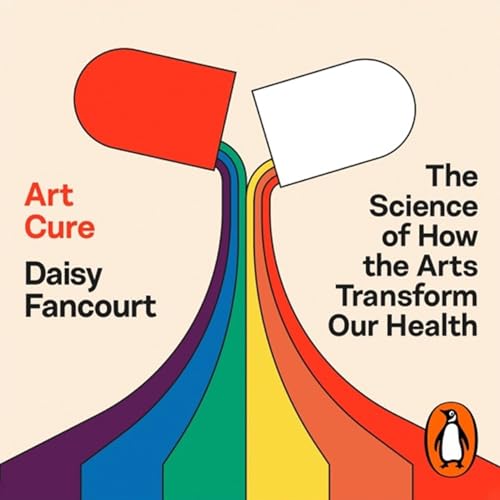
    Daisy Fancourt is a Professor of Psychobiology & Epidemiology at UCL and the author ofArt Cure: The Science of How the Arts Transform Our Health. A pioneer in the field of psychoneuroimmunology, she directs the WHO Collaborating Center on Arts and Health, where her research influences global health policy and the integration of the arts into medical care.

    (0:00) The Healing Power of the Arts: Longevity, Immunity & Wellbeing

    (1:17) Singing to Daphne: How Daisy used singing to comfort her premature daughter in the ICU

    (2:47) The Story of Russell: How a stroke survivor used art classes to reclaim his life, health, and identity

    (5:23) A Planet of 8 Billion Artists: Tracing the evolutionary origins of creativity back 40,000 years

    (8:58) Psychoneuroimmunology. Defining the biological mechanisms: how art reduces inflammation and cortisol

    (12:42) Art & Longevity. How arts engagement can slow biological aging and alter gene expression

    (18:24) Safeguarding Creativity. Why we should use AI for routine tasks but protect the human joy of the creative process

    Episode Website

    www.creativeprocess.info/pod

    Instagram:@creativeprocesspodcast

    Más Menos
    20 m
  • ART CURE: How the Arts Can Transform Our Health with DAISY FANCOURT
    Feb 11 2026

    Did you know that visiting a museum can lower your cortisol levels? Or that singing can bond a group faster than almost any other activity? We tend to think of the arts as entertainment, but science tells a different story. Today, we explore why creativity is hardwired into our biology and how it can be used to treat everything from postnatal depression to stroke recovery.

    Daisy Fancourt is a Professor of Psychobiology & Epidemiology at UCL and the author of Art Cure: The Science of How the Arts Transform Our Health. A pioneer in the field of psychoneuroimmunology, she directs the WHO Collaborating Center on Arts and Health, where her research influences global health policy and the integration of the arts into medical care.

    (0:00) The Healing Power of the Arts: Longevity, Immunity & Wellbeing

    (4:14) The Story of Russell: How a stroke survivor used art classes to reclaim his life, health, and identity

    (9:01) A Planet of 8 Billion Artists: Tracing the evolutionary origins of creativity back 40,000 years

    (15:30) The Chemistry of Connection. Why singing evolved before language and how it accelerates group bonding

    (20:32) Psychoneuroimmunology. Defining the biological mechanisms: how art reduces inflammation and cortisol

    (25:57) The Professional Paradox: Balancing the wellbeing benefits of art with the pressures of a creative career

    (30:03) Predictive Coding & Play: Why the human brain needs improvisation and why we shouldn't outsource creativity to AI

    (33:26) Singing to Daphne: How Daisy usedsinging to comfort her premature daughter in the ICU

    (37:55) World Health Organization, Public Policy & Social Prescribing

    (46:04) Art & Longevity. How arts engagement can slow biological aging and alter gene expression

    (58:17) Finding Artistic Reverence in Nature

    Episode Website

    www.creativeprocess.info/pod

    Instagram:@creativeprocesspodcast

    Más Menos
    1 h y 3 m
  • BASQUIAT: The Price of Fame w/ Author DOUG WOODHAM - Highlights
    Nov 27 2025

    People today are so used to Basquiat's prices being extraordinarily high and rising that it's almost hard for people to understand that wasn't always the case. In the year he died, 1988, a terrific painting by Basquiat might have sold for $30,000. Relative to his other artistic peers, like a great Julian Schnabel painting that cost $800,000. After Basquiat died, some speculative capital entered his market, and his prices did pop, but in the early 1990s, his prices fell apart, and for much of the first half of the 1990s, his work was selling for 80% off what it had been selling before. Auction houses didn't want to include him in their auctions. There was a really good chance he was going to be remembered, but certainly not become a great star. Three key figures believed in him and proceeded to buy almost every available Basquiat in the first half of the 1990s. They were also just passionate believers in his work. But for those three people, it would have taken much longer for Basquiat to achieve acclaim, if ever.”

    Today, we’re joined by someone uniquely positioned to unpack the art world’s inner workings and to help us understand one of its most mythic figures — Jean-Michel Basquiat. Doug Woodham is the author of the new biography, Jean-Michel Basquiat: The Making of an Icon, the first major life study of Basquiat in over twenty-five years. Drawing on more than a hundred interviews — from family and friends to collectors and curators — Doug traces the rise, fall, and resurrection of an artist who redefined what it means to be a cultural icon. Before turning to writing, Doug served as President of the Americas for Christie’s, one of the world’s leading auction houses. That role gave him an insider’s perspective on how value is created — and mythologized — in the modern art market. In this conversation, we’ll explore not just the man behind the legend, but the powerful machinery that turned Jean-Michel Basquiat into one of the most recognized and commercially successful artists in the world.

    Episode Website

    www.creativeprocess.info/pod

    Instagram:@creativeprocesspodcast

    Images courtesy of Doug Woodham and Thames & Hudson. For image credits, see Episode Website.

    Más Menos
    12 m
Todavía no hay opiniones