Episodios

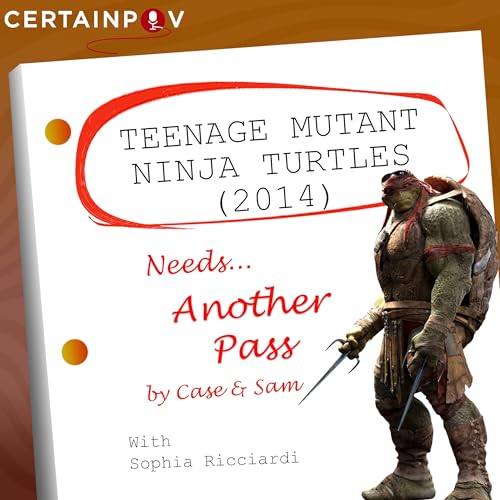
  • Another Pass at Teenage Mutant Ninja Turtles (2014)
    Apr 10 2026
    This week on Another Pass, Sam and Case are joined by their very own editor Sophia Ricciardi to take on Teenage Mutant Ninja Turtles (2014)! We dig into the film's bold redesigns, chaotic energy, and whether this modern take on the Heroes in a Half Shell captures what makes the Turtles work—or misses the mark entirely. #AnotherPass #TMNT #TeenageMutantNinjaTurtles #SophiaRicciardi #MoviePodcast #FascinatingButFlawed Another Pass Full Episode Originally aired: April 10, 2026 Music by Vin Macri and Matt Brogan Podcast Edited by Sophia Ricciardi Certain Point Of View is a podcast network brining you all sorts of nerdy goodness! From Star Wars role playing, to Disney day dreaming, to video game love, we've got the show for you! Learn more on our website: https://www.certainpov.com Support us on Patreon! patreon.com/CertainPOVMedia Join us on Discord: https://discord.gg/wcHHer4 PODCAST SHOWS: ▶ Another Pass - https://www.certainpov.com/another-pass-podcast Identity Crisis Affects Narrative: The movie struggled with its identity, dropping core elements and inserting convoluted backstories mid-production. Character Design Issues: Turtles' designs were criticized as grotesque, reducing relatability and making action scenes less believable. Storytelling Problems: Over-explained plots, especially regarding April O'Neil and Eric Sacks, bogged down the movie's pacing and clarity. Setting Conflicts: The film's setting away from New York City limited key identity elements and iconic landmarks associated with the turtles. Mixed Reception of Cast: Alan Ritchson as Raphael received praise, while others like Johnny Knoxville and Megan Fox faced criticism for their roles. Cultural Context Matters: The film reflected a 2014 era not fully embracing nerd culture, impacting its creative choices and audience reception. Notes Production and Narrative Challenges This 2014 Ninja Turtles movie struggled with a lack of creative love and identity, making it feel like a disjointed and ashamed adaptation of the franchise (00:00). Identity Crisis and Shame Factor heavily influenced the movie's tone and plot, with the film almost dropping the "Teenage Mutant" part and considering alien origins for the turtles (11:31). The film's producers inserted convoluted backstory elements mid-production to "course correct" a script that initially strayed far from the core Ninja Turtles mythos. This led to an over-explained, bogged-down narrative that felt like a "walk of shame" rather than an embrace of the IP's strengths. The era's mainstream culture had not fully embraced nerd properties, causing awkward attempts at modernization and distancing. Plot Bloat and Over-Explanation detracted from the movie's pacing and engagement, especially with April O'Neil's bloated and often unconvincing reporter storyline (20:53). Scenes focus too long on generic Michael Bay-style action and April's personal struggles rather than on the turtles themselves. The turtles are introduced late and spend much of the runtime as shadowy figures rather than engaging characters. Convoluted Villain Backstory with Eric Sacks as an unnecessary intermediary between Shredder and the turtles, adding complexity that did not improve the story (01:10:14). Removing or significantly trimming Sacks' role was proposed as a way to streamline the narrative. Mismatch in Tone and Style was evident, with the movie trying to be serious and gritty while relying on CGI-heavy, unrealistic action sequences that lacked tangible physicality (35:42). The film's heavy use of CGI and complex mech suit for Shredder overshadowed traditional martial arts choreography that defines the franchise. Character and Design Issues The film's character portrayals and designs undermined the essence of the Ninja Turtles, alienating fans and harming engagement (28:35). Turtle Designs Were Widely Disliked for being oversized, grotesque, and overly detailed with "human teeth" that made them less relatable and more monstrous (29:50). Their giant size and bulletproof nature reduced the importance of their ninja skills and made fight scenes less believable. Complex textures and too many visual details caused action scenes to become "CGI mush," making it hard to focus on key movements. Character Imbalance and Focus on Raphael turned the movie into essentially a Raphael-centric story, sidelining the other turtles and undermining the team dynamic (56:20). Alan Ritchson's portrayal of Raphael was praised as the best casting and performance in the film. Other turtles like Leonardo and Donatello were underused; Michelangelo was poorly written as an overly sexualized and annoying character. April O'Neil's Role and Writing were criticized for being unconvincing and bloated, with her professional competence and motivations feeling unrealistic and distracting (26:00). The forced "chosen one" connection between April and the turtles was seen as unnecessary and cheapened her ...
    Más Menos
    1 h y 34 m
  • Another Pass at Transformers the Movie
    Mar 13 2026
    This week on Another Pass, Sam and Case are joined by Nic Woolfe to roll out and revisit Transformers: The Movie (1986)! We dig into the film's bold tonal shift, unforgettable soundtrack, and the shocking moments that left an entire generation of kids staring at the screen in disbelief. Does this animated cult classic still have the touch… or does it dare to be stupid? Another Pass Full Episode Originally aired: March 13, 2026 Music by Vin Macri and Matt Brogan Podcast Edited by Sophia Ricciardi Certain Point Of View is a podcast network brining you all sorts of nerdy goodness! From Star Wars role playing, to Disney day dreaming, to video game love, we've got the show for you! Learn more on our website: https://www.certainpov.com Support us on Patreon! patreon.com/CertainPOVMedia Join us on Discord: https://discord.gg/wcHHer4 PODCAST SHOWS: ▶ Another Pass - https://www.certainpov.com/another-pass-podcast Notes Transformers Movie Overview and Legacy The 1986 Transformers movie remains a cult classic largely due to its bold character deaths and iconic soundtrack despite its flaws (00:00). Cult Classic Status from Bold Choices (00:39) The film's decision to kill most of the original cast early was a major risk that shaped its lasting appeal. This choice was tied to marketing a new toy line, forcing the removal of older characters to introduce new ones. The high character death count was unusual for 1980s cartoons but resonated as a memorable and impactful narrative choice. Sam Alicea emphasized the movie's unique "music video" style and violent tone as key to its charm. Soundtrack as a Defining Feature (00:29) The film features a heavy metal soundtrack with songs like "The Touch" and Weird Al Yankovic's contribution, which remain popular. Sam highlighted the soundtrack's role in making the movie enjoyable even when used as background during chores. The soundtrack's placement sometimes felt forced but added to the overall energetic vibe of the film. The music helped cement the movie's nostalgic value and cultural impact beyond just the story. Animation Quality and Style (00:32) The animation is a mix of highly detailed hand-drawn sequences and inconsistent lower-budget scenes. Key moments like Unicron's introduction and the transformation of Galvatron show impressive craftsmanship. Some sequences, such as Autobot City's transformation, defy logic but maintain visual excitement. The movie's aesthetic reflects typical 1980s animation with a blend of impressive and sloppy elements. Character and Design Highlights (00:14, 00:33) The introduction of new characters like Hot Rod and Cup served marketing goals but received mixed reception; some preferred legacy characters instead. The Dinobots, especially Grimlock, were fan favorites noted for their personality and screen presence. Decepticons like Galvatron and Starscream stood out, with Starscream's treacherous antics praised. New designs leaned toward smoother, rounded shapes compared to the original blockier forms, signaling the toy line shift. Strategic Marketing and Toy Line Impact The movie functioned primarily as a vehicle to launch a new toy line, influencing story and character decisions deeply (00:12, 00:16). Toy Line Rollout Drives Plot and Character Fate (00:12) Killing off legacy characters cleared the stage for a new roster designed to sell fresh toys. Characters like Cup were introduced primarily to support new toy sales rather than story needs, frustrating some fans. Hot Rod's arc was designed to establish a fresh hero while maintaining toyetic appeal. The shift to new designs reflected a strategic move to modernize the brand and stimulate consumer interest. Balancing Narrative and Marketing Needs (00:16) The movie's story and character choices sometimes sacrificed cohesion for toy marketing goals. Legacy characters like Perceptor and the Dinobots were retained to maintain continuity and fan connection. Some characters, like Ultra Magnus, were less favored due to lack of narrative effectiveness but existed for toy continuity. The film's pacing and tone reflected the tension between storytelling and commercial objectives. Voice Cast and Star Power Usage (00:24) Leonard Nimoy's casting as Galvatron was a notable stunt but was not sustained beyond the movie. Orson Welles' last role as Unicron added gravitas despite limited credit and technical challenges with his audio. Voice changes and stunt casting decisions were influenced by budget and potential marketing impact. The cast choices reflect a blend of marketing intent and creative ambition. Narrative and Character Development Critiques The movie's storytelling assumes audience familiarity and presents mixed character arcs, impacting accessibility and engagement (00:38, 00:59). High Barrier for New Viewers (00:38) Nick Wolfe identified the movie as not beginner-friendly, expecting viewers to know extensive ...
    Más Menos
    1 h y 19 m
  • Another Pass at Shazam! Fury of the Gods
    Feb 13 2026
    This week on Another Pass, Sam and Case are joined by Zorikh Lequidre to revisit Shazam! Fury of the Gods. We break down the sequel's mythic swing, its tonal tightrope between family comedy and divine spectacle, and whether this lightning strike deserved a brighter fate at the box office. Another Pass Full Episode Originally aired: February 13, 2026 Music by Vin Macri and Matt Brogan Podcast Edited by Sophia Ricciardi Certain Point Of View is a podcast network brining you all sorts of nerdy goodness! From Star Wars role playing, to Disney day dreaming, to video game love, we've got the show for you! Learn more on our website: https://www.certainpov.com Support us on Patreon! patreon.com/CertainPOVMedia Join us on Discord: https://discord.gg/wcHHer4 PODCAST SHOWS: ▶ Another Pass - https://www.certainpov.com/another-pass-podcast Outline Shazam Franchise and Character Legacy The discussion highlighted the complex evolution of the Shazam character and its multiple incarnations, emphasizing the challenges of maintaining clarity in the franchise (02:00). Complex Character History and Naming (02:43) The Shazam character has undergone multiple renamings, now sometimes called "The Captain" to differentiate from original versions. Comics have introduced variants like Mary Marvel and Junior (Freddie Freeman's hero name) to expand the lore. The character's fluctuating comic presence, with cancellations and restarts, impacts fan engagement and continuity. Zorak's project, Captain Marvel Culture, explores these variants in cultural and historical contexts, highlighting the character's societal relevance. Actor and Fan Perspectives on Shazam (07:30) Sam Alicea shared her positive cosplay experience as Mary Marvel, emphasizing the character's wholesome reception in fandom. Both Sam and Case Aiken noted that the first Shazam movie was colorful and fun, appealing to casual viewers with good pacing and humor. Case's personal connection to the character goes back to childhood superhero creations, reinforcing the deep fan roots. The first film balanced the youthful and superhero personas well, unlike the sequel where the older cast created dissonance. Challenges with Sequel Timing and Casting (14:00) The four-year gap between the first and second Shazam movies caused problematic aging of the cast, making the characters less believable as teenagers. The COVID-19 pandemic limited crowd scenes, affecting the movie's atmosphere and fight sequences, leading to a "COVID movie" feel with socially distanced extras. The sequel's timing made character maturity inconsistent, with Zachary Levi's older age conflicting with immature superhero behavior, reducing audience sympathy. The lack of continuity in character growth and the absence of younger kid scenes weakened the family dynamic established in the first film. Plot, Powers, and Mythological Elements The movie's story and mythological adaptations were discussed, focusing on the Daughters of Atlas and their powers, plus how mythology was reinterpreted (28:58). Invented Mythology and Powers of Atlas' Daughters (29:00) The film introduced three daughters of Atlas, a creative deviation from classical mythology that was accepted as a fun concept. Helen Mirren's character uses force fields and telekinesis, Lucy Liu's character employs "chaos" powers resembling mind control, and Rachel Zegler's character has axis-based powers, visually impressive but not well explained. The powers were often scene-dependent rather than consistent, especially Helen Mirren's varying abilities. The dome barrier served as a plot device to isolate the final fight and prevent intervention from other heroes, a trope common in superhero films. Mythology vs. Comic Lore (31:33) The movie used traditional Shazam power origins (Solomon, Hercules, Atlas, Zeus, Achilles, Mercury) rather than newer comic variations. Discussion considered linking the characters to the broader DC mythos, such as the New Gods, but the film stuck to simpler concepts. The film's magic and powers were occasionally connected to Dungeons & Dragons references, reflecting the script's mix of fantasy influences. The casting of iconic actors like Helen Mirren and Lucy Liu added gravitas despite the powers being plot-driven. Narrative and Visual Critiques of Powers and Effects (35:00) The dome and powers' visual effects felt forced or inconsistent, serving more as story contrivances than meaningful world-building. The chaotic power, mainly mind control, lacked thematic clarity despite being the most consistent. The movie struggled to integrate powers into the plot logically, often introducing new abilities at convenience moments. The limited impact of the dome on the city was noted, with little attention to realistic consequences of such an event. Family Dynamics and Character Development A major theme was how the sequel mishandled the Shazam family dynamic, focusing too much on ...
    Más Menos
    2 h y 2 m
  • Another Pass at Iron Man 2
    Jan 16 2026
    This week on Another Pass, Sam and Case are joined by Red and Blue from Overly Sarcastic Productions to take another look at Iron Man 2. We dig into the film's place in the early MCU, its tangled ambitions, its missed opportunities, and why this sequel is more fascinating—and more frustrating—than its reputation suggests. Another Pass Full Episode Originally aired: January 16, 2026 Music by Vin Macri and Matt Brogan Podcast Edited by Sophia Ricciardi Certain Point Of View is a podcast network brining you all sorts of nerdy goodness! From Star Wars role playing, to Disney day dreaming, to video game love, we've got the show for you! Learn more on our website: https://www.certainpov.com Support us on Patreon! patreon.com/CertainPOVMedia Join us on Discord: https://discord.gg/wcHHer4 PODCAST SHOWS: ▶ Another Pass - https://www.certainpov.com/another-pass-podcast Outline Introduction and Setting Context (00:00 - 01:17) Introduction to 'Another Pass' podcast focused on critically reviewing flawed but fascinating movies. Today's episode focal point: Iron Man 2 and its place in the MCU Phase One. Background on MCU Phase One Rewatch (01:17 - 04:52) Red and Blue's MCU Phase 1 rewatch journey, voice memo files evolution. Discussion on Iron Man 2 as early MCU and its general reception and reputation. Disney Acquisition and Character Edges (04:52 - 06:03) Discussion on Marvel's acquisition by Disney in 2009 and its effects on MCU's tone and character portrayals. Exploration of Justin Hammer as Marvel's first gay Disney character and the evolution of sexism depictions in MCU pre- and post-acquisition. Personal Experiences & Nostalgia (06:03 - 10:27) Case shares personal birthday tradition of watching MCU May releases. Sam shares background on favorite characters, preference for Thor, and experience with Iron Man 2 and Incredible Hulk. Phase One's Impact and Early MCU Experiences (10:27 - 21:23) Sam recounts childhood MCU viewing preferences and early impressions of Iron Man 2. Reflections on when movies were first realized to be potentially 'bad' (Last Airbender as example). Nature vs. Nurture and Character Mirrors (21:23 - 31:38) Deep dive into Tony Stark's foils: Ivan Vanko as brilliance corrupted, Justin Hammer as surface-level money-driven, Rhodey as worthy successor. Themes of legacy, performance personas, and characters as reflections of Tony Stark's facets. ️ SHIELD's Role and Clean Energy Themes (31:38 - 42:13) Discussion on SHIELD's abrupt narrative entry and Natasha Romanoff's character introduction. Iron Man's clean energy arc initially central but deprioritized post-Phase One. Tony Stark Character Study Continued (42:13 - 51:43) Tony's difficulty with vulnerability and communication, particularly in relationships with Pepper and Rhodey. His self-destructive tendencies and manipulation to protect legacy. Comparison with Captain America and Character Dynamics (51:43 - 01:01:44) Similarities and differences between Tony Stark and Steve Rogers in terms of personality, charisma, and heroism. Impact of paternal relationships on both characters. Film's Visuals and Action Choreography Appreciation (01:01:44 - 01:12:11) Praise for the visual effects and choreography, especially fight scenes involving Iron Man and War Machine. Influence of Genndy Tartakovsky's choreography on key fight scenes. Plot Fixes and Structural Critiques (01:12:11 - 01:22:37) Proposal to streamline Tony's palladium poisoning and father issues subplot for clarity and emotional impact. Suggestions to either cut or significantly expand Howard Stark's involvement for better narrative coherence. ️ Villain Dynamics and Plot Simplification Proposals (01:22:37 - 01:33:40) Pitch to kill off Ivan Vanko early to tighten story and increase stakes around spread of arc reactor tech. Hammer's role as comic relief vs. Vanko's as genuine threat. Relationship Between Hammer and Vanko (01:33:40 - 01:44:24) Exploration of Hammer as incompetent and Vanko as the motivated mastermind. Suggestions for portraying toxic partnership dynamic with comedic and dramatic potential. ‍‍ Refining Howard Stark's Role and SHIELD Integration (01:44:24 - 01:54:41) Proposal to reduce Howard Stark's screen time and make his role more subtle, focusing on inspirational content rather than explicit instructions. Advocation for earlier and smoother integration of SHIELD, especially Agent Coulson, to make narrative transitions more organic. ️ Iron Man Tech and Narrative Consequences (01:54:41 - 02:02:11) Discussion on technology leakage leading to arms race and justification for Tony's technological evolution (nanotech in later films). Observations on Iron Man's armor importance fading in MCU. Closing Remarks and Plugs (02:02:11 - 02:02:13) Appreciation for briefcase suit-up scene and early MCU practical effects. Final praise for Tony Stark's characterization as ...
    Más Menos
    2 h y 2 m
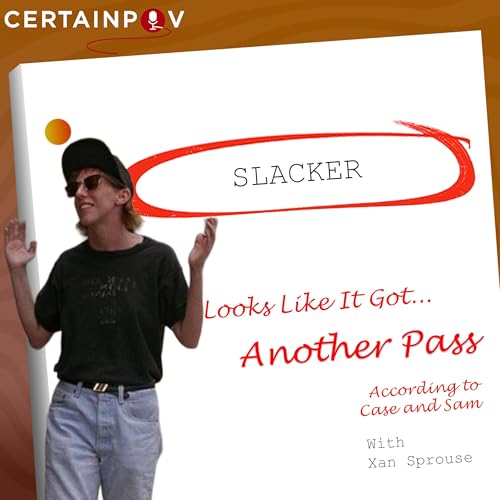
  • Slacker Got Another Pass
    Dec 12 2025
    This week on Another Pass, Case and Sam are joined by Xan Sprouse from Gold Standard: The Oscars Podcast to celebrate a film that triumphed despite its production troubles! We look at how creative perseverance, behind-the-scenes chaos, and a little cinematic magic turned a bumpy shoot into a beloved classic. Another Pass Full Episode Originally aired: December 12, 2025 Music by Vin Macri and Matt Brogan Podcast Edited by Sophia Ricciardi Certain Point Of View is a podcast network brining you all sorts of nerdy goodness! From Star Wars role playing, to Disney day dreaming, to video game love, we've got the show for you! Learn more on our website: https://www.certainpov.com Support us on Patreon! patreon.com/CertainPOVMedia Join us on Discord: https://discord.gg/wcHHer4 PODCAST SHOWS: ▶ Another Pass - https://www.certainpov.com/another-pass-podcast Outline Introduction and Initial Discussion on Film "Slacker" (00:00 - 07:47) Introduction to the podcast episode format and deviation to discuss a 'good' rather than a 'flawed' movie. Introduction of the 1990 Richard Linklater film Slacker and its unconventional narrative structure focusing on small amounts of time with multiple characters. Deep Dive into Cultural and Generational Impact (07:48 - 18:08) Discussion on the generational divide (Gen X vs Older Millennials) and how the film captures the directionlessness and creative spirit of early 90s youth culture, especially in Austin, Texas. The movie's reflection on mental health, societal roles, and the slacker ethos as a distinct identity with unique struggles and ambitions. Storytelling Methods and Character Vignettes (18:08 - 33:46) Exploration of the film's narrative style: non-linear, vignette-driven, character-focused, with no resolved plot but connected by settings and interactions. Notable memorable characters and scenes: hit-and-run guy, conspiracy theorist, woman recently discharged from a mental hospital, and the 'you should quit' mantra. Film Production Context and Cultural Legacy (33:47 - 50:34) Examination of the extremely low $23,000 shooting budget using film stock, guerrilla filmmaking style, and unpaid or deferred payment cast and crew. Discussion on Austin's artistic community's role in the movie's creation and legacy. The film as a time capsule and cultural snapshot of Austin's 1990 scene. Comparison to Other Films and Audience Engagement (50:35 - 01:00:49) Comparison with contemporaneous movies, e.g., Dances with Wolves, Misery and other 'weird' indie films, and Linklater's other work like Dazed and Confused. The film's thematic core of human connection and authentic interaction despite being a clear time capsule. ️ Personal Experiences and Generational Nostalgia (01:00:50 - 01:07:45) Hosts share personal anecdotes about high school experiences, alternative schools, and the value of finding 'freak' communities. Reflection on generational transitions and the continuation of youth culture patterns despite changing technology and social tools. Accessibility and Appeal of "Slacker" Today (01:07:46 - 01:14:15) Discussion on how the film's reputation preceded the viewing experience, yet it remains accessible and enjoyable regardless of familiarity or age. Analysis of the film's tightly scripted dialogue despite its casual and naturalistic style, and comparison with mumblecore movies and shows like Seinfeld. Closing Remarks, Promotions, and Actionable Content for Audience (01:14:15 - 01:20:16) Guest Xan Sprouse promotes her podcasts Gold Standard and Drunk Cinema and her social media (udinax19). Case and Sam promote the Certain POV network, including Patreon tiers, Discord, YouTube channel growth, and new shows like Trade School. Announcement of next episode covering Highlander 2: The Quickening and closing credits.
    Más Menos
    1 h y 20 m
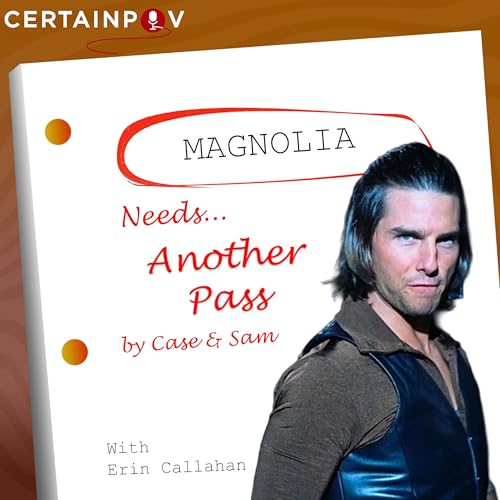
  • Another Pass at Magnolia
    Nov 14 2025
    This week on Another Pass, Sam and Case are joined by Erin Callahan to dig into Paul Thomas Anderson's sprawling emotional epic, Magnolia. We talk about intersecting lives, the weight of coincidence, and whether a few small edits could make this frog-filled fever dream even more powerful. #AnotherPass #Magnolia #PTAnderson #MoviePodcast #FilmDiscussion Another Pass Full Episode Originally aired: November 14, 2025 Music by Vin Macri and Matt Brogan Podcast Edited by Sophia Ricciardi Certain Point Of View is a podcast network brining you all sorts of nerdy goodness! From Star Wars role playing, to Disney day dreaming, to video game love, we've got the show for you! Learn more on our website: https://www.certainpov.com Support us on Patreon! patreon.com/CertainPOVMedia Join us on Discord: https://discord.gg/wcHHer4 PODCAST SHOWS: ▶ Another Pass - https://www.certainpov.com/another-pass-podcast Outline Introduction to Podcast and Guests (00:00 - 02:47) Introduction of podcast hosts Case Aiken and Sam Alicea alongside guest Erin Callahan, comedian and performer based in LA. Overview of the podcast's goal of analyzing fascinating but flawed movies and discussing 'Magnolia' by Paul Thomas Anderson. Film Reception and Initial Impressions (02:47 - 06:41) Discussion on the film's commercial performance (barely recouped budget). Observations on how the interconnected plotlines initially seem scattered but progressively reveal ties. Personal Reactions and Character Complexity (06:41 - 09:43) Sam expresses strong dislike for the film, citing an emotional aversion to nearly all characters except the frogs. Recognition of standout performances by William H. Macy and Philip Seymour Hoffman despite overall dislike. Overview of Film Narrative and Themes (09:43 - 19:46) Aaron explains the ensemble format, interconnected stories set in San Fernando Valley culminating in a biblical-style frog plague. Major theme identified: dysfunctional relationships between parents and children. Cops and Authority Portrayal (19:46 - 29:25) John C. Reilly's character depicted as a well-meaning but incompetent cop, demonstrating systemic failures in law enforcement. The film's critical stance towards police, contrasting with mainstream media depictions at the time. Character Analysis: Donnie and Stanley (29:25 - 39:23) William H. Macy's character as a former quiz boy who symbolizes a lost potential and relatability to gifted child experience. Debate on whether his storyline is essential or expendable in a trimmed-down version of the film. Entertainment Moguls and Their Families (39:23 - 49:49) Comparison of Earl Partridge and Jimmy Gator as similar figures of industry power who have harmed their children and spouses. Tom Cruise's Frank T.J. Mackey characterized as a 'manosphere' guru shaped by family trauma. Claudia and Themes of Control and Addiction (49:49 - 59:40) Claudia viewed as a victim of parental control, drug addiction, and neglect juxtaposed with her father's manipulative behavior. Biblical allusion of plague of frogs as symbolic of parental failure to 'let their children go.' Frank T.J. Mackey and Masculine Performance (59:41 - 01:09:41) Spotlight on Tom Cruise's versatile and immersive performance as Frank T.J. Mackey, exploring the emotional façade and trauma underlying his character. Mention of Cruise's Oscar nomination for the role and the improvisation he brought to the emotional father-son scenes. Julianne Moore's Character and Themes of Caregiving and Betrayal (01:09:41 - 01:20:56) Detailed discussion of Linda Partridge showing vulnerability, guilt, and emotional complexity amid caregiving for a dying Earl Partridge. Exploration of betrayal themes and intimate family dynamics. Film Length and Narrative Structure Discussion (01:20:56 - 01:32:27) Consensus on the film's excessive length complicating viewer engagement. Suggestions to streamline or reimagine — either cut characters and subplots or expand into a miniseries format. Potential Edits and Streamlining Approaches (01:32:27 - 01:43:10) Aaron recommends removing William H. Macy's character to focus tightly on key children and their relationships with their parents. Both emphasize retaining vital scenes such as the frog plague, quiz show elements, and key emotional arcs. Lighthearted Closing and Future Topics (01:43:10 - 01:53:43) Humorous tangent on frogs and Ninja Turtles. Promotion of next episode on 'Highlander 2: The Quickening.'
    Más Menos
    1 h y 54 m
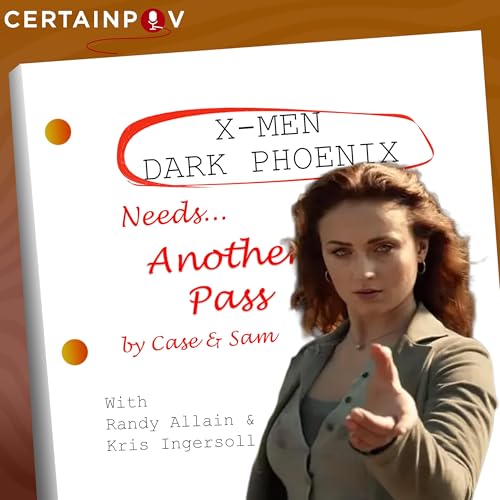
  • Another Pass at X-Men Dark Phoenix
    Oct 17 2025
    This week on Another Pass, Sam and Case are joined by Randy Allain and Kris Ingersoll to tackle the flatscan of a film that was X-Men: Dark Phoenix! Together, they explore where this cosmic finale lost its spark, what could've made it soar, and why the Dark Phoenix saga might be one of Hollywood's hardest stories to get right. #AnotherPass #XMen #DarkPhoenix #MarvelMovies #ComicBookFilms #MoviePodcast Another Pass Full Episode Originally aired: October 17, 2025 Music by Vin Macri and Matt Brogan Podcast Edited by Sophia Ricciardi Certain Point Of View is a podcast network brining you all sorts of nerdy goodness! From Star Wars role playing, to Disney day dreaming, to video game love, we've got the show for you! Learn more on our website: https://www.certainpov.com Support us on Patreon! patreon.com/CertainPOVMedia Join us on Discord: https://discord.gg/wcHHer4 PODCAST SHOWS: ▶ Another Pass - https://www.certainpov.com/another-pass-podcast Outline Introduction and Podcast Setup (00:00 - 11:12) Hosts Case Aiken and Sam Alicea introduce the episode focusing on X-Men Dark Phoenix. Guests Randy Elaine and Chris Ingersoll join the discussion; both co-host Media Lit podcast. Initial Impressions and Beginning of Film Discussion (11:12 - 20:59) Analysis of the opening space mission scene and its visual/aesthetic choices. General approval of the X-Men team roster in Dark Phoenix. Strengths of Characters and Performances (20:59 - 30:59) Appreciation for Sophie Turner's performance with Jean Grey. Discussion of Magneto's portrayal by Michael Fassbender. ‍ Xavier's Character Arc and Franchise Context (30:59 - 41:10) Examination of Xavier's complexities as an idealistic and flawed leader. Reflection on his manipulation and ego, with a key scene involving him being made to walk up stairs. ️ Critiques: Villains and Plot Issues (41:11 - 50:27) Strong criticism of the d'Bari alien race as villains. Weakness of action sequences involving these aliens. Character Development and Timeline Problems (50:27 - 01:00:35) Concern over the lack of emotional investment in characters' relationships. Confusing timeline spanning decades but not reflected in characters' aging or interactions. Death of Mystique and Emotional Impact (01:00:35 - 01:11:32) Mixed feelings about Mystique's death scene. Discussion about studio and star politics influencing character presence. ️ Critique of Dialogue and Character Interactions (01:11:32 - 01:22:42) Criticism of a line spoken by Raven about 'Ex Women' as inauthentic pandering. Suggestions for how to better write character tension and relationship dynamics. Pitches for Reworking the Film: Sam's Pitch (01:22:43 - 01:33:08) Sam proposes minor tweaks to the film's first act. Suggestions to extend screen time for Dazzler and build out Jean's emotional journey. Pitches for Reworking the Film: Randy's Pitch (01:33:08 - 01:43:57) Randy removes the alien villains and replaces them with Mr. Sinister (Kevin Bacon). Incorporates Hellfire Club and Magneto's acolytes to enrich villain roster. Pitches for Reworking the Film: Chris's Pitch (01:43:57 - 01:54:56) Chris focuses on deeper human and emotional connections. Suggests expanded political and social contexts, with Charles juggling idealism and manipulation. Pitches for Reworking the Film: Case's Pitch (01:54:56 - 02:04:42) Case agrees with removing aliens, focusing on emotional stakes and mutant-only conflicts. Adds more everyday heroics and character interactions in the school environment. Concluding Remarks and Show Promotions (02:04:42 - 02:06:15) Round of plugs for guest podcasts and social media. Preview of next episode topic (Highlander 2). Fascinating but Flawed (01:31 - 11:12) X-Men Dark Phoenix is viewed as 'fascinating but flawed,' with a promising roster and good beginning but faltering in villain construction and emotional depth. Strong Performances (20:59 - 30:59) The original cast and comic accuracy provide strong foundations, especially the performances of Fassbender's Magneto and McAvoy's Xavier. Critique of Alien Subplot (41:11 - 50:27) The alien d'Bari subplot is criticized as confusing and unengaging, detracting from the core mutant stories. ⏳ Timeline and Relationship Issues (50:27 - 01:00:35) Timeline and character relationship development, particularly Jean Grey's 10-year arc with Cyclops, lack coherence and emotional impact. Mystique's Death Impact (01:00:35 - 01:11:32) Mystique's death and screen presence suffer due to offscreen issues, weakening potential emotional payoff. Pitches for Improvement (01:22:43 - 02:04:42) Pitches emphasize removing alien plotlines, deepening mutant character interactions, and making Charles Xavier a complex antagonist with a redemption arc. Need for Better Pacing (01:59:57 - 02:06:15) Consensus that better pacing, ...
    Más Menos
    2 h y 6 m
  • Another Pass at Double Impact
    Sep 22 2025
    This week on Another Pass, Sam and Case are joined by action aficionado Adam Garman to take on Double Impact! Two Van Dammes. Twice the splits. Half the plot? We revisit the 1991 JCVD cult classic to see where this martial arts double feature delivers, and where a second pass might've packed a stronger punch. Another Pass Full Episode Originally aired: September 21, 2025 Music by Vin Macri and Matt Brogan Podcast Edited by Sophia Ricciardi Certain Point Of View is a podcast network brining you all sorts of nerdy goodness! From Star Wars role playing, to Disney day dreaming, to video game love, we've got the show for you! Learn more on our website: https://www.certainpov.com Join us on Discord: https://discord.gg/wcHHer4 PODCAST SHOWS: ▶ Another Pass - https://www.certainpov.com/another-pass-podcast FOLLOW US: ▶ Website: https://www.certainpov.com Product and Content Strategy The team agreed that Double Impact stands out as a solid B-movie action film with unique elements that could be leveraged for niche audiences (01:00). Adam Garman highlighted the film's clear logline and fun action sequences, positioning it as superior to similar genre films like the Double Dragon movie (02:00). The dual-role performance by Jean Claude Van Damme was praised for distinguishing the twin characters effectively, supporting the movie's core gimmick and enhancing audience engagement (05:30). Despite some acting and tone inconsistencies, the film's campy style and memorable fight choreography, especially with characters like Bolo Yang, contributed to its cult appeal (16:00). The team noted the film's potential as a video game adaptation or inspiration, reinforcing its value for multi-format storytelling and extended fan engagement (18:30). The discussion revealed opportunities to reframe the film's narrative to deepen character arcs and diversify female roles, which could improve future product iterations or adaptations (50:00). Narrative and Character Development Adjustments A consensus emerged that the original film's character backstories lacked logical depth, especially regarding the twins' upbringing and motivations, prompting proposed rewrites to enhance coherence and emotional impact (45:30). Sam Alicea suggested relocating Frank to an island near Hong Kong rather than the U.S., raising Alex there, while Chad grows up sheltered in France with nuns and charity work, explaining his accent and personality differences (46:30). This rewrite provides Chad with a clear motivation to seek his origins, improving narrative clarity and making his journey compelling for audiences (47:00). The idea to reduce gratuitous scenes, such as the extended sex scene, was proposed to tighten pacing while retaining key fight scenes that drive engagement and humor (50:00). Repositioning Danielle as a secondary character who aids Chad during his quest was discussed to better balance female representation and reduce questionable plot elements (50:45). Adam Garman recommended developing a love triangle to fully embrace the film's hinted romantic tension, which would add depth and increase dramatic stakes (54:30). These character and plot revisions aim to modernize the story's structure while preserving its core action appeal, increasing potential for broader audience resonance. Operational and Process Improvements for Production The team identified pacing and structural issues in the original film that impacted viewer engagement, suggesting process improvements for future projects (58:00). Removing or trimming long exposition sequences, such as the Mercedes smuggling scene, could reduce runtime by several minutes without losing essential plot information (01:00:30). The group highlighted the importance of precise timing in dual-role acting and compositing effects, noting a few awkward scenes where timing and blue screen work were less polished, indicating a need for stronger QA and rehearsal processes in future productions (28:30). Speaker insights underscored the value of balancing action with character development to avoid pacing issues and maintain viewer interest throughout longer runtimes (59:30). They recommended adopting editing strategies like chapter skipping or segmented releases to give viewers control over pacing, potentially enhancing audience retention on digital platforms (01:02:00). These process refinements seek to improve production quality and audience experience, aligning with modern consumption habits. Market Positioning and Competitive Context The film was framed as occupying a unique niche between mainstream and cult action movies, with competitive advantages and challenges noted (18:00). Adam Garman emphasized that Double Impact outperforms similar genre films like Double Dragon by blending action with a campy, video game-like structure, giving it longevity and fan loyalty (02:30). The casting of Bolo Yang as a physically imposing Asian antagonist was recognized as...
    Más Menos
    1 h y 10 m