• Anglotopia Podcast: Bonus Episode – Don’t Make These Expensive Mistakes Traveling to Britain
    Feb 24 2026
    After 25 years and roughly 25 trips across the Atlantic — including one where he ran out of money and had to beg his parents from a London phone box and another that ended with a $1,200 phone bill — Jonathan Thomas has learned how to travel Britain without going broke. In this special bonus episode, he introduces the completely rewritten third edition of 101 Budget Britain Travel Tips, walks through what's new (including 30–40 tips that have never been in the book before), and reads 10 of his favorite tips covering everything from the mandatory new Electronic Travel Authorization to the airport drop-off fee that cost him £140, why you don't need an Oyster card anymore, and the supermarket meal deal hack that saves his family hundreds every trip. Whether you're planning your first visit or your twentieth, this is the episode to listen to before you book. Links 101 Budget Britain Travel Tips, 3rd Edition — Anglotopia Store product page (paperback, ebook pack, and bundle with 101 London Travel Tips)101 Budget Britain Travel Tips on Amazon — Paperback, Kindle, and Audible audiobook101 London Travel Tips — Companion book (link to store page and/or Amazon)101 Budget Britain Travel Tips + 101 London Travel Tips Bundle — Anglotopia StoreUK ETA Official App — iOS App Store / Google Play (official UK government app, not third-party services)Royal Oak Foundation — royaloak.org (US membership for free National Trust admission).Friends of Anglotopia Club — Anglotopia membership for early podcast access and exclusive contentPrevious Anglotopia Podcast Episode on the UK ETA Takeaways This is a complete rewrite, not just an update. The 3rd edition has 30–40 brand new tips never in the book before, the free attractions lists have been consolidated into a master appendix by country, and the book is roughly twice as thick as the previous edition.The UK's Electronic Travel Authorization is now mandatory. As of February 24, 2026, it is being strictly enforced. If you don't have one, you're not boarding the plane. Use the official UK government app — it costs £16. Anyone charging more is a third-party service skimming money.Airport drop-off fees can sting you badly. Jonathan got hit with a £140 total charge (£100 penalty + £40 rental car processing fee) for forgetting to pay the Heathrow drop-off fee within 24 hours. The cameras scan your license plate and the bill goes to the rental car company.You don't need an Oyster card anymore. Contactless credit/debit cards now work on London's entire transport network with the same daily fare caps. Just tap in and tap out — it settles up at the end of the day at no more than about £7–8.Book trains up to 12 weeks out to save money. A same-day journey can cost 4–5 times more than one booked a month or two in advance. Jonathan recommends open tickets for flexibility since trains are frequently late or cancelled.Never pay in US dollars at a British cash register. Dynamic currency conversion is a legal scam — the merchant's bank sets the exchange rate and skims money. Always pay in pounds and let your credit card convert at the interbank rate.Supermarket meal deals are one of Europe's best budget secrets. Lunch deals (sandwich + drink + snack) run £3–4. Dinner deals for two with a main, side, dessert, and wine cost £10–15. Jonathan's family hits the grocery store as one of their first stops every trip.Join Royal Oak, English Heritage, and Historic Houses before your trip. A Royal Oak Foundation membership (under $100/year) gets you free entry to all National Trust properties. English Heritage has an overseas visitor pass. Historic Houses membership covers ~300–400 privately owned stately homes including Highclere Castle (Downton Abbey).Premier Inn is the budget traveler's best friend. Consistent quality, breakfast included, advance rates from £35/night. Not glamorous, but reliable and spread across hundreds of locations near major cities and attractions.Budget travel isn't about suffering — it's about spending smart. The book's philosophy is to save money on the things that don't matter (airport snacks, dynamic currency conversion, overpriced afternoon tea) so you can spend more on the things that do (comfortable lodging, rental cars, experiences, souvenirs). Soundbites "We came home and got our phone bill the next month — we had a $1,200 phone bill from all of our adventures in Britain. And we didn't know. This is 2008, 2009 — we just didn't know." — Jonathan on the expensive lessons that inspired the book."Budget travel isn't about suffering. It's about spending money on the things that matter and refusing to waste money on the elements of your trip that you don't need to." — Jonathan on the book's core philosophy."A family of four could easily spend $10,000 on a one to two week trip to Britain without even trying. Our philosophy with this book is that it doesn't have to cost that much." — Jonathan on why the book exists."...
    Más Menos
    41 m
  • Anglotopia Podcast: Episode 84 – Learning The Knowledge – A London Cabbie’s Guide to the City’s Hidden History
    Feb 20 2026
    In this episode of the Anglotopia podcast, host Jonathan Thomas speaks with Billy Cullen, a London taxi driver and history enthusiast, about the unique experience of navigating London's rich history through the lens of the iconic black cab. They discuss the rigorous training known as 'The Knowledge,' the challenges of being a tour guide, and the impact of modern technology like Uber on the traditional taxi industry. Billy shares insights on hidden gems in London, the importance of supporting local businesses, and the evolving landscape of tourism in the city. Links Website: londonhistorytaxitours.comBilly's Black Cab Tour: londonhistorytaxitours.com/book-now/details/372561/billys-black-cab-tour-of-london/Instagram: @londonhistorytaxitoursTransport for London: tfl.gov.uk/info-for/taxis-and-private-hire/licensing/learn-the-knowledge-of-london Takeaways The Knowledge is a rigorous training process for London taxi drivers.Billy Cullen combines his passion for history with his taxi driving.London's history spans over 2000 years, offering endless exploration.The black cab experience provides a personal connection to the city.Supporting local businesses is crucial for the economy.Uber has changed the landscape of the taxi industry in London.Layover tours offer a unique way to experience London in a short time.Hidden gems like Greenwich are often overlooked by tourists.Film and TV locations are increasingly popular among visitors.The future of London's museums is promising with new developments. Soundbites "I started thinking about doing the knowledge for freedom, working for myself. Freedom and a cool city." — Billy on why he became a cabbie."You have to see the map of London in your head." — Billy on what the Knowledge actually requires."They say you can't fail the knowledge, you can only quit." — Billy on the grueling examination process."Some driver drove past and shouted out the window, 'Don't bother mate, the game's dead, give it up.' I was furious. After about five minutes, I shrugged it off and carried on my run." — Billy on nearly being discouraged."It's a proven fact that the London black cab driver has a significantly larger hippocampus than the average person." — Billy on what the Knowledge does to your brain."You'll be on Regent Street and someone will come out in front of you and just start taking loads of pictures and you feel like you're a celebrity." — Billy on driving an iconic black cab."99% of the time, people are amazed by the stuff they weren't expecting. It's the secret things that also make up London, not just the stuff you see on pamphlets." — Billy on what surprises American tourists."If there's one reason why you should use a black cab rather than Uber, it's because we actually care. Our badge is worth millions of pounds. It's a lifetime of employment." — Billy defending the trade."Support local, support the local businesses. Don't pay up to a multi-billion company that has no care for human welfare." — Billy on why to skip Uber in London."Know that you can't do everything in one trip. There's people that have lived in London that would need at least 200 lifetimes." — Billy's advice for first-time visitors. Chapters 00:00 Introduction to London Taxi Culture02:51 The Knowledge: A Grueling Test for Taxi Drivers05:40 The Journey to Becoming a Taxi Driver08:55 The Oral Examination Experience11:41 Determination and Challenges in the Knowledge14:33 Life After Passing the Knowledge17:28 The Iconic London Black Cab20:14 Memorable Passengers and Celebrity Encounters23:20 The Cabbie’s Perspective on Opinions26:29 Transitioning to a Tour Guide29:13 London History Taxi Tours: Growth and Development32:07 Advantages of Taxi Tours Over Other Tours35:11 Film and TV Location Tours38:08 Airport Layover Tours: A Unique Experience39:07 American Tourists' Must-See Attractions40:03 Navigating Misconceptions in British History45:43 The Impact of Uber on London's Taxi Trade50:17 Future Plans for London History Taxi Tours57:29 Exploring London's Historical Tours01:00:00 Time Travel to London's Past01:02:56 Advice for First-Time Visitors to London01:02:57 anglotopia-podcast-outro.mp4 Video Version
    Más Menos
    1 h y 3 m
  • Anglotopia Podcast: Episode 83 – How the Beatles Built the Greatest Team Ever (And What We Can Learn)
    Feb 13 2026
    In this episode of the Anglotopia podcast, host Jonathan Thomas speaks with Dan Absher, a lifelong Beatles fan and CEO, about the cultural impact of the Beatles and the insights he has drawn from their success for his upcoming book, 'The Fab Four Pillars of Impact: Building Dynamic Teams the Beatles' Way.' They discuss Dan's early memories of the Beatles, his experiences in Liverpool, and the lessons that modern businesses can learn from the Beatles' journey, including the importance of unity, vision, and adaptability. Links Dan's book — The Fab Four Pillars of Impact: Building Dynamic Teams the Beatles Way (Greenleaf Book Group Press, February 2026)fab4academy.com — Dan's websiteThe Beatles on Ed Sullivan, February 9, 1964Cliveden (National Trust)Strawberry Fields ForeverFriends of Anglotopia Club Takeaways Dan Absher's lifelong passion for the Beatles began at age five.The Beatles' charisma and humor were key to their early success.Ringo's role was essential as the steady drummer of the group.Family traditions often incorporate Beatles music, especially at milestone birthdays.Cliveden, where the Beatles filmed, was a significant experience for Dan.Liverpool has transformed into a vibrant city with a Beatles economy.Freda Kelly provided unique insights into the Beatles' personalities.The Beatles' success was driven by the right people and a catalytic vision.Internal conflicts and differing visions contributed to the Beatles' breakup.The Beatles' legacy continues to influence modern business practices. Soundbites Here are 10 interesting soundbites from the episode: "It wasn't until much later that I started to realize how great of musicians they were too. Right then it was their charisma, their personalities, their humor." — Dan on watching the Ed Sullivan show at age five."I might have been coerced into picking Ringo because they needed a drummer and not another guitar player. But I fully embraced the Ringo role." — Dan on childhood Beatles roleplay with his brother and cousin."Every occasion I can think of, particularly in my life, a Beatles song gets played a lot at family outings." — Dan on how the Beatles are woven into his family traditions."John's vision was to save the world. George's was to save his soul and be close to God. Paul wanted to remain relevant in music his whole life. And Ringo — his vision was, have fun with my buddies." — Dan on how their diverging visions fractured the band."It sounds absurd to think of the four of them having a strategic planning retreat, but that's what they needed." — Dan on what could have saved the Beatles."Paul was clinging so hard to try to keep them together. I think that clinging itself had a way of pushing them further apart." — Dan on Paul's role in the breakup."No one I think is in my tree. He's talking about feeling different and isolated, maybe special." — Dan breaking down why Strawberry Fields Forever is his favorite Beatles song."The big fight was over who was going to manage the Beatles — Alan Klein or Paul's in-laws. They were all wrong." — Dan on the business conflict that tore them apart."Each of the four of them had a vote and each of the four of them had veto power of anything they wanted to do." — Dan on how Apple Corps eventually structured their business."It made me realize life's short. Most people back at the company, they got it handled. They can do it without me." — Dan on how dying on the operating table inspired him to finally write the book. Chapters 00:00 Introduction to the Beatles' Impact01:49 Dan's Beatles Origin Story04:33 Teenage Years and Family Traditions07:27 Study Abroad at Clifton Estate09:25 Visiting Liverpool: A Beatles Pilgrimage11:20 An Evening with Freda Kelly14:06 Abbey Road Experience15:17 The Fab Four Pillars of Impact19:09 The Formation of The Beatles21:52 The Role of Vision and Competition23:25 Camaraderie and Emotional Bonds27:57 Synergy and Serendipity in Creativity31:25 Understanding the Breakup36:03 The Aftermath and Corporate Dynamics42:34 Lessons for Modern Businesses49:09 anglotopia-podcast-outro.mp4 Video Version
    Más Menos
    49 m
  • Anglotopia Podcast: Episode 82 – Your Travel Guide to Britain in 2026 – Major Events, Exhibitions, Museums, and More!
    Dec 26 2025
    In this episode of the Anglotopia podcast, host Jonathan Thomas discusses exciting plans for 2026, including his personal goal of walking Hadrian's Wall, the revival of Anglotopia's online store, and major cultural events happening across Britain. He highlights significant Royal anniversaries, exhibitions, and theatre performances to look forward to, emphasizing the importance of planning ahead for Anglophiles. The episode concludes with a call to support Anglotopia through the Friends of Anglotopia Club. Links Friends of AnglotopiaCornish Smuggler's TeaAnglotopia StoreMacs AdventureShadowlands with Huge BonnevilleSorry, Prime Minister TicketsThe Unlikely Pilgrimage of Harold Fry Takeaways Walking Hadrian's Wall is a personal goal for Jonathan.Anglotopia is reviving its online store after ceasing imports.2026 marks Queen Elizabeth II's 100th birthday with special events.The Bayeux Tapestry will be exhibited at the British Museum.Celebrations for Beatrix Potter and other British icons are planned.New museums, including V&A East, will open in 2026.Winston Churchill's paintings will be featured in an exhibition.Theatre performances in London's West End are highly anticipated.Planning ahead is crucial for Anglophiles traveling to Britain.Joining the Friends of Anglotopia Club supports British culture. Sound Bites 1. The Big Commitment (Line 38) "So we closed this deal about a month or two ago and that's a big deal because now I have to do it. There's people counting on me to do this. Macs Adventure is counting on me doing it, my business is counting on me to do it, so I have to do it. I don't have a choice." 2. The Challenge Ahead (Line 14) "It involves physically preparing to walk 84 miles on purpose. And I, as you can see, I'm not in the best of shape. So the idea of walking so many miles is kind of daunting to me." 3. You're All Coming Along (Line 44) "That's the big thing for Anglotopia in 26 is I'm walking Hadrian's Wall. I don't have a choice and you're all coming along for the ride with me." 4. Personal Health Stakes (Lines 26-28) "It's for my own health. I'm not in great health. Preparing training for the walk will improve my health and having done it will also improve my health, and I'm hoping that it kind of ushers in a new era where hopefully once a year I do one of these famous long distance walks in Britain." 5. The Bayeux Tapestry Coup (Lines 105-106) "I don't know how they got the French to agree to this. Apparently it took years of negotiations, but the Bayeux Tapestry is gonna leave France and come to the British Museum for a special exhibition. One hopes they give it back when they're done." 6. Queen Elizabeth 100 (Lines 80-82) "April would have been Queen Elizabeth II's 100th birthday. And so we're expecting a lot of commemorations around that… It'll be a chance for people to kind of reflect and remember the lovely days of the reign of Elizabeth II." 7. The London Museum Opening (Lines 166-168) "It might almost be worth making a special trip for—not just because I like London's history, but it's to see the building itself. The Smithfield Market is an architectural jewel of London." 8. Churchill's Painting Secret (Lines 185-186) "He famously used it to help cope with his mental health, because when he was having the most troubles, he would just go paint, and he would find solace in painting." 9. Television Turns 100 (Line 112) "Many people don't know that a Brit actually made invented television. And so January 26, 2026 will mark the 100th anniversary of Brit John Logie Baird's first public demonstration of television in London." 10. Yes Prime Minister Passion (Lines 220-222) "Yes Minister and Yes Prime Minister are my favorite British comedy show of all time. I've watched it a dozen times over and over. It is so funny… I desperately wanted to see this on the West End." Chapters 00:00 Angotopia's Plans for 202610:08 Major Events in Britain for 202616:39 Cultural Celebrations and Anniversaries26:48 Looking Ahead: Future Events and Exhibitions27:43 Upcoming Exhibitions Worth Seeing29:45 Exciting Museum Openings in 202632:11 Major Exhibitions to Look Forward To35:15 Theatrical Highlights in the West End48:30 Top Picks for 202650:23 anglotopia-podcast-outro.mp4 Video Version
    Más Menos
    51 m
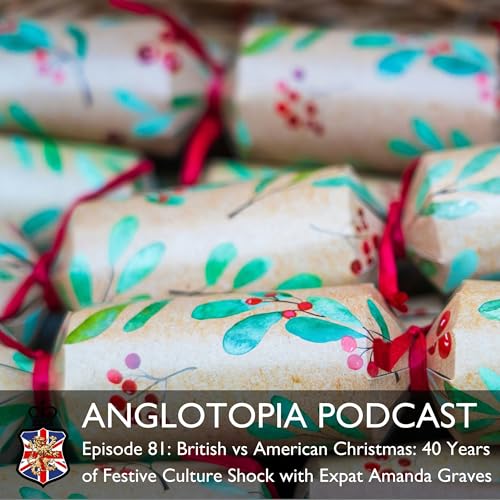
  • Anglotopia Podcast: Episode 81 – British vs American Christmas – 40 Years of Festive Culture Shock with Expat Amanda Graves
    Dec 19 2025
    In this engaging Christmas episode of the Anglotopia podcast, host Jonathan Thomas and guest and Anglotopia columnist Amanda Graves explore the fascinating differences between British and American Christmas traditions. Amanda shares her experiences of celebrating Christmas in both cultures, discussing everything from the timing of decorations and Christmas dinner to the significance of Boxing Day and the King's speech. The conversation highlights the unique aspects of each tradition, the challenges of blending cultures, and the joy of preserving cherished customs while adapting to new ones. Links Spilling the Tea Column on AnglotopiaBritish Christmas ArticlesFriends of Anglotopia Takeaways Amanda shares her first culture shock during her first American Christmas.The tradition of opening presents on Christmas Day is a significant difference between the UK and the US.Christmas dinner in the UK typically includes turkey, stuffing, and Christmas pudding, while Americans often opt for ham or beef.Amanda has adapted to American traditions while still trying to maintain some British customs.Christmas crackers are a fun British tradition that Amanda tries to introduce to her American friends.The misconception of fruitcake in America differs greatly from the British version, which is often enjoyed.Boxing Day is a day of recuperation and charity in the UK, but is largely unknown in America.The King's Christmas speech is an important tradition for Amanda, providing a moment of reflection during the holiday.Christmas television specials are a cherished part of British culture that Amanda misses.Amanda enjoys the festive spirit of Texas, where Christmas decorations are often extravagant. Sounds Bites Here are 10 compelling sound bites from the episode with timestamps: 1. The Decoration Culture Shock (02:22-02:51) "Suddenly everybody had tons of decorations up. Everybody had wreaths on their door. Everybody was putting lights into their bushes outside their door. And I'm thinking, I didn't know that we were supposed to do that." 2. Tree Timeline Shock (02:51-03:18) "A lot of people put their Christmas trees up super early, right after Thanksgiving. That was a bit baffling to me because at home we really didn't put up our Christmas tree until the week of Christmas." 3. The Cactus Christmas (04:12-05:02) "When I first met my husband, he had a large cactus and he would put some really funny ornaments on the cactus. He has some funny ornaments like the Oscar Mayer Wienermobile, which hangs from that. We still have a small Christmas tree that we put the tacky ornaments on as a nod to his previous indifference of Christmas." 4. The Breakfast in Bed Disaster (06:48-07:37) "We decided to make my mother breakfast in bed. We had no way of knowing that very late the night before she'd gone to midnight mass and had trod dog poo all the way up the stairs and had to spend two hours scrubbing the stairs, had fallen into bed at about three o'clock in the morning and we woke her at six o'clock with breakfast in bed." 5. Bilingual Christmas Greetings (01:32-01:38) "Well, I am bilingual now. So when I'm here, I say Merry Christmas. And when I'm in England, I say Happy Christmas." 6. Christmas in July Surprise (41:45-42:29) "I enlisted my niece to help me surprise everybody with Christmas in July. I had ordered a turkey from the butcher and it was so big it literally wouldn't fit in the fridge. So I had to find a cooler, pack it full of ice and put the turkey in the cooler and hide it." 7. The Queen's Speech Tradition (06:48-07:37) "At three o'clock, it was the Queen's speech, it's now the King's speech, and that is an absolute must-see. Everybody pretty much gathers around the TV. We would spend hours before Christmas poring over the radio times and the TV times to see what was on on Christmas Day." 8. Not Grandma Got Run Over by a Reindeer (43:11-43:22) "I like to tune into the Christmas carols and just remind myself that there are beautiful carols out there and beautifully sung and it's not Grandma Got Run Over by a Reindeer." 9. American Vacation Reality (42:01-42:29) "In the UK, pretty much everybody has that whole week off. It's just expected. That's another thing. It's more difficult to do that, to get away, unless the children are really small." 10. The Great Christmas Closing Line (46:46-46:52) "Whether you're celebrating with Christmas crackers or inflatable lawn Santas, mince pies, or fruit cake, we wish you a very happy Christmas. Or is it Merry Christmas? After this conversation, we'll leave that choice up to you." Chapters 00:00 Introduction to Christmas Traditions02:29 Amanda's First American Christmas Experience05:19 Childhood Christmas Traditions in Britain08:22 Navigating British Traditions in America11:04 Christmas Dinner: A Cultural Comparison14:21 The Role of Christmas Crackers16:59 Understanding Fruitcake: A Misconception20:06 Present Opening Traditions23:10 Cultural Differences: Massachusetts vs. Texas24:43 ...
    Más Menos
    47 m
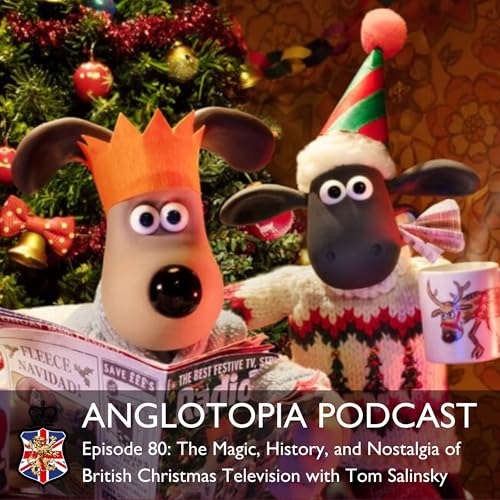
  • Anglotopia Podcast: Episode 80 – The Magic, History, and Nostalgia of British Christmas Television with Tom Salinsky
    Dec 12 2025
    In this episode of the Anglotopia Podcast, host Jonathan Thomas and British TV expert Tom Salinsky delve into the rich tradition of British Christmas television specials. They explore the cultural significance of these specials, the evolution of Christmas Day TV schedules, and highlight some of the most beloved and memorable Christmas episodes from shows like Wallace & Gromit, Doctor Who, Only Fools and Horses, and Gavin and Stacey. The conversation also touches on the nostalgia associated with classics like The Snowman and the impact of streaming on traditional viewing habits. Salinsky shares insights into the history of Morecambe and Wise, the role of sports in Christmas TV, and the unique approach of shows like EastEnders during the festive season. The episode concludes with a discussion on the importance of the Radio Times Christmas double issue and a promotion for Salinsky's new podcast, All British Comedy. Links AllBritishComedy.comTom SalinskyTom Salinsky's Red Dwarf booksRadio Times Christmas Double IssueBBC Genome ProjectThe SnowmanFriends of Anglotopia Club Takeaways British Christmas television specials are a cultural institution.Christmas specials often feature nostalgia and beloved characters.The Snowman is a quintessential part of British Christmas.Only Fools and Horses Christmas specials are highly anticipated events.Gavin and Stacey's serialization contributed to its popularity.Christmas Day TV schedules have evolved over the years.The Radio Times Christmas double issue is a cherished tradition.Not all Christmas specials are successful or well-received.EastEnders often delivers dramatic and intense Christmas episodes.Streaming has changed how audiences engage with Christmas specials. Sound Bites 1. On why British Christmas TV became a tradition: "I think it was EastEnders that made the difference. In 1986, EastEnders devoted its Christmas episode to the Den and Angie storyline absolutely coming to boiling point... The viewing figures were phenomenal—something like 30 million. Half the population was watching." — Tom Salinsky 2. On the unique appeal of Christmas specials: "The difference between writing a regular episode of Doctor Who and a Christmas special is there will be non-fans watching at Christmas. The 14-year-old says, everybody has to shut up so I can watch this. And then uncle and auntie and grandma and grandpa are all in the room anyway." — Tom Salinsky 3. On nostalgia and Christmas television: "Nostalgia and Christmas, certainly for British television, seem very intertwined. It's a time when we want to hark back to the past... Even Vengeance Most Foul, which is a brand new piece of work, feels old-fashioned, has that old-fashioned charm about it." — Tom Salinsky 4. On why EastEnders goes dark at Christmas: "If what we tune in for is misery and torment and betrayal, then at Christmas it needs to be maximum misery and maximum betrayal. No one is starved of EastEnders. So when it comes around for Christmas, we just want to take that lever and throw it as far in the direction of drama as we possibly can." — Tom Salinsky 5. On the Radio Times Christmas double issue: "When I was 10, I would have read about National Velvet and that Old Curiosity Shop musical film in the Radio Times and probably opted not to circle them. We were a very middle-class household, Jonathan, so we didn't get the TV Times because that was vulgar." — Tom Salinsky 6. On discovering The Snowman: "I spent Christmas in England in 2013 and I kept hearing this haunting melody everywhere... I finally saw it and I was literally in tears when it was over. I'd never seen it before, but it just hit me. There's no words—even the book has no words—and it's an incredible story." — Jonathan Thomas 7. On the 1971 Morecambe and Wise Christmas special: "The 71 special with Andre Previn is definitely something a cut above. That is such a famous routine. They kind of stayed at the top of their game for about seven or eight years, which is hard to do." — Tom Salinsky 8. On The Office Christmas specials: "The way that The Office started out as this show which nobody really knew what it was or why it was funny... to then capturing the nation's conversation and ending up being the centerpiece of the BBC One Christmas schedule in three years is astonishing." — Tom Salinsky 9. On the first Doctor Who Christmas special: "Nobody knew whether that first series with Christopher Eccleston was going to be a success. We'd never had a Doctor Who Christmas special before. Just as Russell T. Davies had to invent how to make Doctor Who at all in 2005, he had to invent a Doctor Who Christmas special." — Tom Salinsky 10. On Christmas specials as the last appointment viewing: "We're just now used to using our television sets as jukeboxes where we select what we're going to watch. We're out of the habit of treating them like radio sets where the broadcaster determines what we are sent at what time... I think it's one of the...
    Más Menos
    55 m
  • Anglotopia Podcast: Episode 79 – Celebrating British Christmas as a British Expat Living in the USA – Jolly Posh Foods
    Dec 5 2025

    In this episode of the Anglotopia Podcast sponsored by Jolly Posh Foods, host Jonathan Thomas speaks with Lucy Pask, a British expat in Chicago, about the significance of British food during Christmas. They discuss the offerings of Jolly Posh Foods, Lucy's journey from the UK to the US, and the unique aspects of British Christmas dinner traditions, including the importance of specific dishes and the cultural nuances that come with being an expat. The conversation also touches on Boxing Day traditions and the challenges of finding authentic British food in America.

    Links
    • Jolly Posh Foods
    • British American Business Council Chicago
    • Friends of Anglotopia Club
    Takeaways
    • British food is a significant comfort for expats during the holidays.
    • Jolly Posh Foods provides authentic British food to expats in America.
    • Lucy Pask's journey reflects the passion for British culture in the US.
    • Christmas dinner in Britain includes unique dishes like pigs in blankets and roast potatoes.
    • Boxing Day is a day for leftovers and family traditions.
    • The importance of Yorkshire pudding in British cuisine cannot be overstated.
    • Mince pies are a staple of British Christmas, despite their acquired taste.
    • Ordering British food early is crucial for expats during the holiday season.
    • Cultural differences in food can lead to humorous misunderstandings.
    • The joy of sharing British food traditions with American family members.
    Sound Bites
    1. "The correct answer is always to say my family. But the honest answer, Jonathan, is that I really miss Waitrose and Marks and Spencer."
    2. "When you're in the UK, the whole of the UK, not just England, you're never more than about six foot away from a bacon butty."
    3. "When you have a proper breakfast sausage in the UK for the first time, it's almost like a revelation. You're like, I've been doing sausage wrong my whole life."
    4. "Being able to access this food and share it with them is one of my greatest joys in life."
    5. "I honestly don't think I could eat a Christmas dinner if I wasn't wearing a paper crown. I've never tried it and I don't want to."
    6. "Over 750 million pigs in blankets are eaten in the UK during Christmas... every citizen eats 13 pigs in blankets on Christmas Day."
    7. "We thought, well, what can we take to Thanksgiving? Why don't we take a Christmas pudding? We'll set fire to it and it'll make them laugh. And now we have to do it every year."
    8. "There's something about Chicago and a Midwestern attitude that's actually very British. It's a little self-effacing, fun, open to being humble and funny about yourselves."
    9. "It is treated with the same reverence and panic as booking Coachella tickets or Eras Tour tickets."
    10. "Full disclosure, I messed the whole thing up... Christmas Eve in the UK is one of the biggest nights out of the year. It is a full-on festival of going out to the pub. All the pubs and bars were shut at 10."
    Chapters
    • 00:00 Introduction to British Christmas Food
    • 04:11 Lucy Pask's Journey to Chicago
    • 19:58 Exploring British Christmas Dinner Traditions
    • 25:54 The Quintessential British Christmas Dinner
    • 34:54 Christmas Pudding and Its Traditions
    • 38:25 Understanding Mince Pies
    • 50:17 Boxing Day: The Day of Leftovers
    • 54:56 Ordering British Foods for the Holidays
    • 58:59 anglotopia-podcast-outro.mp4
    Video Version
    Más Menos
    59 m
  • Anglotopia Podcast: Episode 78 – Did Churchill Know? Unraveling the Myths of the Coventry Blitz and Wartime Espionage
    Nov 21 2025
    In this episode, historian Dr. Chris Smith discusses the Coventry Blitz, marking its 85th anniversary. He explores the myths surrounding the event, particularly the narrative that Churchill sacrificed Coventry to protect intelligence secrets. The conversation delves into the scale of the bombing, the city's industrial significance, the immediate aftermath, and the role of propaganda. Smith also highlights the reconstruction efforts and the lasting legacy of the Blitz in Coventry's identity, emphasizing themes of resilience and reconciliation. Note: I'm aware of the technical problems with the guest's video - unfortunately, there is no way to fix it, but the audio is fine. Also, there will not be a podcast next week due to the Thanksgiving holiday. Links Chris Smith at Coventry University"The Last Cambridge Spy: John Cairncross, Bletchley Codebreaker and Soviet Double Agent" by Chris SmithOfficial Coventry Cathedral website: coventrycathedral.org.ukHitler's Btlitz's on Britain (Article)Friends of Anglotopia Club Takeaways The Coventry Blitz is framed by both historical and modern narratives.Myths surrounding the Blitz, particularly about Churchill, persist despite being debunked.The bombing raid on Coventry was one of the largest of the war at that time.Coventry's industrial significance made it a strategic target during WWII.The aftermath of the bombing revealed a complex public reaction, not just unity.Propaganda played a crucial role in shaping public perception of the Blitz.The reconstruction of Coventry was influenced by pre-war modernization plans.The new cathedral symbolizes peace and reconciliation after the war.Coventry's identity is deeply tied to the events of the Blitz.Commemoration of the Blitz remains significant in Coventry's cultural memory. Soundbites Here are 10 interesting soundbites from the Coventry Blitz podcast: On the scale of the raid: "They dropped something in the region of 30,000 incendiary bombs, 500 tons of high explosives and 50 landmines. They even used some brand new types of explosive that they hadn't really been using to that point. It's a really, really massive raid by the standards of the war to that point."On the Churchill Ultra myth: "There's no evidence that Churchill made a decision to sacrifice Coventry. It's an absolute fantasy which basically has to rely upon either Churchill being the most evil man who has ever existed or the most incompetent man who has ever existed."On strategic bombing's true purpose: "One of the points of strategic bombing is terror, is to cause terror amongst the citizens... the British actually have a really nasty euphemism for this, which was to 'dehouse people' as a result of bombing. And that's how they basically described killing citizens and making other citizens homeless."On Coventry's industrial importance: "Coventry is hugely important industrially to Britain's war effort... by the time we get into the 20th century, bicycle manufacturing, the auto industry, the car industry becomes very important to Coventry, which makes it both wealthy and a ripe target."On the cathedral's symbolism: "They didn't knock it down. They built a new cathedral right next to it. So if any of your listeners ever visit Coventry, you can actually walk around the ruins of the old cathedral... It's a really powerful testament to resilience."On why the myth persists: "The myth of Churchill sacrificing Coventry persists because it plays into this very British, post-war self-image of stoic heroism and difficult choices. It makes for a better story than the truth, which is that sometimes intelligence fails and terrible things happen."On comparing bombing campaigns: "In Dresden, over 22,000 people are killed. The US conventional bombing of Tokyo kills over 100,000 people. So by those standards, what we're talking about in Coventry is relatively light, but by the context of what's happening in Britain, it's extremely serious."On "Keep Calm and Carry On": "These posters were wildly unpopular. They're really patronizing. They never really get used in the Second World War—they mostly just stay in a warehouse and are pulped for paper. But now they've taken on this massive life... You cannot go to London without seeing them, but you wouldn't have seen that in the Second World War at all."On Coventry's transformation: "Coventry becomes a symbol of reconciliation and peace after the war, forging connections with other bombed cities including Dresden. It's this remarkable transformation from devastation to representing hope and international cooperation."On the raid's duration: "The raid begins around seven o'clock in the evening, 10 past seven, and it lasts for a good 11 hours. The all-clear isn't actually announced until 6:16 the following morning. Eleven hours of continuous bombing—imagine living through that." Chapters 00:00 The Coventry Blitz: A Historical Overview01:48 The Scale and Impact of the Raid04:48 Destruction and Loss: Key Buildings in Coventry06:29 ...
    Más Menos
    1 h y 1 m