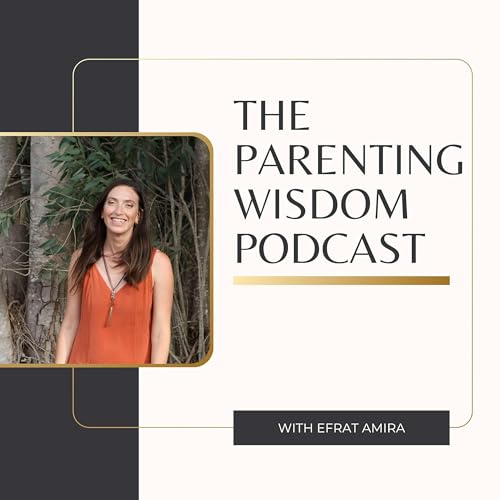
The Parenting Wisdom Podcast Por Efrat Amira arte de portada

The Parenting Wisdom

The Parenting Wisdom

De: Efrat Amira
Escúchala gratis

The Parenting Wisdom Podcast is a place where we explore parenting from a truly holistic perspective. I believe that a wise parent is one who asks questions, keeps an open mind, and also trusts their deep inner knowing.


Here, we integrate insights from psychology, sociology, holistic medicine, child development science, philosophy, and ancient wisdom. Because there is no single “right” way to parent — each of us is unique, and every child is a unique soul.


The guiding principle of The Parenting Wisdom Podcast is that parents are their children’s leaders. And as leaders, we must be both humble and courageous as we raise children who will grow into independent, resilient, and fulfilled human beings — ready to share their unique gifts and live lives of meaning and purpose.


We believe that our children are strong and capable, and that challenges are part of their growth. Our role is to let them face those challenges while remaining their safe haven — the steady presence they can always count on, no matter what.

Efrat Amira
Crianza y Familias Relaciones
Episodios
  • Why Gentle Parenting Is Making Your Kids More Anxious (And What To Do Instead)
    Mar 22 2026

    Sign up for my upcoming free online workshop: Grit Starts at Home:https://www.efratamira.com/grittykids👉 Join The Parenting Wisdom Community FB group for weekly Parenting Q&A:https://www.facebook.com/share/g/17mDYDmSNa/We live in a parenting culture that puts feelings on a pedestal. Validate every emotion. Name it. Sit with it. Never dismiss it.But what if that approach — as well-intentioned as it is — is actually producing kids who are more anxious, more self-focused, and increasingly disconnected from their purpose?In this episode I'm tackling one of the most sacred cows of modern parenting: the idea that we should always trust our feelings and center our children's emotional experience above everything else. I'll show you what the research says, what ancient Jewish wisdom understood long before modern therapy, and one practical shift you can make today.In This Episode You'll LearnWhy two landmark books — The Coddling of the American Mind and Bad Therapy — are sounding the alarm about the way we talk to kids about feelingsThe difference between wanted and unwanted emotions — and why this distinction changes everything about how you respond to your childWhat Jewish psychology teaches about the soul, emotions, and the mind's role in leading themWhy constantly turning your child's gaze inward may be robbing them of their ability to connect with others and live with purposeThe one question to replace "how does that make you feel?" — and why it worksThis Week's ChallengeThe next time your child comes to you flooded with a big emotion, instead of asking "how does that make you feel?" — try asking:"What do you want to do about it?"That single shift moves them from the inside out. Try it and tell me what happens in the comments.Books Mentioned📖 The Coddling of the American Mind — Greg Lukianoff & Jonathan Haidt📖 Bad Therapy — Abigail ShrierEpisodes:00:00 The Question That Changes Everything00:39 The Lie We've Been Told About Feelings01:07 The Research About Centering Feelings02:49 What Jewish Psychology Says About Emotions04:20 Unwanted vs. Wanted Emotions: The Core Distinction06:46 Purpose Beyond Emotions07:46 Teaching Children to Differentiate Emotions08:11 The One Question That Shifts Everything (Practical challenge)08:44 What to Remember From This Episode (Takeaway)👉 Join my newsletter to receive weekly parenting insights and updates here: https://www.efratamira.com/newsletter👉 The Parenting Wisdom Website: https://www.efratamira.com/

    Más Menos
    9 m
  • Is Therapy Making Your Child WORSE? The Truth Parents Need to Hear
    Mar 16 2026

    👉 Join Becoming Leaders- Raising Leaders Program: https://www.efratamira.com/blrlprogram👉 Join The Parenting Wisdom Community FB group for weekly Parenting Q&A:https://www.facebook.com/share/g/17mDYDmSNa/Think Twice Before Sending Your Child to TherapyTherapy has become the default solution for almost every challenge children face today. But is it always the right answer?In this episode, parenting coach Efrat Amira explores an important and controversial question: could sending kids to therapy sometimes do more harm than good?Drawing on research and ideas discussed in the book Bad Therapy: Why the Kids Aren't Growing Up by Abigail Shrier, this episode examines the unintended consequences that can arise when therapy becomes the first response to childhood struggles.This conversation is not about rejecting professional help when it is truly needed. Instead, it is about helping parents pause, think critically, and remember that the most powerful support system a child has is often already at home.In This Episode:* Why therapy has become the default parenting solution* The silent message children may receive when they are sent to therapy* How children can begin to internalize mental health labels* The risk of outsourcing the parent–child relationship* How therapy may unintentionally undermine parental authority and attachment* Why constant emotional excavation can sometimes increase fragility rather than resilience* The hidden risk of treatment dependency* How therapy can sometimes lead toward medication pathways* What research says about the most powerful protective factor in children’s mental health* Why strengthening the parent–child relationship may be more powerful than most interventions* A Key Concept Discussed: IatrogenesisThe Bigger Message:Children do not primarily need experts to interpret their emotions.What they need most is a strong, present, connected parent who is willing to walk through challenges with them.Before outsourcing difficult moments, consider whether what your child truly needs is more of you.Parenting Program:If you want to learn how to step into the role of a calm and confident leader in your home, explore the Becoming Leaders, Raising Leaders parenting program by Efrat Amira.https://www.efratamira.com/blrlprogramThis program helps parents:Build strong family cultureRaise resilient childrenLead their home with calm authorityMentioned in This EpisodeBad Therapy: Why the Kids Aren't Growing Up — by Abigail ShrierJoin the ConversationHave you ever considered sending your child to therapy—or already have?What was your experience?Did it help your child, or did it raise new questions?Share your thoughts in the comments.Chapters:00:00 The Therapy Dilemma: A Parent's Perspective00:33 You're Sending a Message That YOU Can't Handle Your Own Child01:41 You're Sending a Message That Something Is Inherently Wrong With Your Child02:53 You Can't Control What Messages Your Child Receives04:19 It Undermines Your Leadership and Your Attachment05:33 Teaching Kids to Center Their Feelings Is Actually Harmful07:00 The Risks of Medication and Dependency07:54 Treatment Dependency Is a Real Risk09:00 The Time You Spend on Therapy Is Better Spent WITH Your Child09:13 Reassessing Therapy: Alternatives and Solutions10:07 The Research Is Starting to Catch Up — And It's Not Pretty12:32 The Parent's Role: Building Resilience and Connection👉 Join my newsletter to receive weekly parenting insights and updates here: https://www.efratamira.com/newsletter👉 The Parenting Wisdom Website: https://www.efratamira.com/

    Más Menos
    13 m
  • What to Do Instead of Punishment for Kids with ADHD Traits
    Mar 11 2026

    👉 Join The Parenting Wisdom Community FB group for weekly Parenting Q&A:https://www.facebook.com/share/g/17mDYDmSNa/Join Becoming Leaders- Raising Leaders parenting program: https://www.efratamira.com/blrlprogram👉 Join my newsletter to receive weekly parenting insights and updates here: https://www.efratamira.com/newsletterWhat if the reason punishment isn’t working for your child isn’t because they’re difficult… but because punishment is the wrong tool?In this episode, parenting coach Efrat Amira explains why punishment often backfires with children who have ADHD traits like impulsivity, hyperactivity, and inattentiveness.Instead of focusing on control or discipline, this conversation explores a powerful shift: moving from **reactive parenting to calm leadership**.You’ll learn practical strategies that help children build regulation, responsibility, and confidence — without relying on punishment or power struggles.These ideas can help not only children with ADHD traits, but **any child who struggles with regulation, focus, or impulsivity.**# In This Episode• Why punishment often makes behavior worse• How ADHD traits may reflect a **different way of interacting with the environment**, not necessarily a disorder• The clash between **dynamic children and rigid systems** like school environments• Why parenting swings between **too strict and too permissive** often fail• How **calm leadership** creates stability and regulation for children# Practical Strategies Discussed### 1. Create Clear Structure### 2. Give Children Real Responsibility### 3. Teach the Mindset of Choice### 4. Teach Emotional Regulation### 5. Reduce High Dopamine, Low Effort Activities### 6. Simplify the Day and Prioritize NatureOverscheduled and overstimulated environments increase chaos for many children.Instead prioritize:• Free play• Outdoor time• Physical activity• Simpler routinesNature and movement help regulate the nervous system and restore focus.# Key TakeawayMany children labeled with ADHD traits are not broken.Often they are **dynamic, energetic children trying to function inside systems that demand stillness and constant compliance.**When parents shift from **punishment to calm leadership**, children gain the structure, guidance, and regulation they need to thrive.

    00:00 Understanding ADHD: A New Perspective

    00:56 The Impact of Environment on ADHD Traits

    02:35 The Ineffectiveness of Punishment

    04:20 Shifting to Calm Leadership

    05:35 Strategy 1- Create Structure

    06:33 Building Structure and Responsibility

    08:05 Strategy 2- Giving Kids Responsibilities

    09:29 Strategy 3- Teach Kids They Always Have a Choice

    11:14 Strategy 4- Teach Our Kids Regulation

    11:39 Simplifying Life for Better Focus

    13:36 Strategy 5- Nature and Movement

    14:35 Strategy 6- Simplify the Day and Prioritize Nature

    16:27 Conclusion and Further Resources# Resources MentionedADHD brain types by **Daniel Amen**: https://youtu.be/89ycxowroo4?si=n7f5zfTmYwqiM_3I---# Parenting Program: https://www.efratamira.com/blrlprogramIf you want to learn how to step into **calm, confident leadership in your home**, explore the **Becoming Leaders, Raising Leaders** program.This 10-week program teaches parents how to create strong family culture, clear leadership, and resilient children.

    Más Menos
    17 m
Todavía no hay opiniones