

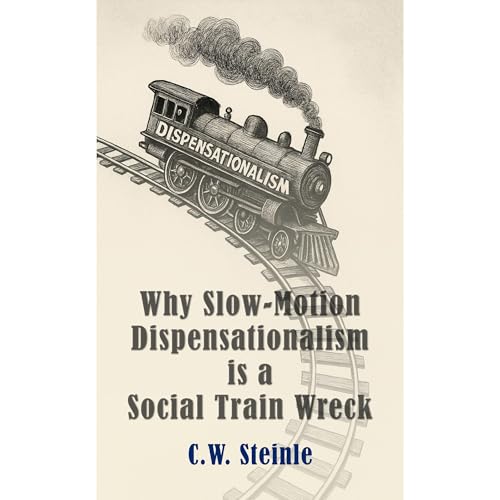
Why Slow-Motion Dispensationalism is a Social Train Wreck
No se pudo agregar al carrito
Add to Cart failed.
Error al Agregar a Lista de Deseos.
Error al eliminar de la lista de deseos.
Error al añadir a tu biblioteca
Error al seguir el podcast
Error al dejar de seguir el podcast
Obtén 30 días de Standard gratis
Compra ahora por $3.99
-
Narrado por:
-
Virtual Voice
-
De:
-
C.W. Steinle

Este título utiliza narración de voz virtual
Modern evangelical culture didn’t arrive at its obsessions by accident—it was set on a slow-moving track decades ago. In this provocative and penetrating essay, C. W. Steinle uncovers how the popular theology of Dispensationalism—with its promise of a secret Rapture and its fixation on the modern state of Israel—has quietly derailed the Church’s social and moral bearings.
Steinle argues that “slow-motion Dispensationalism” isn’t just a theological error; it’s a cultural force shaping how millions of Christians interpret history, politics, and even their duty to society. Through careful biblical reasoning and historical insight, he reveals how prophetic fatalism, false urgency, and misplaced loyalties have combined to create a kind of spiritual paralysis—a faith waiting for escape rather than engaging the world in hope and service.
Written with both pastoral compassion and scholarly precision, Why Slow-Motion Dispensationalism Is a Social Train Wreck issues a wake-up call to believers who sense that something has gone terribly off course in modern prophecy teaching. Steinle invites readers to re-examine the foundations of their eschatology, to rediscover the living hope of the gospel, and to re-enter history—not as spectators of doom, but as participants in redemption.
Inside you’ll discover:
The historical evolution of Dispensationalism and its modern mutations
How prophecy charts and political alliances reshaped Christian conscience
The psychological toll of “prophetic anxiety” on the Church and society
A biblical alternative grounded in faith, endurance, and responsibility
Steinle’s warning is clear: When theology turns inward and hope turns escapist, the Church stops being salt and light—and becomes a bystander to its own derailment.
Uninformed Straw Man Arguments
Se ha producido un error. Vuelve a intentarlo dentro de unos minutos.