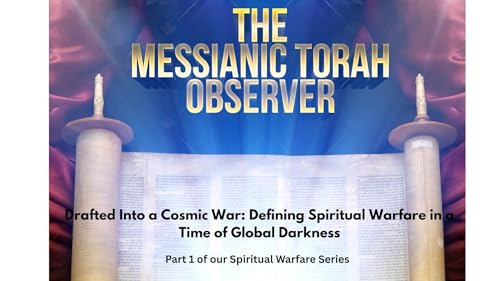
The Messianic Torah Observer Podcast Por Rod Thomas arte de portada

The Messianic Torah Observer

The Messianic Torah Observer

De: Rod Thomas
Escúchala gratis

The Messianic Torah Observer is a podcast that examines the topics and issues most affecting members of the Hebrew Roots/Messianic Faith Community. The purpose and goal of the program is to inform, enlighten and edify the Body of Messiah on living a holy and righteous Messiah-focused Torah life.2023 Espiritualidad
Episodios
  • TMTO Update and Biblical Rosh HaShanah Announcement
    Mar 20 2026

    In this special installment of TMTO, Rod announces the advent of Biblical Rosh HaShanah 6026 in addition to providing an update on TMTO, his personal life, and Qumran Family Church and Qumran Family Foundation.

    Más Menos
    20 m
  • Drafted Into a Cosmic War-Defining Spiritual Warfare in a Time of Global Darkness-Part 1 of our Spiritual Warfare Series
    Feb 7 2026
    Episode Overview We are living in a time of global upheaval, moral inversion, and spiritual confusion. Scripture warned us that such days would come—but it also prepared us for them. In Part 1 of our Spiritual Warfare Series, we lay the foundation by answering a critical question: What is spiritual warfare—from a biblical, Messianic, Torah‑rooted perspective? This episode introduces the reality of an unseen cosmic conflict between the Kingdom of Light and the Kingdom of Darkness, a war that has been raging since the dawn of creation and one in which every believer is already involved—whether they realize it or not. Contrary to popular Christian culture, spiritual warfare is not emotionalism, not fear‑based obsession, and not optional. It is covenantal, scriptural, and central to our calling as the redeemed of YHWH in these last days. 🔍 What This Episode Covers 1️⃣ Why Spiritual Warfare Matters Now Global instability, deception, lawlessness, and moral reversal Wars, rumors of wars, and "birth pangs" foretold by Messiah The increasing pressure on faith, families, and covenant identity Key Scriptures: Matthew 24:3–8; Isaiah 5:20; 2 Timothy 3:1–5; Ecclesiastes 12:13–14 2️⃣ Defining Spiritual Warfare Biblically Why the phrase "spiritual warfare" does not appear in Scripture—yet the reality permeates it Warfare as a multi‑layered conflict in the unseen realm The difference between the visible, temporal world and the invisible, eternal realm Key Scriptures: 2 Corinthians 4:18; Job 32:8; Ecclesiastes 3:21 3️⃣ The Unseen Realm and the Real Enemy Why our struggle is not against flesh and blood Thrones, dominions, rulers, and powers created by Elohim—some now in rebellion How worldly systems, temptation, deception, and hasatan himself work together Key Scriptures: Colossians 1:16; Ephesians 6:12; 1 Peter 5:8; 2 Corinthians 10:3–5 4️⃣ Spiritual Warfare Throughout the Tanakh and Apostolic Writings A survey of foundational biblical passages that reveal warfare without using the modern term: Genesis 3:15 – The Protoevangelium: hostility between the seed of the woman and the serpent Exodus 14:14 – YHWH fights for His people Deuteronomy 20:3–4 – Fearlessness because YHWH goes with us 1 Samuel 17:45–47 – David vs. Goliath: the battle belongs to YHWH 2 Kings 6:16–17 – Elisha and the unseen angelic host Daniel 10:12–13, 20 – Warfare in the heavens affects events on earth Psalm 91 – Protection, refuge, and angelic guardianship Zechariah 4:6 – Victory by YHWH's Spirit, not human strength 5️⃣ Weapons and Principles of Spiritual Warfare Authority given to the people of YHWH Torah (the Word of Elohim) as a primary weapon Prayer, fasting, unity, praise, obedience, and righteousness Assurance: no weapon formed against YHWH's people will ultimately prevail Key Scriptures: Matthew 4:1–11; Hebrews 4:12; Isaiah 54:17; Romans 12:21; Ephesians 6:10–20 6️⃣ Why This Series Exists This series is not about fear—it is about: Clarity instead of confusion Identity instead of deception Preparation instead of passivity We are not spectators in a cosmic conflict. We are called to stand, resist, and overcome—not in our own strength, but in the might of YHWH. 📖 Scripture References Cited in This Episode Torah & Writings Genesis 3:15 Exodus 14:14 Deuteronomy 20:3–4 Job 32:8 Psalm 44:5 Psalm 91 Psalm 144:1–2 Ecclesiastes 3:21; 12:13–14 Isaiah 5:20; 41:10–13; 54:17 Zechariah 4:6 Prophets Daniel 10:12–13, 20 Apostolic Writings Matthew 4:1–11; 5:14; 24:3–8 Luke 17:20–24; 18:3–8 John 9:4; 10:10 Romans 12:21; 13:12 2 Corinthians 4:18; 10:3–5 Ephesians 6:10–20 Colossians 1:16 Hebrews 4:12 1 Peter 5:8 2 Timothy 2:3; 3:1–5 📚 Extra‑Biblical Sources Referenced Jonathan Welton, How to See Heaven: Accessing Divine Secrets, Destiny Image, 2013 Judith Allen Shelly et al., Called to Care: A Christian Vision for Nursing, IVP Academic, 2021 🔜 What's Coming Next Part 2: Messianic vs. Denominational views of spiritual warfare Part 3: Laying the groundwork for Ephesians Part 4 and beyond: A verse‑by‑verse exposition of Ephesians 6:10–20 – The Whole Armor of Elohim
    Más Menos
    46 m
  • The Suffering Warrior Unveiling Judahs Mashiyach ben Joseph and the Messianic Mystery A - Part 10 of our Melchizedek Series
    Jan 30 2026
    The Suffering Warrior: Unveiling Judah's Mashiyach ben Yosef and the Messianic Mystery Overview In this post, Rod explores Judah's conception of Mashiyach ben Yosef (Messiah son of Joseph), tracing its development through biblical, Rabbinic, and apocalyptic literature, and connecting it to Messianic faith in Yeshua. The study highlights the "suffering warrior" motif, the precursor role to Mashiyach ben David, and the eschatological implications for Israel and the world. Key Themes & Scriptural Foundations Mashiyach ben Yosef as Precursor: Mashiyach ben Yosef is depicted as a leader who precedes Mashiyach ben David, preparing Israel through military, political, and spiritual means (repentance and Torah observance). This role is likened to John the Immerser as a type of precursor. Two-Stage Eschatology: Rabbinic tradition envisions two Messiahs—ben Yosef (the suffering, martyred leader) and ben David (the glorious, reigning king). The first stage is marked by suffering and conflict, the second by peace and restoration. Scriptural Roots: Genesis 49:22–26: Joseph's blessing as a "fruitful bough" and a suffering deliverer, foreshadowing the Messiah's role. Isaiah 11:13: Prophecy of Ephraim and Judah's reconciliation, interpreted as the work of two Messiahs. Zechariah 12:10: The pierced one, mourned by Israel, linked to Mashiyach ben Yosefciteturn4search1L20, L29-30. Obadiah 1:18, 21: Two "saviors" leading Israel, interpreted as ben Yosef and ben David. Rabbinic and Apocalyptic References Talmudic Sources: Sukkah 52a–b: Explicit references to Mashiyach ben Yosef, his death in the war of Gog and Magog, and the mourning that follows. Also mentions four eschatological figures: Mashiyach ben David, Mashiyach ben Yosef, Elijah, and the righteous High Priest (https://www.sefaria.org/Sukkah.52b.16?lang=bi&with=all&lang2=en)citeturn4search1L25, L29-31. Genesis Rabbah 75:6, 99:2: Describes the "War Messiah" from Joseph's lineage, involved in Temple restoration. Pesikta de-Rav Kahana 5:9 and Pesikta Rabbati 15.14/16: Discuss the "Anointed One for War" and the four messianic figures. Songs of Rabbah: Mentions Elijah, King Messiah, Melchizedek, and the Anointed for War (https://books.google.com/books?id=3YH99skQxGIC&q=Song+of+Songs+Rabbah+messiah+Elijah+war&pg=PA138). Sefer Zerubbabel: 7th-century apocalyptic text introducing Nehemiah ben Hushiel (Mashiyach ben Yosef) and Menahem ben Ammiel (Mashiyach ben David), outlining the sequence of redemption, warfare, death, resurrection, and the Messianic Age (https://pages.charlotte.edu/john-reeves/research-projects/trajectories-in-near-eastern-apocalyptic/sefer-zerubbabel). Dead Sea Scrolls: 4Q175 ("The Testimonia") and 4Q372 ("The Joseph Apocryphon"): Present a suffering, priestly, and warrior leader matching the ben Yosef persona. 1QS (Community Rule): Describes two Messiahs—of Aaron (priestly) and of Israel (kingly/warrior), with the latter subordinate to the former. Liturgical and Kabbalistic References: Amidah (Shemoneh Esrei): Kabbalists see the prayer for David's throne as a plea for Mashiyach ben Yosef's protection (https://www.chabad.org/library/article_cdo/aid/867674/jewish/Translation.htm). Kol HaTor: "Yosef is still alive" prayer for Mashiyach ben Yosef's mercy (https://vilnagaon.org/wp-content/uploads/2018/06/KOL_HATOR.pdf). Messianic Fulfillment and Insights Typology and Yeshua: Rod argues that Yeshua fulfills the typology of Mashiyach ben Yosef—suffering, atoning, gathering the lost sheep, and preparing the way for the Messianic Age. Scriptural parallels include Isaiah 53, Luke 4, Mark 13, Revelation 19, Zechariah 14, Ezekiel 34, and others. Conditional Redemption: Some Rabbinic sources suggest that the suffering and death of Mashiyach ben Yosef are conditional upon Israel's spiritual state. Practical Insights for Believers: Suffering: True discipleship involves suffering and persecution, echoing the path of Mashiyach ben Yosef and Yeshua (Matthew 24:9, John 15:20). Atonement: The suffering of Mashiyach ben Yosef is linked to atonement for Israel's sins, paralleling Yeshua's redemptive work (Ephesians 2:8, Matthew 5:3, 5). Redemption: The manuscript emphasizes the final redemption of Israel, rooted in biblical prophecy (Romans 11, Ezekiel 36–37, Zechariah 12–14, Isaiah 11, Jeremiah 31). Warfare: Both spiritual and physical warfare are central, with believers called to "put on the whole armor of God" (Ephesians 6). Call to Action Intercession for Judah: The manuscript urges Messianic believers to pray for and love the Jewish people, recognizing the "partial blindness" until the fullness of the Gentiles comes in (Romans 11:25). Invitation to Discipleship: The closing invites readers to enter into covenant relationship with Yehovah through Yeshua Messiah (2 Corinthians 6:2). References & Further Reading https://www.chabad.org/library/article_cdo/aid/101747/jewish/Mashiach-ben-Yossef.htm https://www.sefaria.org/...
    Más Menos
    1 h y 22 m
Todas las estrellas
Más relevante
Let me just say this guy in this podcast is 100% correct.

I’m black American and I’ve done two DNA test 3.5 years ago and both came out 48% Beta Jew from north east Africa/Ethiopia. Our history is told we possibly fall in the tribe of Manessa, Ruben, and or maybe talk that we could possibly be in the tribe of Levi, but there are debates. All of the research I’ve done I follow Messianic Jewish traditions, in a nut shell it’s pretty much Torah Observant nothing different at all. So my brothers and sisters that are Torah Observant…..keep doing what your doing because it is proper in Ēl’s eyes, by the way it doesn’t matter what your skin color is. Anyway, one day I was hanging out at my apartment sitting on the patio and it was about mid day, maybe late afternoon the sun was really orange and so beautiful. The sun rays were so amazing hitting me in the face on Shabbat. At that particular time I was in a day dream. In this day dream it was clear to me that every believer in Yashua will be doing something like a Torah Observant dedication in the kingdom of Shamayim anyway, so we might as well get used to it hear on earth. It just makes my heart so warm to know that more Christians are becoming Torah Observant and is waking up. Before my discovery of being a member of one of the tribes of Yisra’ēl I too was already Torah Observant. I was already studying to speak, and write Hebrew, Aramaic, and Greek, I’m getting pretty good. I still get hung up on english though. Anyway there’s a different dynamic in Messianic Torah Observant Believers. I feel that there is way more love for one another then inside most Christian churches. Don’t get me wrong I love my brothers and sisters in Christ all across the board, but there’s just something different about the Torah Observant community. I haven’t found too many Torah Observant churches in my community so for the most part I practice on my own and with Yashua. I’m pretty sure sooner or later more Christians are going to start waking up. They will realize that Mosaic Law is the Jewish legal system that was done away with in the resurrection of Yashua, but the 10 commandments still remain. I’ve always told my Christian brothers and sisters It’s better to follow the biblical feast days/high holy days versus the pagan/secular church traditions that derived from Babylonian tradition. I believe the scripture is in Deuteronomy 2nd chapter when Abba told his people to not worship him like the heathen. Well all of the Christian church is pretty much doing the very thing Abba Yeshua commanded us not to do. Anyways my brothers and sisters I love you all very much and can’t wait to see y’all in Shamayim O’boy it’s going to be a glorious time. Anyway please continue to pray for one another and let your soul remain in Yeshua Ha’mashicha our Adon forever Amen! ✝️

This guy is 100% correct! It’s not about skin color!

Se ha producido un error. Vuelve a intentarlo dentro de unos minutos.