

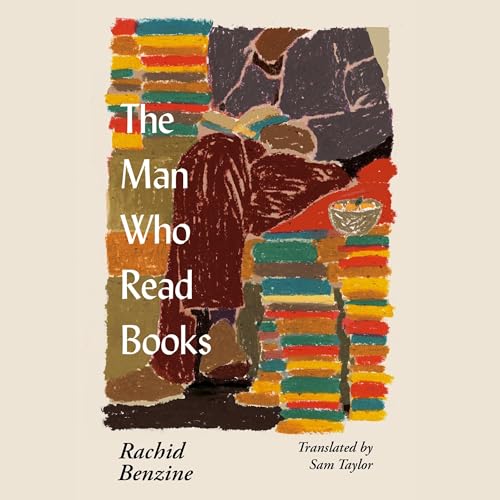
The Man Who Read Books
No se pudo agregar al carrito
Solo puedes tener X títulos en el carrito para realizar el pago.
Add to Cart failed.
Por favor prueba de nuevo más tarde
Error al Agregar a Lista de Deseos.
Por favor prueba de nuevo más tarde
Error al eliminar de la lista de deseos.
Por favor prueba de nuevo más tarde
Error al añadir a tu biblioteca
Por favor intenta de nuevo
Error al seguir el podcast
Intenta nuevamente
Error al dejar de seguir el podcast
Intenta nuevamente
 Exclusivo para miembros Prime: ¿Nuevo en Audible? Obtén 2 audiolibros gratis con tu prueba.
Elige 1 audiolibro al mes de nuestra inigualable colección.
Acceso ilimitado a nuestro catálogo de más de 150,000 audiolibros y podcasts.
Accede a ofertas y descuentos exclusivos.
Premium Plus se renueva automáticamente por $14.95 al mes después de 30 días. Cancela en cualquier momento.

The Man Who Read Books
Haz tu pedido de preventa ahora por $17.09
-
Narrado por:
A young French photographer travels to Palestine to report on the bombings in the Gaza Strip. One morning, during a ceasefire, he wanders far from his hotel into the narrow alleys of the city. Roaming aimlessly, he stumbles across a bookseller sitting on the doorstop of his shop—an old man, surrounded by stacks of books. As the photographer raises his camera, the bookseller calls out to him and asks him to listen to his story, not simply take his picture.
The story that unfolds is one that encompasses exile and imprisonment, activism and political disillusionment, the joys of love and art and watching your children grow up and thrive, and the tragedies that tear your loved ones from you. Each event is tied to the book that helped him understand and, in some cases, survive it, from Milan Kundera to Frantz Fanon to Umberto Eco to Ernest Hemingway, among many others. There’s a saying that when an old man dies a library burns, and it’s this very library that the bookseller opens and describes.
Rachid Benzine gives us a magnificent modern tale that explores the power of words against barbarism, of books as the last bastions of resistance against the loss of empathy, of literature as a means of sustenance during our darkest hours.
Todavía no hay opiniones