

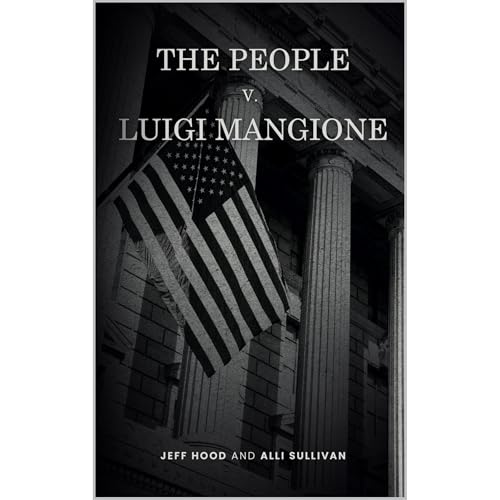
THE PEOPLE V. LUIGI MANGIONE
No se pudo agregar al carrito
Add to Cart failed.
Error al Agregar a Lista de Deseos.
Error al eliminar de la lista de deseos.
Error al añadir a tu biblioteca
Error al seguir el podcast
Error al dejar de seguir el podcast
Compra ahora por $3.99
-
Narrado por:
-
Virtual Voice

Este título utiliza narración de voz virtual
When violence meets violence, what does justice actually demand?
In December 2024, Luigi Mangione was arrested for the killing of UnitedHealthcare CEO Brian Thompson. Within weeks, Attorney General Pam Bondi announced federal prosecutors would seek the death penalty...making Mangione the test case for the Trump administration's revived capital punishment agenda. The internet erupted. Some celebrated Mangione as a folk hero striking back against a predatory healthcare system. Others demanded his execution. Both responses missed everything that matters.
The People v. Luigi Mangione refuses the easy answers. Written by priest and death row spiritual advisor The Rev. Dr. Jeff Hood and chronically ill healthcare advocate and death penalty abolitionist Alli Sullivan, this collection of essays examines two forms of violence: the bullet that killed Brian Thompson and the denial letters that kill thousands of anonymous Americans every year. The authors condemn both...and argue that responding to murder with execution while leaving the healthcare system unchanged represents the ultimate failure of justice.
What makes this book different:
- Uncommon credentials: Hood has witnessed eleven executions across five states and served as spiritual advisor to condemned inmates. In addition to her work against the death penalty, Sullivan has navigated years of insurance denials, prior authorizations and algorithmic healthcare rationing. Together, they understand violence from both sides.
- No heroes, no villains: The authors refuse to lionize Mangione or celebrate his alleged actions. They also refuse to ignore the systemic violence that creates the desperation from which such acts emerge.
- Theological depth: Drawing on Krishnamurti, liberation theology and prophetic witness, the book explores Mangione's reported intellectual influences and examines what happens when revolutionary yearning finds no community to hold it.
- Concrete reform proposals: Beyond critique, the authors present specific healthcare reforms...from mandatory disclosure of insurance denial rates to criminal liability for executives whose fraudulent denials result in death.
The book tackles uncomfortable questions:
- Why did the government announce its intent to seek death before Mangione was even indicted?
- How does the online "Luigi fandom" actually harm his chances of avoiding execution?
- What does it mean when America will execute one alleged killer but tolerate systems that harm tens of thousands annually?
- How do we hold individuals accountable without replicating the violence we condemn?
This is not a book for those seeking simple narratives or comfortable conclusions. It will frustrate readers looking for a revolutionary saint and disappoint those demanding state vengeance. But for anyone willing to hold complexity without flinching, it offers a path toward justice that addresses all forms of violence...not just the ones captured on camera.
The Mangione case has revealed something broken at the center of American life. This book demands we fix it.
Perfect for readers interested in criminal justice reform, death penalty abolition, healthcare policy, theological ethics and the intersection of structural violence and individual accountability.