

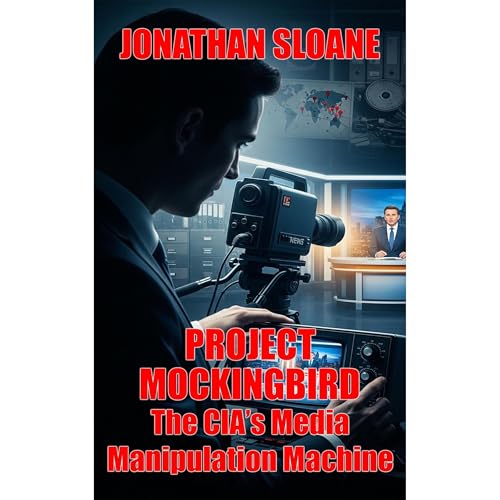
Project Mockingbird: The CIA's Media Manipulation Machine
No se pudo agregar al carrito
Solo puedes tener X títulos en el carrito para realizar el pago.
Add to Cart failed.
Por favor prueba de nuevo más tarde
Error al Agregar a Lista de Deseos.
Por favor prueba de nuevo más tarde
Error al eliminar de la lista de deseos.
Por favor prueba de nuevo más tarde
Error al añadir a tu biblioteca
Por favor intenta de nuevo
Error al seguir el podcast
Intenta nuevamente
Error al dejar de seguir el podcast
Intenta nuevamente
Prueba gratis de 30 días de Audible Standard
Selecciona 1 audiolibro al mes de nuestra colección completa de más de 1 millón de títulos.
Es tuyo mientras seas miembro.
Obtén acceso ilimitado a los podcasts con mayor demanda.
Plan Standard se renueva automáticamente por $8.99 al mes después de 30 días. Cancela en cualquier momento.

Project Mockingbird: The CIA's Media Manipulation Machine
Narrado por:
Virtual Voice
Compra ahora por $7.99
-
Narrado por:
-
Virtual Voice
-
De:
-
Jonathan Sloane

Este título utiliza narración de voz virtual
Voz Virtual es una narración generada por computadora para audiolibros..
This book traces the full arc of CIA media manipulation from its origins in World War II intelligence work through its exposure, partial reform, and uncertain continuation into the digital age. It examines the men who built the system, including spymaster Frank Wisner, CIA director Allen Dulles, and the network of Ivy League graduates who moved seamlessly between journalism and intelligence. It documents the specific operations that shaped coverage of coups in Iran and Guatemala, the suppression of stories about the Bay of Pigs, and the elaborate funding of cultural organizations designed to win hearts and minds across the globe.
The revelations that emerged during the Church Committee hearings and Carl Bernstein's landmark 1977 investigation exposed relationships that participants had assumed would remain secret forever. Major news organizations faced uncomfortable questions about their independence, and reforms were announced that supposedly ended the practices investigators had documented. Yet the policies contained exceptions, the oversight mechanisms remained weak, and the structural incentives that had made manipulation attractive never disappeared.
The consequences of this history extend far beyond the Cold War era that produced it. The erosion of trust in media institutions, the weaponization of Mockingbird accusations in political debate, and the persistent questions about whether influence operations continue in modified forms all trace back to decisions made in Georgetown parlors and Langley offices decades ago. This is the story of how America's intelligence community compromised the independence of American journalism, and what that compromise has cost the nation ever since.
Todavía no hay opiniones