

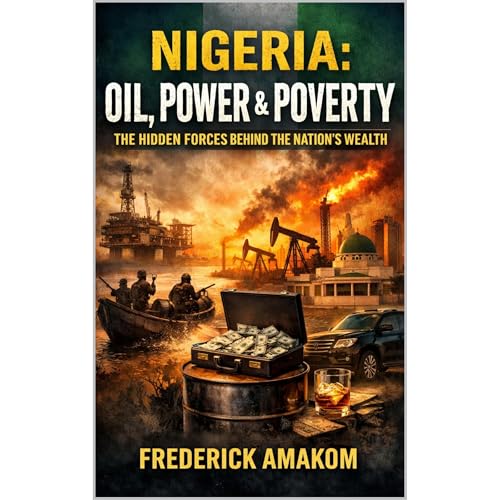
NIGERIA: OIL, POWER & POVERTY
The Hidden Forces Behind the Nation’s Wealth
No se pudo agregar al carrito
Add to Cart failed.
Error al Agregar a Lista de Deseos.
Error al eliminar de la lista de deseos.
Error al añadir a tu biblioteca
Error al seguir el podcast
Error al dejar de seguir el podcast
Prueba gratis de 30 días de Audible Standard

NIGERIA: OIL, POWER & POVERTY
Compra ahora por $10.00
-
Narrado por:
-
Virtual Voice
-
De:
-
Frederick Amakom

Este título utiliza narración de voz virtual
Nigeria is one of the world’s major oil producers.
It earns billions of dollars from crude exports.
It sits on vast energy reserves.
So why do millions of Nigerians still struggle with poverty, fuel scarcity, unemployment, and failing infrastructure?
In NIGERIA: Oil, Power & Poverty, Frederick Amakom delivers a penetrating investigation into the structure of Nigeria’s oil industry — exposing how power flows through contracts, political influence, subsidy regimes, crude lifting allocations, and oil bunkering networks.
This is not a conspiracy narrative.
It is a structural examination of how wealth is generated — and how it is managed.
Inside this book, you will uncover:
- How multinational oil companies shaped Nigeria’s petroleum architecture
- How domestic political elites captured influence through oil block allocations
- The mechanics of oil bunkering and why it survives
- The truth about fuel subsidy and who benefited most
- Why oil wealth has failed to translate into broad-based prosperity
- How the “resource curse” distorts governance and development
- What reforms are necessary if Nigeria is to reclaim control
From the creeks of the Niger Delta to the policy corridors of Abuja, this book connects the dots between resource wealth and institutional weakness.
Oil is revenue.
Power determines its direction.
Poverty reveals its management.
For readers interested in Nigerian politics, African development, governance reform, and energy economics, this book offers clarity where there has long been confusion.
The oil is real.
The wealth is real.
The question is whether the system managing it can change.
If you want to understand one of the most important political economy stories of modern Nigeria, this book is essential reading.