Morgellons Discussion Podcast Por Jeremy Murphree arte de portada

Morgellons Discussion

Morgellons Discussion

De: Jeremy Murphree
Escúchala gratis

Jeremy Murphree discusses the latest research of Morgellons disease.Jeremy Murphree Higiene y Vida Saludable
Episodios
  • Silenced by Similarity: How the Syphilis Comparison Shut Down Morgellons Research
    Apr 3 2026

    In February 2020, a groundbreaking peer-reviewed paper titled “Classification and Staging of Morgellons Disease: Lessons from Syphilis” dropped a bombshell. Researchers showed that Morgellons lesions mirror secondary syphilis in their wildly variable appearance, spirochetal burden (Borrelia in skin cells), and histopathological patterns. They even proposed a new staging system modeled directly on syphilis.

    Then… the information flow about Morgellons virtually stopped.

    No major new studies. Minimal mainstream coverage. Dermatology guidelines still call it delusional infestation. Even within the patient community, the full spirochetal picture — especially the syphilis parallels and visible fibers/sores — gets sidelined or ignored.

    In this episode, I break down the 2020 paper’s key findings, the suspicious silence that followed, and why almost nobody outside a small research circle wants to engage with this science. I also call out the gaps: the Charles E. Holman Foundation runs conferences and the Morgellons Lived Experience Project, but isn’t pushing the syphilis staging research hard enough through aggressive outreach.

    Meanwhile, some Lyme doctors like Daniel Cameron acknowledge crawling and biting sensations as neurologic Lyme symptoms, yet downplay the dermopathy, fibers, and full Morgellons picture.

    If Morgellons is another spirochetal infection like syphilis or chronic Lyme, patients deserve real testing, treatment discussions, and answers — not silence.

    Listen as we examine how the moment the science got too real, the conversation went quiet. Read the 2020 paper yourself (link below), demand better outreach from patient organizations, and help force this discussion back into the light.

    2020 Paper: https://pmc.ncbi.nlm.nih.gov/articles/PMC7012249/

    Charles E. Holman Foundation: thecehf.org (support them… but push them for more outreach!)

    Daniel Cameron article on crawling sensations: danielcameronmd.com (example of narrowed view)

    Sources: Middelveen et al. 2020, CDC 2012 contrast, recent patient registry updates

    Más Menos
    10 m
  • Morgellons Disease: Bacterial Truth vs. Psychiatric Myth
    Jan 24 2026

    Morgellons is not a mystery; it is microbiology. In this 15-minute clinical briefing, host Jeremy Murphree strips away the stigma of "unexplained dermopathy" and replaces it with a concrete bacterial framework. For years, patients have been trapped in the "Delusional Parasitosis" (DP) label—a diagnostic dead end that halts medical investigation. Today, we turn the tide.

    In this episode, we cover:

    • The Diagnostic Barrier: Why the DP label is used to gaslight patients and how to bypass the "negative test trap."

    • The Spirochetal Link: Exploring the connection between Borrelia (Lyme Disease), Syphilis, and the cutaneous manifestations of infection.

    • Biofilm Science: How mixed biofilms and proteins like β-amyloid protect pathogens from the immune system.

    • The Middelveen Criteria: Breaking down the Stages A–C of infection and the truth about human biofilaments (keratin/collagen) vs. textile myths.

    • Your Action Plan: How to find ILADS-trained doctors, demand "Direct Detection" (PCR/FISH) testing, and access financial aid.

    Stop fighting for belief and start fighting with biochemistry.

    • Middelveen, M. J., et al. (2015). Exploring the association between Morgellons disease and Lyme disease: identification of Borrelia burgdorferi in Morgellons disease patients. BMC Dermatology. Read the full study here.

      Key takeaway: Confirmed the presence of spirochetes in 24 out of 25 MD patients.

    • Middelveen, M. J., et al. (2020). Classification and Staging of Morgellons Disease: Lessons from Syphilis. Clinical, Cosmetic and Investigational Dermatology. Read the full study here.

      Key takeaway: Establishes the Classes I-IV and Stages A-C framework used in the episode.

    • Middelveen, M. J., & Stricker, R. B. (2016). Morgellons disease: a filamentous borrelial dermatitis. International Journal of General Medicine. Read the full study here.

      Key takeaway: Provides the histological proof that fibers are human biofilaments (keratin/collagen).

    • Ekbom, K. A. (1938). Der prasenile Dermatozoenwahn. (The original study on "delusions" where subjects actually had syphilis).

    • Vié, J. (1935). Les idées de possession et d'infestation parasitaires. (Early documentation of spirochetal links to parasitic delusions).

    • The New Morgellons Movement - Free Morgellons Course

    • The Charles E. Holman Morgellons Disease Foundation (CEHMDF): The leading source for MD research, patient education, and financial aid information. Visit thecehf.org.

    • ILADS (International Lyme and Associated Diseases Society): For finding clinicians who specialize in complex tick-borne infections and intracellular-targeting protocols. Visit ilads.org.

    • IU Indianapolis ScholarWorks: For accessing the latest posters and data on the diagnostic overlaps between DP and MD. Search the Repository.

    • Tick-Borne Disease Working Group (TBDWG): 2020 Report to Congress. This report acknowledges the gaps in diagnosis and the need for better validation of Lyme-related conditions. Download the 2020 Report.

    Más Menos
    10 m
  • Saved by Obamacare: My Morgellons Story
    Jan 15 2026

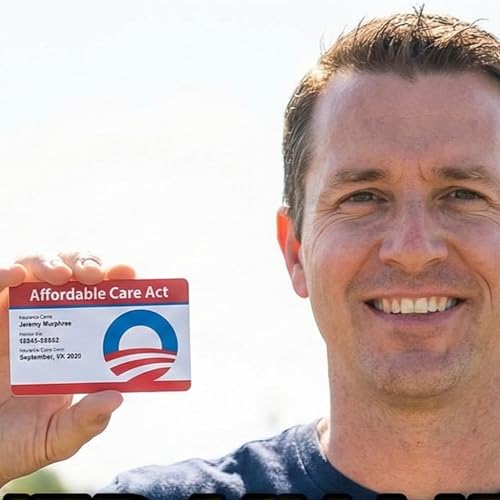
    In this episode of Morgellons Discussion & Microscopy, host Jeremy Murphree shares a deeply personal look at the reality of living with—and recovering from—Morgellons.Moving beyond the common "static" found online, Jeremy discusses the clinical science behind his diagnosis of Tick-Borne Relapsing Fever (TBRF) and the persistence of spirochetal infections. Most importantly, he reveals how the Affordable Care Act (Obamacare) became the literal lifeline that allowed him to afford the treatment necessary to reclaim his life.

    Más Menos
    9 m
Todavía no hay opiniones