

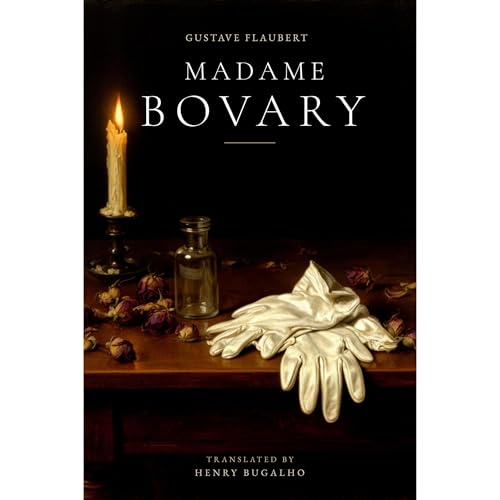
Madame Bovary
A Novel by Gustave Flaubert — New Translation with Critical Afterword by Henry Bugalho
No se pudo agregar al carrito
Add to Cart failed.
Error al Agregar a Lista de Deseos.
Error al eliminar de la lista de deseos.
Error al añadir a tu biblioteca
Error al seguir el podcast
Error al dejar de seguir el podcast
 Exclusivo para miembros Prime: ¿Nuevo en Audible? Obtén 2 audiolibros gratis con tu prueba.
Madame Bovary
Compra ahora por $3.99
-
Narrado por:
-
Virtual Voice
-
De:
-
Gustave Flaubert

Este título utiliza narración de voz virtual
The novel that changed what fiction could do — in a vivid new English translation.
Emma Bovary is bored. Married to a dull provincial doctor, suffocated by the routines of small-town Normandy, she has fed her imagination on romantic novels and believes that somewhere — in another man's arms, in another city, in another life — the passion and elegance she craves must exist. She is wrong. And that error will destroy her.
Gustave Flaubert spent five years writing Madame Bovary, agonizing over every sentence. When it was published in 1857, he was put on trial for offending public morality. He was acquitted. The novel was never forgiven.
What makes this edition different:
- A new translation by Henry Bugalho — faithful to Flaubert's obsessive precision, but written in living, contemporary English. No archaisms, no stiffness, no translator's fog between the reader and the prose. Every sentence has been weighed against the French original for rhythm, tone, and exactness.
- A critical afterword exploring why Flaubert matters — how Madame Bovary invented modern fiction, why its method was revolutionary, and what the novel reveals about desire, self-deception, and the stories we tell ourselves about our own lives.
Madame Bovary is not simply a story about adultery. It is a novel about what happens when a person cannot distinguish between wanting and living — when the imagination, fed on fiction and fantasy, becomes a prison more absolute than any provincial marriage. Emma's tragedy is not that she wants too much. It is that she wants what does not exist.
Nearly two centuries later, the diagnosis has not aged.
Translated and with an afterword by Henry Bugalho, philosopher, writer, and translator of Homer, Machiavelli, Descartes, and Plato.