

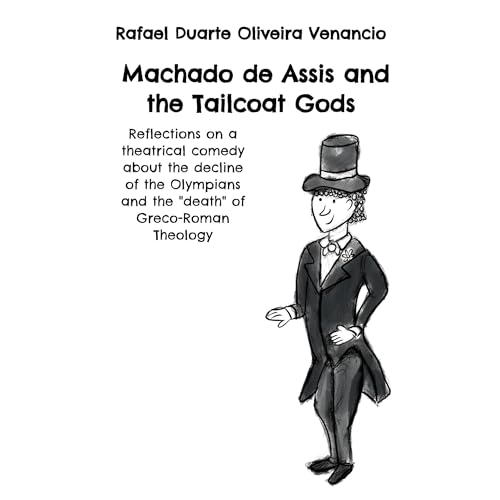
Machado de Assis and the Tailcoat Gods
Reflections on a theatrical comedy about the decline of the Olympians and the "death" of Greco-Roman Theology
No se pudo agregar al carrito
Solo puedes tener X títulos en el carrito para realizar el pago.
Add to Cart failed.
Por favor prueba de nuevo más tarde
Error al Agregar a Lista de Deseos.
Por favor prueba de nuevo más tarde
Error al eliminar de la lista de deseos.
Por favor prueba de nuevo más tarde
Error al añadir a tu biblioteca
Por favor intenta de nuevo
Error al seguir el podcast
Intenta nuevamente
Error al dejar de seguir el podcast
Intenta nuevamente
Prueba gratis de 30 días de Audible Standard
Selecciona 1 audiolibro al mes de nuestra colección completa de más de 1 millón de títulos.
Es tuyo mientras seas miembro.
Obtén acceso ilimitado a los podcasts con mayor demanda.
Plan Standard se renueva automáticamente por $8.99 al mes después de 30 días. Cancela en cualquier momento.

Machado de Assis and the Tailcoat Gods
Narrado por:
Virtual Voice
Compra ahora por $3.99
-
Narrado por:
-
Virtual Voice

Este título utiliza narración de voz virtual
Voz Virtual es una narración generada por computadora para audiolibros..
This text, in a way, engages in an important intertextual dialogue with “Gods in Exile,” by Heinrich Heine, whom the young Machado de Assis greatly admired. Thus, in this book we intend to analyze the idea of "Tailcoat Gods" not only within the traditional scope of understanding Machado de Assis's work (that is, the issues of Realism and the discussion of the Modern civilization process), but also within a theological and mythological scope, present in the work of Heinrich Heine, whom we consider a decisive influence on Machado de Assis. The idea is to reach a broader audience than those highly versed in art, philosophy, theology, and ancient history, aiming for clarification in both the historical and philosophical knowledge process, promoting reflection on how Machado de Assis, like Heine, metaphorically addresses a "death" of Greco-Roman Theology in his text.
Thus, the play "Tailcoat Gods," by Machado de Assis, is a comedy that deals with—in addition to political and social issues—the spiritual side of Western Civilization with the loss of its first gods, the Olympians.
Todavía no hay opiniones