

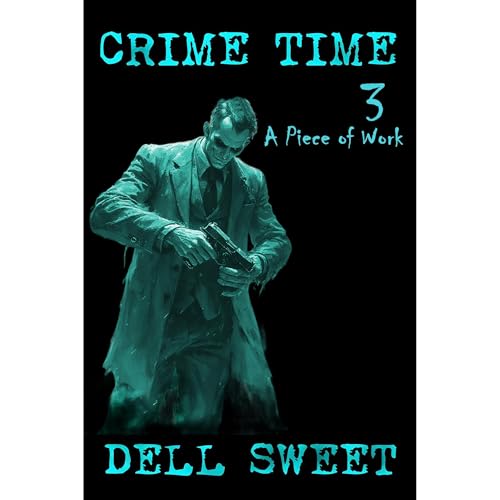
Crime Time 3: A piece of Work
No se pudo agregar al carrito
Add to Cart failed.
Error al Agregar a Lista de Deseos.
Error al eliminar de la lista de deseos.
Error al añadir a tu biblioteca
Error al seguir el podcast
Error al dejar de seguir el podcast
Prueba gratis de 30 días de Audible Standard

Crime Time 3: A piece of Work
Compra ahora por $4.99
-
Narrado por:
-
Virtual Voice
-
De:
-
Dell Sweet

Este título utiliza narración de voz virtual
Jimmy began to formulate a plan, a multi-pronged strategy designed to chip away at the foundations of Murphy’s power. He couldn't take down the king, but he could dismantle his army, one soldier at a time. The first step was to gather irrefutable, independently verifiable evidence against Corbin. This meant discreetly accessing internal police records, cross-referencing witness statements from past cases that had inexplicably gone cold, and even, if necessary, obtaining security footage from locations Corbin was known to frequent during his illicit dealings. It was a dangerous game, requiring meticulous planning and a healthy dose of paranoia, as he knew Murphy’s eyes and ears were everywhere.
He then turned his attention to Elias Thorne. Thorne’s digital footprint was vast, filled with emails, memos, and financial records that chronicled his descent into corruption. Jimmy knew that Thorne’s ambition was his primary weakness. He was a man who craved public recognition and a comfortable retirement funded by his illicit gains. By compiling a dossier that meticulously detailed Thorne’s compromised decisions, connecting them to specific developments and the companies that benefited, Jimmy aimed to create an irresistible pressure point. He could leak this information selectively, perhaps to a trusted journalist who was known for her integrity, or to a rival politician who was already circling Thorne, looking for an opportunity to strike. The ensuing scandal would undoubtedly force Thorne out of his position, creating a void in Murphy’s planning apparatus and potentially opening him up to further investigation by internal affairs.
The intelligence gathered on the social services network was perhaps the most ethically sensitive. Exposing these individuals, many of whom might have been coerced or blackmailed into cooperation, required extreme caution. Jimmy understood that not everyone was a willing participant. Some might have been desperate, trapped by circumstances, or threatened into compliance. His aim was not to destroy lives indiscriminately but to sever the operational links, to disrupt the flow of information and recruitment. He decided to focus on the handlers, the individuals who were actively orchestrating the exploitation, and to use their exposure as a warning to others, offering leniency to those who were willing to cooperate and provide further intelligence on Murphy’s operations.
The chilling realization that Murphy’s power stemmed from his invisibility was a heavy, suffocating blanket. This intangible nature of Murphy’s influence presented a formidable obstacle. Every transaction, every illicit deal, every compromised official was a brick in the wall that separated Murphy from the law. And that wall was designed to be impenetrable. Murphy didn’t get his hands dirty; he delegated, he manipulated, he ensured that the evidence always pointed to someone else, someone expendable, someone who could be readily sacrificed if necessary. Jimmy had the downloaded files, a treasure trove of information, but even within that vast digital ocean, Murphy’s direct involvement was a carefully guarded secret. The names and figures were there, the patterns of corruption were undeniable, but the ultimate beneficiary, the architect of it all, remained elusive, a spectral presence lurking just beyond the reach of the law.