

BAPTISM FOR THE DEAD??
No se pudo agregar al carrito
Add to Cart failed.
Error al Agregar a Lista de Deseos.
Error al eliminar de la lista de deseos.
Error al añadir a tu biblioteca
Error al seguir el podcast
Error al dejar de seguir el podcast
 Exclusivo para miembros Prime: ¿Nuevo en Audible? Obtén 2 audiolibros gratis con tu prueba.
BAPTISM FOR THE DEAD??
Compra ahora por $3.99
-
Narrado por:
-
Virtual Voice

Este título utiliza narración de voz virtual
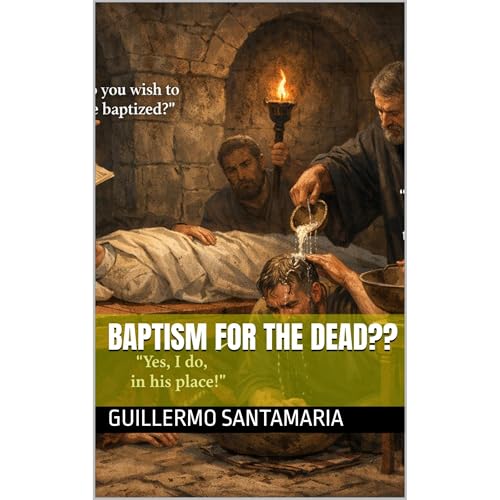
This short booklet, “BAPTISM FOR THE DEAD?”, is a tightly focused study built around one stubborn text—1 Corinthians 15:29—and it argues that Paul’s line about people being “baptized for the dead” is best handled as a rhetorical weapon in his resurrection defense, not as a permission slip for post-mortem rites. The foreword sets the tone: the church is repeatedly tempted to take an obscure phrase, detach it from the whole counsel of God, and construct a “machine” out of it—something impressive and even emotionally appealing, but ultimately replacing Christ and truth with technique. The foreword frames the stakes as doctrinal and pastoral: if Christ is not raised, Christianity collapses; therefore any reading of 1 Cor 15:29 must be governed by Paul’s main burden, not by curiosity about unusual ritual possibilities.
The introduction then walks through the Greek of 1 Corinthians 15:29 and explains the argument’s “bones.” It emphasizes that Paul says “they” (not “we”), suggesting he is invoking a practice he can point to in Corinth without necessarily endorsing it as normative. The discussion highlights that the key phrase ὑπὲρ τῶν νεκρῶν most naturally reads “on behalf of the dead,” and it surveys the major interpretive options that have been offered: (1) some kind of vicarious/proxy baptism in Corinth; (2) Chrysostom’s reading that “the dead” means “dead bodies,” so baptism is performed with a view to one’s own future resurrection; (3) softer proposals where baptism is “because of” the dead (inspiration/hope of reunion); and (4) a “replacement” idea where new converts fill the ranks of deceased believers. The author keeps returning to the controlling point: Paul’s thrust is logical consistency—if you deny resurrection, why do resurrection-shaped things at all?
From there the booklet broadens outward to historical plausibility. It argues that the ancient world certainly had “death + ritual + water” all around it, but that clear, straight-line evidence for a pagan or Jewish proxy-baptism rite that would neatly explain Corinth is lacking. In Greco-Roman religion you find purifications and initiations, often aimed at cleansing the living from death-pollution or promising a better afterlife; in Judaism you find immersion for ritual impurity (including corpse-impurity), again aimed at the living. The closest conceptual parallel the booklet stresses is not a baptismal rite but a linguistic and argumentative one: Second Temple Judaism does contain the idea of acting “for the dead.”
That sets up the final question the booklet treats directly: whether 2 Maccabees 12:44 could have influenced Paul’s language and logic. The author notes the striking overlap in structure: 2 Maccabees argues that if the fallen will not rise, it would be “superfluous and foolish” to pray ὑπὲρ νεκρῶν (“on behalf of the dead”), while Paul argues that if the dead are not raised, why are people being baptized ὑπὲρ τῶν νεκρῶν. The conclusion is cautious: there is a plausible conceptual parallel and shared phrasing “in the air,” but no provable direct dependence, especially since Paul appears to be leveraging a Corinthian practice rather than teaching a Jewish liturgical custom. The booklet closes by reinforcing the main interpretive compass: the resurrection of Christ is the fixed star; every proposed explanation of “baptized for the dead” must be kept subordinate to Paul’s central proclamation that Christ is risen and therefore the dead shall be raised.