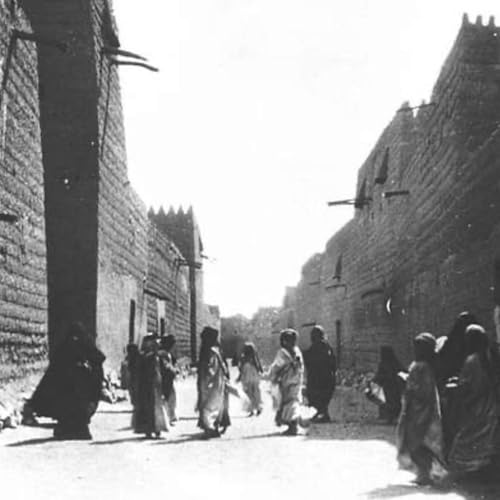
S8 Ep670: SHOW SCHEDULE JOHN BATCHELOR SHOW, 3-30-26. 1926, HA'IL ARABIA Podcast Por  arte de portada

S8 Ep670: SHOW SCHEDULE JOHN BATCHELOR SHOW, 3-30-26. 1926, HA'IL ARABIA

S8 Ep670: SHOW SCHEDULE JOHN BATCHELOR SHOW, 3-30-26. 1926, HA'IL ARABIA

Escúchala gratis

Ver detalles del espectáculo
SHOW SCHEDULE JOHN BATCHELOR SHOW, 3-30-26.1926, HA'IL ARABIA1. Pakistan Acts as Intermediary in Ongoing Iran-Israel Conflict GUEST: Bill Roggio, Ambassador Husain Haqqani SUMMARY: Pakistan acts as a conduit for messages between Washington and Tehran. While communication exists, neither side has offered a second negotiating position, and Iran continues to demonstrate strategic control over the Strait of Hormuz.,, John Batchelor and his guests discuss the stagnant global situation, noting that while missiles fly in the Iran war and a Russian tanker heads for Cuba, Pakistan remains a key intermediary. Ambassador Haqqani explains that Pakistan’s relationships with both the U.S. and Iran allow for message delivery, though Iran has not formally accepted a mediation role. Bill Roggio notes that Iran is showing its control by selectively allowing ships through the Strait of Hormuz, while the Trump administration faces mounting domestic disapproval and a 60-day War Powers Act deadline. (1)2. The Ineffectiveness of the U.S. Hammer Strategy Against Iran GUEST: Husain Haqqani, Bill Roggio SUMMARY: This segment critiques the U.S. "hammer" strategy, comparing it to Vietnam's failure of absolute power. Iran’s ability to endure pain and its control of vital shipping lanes are seen as its true strategic "nuclear weapons.",, Ambassador Haqqani argues that dropping thousands of bombs is a simplistic notion of power that fails against asymmetric warfare, much like the U.S. experience in Vietnam. He notes that Iran's capacity to endure pain is greater than assumed and its real "nuclear weapon" is the ability to shut down the Strait of Hormuz,. Bill Roggio agrees, stating that without an active Iranian resistance or helpful adjacent countries to host one, the U.S. is further from a resolution than when the war began,,. (2)3. Iranian Regime Employs Human Shields and Nightly Terror Raids GUEST: Bill Roggio, Jonathan Sia SUMMARY: Jonathan Sia details the Iranian regime's use of schools and hospitals as human shields to deter strikes. Security forces conduct nightly terror raids to prevent domestic uprisings while the Supreme Leader’s status remains uncertain.,,, As war fatigue sets in, the Iranian regime is embedding personnel in sports stadiums, hospitals, and residential areas to create a "rally around the flag" effect. Jonathan Sia describes "nightly terror raids" where forces fire on buildings to suppress potential rebellion, noting that officials fear internal uprisings more than foreign bombardment,. Furthermore, the whereabouts of Supreme Leader Ali Khamenei are unknown, allowing the IRGC to operate with less oversight while "pragmatist" officials maintain the same hardline policies as their predecessors,. (3)4. The Search for Armed Resistance and the Iranian Diaspora’s Role GUEST: Bill Roggio, Jonathan Sia SUMMARY: This file explores the role of the Iranian diaspora and Crown Prince Reza Pahlavi in a potential transition. Analysts evaluate potential bases for armed resistance, identifying Kurdish and Baluch populations as key entry points.,, Jonathan Sia explains that the diaspora is no longer disconnected from those inside Iran, with Crown Prince Reza Pahlavi serving as a unifying figure for a "day after" scenario and sanctions relief. While historical resistance groups like the MEK lack internal legitimacy, Sia identifies the Kurdish and Baluch populations as potential bases for an armed movement against the regime. Notably, the Baluch group Jaish al-Adl focuses its attacks on armed personnel rather than civilians, indicating a more nationalist mindset that could serve as an entry point for internal change,. (4)5. The Strategic Importance of the Litani River Buffer Zone in Lebanon GUEST: Bill Roggio, David Daoud SUMMARY: David Daoud explains the IDF’s offensive to establish a 40km buffer zone up to the Litani River. This strategy aims to protect northern Israel from short-range rockets and prevent future ground invasions by Hezbollah., The IDF is pushing to move Hezbollah back to the Litani River, a 40km distance that effectively puts short-range rockets out of reach of northern Israeli communities. David Daoud highlights that Hezbollah’s Al-Manar TV acts as a military auxiliary to demoralize the Israeli public, emphasizing the need for permanent fortifications to protect displaced citizens,. Meanwhile, the UNIFIL peacekeeping mission is in a drawdown phase, having been largely ineffective due to a mandate that required following the lead of the Lebanese Armed Forces. (5)6. Lebanon Declares Iranian Ambassador Designate Persona Non Grata GUEST: Bill Roggio, David Daoud SUMMARY: Lebanon has declared the Iranian ambassador designate persona non grata for interfering in domestic affairs and coordinating with Hezbollah. This rare assertion of sovereignty highlights Tehran’s long-standing disregard for Lebanese government authority during the war., The Lebanese foreign ministry expelled ambassador designate ...
Todavía no hay opiniones