

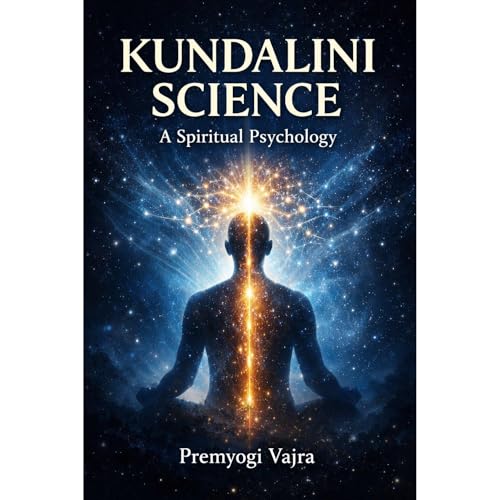
Kundalini science
A spiritual psychology
No se pudo agregar al carrito
Add to Cart failed.
Error al Agregar a Lista de Deseos.
Error al eliminar de la lista de deseos.
Error al añadir a tu biblioteca
Error al seguir el podcast
Error al dejar de seguir el podcast
 Exclusivo para miembros Prime: ¿Nuevo en Audible? Obtén 2 audiolibros gratis con tu prueba.
Kundalini science
Compra ahora por $3.99
-
Narrado por:
-
Virtual Voice
-
De:
-
Premyogi vajra

Este título utiliza narración de voz virtual
What if Kundalini is not a mysterious myth, but a gradual, observable process of inner psychological evolution?
Kundalini Science is the first book in a six-part series that documents the unfolding of Kundalini through lived experience rather than borrowed theory. All six parts of the Kundalini Science series are now published, with the sixth and final volume bringing the journey to its natural completion.
Unlike books that present Kundalini as a sudden, dramatic event, this series follows a slow and organic inner transformation—one that grows alongside everyday life, responsibilities, and long-term yogic practice. Each volume reflects a distinct phase of inner maturation, culminating in the sixth book, which corresponds to the stabilization of a Nirvikalpa-like state of awareness.
This first book is a curated collection of blog posts written by Premyogi Vajra, a mystic yogi whose Kundalini awakened after a year of sustained Kundalini Yoga meditation. Each post forms a chapter, and together they trace the earliest stages of inquiry, observation, and understanding.
During his exploration, the author encountered a surprising gap: despite abundant discussion, Kundalini was rarely defined with clarity or completeness. Many personal accounts appeared fragmented or exaggerated, while classical texts described similar states—such as Samadhi in the Patanjali Yoga Sutras—in symbolic language that felt distant from modern experience.
Kundalini Science emerged from this gap.
Written in clear, grounded, and accessible language, the book translates subtle inner processes into concepts that can be observed, reflected upon, and understood. Rather than glorifying mystical experiences, it focuses on how awareness changes, how identity loosens, and how psychological structures reorganize as Kundalini unfolds.
These writings were originally published as blog posts, but were later compiled into an ebook to allow uninterrupted reading beyond the glare of screens. The result is a work that feels personal yet systematic, experiential yet reflective.
For readers curious about Kundalini beyond mythology—for those who sense that inner awakening may be a long, quiet process rather than a sudden explosion—Kundalini Science offers a rare and honest starting point.