

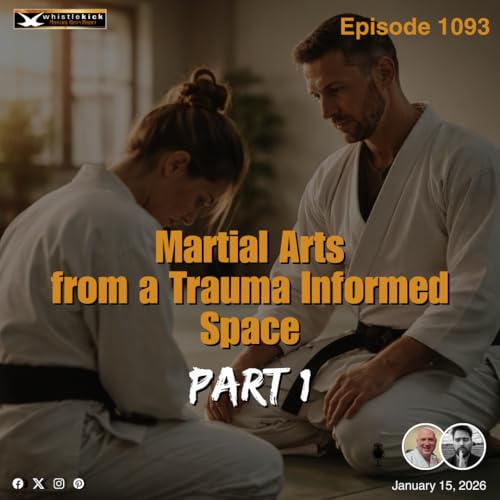
Episode 1093 - Martial Arts from a Trauma Informed Space: Part 1
No se pudo agregar al carrito
Add to Cart failed.
Error al Agregar a Lista de Deseos.
Error al eliminar de la lista de deseos.
Error al añadir a tu biblioteca
Error al seguir el podcast
Error al dejar de seguir el podcast

Episode 1093 - Martial Arts from a Trauma Informed Space: Part 1
-
Narrado por:
-
De:
SUMMARY
In this episode, Andrew is joined by Paul Coffey and they discuss the importance of teaching martial arts from a trauma-informed perspective. They explore the nuances of class planning, the distinction between soft and hard skills, and how to effectively navigate violence and nonviolence in martial arts education. The conversation emphasizes the need for sensitivity and understanding when working with students who may have experienced trauma, and the importance of effective communication in creating a safe learning environment. In this conversation, Paul Coffey discusses the importance of crisis intervention and soft skills in martial arts, particularly for vulnerable populations. He emphasizes the need for instructors to build trust with their students, create a safe training environment, and understand the significance of intention in martial arts practice. The discussion also highlights the necessity of teaching nonviolent techniques for self-defense and the critical role of listening to students to address their unique needs and traumas.
TAKEAWAYS
· Teaching from a trauma-informed perspective is essential.
· Nonviolent individuals can learn to navigate violent situations.
· Soft skills in martial arts are crucial for effective teaching.
· Class planning should consider the audience's background.
· The distinction between soft and hard skills is important.
· Trauma can affect how individuals respond to violence.
· Effective communication is key in trauma-informed teaching.
· Crisis intervention is essential before physical conflict occurs.
· Soft skills can help mitigate damage while protecting oneself.
· Building trust with students is crucial for effective teaching.
· Instructors must listen to both verbal and non-verbal cues from students.
· Creating a safe training environment is vital for trauma-informed practices.
· Intention in martial arts training can change the perception of techniques.
· Every trauma is valid; do not compare traumas.
· Teaching nonviolent techniques can empower students who have experienced trauma.
· Instructors should express boundaries clearly to foster a safe space.
· Listening to students can reveal their unspoken needs and concerns.
Join our EXCLUSIVE newsletter to get notified of each episode as it comes out!
Subscribe — whistlekick Martial Arts Radio