

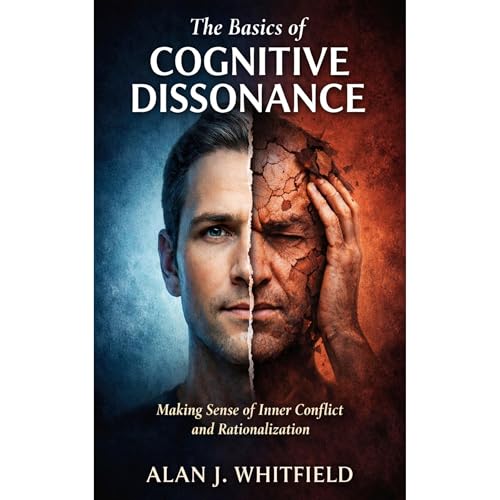
The Basics of Cognitive Dissonance
Making Sense of Inner Conflict and Rationalization
No se pudo agregar al carrito
Add to Cart failed.
Error al Agregar a Lista de Deseos.
Error al eliminar de la lista de deseos.
Error al añadir a tu biblioteca
Error al seguir el podcast
Error al dejar de seguir el podcast

The Basics of Cognitive Dissonance
Compra ahora por $9.99
-
Narrado por:
-
Virtual Voice

Este título utiliza narración de voz virtual
You believe you’re rational.
You value honesty.
You like to think your decisions are guided by reason.
So why does your mind work so hard to explain away mistakes, defend shaky choices, and protect beliefs long after evidence starts to pile up?
The Basics of Cognitive Dissonance reveals the hidden psychological force shaping your opinions, decisions, loyalties, and justifications—often without your awareness. This book explains, in clear and compelling language, why inner conflict feels so uncomfortable and why the mind instinctively rewrites reality to make that discomfort disappear.
Inside these pages, you’ll learn:
- Why smart, thoughtful people defend decisions they privately regret
• How beliefs quietly change to match behavior—rather than the other way around
• The mental tricks we use to avoid feeling wrong, inconsistent, or exposed
• Why facts alone rarely change minds, including your own
• How cognitive dissonance shapes relationships, careers, politics, morality, and identity
• When rationalization protects you—and when it silently limits growth
This isn’t an academic text filled with jargon. It’s a clear-eyed exploration of everyday thinking—how people justify choices, double down on beliefs, and preserve a sense of inner consistency even when life refuses to cooperate.
You’ll begin to recognize cognitive dissonance everywhere:
in arguments you’ve had,
in purchases you’ve defended,
in opinions you’ve protected,
and in moments where certainty felt more important than truth.
More importantly, you’ll learn how awareness changes the game. Not by making you immune to inner conflict—but by giving you the ability to recognize it, understand it, and respond with clarity rather than reflex.
If you’ve ever wondered why changing your mind feels so difficult…
why regret demands explanation…
or why being wrong can feel like a threat to who you are—
this book will feel uncomfortably familiar in the best possible way.
The Basics of Cognitive Dissonance doesn’t promise perfect consistency. It offers something far more valuable: insight into how the mind really works—and how understanding that process can lead to better decisions, deeper self-honesty, and fewer excuses you have to believe.
If you’re ready to understand the psychology behind self-justification—and recognize it in your own thinking—this book belongs in your library.
Add it to your cart and start seeing your decisions, beliefs, and inner conflicts with new clarity.